ES
ES 
Passive vs active rainwater harvesting comes down to a simple question for Tucson property owners. Do you shape the land so rain soaks into the soil, or do you store roof runoff in a tank for later use? Both approaches capture the same monsoon rain. They just send it to different places, and the right choice depends on your yard, your goals, and how much water you want on hand. If you are weighing the options, our rainwater harvesting work in Tucson covers the active side of that decision.
This guide compares the two approaches as concepts, not as a step by step install. Passive harvesting is landscape shaping that anyone planning a desert yard should understand. Active harvesting is storage, and it is where Southern Arizona Rain Gutters fits, with tanks, cisterns, and a drainage option that ties into your gutter system. What follows is a clean side by side, a look at how storage scales, and the rebate and legal points to confirm before you commit to a plan.
What passive rainwater harvesting means
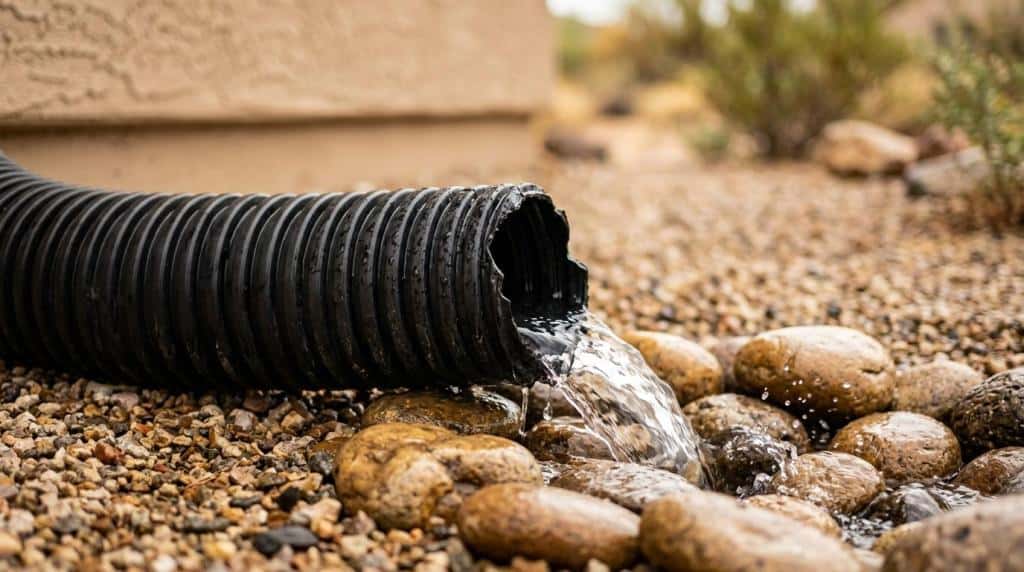
Passive rainwater harvesting shapes the land so rain soaks into the ground where plants can use it. Instead of piping water into a container, you contour the soil into basins, swales, and mulched beds that slow the runoff and let it sink in. There is no tank and no pump. The soil and the root zone become the storage.
In a desert climate, this is a common first move for a planting area, because it puts water directly under trees and shrubs during the monsoon. The elements are simple: a shallow basin around a tree, a graded swale that guides water off a hard surface, or a mulched bed that holds moisture longer. Passive work is landscape design more than plumbing, so it is best understood as general education here. Confirm with the company what parts of a passive plan fall within its scope, since Southern Arizona Rain Gutters is focused on the storage side.
What active rainwater harvesting means
Active rainwater harvesting stores roof runoff in tanks and cisterns for later use. Gutters and downspouts route water from the roof into a container, where it waits until you need it for landscape irrigation or another approved use. This is the side of the choice that involves real hardware, and it is what our crews install across the Tucson area.
Southern Arizona Rain Gutters offers three storage lines: above-ground plastic tanks, steel culvert cisterns, and commercial storage tanks. A plastic tank is the everyday choice for a home garden. A steel culvert cistern holds more and suits a property that wants serious capacity. Commercial tanks scale up for businesses and larger sites. Best practice across the trade is to use UV-stabilized tank bodies, screened inlets, sealed openings, and an overflow plan, all of which keep the stored water cleaner. The gutters do the collecting, so a clean, well-supported gutter run feeds the tank as much as the tank itself matters. Active systems give you water on demand, which is the main thing passive shaping cannot do.
Passive vs active rainwater harvesting side by side
Passive vs active rainwater harvesting differ in one core way. Passive keeps water in the soil for plants, and active keeps water in a tank for you to direct. Everything else follows from that split. The table below lines up what each approach actually does, with the storage details drawn from the lines Southern Arizona Rain Gutters installs.
| Feature | Passive harvesting | Active harvesting |
|---|---|---|
| How it works | Shapes the land with basins and contouring so rain soaks into the soil | Stores roof runoff in tanks and cisterns for later use |
| Typical elements | Basins, swales, mulched beds, and land contouring (general landscape work) | Above-ground plastic tanks, steel culvert cisterns, and commercial storage tanks |
| Where the water ends up | In the root zone and the surrounding soil | In storage, then sent to irrigation or another approved use |
| Best suited for | Planting areas and low-effort landscape watering | On-demand irrigation and larger storage needs |
| SARG role | General education, confirm scope with the company | Installs the tanks and cisterns, plus a drainage entry option |
| Rebate note (hedged) | May qualify under Tucson Water programs, confirm current terms | May qualify under Tucson Water programs, confirm current terms |
How much water active storage can hold
Active storage scales from a small garden tank to a whole-property system, and the size gap is large. Most garden irrigation setups run in the low hundreds of gallons, while a whole-property residential system can reach several thousand gallons. Commercial storage goes larger still. The chart below shows typical industry capacity points so you can picture the range before sizing anything for your own roof.
Those figures are typical trade ranges, not a fixed rule for your property. Real sizing depends on your roof area, how much of that roof drains to the tank, and what you plan to water. That is a conversation for a site review, not a number to guess from a chart.
Where underground drainage fits between the two
Underground drainage is a middle option for owners who are not ready for a full tank. It ties into the gutter system and carries roof water to a safe runoff area away from the foundation, so heavy monsoon flow has somewhere controlled to go. It is not storage the way a tank is, but it is an active piece of the same gutter setup, and it can be a sensible first step.
Think of it as a way to manage the water now and add storage later. The gutters and downspouts are already doing the collection, so a buried line simply directs that flow instead of letting it pool. If you are trying to decide between piping the water away and holding it in a tank, our breakdown of underground drainage versus a rain tank walks through that specific trade-off in more detail.
Which approach fits a Tucson property
The right approach depends on what you want the water to do. If your goal is greener planting beds and trees with little ongoing effort, passive shaping puts rain where roots can reach it. If you want water you can store and apply on your own schedule, active tanks and cisterns give you that control. Many Tucson properties use both, sending some roof runoff to basins and routing the rest to a tank.
Upkeep looks different for each. A passive setup means keeping basins clear and topping up mulch so water still sinks in where you want it. An active setup means keeping screened inlets and sealed openings clean so the stored water stays usable, with an overflow path for the days a tank fills fast. Neither is heavy work, but knowing what you are signing up for helps you pick the approach you will actually maintain.
Local conditions push the decision. Tucson gets much of its rain in short, intense monsoon bursts, so a system needs to catch a lot of water quickly and then release it slowly through the long dry stretches. Stored water in a tank stretches that monsoon supply across weeks when nothing falls, and a passive basin holds moisture in the soil for the same reason on a smaller scale. Roof size, slope, and where your downspouts already run all matter. For the mechanics of how roof water becomes usable supply, see our guide on how rainwater harvesting works for Arizona homes. We serve Tucson and nearby communities including Oro Valley, Marana, Sahuarita, Green Valley, and Three Points, so a quick site look can settle which mix suits your property.
Rebates and Arizona rules to check first
Before you plan either approach, check the current rebate and legal picture, because the details change. Arizona is among the most permissive states in the country for rainwater harvesting, with no residential collection limits and incentives available. Tucson Water offers rainwater harvesting rebates that have applied to both passive and active systems, though amounts, eligibility, and application windows shift between cycles.
Do not lock a budget to a specific rebate figure you read somewhere. Confirm the current terms directly with the authority. You can review the program details on the Tucson Water residential rebates page, and check any permit or HOA color rules that apply to your specific address. A short call to the utility, or a chat during your site review, will tell you where your project stands today.
Key Takeaways
- Passive harvesting shapes the land so rain soaks in. Active harvesting stores roof runoff in tanks and cisterns.
- Southern Arizona Rain Gutters installs the active side: above-ground plastic tanks, steel culvert cisterns, and commercial storage tanks.
- Underground drainage that ties into the gutter system is a practical middle step for owners not ready for a full tank.
- Active storage scales from a few hundred gallons for a garden up to several thousand for a whole property, with commercial larger.
- Many properties combine both approaches, using basins for planting areas and a tank for on-demand irrigation.
- Tucson Water rebates and Arizona rules change, so confirm current terms before you plan.
Passive and Active Harvesting Questions from Tucson Property Owners
What is the main difference between passive and active rainwater harvesting?
The difference is where the water goes. Passive harvesting moves rain into the soil through basins and contouring, while active harvesting captures roof runoff in tanks and cisterns you can draw from later.
Does Southern Arizona Rain Gutters install passive earthwork systems?
Southern Arizona Rain Gutters focuses on the active side, meaning tanks and cisterns, plus an underground drainage option that ties into the gutter system. For basins and earthworks, ask the company what falls within its scope.
Can I combine passive and active harvesting on the same property?
Yes. Many Tucson properties do both, guiding some roof runoff into planting basins and sending the rest to a storage tank. The two approaches work well together.
Which approach saves more water on a Tucson property?
It depends on your goals. Active storage holds water for irrigation on your own schedule, while passive shaping keeps water in the soil where plants use it directly. The best result often comes from using both.
Do passive and active systems qualify for the Tucson Water rebate?
Tucson Water has offered rainwater harvesting rebates covering both passive and active systems, but amounts, eligibility, and application windows change over time. Confirm the current terms with Tucson Water before you plan.
Is rainwater harvesting legal in Arizona?
Arizona is among the most permissive states for rainwater harvesting, with no residential collection limits and incentives available. Always confirm any local permit or HOA rules that apply to your specific address.
How large a tank do I need for active harvesting?
Garden systems commonly run from about 50 to 500 gallons, and whole-property systems commonly reach several thousand up to around 10,000 gallons. Correct sizing depends on your roof area and how you plan to use the water, so a site review is the best guide.
The safe uses for harvested rainwater start outside the house: watering trees, shrubs, desert natives, and drip-irrigated beds. That is where roof-collected water does the most good with the least risk, and it is the use most Southern Arizona systems are built around. Our rainwater harvesting services in Tucson page covers the tank options.
After a big monsoon storm fills a tank, the next question is usually what else the water can do. Quite a lot, as long as each use matches the water quality. Roof runoff carries dust, pollen, and bird droppings. None of that bothers a mesquite tree, but some uses need extra steps, and drinking needs a lot of them.
What are the safe uses for harvested rainwater?
The safest uses for harvested rainwater are the ones where nobody swallows it: landscape irrigation, watering ornamental plants and trees, and outdoor cleaning. Indoor non-potable uses such as toilet flushing are possible with dedicated plumbing. Drinking, cooking, and brushing teeth require treatment and regular testing.
That tiered approach lines up with CDC guidance on collecting rainwater and your health, which suggests using rainwater in ways that limit the chance of swallowing it and keeping treated tap or bottled water for anything that goes in your mouth. Each step up the list below asks for more treatment, more plumbing, or more caution.
| Use | Fit for untreated harvested rainwater | What to keep in mind |
|---|---|---|
| Trees, shrubs, and desert-adapted plants | Yes, the core use | Deliver it at the root zone by hose, bubbler, basin, or drip |
| Drip irrigation on ornamental beds | Yes | A screen or filter on the line helps keep emitters from clogging |
| Edible gardens and fruit trees | Use with care | Water at the soil, not over the harvest, and wash produce with tap water |
| Rinsing tools, pots, patios, and screens | Yes | Keep it away from grills, coolers, and anything used for food |
| Dust control on dirt paths and work areas | Yes | A light, even soak settles dust without making mud |
| Toilet flushing or laundry | Only with a dedicated system | Separate plumbing, local code approval, and no link to drinking water lines |
| Drinking, cooking, and brushing teeth | Not without treatment | Filtration, disinfection, and ongoing testing under health department guidance |
Why is landscape irrigation the best use in Tucson?
Landscape irrigation is the best use for harvested rainwater because plants handle ordinary roof runoff with no trouble, and every gallon drawn from the tank is a gallon that did not pass through your water meter. That is where the lower water bill comes from. It is also the use SARG designs its residential systems around.
Desert landscapes are a natural match. Mesquite, palo verde, desert willow, agave, and most native shrubs do well on deep, occasional soaks, which is exactly what a tank delivers after the summer storms. Rainwater is also naturally soft, so it does not add the dissolved minerals that groundwater-based supplies can leave in the soil over the years.
How the water reaches the plants matters as much as where it goes. A hose on the tank spigot works for spot watering and new plantings. Gravity feed to basins around trees is simple and needs no power. Drip systems usually need some pressure, so a small pump is a common addition when the tank is feeding a drip line across a whole yard. For a closer look at how the roof, gutters, and tank work together to supply that water, read how rainwater harvesting works for Arizona homes.
Water deeply at a tree's drip line, where the feeder roots are, instead of at the trunk. One slow soak does more than several quick sprinkles and loses less to afternoon evaporation.
Can you use harvested rainwater on a vegetable garden?
You can, but edible gardens call for more care than ornamental beds. Apply the water at the soil line rather than over leaves or fruit, and wash everything you harvest with tap water before eating it. Some health guidance goes a step further and favors tap water for plants you plan to eat.
Fruit on a citrus tree hangs well above the soil, so water at the base rarely touches it. Leafy greens, herbs, and root crops sit in or next to wet soil, so be most careful with those. Drip lines tucked under mulch are a good way to keep water off the parts you eat.
If you would rather not think about it at all, a split setup works well. Run harvested rainwater to trees, shrubs, and flower beds, and keep the vegetable bed on tap water. You still capture most of the savings, since trees are usually the thirstiest plants.
What about cleaning and other outdoor chores?
Harvested rainwater works well for outdoor cleaning jobs such as rinsing garden tools, flowerpots, patio furniture, window screens, and hardscape. It also settles dust on dirt paths and work areas.
Draw a firm line at anything that touches food. Grill grates, coolers, cutting boards, and outdoor kitchen surfaces should get tap water. The same goes for anything a small child might put in their mouth, like water table toys or a splash area.
A simple non-potable label on the tank spigot is worth adding, especially if guests or kids use your yard, so nobody mistakes it for a drinking tap.
Can harvested rainwater be used inside the house?
Indoor non-potable uses like toilet flushing and laundry are possible, but they are a separate level of project. They need dedicated plumbing, backflow protection, and approval under local code, and the rainwater lines must never connect to the drinking water supply.
That last point is the one that matters most. Mixing rainwater into pipes that carry treated water can contaminate the treated water, so indoor systems keep the two completely apart. Requirements change from one jurisdiction to the next, so check with the City of Tucson or Pima County, depending on where you live, before planning an indoor tie-in.
For most homes in Tucson, Oro Valley, and Marana, outdoor use delivers the bulk of the value with none of the added plumbing, so start outside and treat indoor use as a later upgrade.
Is harvested rainwater safe to drink?
Not without treatment. Untreated rainwater from a roof should be treated as non-potable, and turning it into drinking water takes filtration, disinfection, and ongoing testing. SARG's harvesting systems are built for landscape irrigation and outdoor use, not as drinking water systems.
Clear water can still carry germs and chemicals from dust, smoke, roofing and piping residue, and animal droppings. The first storm after a long dry spell tends to wash the most of it into a tank.
Bathing falls into the same category, since water near the mouth is easy to swallow. If you are considering any potable use, talk to the county health department about testing and treatment first. Never drink straight from a storage tank, however clean it looks.
How does tank design keep stored water usable?
Cleaner water in means cleaner water out. As a general best practice, a well-built tank has a UV-stabilized body, screened inlets, sealed openings, and a planned overflow route.
A UV-stabilized body holds up to Tucson sun and limits light reaching the water. Screened inlets catch leaves and palo verde litter. Sealed lids keep out insects, animals, and blowing dust. Overflow planning sends excess water to a safe spot in the landscape instead of against the foundation.
Clean gutters before storm season pay off inside the tank. Pest and algae control is its own topic, and our guide to keeping mosquitoes and algae out of stored rainwater covers it step by step.
How much storage do your planned uses need?
The uses you have in mind decide how much storage makes sense. Garden irrigation systems commonly run 50 to 500 gallons, while whole-property residential systems commonly reach several thousand gallons, up to around 10,000, with larger tanks for commercial sites.
Matching storage to your plans is part of choosing safe uses for harvested rainwater, since a tank sized for a few beds cannot carry a whole yard of trees through the dry months. SARG installs three tank lines to cover that spread: above-ground plastic tanks, steel culvert cisterns, and commercial storage tanks. For owners not ready for a tank, underground drainage ties into the gutter system and moves water to a safe runoff area as a first step.
Tucson Water offers rainwater harvesting rebates, which can offset part of the cost of a qualifying system. Rebate amounts, eligibility, and program rules change over time, so confirm the current terms with Tucson Water before you buy.
Key Takeaways
- Deep, occasional soaks at a tree's drip line make the most of every stored gallon.
- For edible gardens, drip lines under mulch keep water off the parts you eat.
- A non-potable label on the tank spigot prevents mix-ups with guests and kids.
- Indoor rainwater plumbing must stay fully separate from drinking water lines.
- UV-stabilized tanks, screened inlets, sealed openings, and planned overflow protect water quality for every use.
- Tucson Water rebates can help with system cost, but confirm current terms first.
Other Rainwater Uses Tucson Homeowners Ask About
Can I use harvested rainwater in an evaporative cooler?
It is possible, but most swamp coolers are plumbed to the household water line, so running one on rainwater usually means a separate supply line and a small pump. Soft rainwater may reduce mineral buildup on the pads. Have a licensed plumber review any change first.
Is it okay to top off a swimming pool with stored rainwater?
Small top-offs are generally fine, since rain already falls into open pools. Tank water can carry sediment and organic matter that the pool filter and sanitizer then have to handle, so screen it on the way in and retest your pool chemistry afterward.
Can pets or backyard chickens drink harvested rainwater?
Fresh tap water is the safer choice for pet and poultry bowls. Stored roof runoff can carry droppings and roof residue. If you want to use tank water for animals, ask your veterinarian or the county extension office first.
Is harvested rainwater good for houseplants?
Yes, ornamental houseplants can be watered with harvested rainwater. Let it reach room temperature first, and skip it for indoor herbs or anything else you eat. Empty the saucers if pets tend to drink from them.
Does my roof material affect how I can use the water?
It can. Coatings, treated wood, and older roofing materials may shed residue into runoff, which matters more as a use moves closer to skin or food contact. Most common roof types work for watering ornamental plants, but have your installer look at the roof surface before you plan anything beyond the landscape.
Can I run a fountain or small pond on harvested rainwater?
Yes, decorative fountains and ponds are a good fit, since nobody drinks from them. Keep the water moving with a pump, clean the filter regularly, and plan for summer evaporation in Tucson so the pump never runs dry.
Should I use stored rainwater right after a monsoon storm or save it?
Use it steadily rather than holding it back. Drawing the tank down between storms frees space to catch the next monsoon rain instead of losing it to overflow. Once the storms end, ration what is left for the plants that need it most during the dry months.
Is rainwater harvesting legal in Arizona? Yes. The state is one of the most permissive in the country on this, with no residential collection limits and tax incentives available at the state level. If you want to run a downspout into a tank in your own yard, state law is not what stands in the way. That is a very different position from parts of the country where capturing rain off a roof has been restricted or metered, which is usually where the question comes from in the first place.
The more useful question for a Tucson homeowner is not whether harvesting is allowed, but which rules apply to the specific system you have in mind. Permits, plumbing connections, drainage, and HOA appearance standards are all decided closer to home, and they vary by city, county, and neighborhood. This is a plain look at what is settled at the state level, what is not, and what to confirm before anything gets built. For the systems themselves, our rainwater harvesting and water storage work in the Tucson area covers how the pieces fit together.
Is Rainwater Harvesting Legal in Arizona?
Yes. Residential rainwater harvesting is legal in Arizona, and the state does not cap how much a household may collect. Arizona is consistently described as one of the most permissive states in the country on this point, and incentives have existed at the state level to encourage it rather than discourage it.
That permissiveness is the baseline, not the whole picture. No collection limit does not mean no rules of any kind. It means the act of catching rain that falls on your own roof is not the regulated part. What can be regulated is the construction around it: what you build, where you put it, whether it touches household plumbing, and where the overflow goes when a monsoon storm fills a tank in twenty minutes.
What the State Settles and What It Leaves to Your City
The state settles the threshold question, and it answers yes. It does not settle building permits, plumbing and backflow requirements, setbacks, grading and drainage, or how your homeowners association feels about a tank beside the driveway. Those are local decisions with local answers.
Holding onto that split explains something that otherwise sounds contradictory. You will read that rainwater harvesting is legal in Arizona, and then hear a homeowner in Oro Valley or Marana say they had to check with the city before anything went in. Both are accurate. The state question is closed. The project questions are open until someone with jurisdiction over your address answers them.
Rules that vary by city, county, and program also change over time. Treat anything you read about permits, rebates, or tax treatment, including what is written here, as a starting point to confirm with the relevant authority rather than a final answer. That is not a disclaimer for its own sake. Program terms genuinely move from year to year, and the cost of assuming is usually paid after the equipment is already bought.
Where Local Rules Can Still Apply
Local requirements tend to surface in four places: permitting for larger or more permanent installations, plumbing and backflow when a system could touch the drinking water supply, grading and drainage when water crosses a property line, and HOA standards covering appearance. None of these make harvesting illegal. They shape how a particular system gets built.
Permitting. A plastic tank set on prepared ground in a back yard is a different proposition from a buried cistern, a tank on an engineered pad, or a system tied into the house. Generally, the larger and more permanent the installation, the more likely a local requirement applies. In the Tucson area that means the City of Tucson or Pima County, and if you are in Sahuarita, Green Valley, Vail, Nogales, Rio Rico, Sonoita, or Three Points, the jurisdiction covering your address. One phone call before design beats a correction afterward.
Plumbing and backflow. Any point where harvested water could reach the potable supply turns into a plumbing question with its own requirements. Most residential irrigation systems avoid that entirely by staying fully separate from household plumbing, which is the simplest path and the one we see most often.
Drainage. Overflow planning is standard best practice for a tank, and it is also where a project can quietly become a neighbor problem. Water that exceeds capacity during a storm has to land somewhere deliberate. Sending it toward a foundation, a wash, or the property next door is the version that generates a phone call, and grading and drainage are handled locally.
HOA standards. An association usually regulates how something looks rather than whether you may do it. Tank color, placement, height, and screening are the recurring points. Ask before ordering, because moving a full tank is not a small job and repainting one is not always an option.
What Actually Sets the Limit on How Much You Collect
With no legal cap on residential collection, the ceiling is physical rather than regulatory. Roof area, gutter capacity, and tank size decide how much water you keep. Almost every homeowner runs into one of those three limits long before any rule enters the conversation.
Gutters are the part people underestimate. A tank cannot store water that never reached it, and a roof with missing runs or leaking joints loses volume during exactly the intense storms you were counting on. Seamless gutters are formed on site in one continuous piece, which removes the seams that otherwise leak under heavy flow. Downspout capacity matters just as much: the industry standard sizes are 2x3 and 3x4 inch, with larger sections used for bigger roofs or more intense rainfall, and one downspout typically serves roughly 30 to 35 feet of gutter.
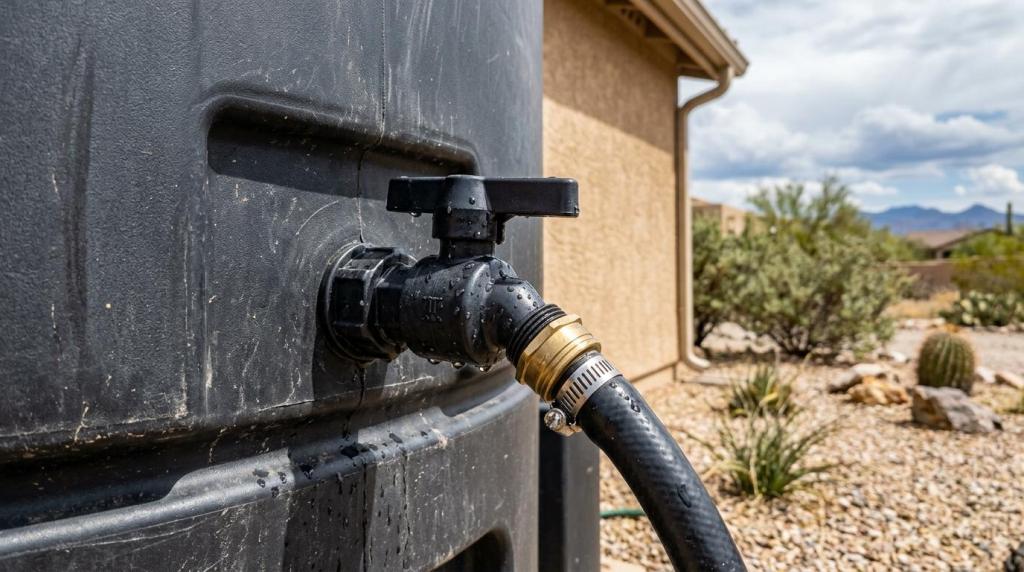
Storage is the other ceiling. There are three tank lines to choose from, above-ground plastic tanks, steel culvert cisterns, and commercial storage tanks, and the right one depends on capacity, appearance, and whether the property is residential or commercial. As general industry guidance, garden irrigation systems commonly run somewhere between 50 and 500 gallons, while whole-property residential systems commonly reach several thousand gallons and up to around 10,000. Commercial installations go beyond that. Those are ranges, not specifications, and the honest answer for any given property depends on roof area and what the water is for.
What You Are Allowed to Do With the Water
Landscape irrigation is the standard use and where nearly every residential system in Southern Arizona starts. Harvested rain goes onto trees, gardens, and planted areas, which is precisely the demand that pushes an outdoor water bill up through the summer. Nothing about that use is unusual or restricted here.
Drinking water is a separate category and should be treated as one. Potable use raises treatment and plumbing questions that irrigation simply does not, and it is not something to assume from a standard roof to tank setup. If that is your goal, plan it as its own project and confirm the requirements with the relevant authority before designing around it.
For the ordinary case, the payoff is straightforward: a lower water bill, eligibility for the Tucson Water rebate, water for landscape irrigation, added property value, and a local resource that currently runs off your roof and leaves. We looked at the bill side of that in detail in our piece on whether rainwater harvesting lowers outdoor water costs.
Does Arizona Offer a Tax Incentive for Rainwater Systems?
Tax incentives have been available at the state level, and the current status, eligibility, and value of any credit is something to verify rather than assume. Tax programs are created, amended, and retired, and a figure quoted on a contractor's blog is not a basis for a filing. The Arizona Department of Revenue publishes what is currently available on its state tax credits page, and that, together with a tax professional, is where this should be settled.
Locally, the more immediate program for most people is the utility one. Tucson Water offers rainwater harvesting rebates to its own customers, with amounts, funding, and requirements set by the utility and subject to change from one program year to the next. If that is part of your plan, the sequence matters more than the number, because some requirements have to be met before you buy equipment. We walked through how the program is structured in our guide to the Tucson Water rainwater harvesting rebate.
Worth separating the two in your head: a state incentive and a utility rebate are different programs run by different bodies with different rules. Qualifying for one tells you nothing about qualifying for the other.
What to Confirm Before You Build
Different setups raise different questions, and knowing which ones apply to yours takes about one conversation. The table below maps the storage options to the checks that most often come up, all of which are answered locally rather than by state law.
| Setup | What it is | What usually needs a local check |
|---|---|---|
| Above-ground plastic tanks | Plastic tanks set on prepared ground and plumbed to the downspouts | HOA appearance rules, placement and setbacks, overflow routing |
| Steel culvert cisterns | Corrugated steel culvert built into a cistern for larger, more permanent storage | Any permitting tied to size or structure, pad requirements, placement |
| Commercial storage tanks | Higher capacity tanks matched to large roof areas | Commercial permitting, site drainage, backflow if the system touches supply plumbing |
| Underground drainage only | Buried piping tied into the gutter system, moving water to a safe runoff area | Grading and drainage rules, where discharged water ends up |
Underground drainage is worth flagging as a legitimate first phase. If a tank is not the right step yet, piping that ties into the gutter system and carries water to a safe runoff area solves the immediate problem, which for most people is water landing where it should not. Because the gutters and downspout routing are shared by both approaches, getting the collection side right now means storage is an addition later rather than a rebuild.
None of this is complicated once it is written down, and none of it changes the headline. Harvesting is allowed here. The work is in matching a system to your property, your roof, and whatever your city and association expect.
Key Takeaways
- State law answers whether you may collect. Your city, county, and HOA answer how the system gets built.
- Permitting likelihood tracks permanence, so a buried cistern draws more scrutiny than a plastic tank on prepared ground.
- Keeping a system fully separate from household plumbing avoids the backflow question entirely.
- Overflow has to be planned deliberately, because storm water leaving a full tank is a drainage matter with a local answer.
- A state tax incentive and a Tucson Water rebate are separate programs with separate rules, and both change over time.
- The real ceiling on collection is roof area, gutter capacity, and tank size, not the law.
Legal Questions Tucson Homeowners Ask About Collecting Rain
Does Arizona limit how much rainwater I can collect?
No. There are no residential collection limits in Arizona, which is part of why the state is considered one of the most permissive in the country on rainwater harvesting. The amount you end up with is decided by your roof, your gutters, and your tank rather than by a legal cap.
Can my HOA stop me from installing a rainwater tank?
An association typically regulates appearance rather than the practice itself, so expect questions about tank color, placement, height, and screening rather than a flat refusal. Rules vary by association, so check your governing documents and ask the board before ordering equipment.
Do I need a permit for an above-ground tank in Tucson?
It depends on the installation, and it is a local question rather than a state one. Simple above-ground tanks on prepared ground are generally the least involved option, while structural pads, buried tanks, and connections to household plumbing are more likely to trigger a requirement. Confirm with the City of Tucson or Pima County for your address.
Is it legal to drink harvested rainwater in Arizona?
Potable use is a different category from irrigation and brings treatment and plumbing requirements with it. Do not assume a standard roof to tank system is suitable for drinking water. If that is the goal, treat it as its own project and confirm the requirements with the relevant health or building authority first.
Are greywater and rainwater treated the same way?
No. Greywater from sinks, showers, and laundry is regulated separately from rainwater collected off a roof, and the requirements are not interchangeable. If you are considering both, check the rules that apply to each system rather than assuming one answer covers the pair.
Is there still a state tax credit for installing a system?
Verify this before relying on it. Incentives have existed at the state level, but tax programs change, and the current status and eligibility should come from the Arizona Department of Revenue or a tax professional rather than from any contractor website, including ours.
Can overflow from my tank cause a problem with a neighbor?
It can, which is why overflow routing is part of the design rather than an afterthought. Water leaving a full tank during a storm needs a planned path to a safe runoff area, and grading and drainage rules are set locally. Plan the overflow before the tank is placed, not after the first monsoon.
Does any of this change if I rent the property out?
The legal position on collecting rain does not change, but the decision making does. Ownership, association approval, and responsibility for maintenance all need to be settled between owner and tenant before a permanent installation goes in.
Underground drainage vs rainwater tank is a choice about the same water. Both start with rain landing on your roof and running into the gutters. The difference is what happens at the bottom of the downspout: drainage carries the water away from the house, and a tank keeps it.
Most people arrive at this question from one of two directions. Either something is going wrong, water pooling by the foundation or cutting a channel through the yard, or they have decided they would rather irrigate with rain than with treated municipal water. Those are different problems and they point at different answers. Our water harvesting work covers both ends, and the useful thing to understand first is that these are not competing options so much as two stages of the same system.
Underground Drainage vs Rainwater Tank at a Glance
Drainage removes the water, a tank retains it. If your problem is that water is going somewhere it should not, drainage solves it directly. If your goal is to use the water, you need storage. The table below sets out the practical differences.
| Consideration | Underground drainage | Rainwater tank |
|---|---|---|
| What it does with the water | Carries it to a safe runoff area away from the house | Stores it for later use |
| Problem it solves | Pooling, erosion, runoff hitting the wrong place | Irrigation supply and a lower water bill |
| Presence on the property | Buried, nothing visible once backfilled | A visible structure that needs a prepared location |
| Rebate relevance | Not the purpose of the work | A qualifying system may be eligible through Tucson Water |
| Usual trigger | A water problem happening now | Wanting to put the water to work |
| Adding the other later | Storage can be added to the same collection layout | Overflow still has to be routed somewhere safe |
What Underground Drainage Actually Does
Underground drainage is buried piping that ties into the gutter system and moves water to a safe runoff area. Instead of a downspout discharging against the house and letting the water find its own path, the flow is captured and taken to a location you chose deliberately.
That matters here because our rain is concentrated. A monsoon storm can deliver a large volume in a short window, and a downspout emptying beside a foundation during that burst is doing real work in the wrong direction. The visible symptoms are familiar: a scoured channel across the yard, standing water that takes days to clear, soil pulling away from the slab, or a patio that keeps silting up.
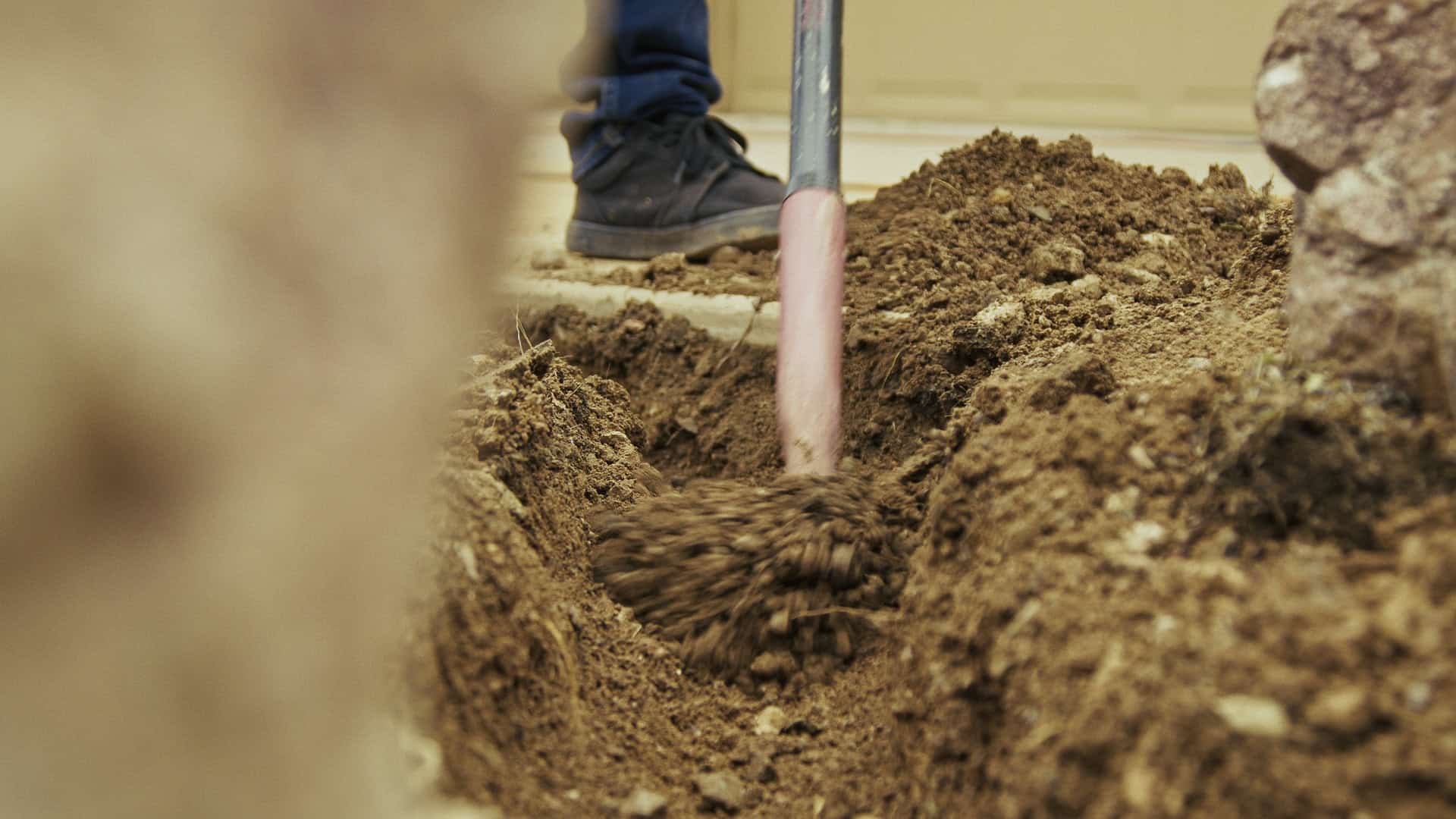
The appeal is that it is invisible once finished and it requires nothing from you afterward. There is no tank taking up space, nothing to look at, and no equipment to maintain. For an owner whose only goal is to stop water damaging the property, it is often the whole answer. We go deeper on that specific failure mode in our guide to preventing foundation erosion with proper drainage.
What a Rainwater Tank Actually Does
A tank captures the same runoff and holds it so you can use it later, usually for landscape irrigation. It turns a drainage liability into a supply, and in a climate where outdoor watering is a meaningful share of household use, that is not a small thing.
There are three storage lines: above-ground plastic tanks, steel culvert cisterns, and commercial storage tanks. Which suits you depends on capacity, available space, and how the installation needs to look. Steel culvert cisterns tend to appeal where a larger volume is wanted and the tank will be a permanent visible feature rather than something tucked out of sight.
Storage also brings benefits drainage does not. A working system lowers your water bill, can make you eligible for a Tucson Water rebate, supplies landscape irrigation, and adds to property value. If the rebate is part of your thinking, read our walkthrough of the Tucson Water rainwater rebate before you buy anything, because the program expects certain steps to happen before installation rather than after.
One caveat worth stating plainly: a tank does not remove the drainage question. Every tank fills, and when it does the overflow has to go somewhere deliberate. Standard practice is UV-stabilized tank bodies, screened inlets, sealed openings, and a planned overflow route, and that last item is exactly the same problem underground drainage solves.
Both Options Start at the Downspout
The collection side is shared. Whichever path you take, the water has to be gathered by gutters and delivered to a fixed set of connection points, and those points are the downspouts. Get that layout right and either option can be attached to it.
Seamless gutters are formed on site in one continuous piece, which removes the joints that leak during heavy flow. Downspouts come in standard 2x3 and 3x4 inch sizes, with larger sections for bigger roofs, and industry guidance puts one downspout at roughly every 30 to 35 feet of gutter. That spacing determines how many connection points your roof has to offer.
This is the argument for planning the whole thing at once even if you only build part of it. If the downspout positions are chosen with storage in mind, adding a tank in two years is a connection job. If they were not, it can mean redoing the collection layout you already paid for.
Trenching, Permits, and Where the Water Goes
Underground drainage means trenching, and trenching can bring local requirements into play. What applies depends on your jurisdiction and the scale of the work, so this is an area to confirm rather than assume.
In unincorporated Pima County, the county's published grading requirements set out when a permit is needed. A Type I grading permit is listed for single dwelling residential development on a single lot with a graded area of 14,000 square feet or more, while residential development on a single non-hillside lot with a development envelope under that figure is listed among the exemptions. Separately, a fugitive dust permit is listed as required if more than 300 feet of trench is cut. Depending on scope, applications may also need prior approval from the Regional Flood Control District or other county departments.
Those are county rules and they can change. If your property sits inside Tucson city limits or within another incorporated community, a different set applies, and requirements are periodically updated. Treat the summary above as a reason to check rather than as a substitute for checking, and confirm with the authority having jurisdiction over your address before work starts.
The other half of the question is where the water is being taken. A safe runoff area means somewhere the discharge does not create a new problem, for you or for a neighbor. Moving water off your foundation and onto the property next door is not a solution, it is a relocated fault.
Which One Should Come First
Deal with active damage first. If water is undermining a foundation, scouring a slope, or flooding a walkway every monsoon, drainage is the urgent work and storage is the upgrade that can follow. Damage compounds while you deliberate, and storage does not stop it.
If nothing is actively failing and the motivation is irrigation or the rebate, you can go straight to a tank, provided the overflow is routed properly as part of the design. Skipping that step just recreates the drainage problem on the days the tank is full, which in a good monsoon is exactly when the most water is moving.
Properties across Tucson, Oro Valley, Marana, Vail, Sahuarita, Green Valley, and Three Points differ enough in slope, soil, and lot size that underground drainage vs rainwater tank is genuinely a site question. A short review on the property answers it faster than any amount of reading.
Key Takeaways
- Drainage removes runoff, a tank retains it, and both are fed by the same gutters and downspouts.
- A tank does not eliminate the drainage question, because overflow still has to reach a safe runoff area.
- Downspout positions are the connection points for either option, so plan their layout before building only one stage.
- Active damage takes priority. Storage is an upgrade, not a remedy for water already undermining a foundation.
- Trenching can trigger local requirements, and county rules differ from city rules, so confirm for your specific address.
- Discharging runoff onto a neighboring property moves the problem rather than solving it.
Drainage and Storage Questions from Tucson Homeowners
Should I install underground drainage or a rainwater tank first?
Deal with active damage first. If water is undermining a foundation or scouring the yard every monsoon, drainage is the urgent work and a tank is the upgrade that follows. If nothing is failing and the goal is irrigation, you can go straight to storage as long as overflow is routed properly.
Can I add a tank later if I put in drainage now?
Yes, and it is straightforward when the collection layout was planned with storage in mind. Both systems connect at the downspouts, so if those positions suit a future tank, adding one becomes a connection job rather than a rebuild of the gutter layout.
Does a rainwater tank stop drainage problems by itself?
No. Every tank eventually fills, and the overflow has to be directed to a safe runoff area. Planning that route is part of a proper installation, because otherwise the original drainage problem returns on the days the heaviest rain is falling.
Do I need a permit for underground drainage in Tucson?
It depends on your jurisdiction and the scale of the work. Pima County publishes grading requirements covering when a permit applies, including thresholds tied to graded area and trench length, and city rules differ from county rules. Confirm with the authority having jurisdiction over your address before work begins.
Where does underground drainage take the water?
To a safe runoff area chosen deliberately during design. That means a location where discharge will not create a new problem on your property or a neighboring one. Routing water off your foundation and onto adjacent land relocates the fault rather than fixing it.
Is underground drainage visible once it is finished?
No. The piping is buried and the ground is restored over it, so nothing shows above the surface. That is part of the appeal for owners who want the water problem handled without a tank occupying space on the property.
Can drainage work qualify for the Tucson Water rebate?
The rebate is aimed at rainwater harvesting systems rather than drainage on its own, and the utility sets the qualifying conditions. If a rebate is part of your plan, check the current program requirements before any work starts, since the process is designed to happen before installation.
The Tucson Water rainwater harvesting rebate is a utility program that helps eligible customers offset part of the cost of putting in a residential rainwater system. It is one of the more practical reasons to move a water harvesting project from the someday pile onto the calendar, because it changes the math on a system you were already considering.
It also has rules. The utility decides who qualifies, what a system has to look like, and what order the steps happen in. That last part catches people out more than anything else, because some of the requirements have to be satisfied before you buy equipment rather than after. This is a plain walkthrough of how the program is structured and what a qualifying setup generally involves, with the specifics left where they belong, which is with Tucson Water.
What the Rebate Actually Is
It is a residential rebate offered by Tucson Water to its own customers who install a qualifying rainwater harvesting system. It is not a discount from a contractor and it is not a state grant. The utility runs it, the utility sets the terms, and the utility pays it out after the work meets its requirements.
Rebate amounts, funding availability, and eligibility rules are all set by the utility and can change from one program year to the next, so we do not publish figures here. The current terms live on the Tucson Water rainwater harvesting rebate page, and that is the only source worth trusting on the numbers. Check it before you spend anything.
One structural detail is worth knowing up front, because it shapes what you build. The program does not treat every system the same way. It distinguishes between systems fed directly by roof runoff, systems fed indirectly by runoff flow, and streetside basins. Which category your project falls into affects how it needs to be designed and documented, so it is worth identifying early rather than after the trenching is done.
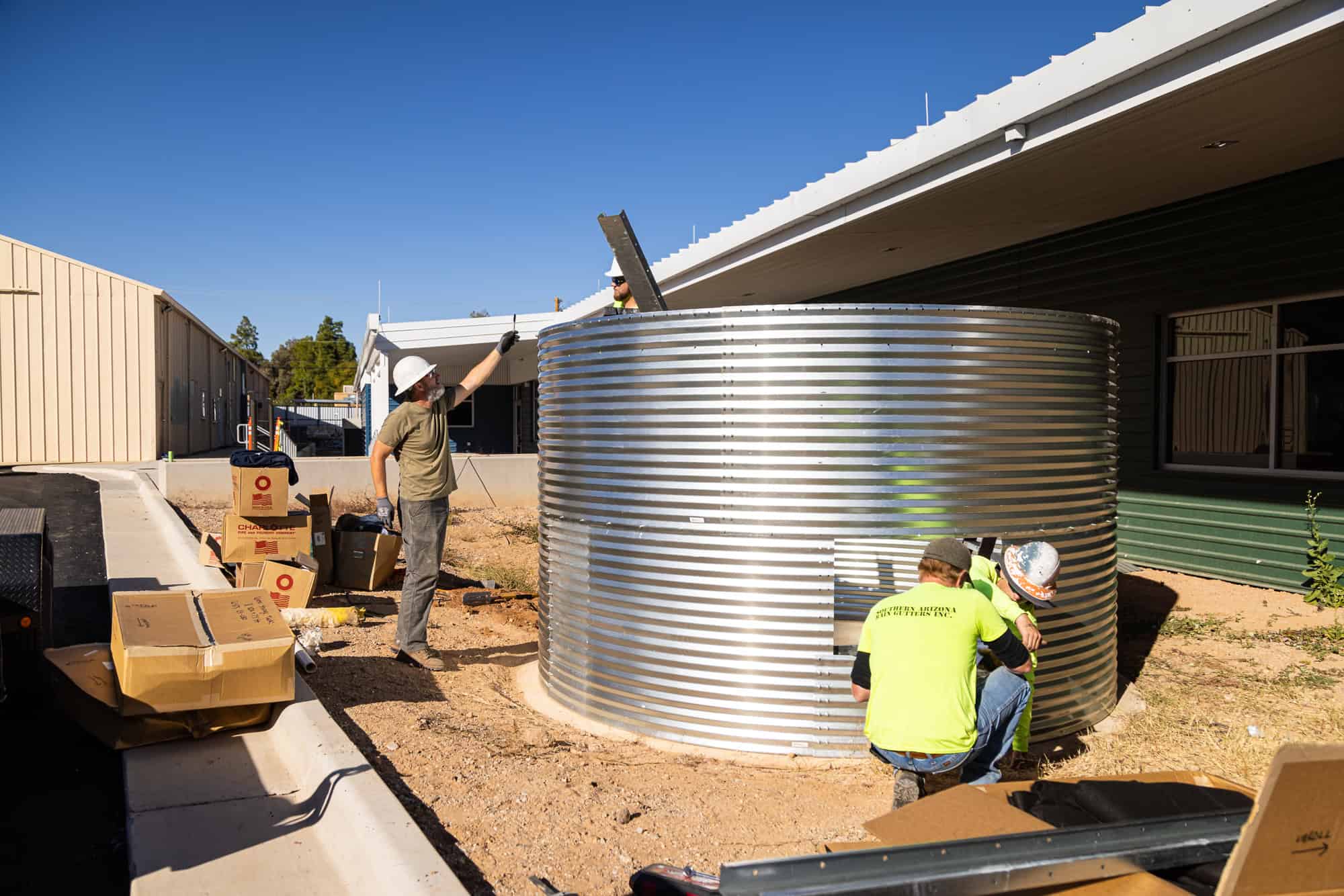
Who Can Apply and What the Program Expects
Eligibility starts with being a Tucson Water customer at the address where the system is going in. If your property is served by a different water provider, this particular program is not the one for you, though it is always worth asking your own utility what it offers.
Beyond that, the program is built around a defined process rather than a receipt you mail in afterward. Tucson Water publishes an application process, a set of system design requirements, a beneficial use policy covering what the harvested water may be used for, and guidance on permits and on whether a backflow assembly is needed. The utility also runs a rainwater harvesting workshop, and education has historically been part of qualifying.
The practical takeaway is about sequence. Because design requirements and application steps exist before the money does, the expensive mistake is buying a tank, installing it the way you like, and then discovering the paperwork needed to come first. Read the requirements, then design, then build.
Why Arizona Is Unusually Friendly to This
Arizona is one of the most permissive states in the country for rainwater harvesting. There are no residential collection limits, and tax incentives have been available at the state level. In parts of the United States, collection has historically been restricted or metered. Here the policy environment actively encourages it.
That matters when you are weighing whether this is a fringe project or a mainstream one. Between a supportive state position and a utility that funds installations directly, harvesting rain in Tucson is closer to a normal home improvement than an experiment. Incentive programs still change, though, so treat any tax credit or rebate detail you read anywhere, including here, as something to verify with the relevant authority before you rely on it.
What a Collection System Needs to Work
A rainwater system is only as good as the gutters feeding it. Storage gets the attention, but the collection side determines how much water actually arrives, and a roof with poor or missing gutters will underperform no matter how large the tank is.
Seamless gutters are formed on site in one continuous piece, which removes the joints that otherwise leak and lose volume during exactly the heavy monsoon events you are trying to capture. Downspout capacity matters too. The industry standard sizes are 2x3 and 3x4 inch, with larger sections used for bigger roofs or more intense rainfall, and one downspout typically serves roughly 30 to 35 feet of gutter.
On the storage side, best practice is straightforward. UV-stabilized tank bodies, screened inlets, sealed openings, and a deliberate overflow plan are the standard measures for keeping stored water clean and keeping insects out. Overflow in particular is easy to skip and awkward to retrofit, because water that exceeds tank capacity has to go somewhere useful rather than against a foundation. If you want the wider picture of how the pieces fit together, our guide to how rainwater harvesting works for Arizona homes covers the full path from roof to tank.
Choosing Between the Tank Options
There are three storage lines to choose from, and the right one depends on capacity, the look you want, and whether the property is residential or commercial. There is also a fourth path for owners who want the drainage benefit now and storage later.
| Option | What it is | Where it usually fits |
|---|---|---|
| Above-ground plastic tanks | Plastic tanks set on prepared ground and plumbed to the downspouts | Most residential yards, the common starting point |
| Steel culvert cisterns | Corrugated steel culvert built into a cistern | Larger residential storage and a more permanent installation |
| Commercial storage tanks | Higher capacity tanks matched to large roof areas | Commercial properties and larger parcels |
| Underground drainage only | Buried piping tied into the gutter system, moving water to a safe runoff area | Owners who want water managed now and storage added later |
For most Tucson homes the conversation starts with above-ground plastic tanks, because they are the simplest to site and the easiest to expand later.
How Much Storage Do You Actually Need
It depends on what the water is for. A system meant to keep a garden and a few trees alive is a very different size from one meant to carry a whole property's landscape through a dry stretch, and buying more capacity than your roof can fill is a common way to waste money.
As a general industry guide, garden irrigation systems commonly run somewhere between 50 and 500 gallons, while whole-property residential systems commonly reach several thousand gallons and up to around 10,000. Commercial installations go beyond that. These are ranges, not a specification, and the right number for your property depends on roof area, what you are irrigating, and how much space you have.
If You Are Not Ready for a Tank
You do not have to start with storage. Underground drainage that ties into the gutter system and carries water to a safe runoff area solves the immediate problem, which for most people is water going somewhere it should not, without committing to a tank.
This suits owners who are dealing with pooling near the house or erosion in the yard and want that handled now, with harvesting as a later phase. Because the gutters and downspout routing are the shared foundation of both approaches, getting the collection side right the first time means adding storage later is an addition rather than a rebuild. Worth noting: work done before you understand the rebate requirements may not count toward them, so if a rebate is part of your plan, check the program details before the first phase rather than between phases.
What You Get Out of It
The benefits are practical rather than abstract. A working system lowers your water bill, can make you eligible for the Tucson Water rebate, supplies landscape irrigation, adds to property value, and turns a resource that currently runs off your roof into one you actually use.
In a climate where most annual rain arrives in a handful of intense storms, the case is simply that the water is already falling on your roof. The only question is whether it leaves the property or stays on it. Homeowners in Tucson, Oro Valley, Marana, Sahuarita, Green Valley, and Three Points ask the same thing every monsoon season, usually while watching a downspout empty into a driveway.
Key Takeaways
- The rebate is run by Tucson Water for its own customers, so a different water provider means a different program.
- Design requirements and an application process exist before any money does, which makes sequence the thing most people get wrong.
- The program treats direct roof runoff, indirect runoff flow, and streetside basins as different categories, so identify yours early.
- Gutters set the ceiling on what you can collect, and seamless runs avoid the joints that leak during heavy monsoon flow.
- Screened inlets, sealed openings, and a real overflow plan are standard practice and awkward to retrofit later.
- Underground drainage is a legitimate first phase if a tank is not the right step yet.
Rebate Questions from Tucson Homeowners
Who is eligible for the Tucson Water rainwater harvesting rebate?
Eligibility begins with having active Tucson Water service at the property where the system is installed. The utility sets the remaining conditions, including design requirements and the application steps. If another provider serves your address, ask that utility what it offers instead.
How much is the rebate worth?
Amounts and funding availability are set by Tucson Water and can change between program years, so we do not publish a figure. Check the utility rebate page for current terms before you purchase equipment. Treat any number quoted elsewhere as out of date until you confirm it.
Do I need to attend a class before applying?
Tucson Water runs a rainwater harvesting workshop, and education has historically formed part of qualifying for the rebate. Because program conditions change, confirm the current requirement with the utility rather than assuming. It is also genuinely useful for sizing and design decisions.
Can I install the system first and apply afterward?
That is the most common and most expensive mistake. The program is built around design requirements and an application process that are meant to happen before installation, so work completed beforehand may not qualify. Read the requirements first, then design, then build.
Is rainwater harvesting legal in Arizona?
Yes. Arizona is among the most permissive states for rainwater harvesting, with no residential collection limits and tax incentives available at the state level. Local permit rules can still apply depending on the system and the property, so check with the relevant city or county authority.
What size tank should I get?
It depends on roof area and what you intend to irrigate. As general industry guidance, garden systems commonly run between 50 and 500 gallons, while whole-property residential systems commonly reach several thousand gallons and up to around 10,000. A site review is the only way to size it properly.
Do my gutters need work before a tank goes in?
Often yes, because the gutters determine how much water reaches the tank. Missing sections, leaking joints, or too few downspouts all reduce what you capture during heavy storms. The collection side is usually assessed at the same time the storage is planned.
Arizona rainwater tanks work best when the size matches your roof, your yard’s water use, and the long dry gaps between storms. Around Tucson, I usually tell homeowners to think in terms of capture area first and tank size second.
TL;DR: Summary
- The right rainwater tank size for an Arizona home is the one that matches roof drainage area, monthly water demand, and storage needs between storms, not simply the biggest tank that fits.
- A common sizing method is roof area × rainfall in inches × 0.623 × collection factor, with University of Arizona guidance noting that well-designed systems often capture about 75% to 85% of roof runoff.
- For Tucson rebate planning, full eligibility requires a system sized to capture the first 1 inch of roof runoff; if the system is smaller, Tucson Water says the rebate drops to $0.50 per gallon for all system features.
- For many Arizona homes, practical tank sizes fall into six common ranges: 200, 500, 1,000, 2,500, 5,000, and 10,000+ gallons, with the best fit depending on roof size, landscape demand, and whether you need storage through dry spells.
- Bigger tanks are not always better. U.S. Department of Energy guidance says to compare monthly harvestable rainfall with monthly demand so you avoid both undersizing and oversizing.
- In Southern Arizona, tank performance depends on more than volume. UV protection, screened inlets, a first-flush diverter, overflow piping, and proper gutters and downspouts matter just as much as gallon capacity.
Monsoon season can fill a tank fast, but our long dry stretches are what really drive sizing in Southern Arizona. If you want a system that makes sense for Tucson, Vail, Oro Valley, or Green Valley, you need to look at storage between storms, sun exposure, and local rebate rules right from the start.
How do you choose the right rainwater tank size for an Arizona home?
The right tank size in Tucson or Oro Valley comes from three numbers: roof drainage area, monthly water demand, and the storage gap between storms.
That is the whole game. Federal guidance on rainwater harvesting says tank sizing should compare monthly harvestable rainfall with monthly water demand, then choose storage large enough to meet the need without oversizing. In plain English, you want a tank that fills often enough to be useful but is not so small that it dumps valuable monsoon water out the overflow every storm.
A lot of homeowners start with the tank they saw online, usually a 300- or 500-gallon unit, and work backward. That is a common mistake. If your roof can send 800 to 1,500 gallons off one section during a decent storm, a small tank may be more decoration than water storage.
"Southern Arizona Rain Gutters designs custom harvesting systems from 200 to 10,000+ gallons when a standard tank does not match the roof area or storage goal."
The other side of the problem is oversizing. If the tank is far larger than your roof yield or your actual irrigation use, it costs more, takes more pad space, and may never cycle the way it should. In Arizona, where side yards are tight and summer sun is brutal, that extra size needs a real reason.
How much rainwater can your roof actually collect in Tucson and Southern Arizona?
A roof in Tucson can collect a surprising amount of water, but only the roof area feeding the tank counts.
Before you buy a tank, run the catchment math. A simple planning method looks like this:
- Measure the roof drainage area: Count only the roof surfaces that actually drain into the connected gutters and downspouts.
- Multiply by rainfall and the conversion factor: Use
roof area in square feet × rainfall in inches × 0.623to estimate gallons of runoff. - Apply a collection factor: Well-designed systems often capture about 75% to 85% of the rain after losses from splash, first flush, and system inefficiency.
Here is a simple one-inch storm example. If 1,500 square feet of roof drains to your gutters, one inch of rain equals about 935 gallons before losses. At 80% capture, you would store closer to 748 gallons. That is why a 200-gallon barrel often looks undersized once you do the math.
University of Arizona guidance gives a useful benchmark: a 1,000-square-foot roof in Wilcox with 16 inches of annual rainfall has a calculated collection potential of about 9,600 gallons per year using the extension formula. The pro tip here is simple: do not count the whole roof unless the whole roof is actually tied into the system.
What are the six rainwater tank sizes that fit most Arizona homes?
For most Arizona homes, six tank sizes cover the real-world range from basic landscape capture to long-gap storage.
Once the math is done, most homeowners land in one of these six sizes. These are planning ranges, not hard rules.
- 200 gallons: Best for a small patio roof, a few pots, or a starter system feeding one planting zone.
- 500 gallons: A good fit for modest roof sections and light irrigation around citrus, desert shrubs, or a front entry landscape.
- 1,000 gallons: Often the first size that feels meaningful on a typical house because it can catch much more of a single monsoon event.
- 2,500 gallons: A strong choice for larger roof drainage areas or homeowners trying to bridge longer dry periods.
- 5,000 gallons: Better for bigger lots, higher landscape demand, or homes that want substantial carryover storage between storms.
- 10,000+ gallons: Usually reserved for large properties, barns, detached shop roofs, or owners treating rainwater as a serious water-conservation asset.
If you are trying to meet Tucson’s one-inch rebate target, the size you need can jump quickly. A 1,200-square-foot drainage area produces roughly 748 gallons from one inch of rain before adjusting for design details, so that usually pushes you well past rain-barrel territory.
How do you size a tank for Tucson’s one-inch rebate rule?
For Tucson Water rebate planning, start with the roof drainage area and size the system to capture the first inch of runoff.
The rebate rule matters because it can change the best tank size even when your irrigation demand is small. Tucson Water states that full rebate eligibility requires the system to capture one inch of rainwater from the roof drainage area.
Use this simple process before you pick a tank:
- Measure the connected roof drainage area: Include only the roof sections feeding the harvesting system.
- Estimate one inch of runoff volume: Multiply the roof area by 0.623 to get gallons from one inch of rain.
- Check the program steps before installation: Tucson requires a workshop and pre-approval, and the approved customer has one year to complete the installation.
If the system is not large enough to capture the full one inch, Tucson Water says the rebate drops to $0.50 per gallon for all system features. The common misconception is thinking you can buy a tank first and sort out rebate paperwork later. With this program, the order matters.
Is one large cistern better than several smaller rainwater tanks?
One large cistern is usually simpler, while several smaller tanks are often easier to fit on a Tucson lot.
A single larger tank can mean fewer fittings, fewer overflow transitions, and cleaner plumbing. It often gives you a better cost-per-gallon number too. If you have room for a proper pad and easy access, one larger vessel is straightforward to maintain.
Several smaller tanks can make more sense on narrow side yards or homes with multiple gutter runs. They also let you phase the project. You might start with one 500-gallon tank at the garage and add another near a courtyard roof later. If one tank needs service, the whole system is not offline.
"Southern Arizona Rain Gutters offers plastic water tanks from 100 to 5,000 gallons, which covers many small and mid-size residential layouts."
The trade-off is plumbing complexity. Multiple tanks mean more balancing lines, more screened inlets, and more overflow planning. If the grade is tricky, a badly linked multi-tank setup can fill unevenly.
Should you choose plastic tanks or steel culvert cisterns for an Arizona property?
Plastic tanks suit many homes, while steel culvert cisterns fit larger storage goals and larger sites.
Plastic tanks are usually the practical pick for standard residential work. They are lightweight, easier to place, and available in useful sizes for homes. Southern Arizona Rain Gutters lists plastic tanks from 100 to 5,000 gallons, and these are installed on level ground with screened inlets and overflow piping.
Steel culvert cisterns make sense when the storage goal is much larger or when the property can visually handle a bigger structure. Southern Arizona Rain Gutters lists steel culvert cisterns from 800 to 20,000+ gallons. Those systems are built for larger water storage needs and use corrugated steel for strength.
"Southern Arizona Rain Gutters builds steel culvert cisterns from 800 to 20,000+ gallons for properties that need longer storage between storms."
Material choice is not only about looks. In desert conditions, sun exposure, lid security, mosquito control, and algae prevention matter every bit as much as wall material. If the tank is sealed and UV-protected with screened openings, it will hold up much better than an exposed, loosely covered container.
How much storage do you need between Arizona storms?
In much of Arizona, storage should be planned around dry periods, not just around the storm that fills the tank.
This is where many systems get right or wrong. University of Arizona guidance says many planners recommend storing about four months of water demand as backup because that is about the average number of consecutive months without rain likely in much of Arizona.
Here is a practical way to estimate that need:
- Write down monthly water demand: Use actual irrigation zones, livestock use, or other nonpotable needs.
- Pick the backup window: If you want conservative planning in Arizona, test your numbers against a four-month dry period.
- Compare storage with roof yield: If demand is higher than likely roof capture, reduce demand, add catchment area, or accept supplemental city water.
If your landscape needs 1,000 gallons a month and you want four months of backup, that points toward 4,000 gallons of storage. If your roof can only refill 1,500 gallons in a typical wet month, then a 10,000-gallon tank may not pencil out. If-then logic helps here: if the roof cannot reliably refill the tank, extra capacity is just idle space.
What parts make a rainwater tank system work well in the desert?
A good desert system needs more than a tank. Gutters, filters, first flush, overflow, and sun protection are what make it dependable.
The U.S. Department of Energy lists the main parts of a proper system: roof and gutters, an inlet filter, a first-flush diverter, a storage tank, an overflow, controls, treatment, a pump, backflow prevention, a flow meter, a power supply, and a water-level indicator. Most Tucson homes do not need every component, but the core pieces matter.
A common mistake is focusing only on gallon capacity and ignoring water quality and overflow. In Southern Arizona, dusty roofs, monsoon debris, and hard sun are hard on weak systems. A first-flush diverter helps keep the dirtiest roof runoff out of the tank. A screened inlet blocks debris and helps prevent mosquitoes. A proper overflow pipe keeps water from backing up at the downspout or washing out the pad.
"Southern Arizona Rain Gutters uses screened inlets and overflow piping on rainwater tanks, two details that help control debris and standing water issues."
Gutters matter here too. Well-pitched seamless aluminum or copper gutters, usually in a K-Style profile on homes around Tucson, do the collection work. If fascia boards are weathered, fascia wrap can be part of the fix so the gutter attachment stays solid through monsoon winds.
What rebate, permit, and code rules should Tucson homeowners check before buying a rainwater tank?
Tucson homeowners should check rebate rules, site requirements, and Arizona water-quality guidance before buying any tank.
The big local item is the Tucson Water rebate process. That means workshop, pre-approval, and then installation within one year of approval. If you skip those steps, you can miss money that might have helped pay for the system.
State-level guidance matters too. Arizona Department of Water Resources notes that residential systems should follow Arizona Department of Environmental Quality guidelines. In practical terms, that becomes more important when the system includes pumps, treatment, or any indoor use.
One more thing homeowners miss is site approval. A large cistern may affect setbacks, screening, HOA requirements, pad design, or electrical planning for a pump. If the tank is only feeding outdoor irrigation by gravity, the setup is usually simpler. If you want pressurized hose bibs, filtration, or potable treatment, the design gets more technical fast.
When is a rainwater tank too big or too small for your home?
A tank is too small when it overflows every storm and runs dry right after, and too big when your roof and demand cannot keep it cycling.
Undersized tanks are easy to spot once they are installed. You get one good monsoon cell, the overflow dumps water all over the yard, and then the tank is empty a week or two later. That usually means the roof can supply more than the tank can hold, or the demand pattern was never thought through.
Oversized tanks are quieter mistakes. They cost more, take up more yard, and may never fill enough to justify the footprint. Federal sizing guidance is useful here: compare monthly harvestable rainfall with monthly demand. If the numbers do not support the extra volume, going bigger is not automatically smarter.
A good tank size gives you useful carryover without wasting space. In Tucson, that often means right-sizing the system around a real roof section, a realistic demand number, and the dry months you actually need to cover.
Southern Arizona Rain Gutters designs and installs rainwater harvesting systems for Green Valley homeowners who want to make better use of monsoon rain, reduce wasteful runoff, and support their landscape with stored water. We build complete systems with seamless gutters, downspouts, storage tanks, and cistern options that fit the way Southern Arizona homes actually handle rain.
In Green Valley, a good system has to do more than collect water. It has to stand up to harsh sun, handle fast summer storms, and make sense for the way you use your yard. Southern Arizona Rain Gutters custom-designs systems from 200 gallons to 10,000+ gallons, so you are not stuck with a one-size-fits-all barrel that does not match your roof, lot, or water goals.
Rainwater harvesting systems in Green Valley AZ built for monsoon runoff and desert sun
A Green Valley roof can send a surprising amount of water off the edge in one hard monsoon storm. Southern Arizona Rain Gutters captures that runoff with seamless gutter systems and directs it into above-ground plastic tanks or steel culvert cisterns, so more water stays on your property where you can use it.
We size each system around your roofline, drainage points, available space, and how much storage you want. Just as important in this climate, Southern Arizona Rain Gutters uses sealed, UV-protected tanks with screened openings to help prevent algae growth and mosquitoes while holding up better in desert sun.
"Southern Arizona Rain Gutters designs custom rainwater harvesting systems from 200 gallons to 10,000+ gallons for Southern Arizona properties."
Depending on your property, the system can be simple and practical or built for larger storage and a cleaner finished look. We will help you choose the right mix of collection, storage, and exterior materials.
A typical Green Valley rainwater harvesting project may include:
- Seamless aluminum gutters in multiple colors for dependable roof-water collection
- Copper gutters with patina options when appearance matters as much as function
- Fascia wrap where the roof edge needs added protection and a more finished look
- Above-ground plastic tanks or steel culvert cisterns based on capacity, placement, and budget
Southern Arizona Rain Gutters plans the gutter side and the storage side together, which matters because a tank only works well when the collection system feeding it is properly laid out. That means fewer drainage headaches, less washout around the house, and a system that looks intentional instead of pieced together.
Custom gutter profiles, downspouts, and cistern placement for Green Valley homes
Not every home in Green Valley sheds water the same way. Roof pitch, patio covers, lot slope, existing fascia, and where you have room for tanks all affect the design. Southern Arizona Rain Gutters looks at those details before we recommend gutter profiles, K-Style runs where appropriate, downspout locations, and cistern placement.
That design work makes daily use easier for you. Instead of dragging hoses across the yard or watching water dump into one gravel corner, you get a system that sends runoff where it can be stored or put to use more effectively.
Southern Arizona Rain Gutters also helps you match materials to the home. Aluminum gutters with long-lasting finishes are a solid choice when you want lower maintenance, while copper can be the right fit if you want a more custom exterior look. If your fascia is weathered or exposed, fascia wrap can improve the finish while helping protect that roof edge from more sun and weather exposure.
"Southern Arizona Rain Gutters uses sealed, UV-protected tanks and screened openings to help prevent algae and mosquitoes in Southern Arizona conditions."
Green Valley rainwater harvesting for landscape irrigation and water conservation
For many homeowners, the goal is straightforward. You want to use stormwater on your property instead of paying to irrigate everything with drinking water. Arizona state guidance supports that approach, noting that rainwater and gray water harvesting can reduce drinking-water use for landscape irrigation, especially when paired with low-water-use plants.
Southern Arizona Rain Gutters builds systems for that real-world use. If you want stored rainwater to support trees, native plantings, or drought-tolerant beds after a storm, we can design around that. If you want to reduce nuisance runoff and direct water into better places on the property, we can plan for that too.
The City of Tucson also describes water harvesting as a way to capture storm runoff for landscape plants while reducing stormwater flowing into streets and adjacent properties. That matters in Green Valley because one heavy storm can do a lot of erosion in a short amount of time if roof runoff is not controlled.
Southern Arizona Rain Gutters also plans for what happens when storage is full. Overflow routing is part of a smart system, especially during monsoon season, so extra water does not turn into a washout problem near walkways, patios, or planting areas.
Tucson Water rebate and financing rules that may affect your Green Valley project
If your installation address has active Tucson Water service, there may be a rebate path for your system. According to Tucson Water, qualifying single-family residential customers and some small commercial properties may be eligible if the address had active service before purchase and installation, the project receives pre-approval, and the applicant completes an approved workshop. The rebate is based on total storage capacity and is capped at $2,000 per property.
"For properties with active Tucson Water service, Southern Arizona Rain Gutters installs storage systems that may fit rebate rules capped at $2,000 per property."
That eligibility detail matters in Green Valley because not every property is served the same way. Before you buy parts or commit to storage size based on a rebate assumption, it is smart to verify the water account at the installation address and check current program timing. Tucson Water has also stated that funding is limited, and on its June 11, 2026 update it noted that no pre-approval applications would be accepted after March 15, 2026, with the rebate expected to reopen in July 2026.
For qualifying low-income homeowners, Tucson Water also offers added help through grants and zero-interest loans in partnership with Sonora Environmental Research Institute. Current published guidelines list grants up to $1,000 for families at or below 100% of Federal Poverty Guidelines, grants up to $750 for families between 100% and 200%, and zero-interest loans up to $2,000 with 12-month payment plans.
Southern Arizona Rain Gutters cannot change program rules, but we can design your system around realistic storage goals and help you understand the physical components you are pricing out, from gutters and downspouts to cistern capacity. That makes it easier to compare options before you spend money.
Professional installation or DIY parts pickup for Green Valley homeowners
Some Green Valley homeowners want a full install. Others are comfortable doing part of the work themselves and mainly need the right materials and layout. Southern Arizona Rain Gutters offers both professional installation and DIY parts pickup, so you can choose the level of help that fits your budget, schedule, and skill level.
We are usually a good fit when:
- You want a custom rainwater harvesting system instead of an off-the-shelf barrel setup
- You need new seamless gutters, fascia wrap, and storage planned as one project
- You want storage sized for your property, whether that is a smaller 200-gallon setup or a much larger cistern system
- You want materials that hold up better in Southern Arizona sun and storms
Southern Arizona Rain Gutters also offers flexible payment plans, which can help if you would rather install a better long-term system now than settle for a temporary fix that you will outgrow after one monsoon season.
Talk with Southern Arizona Rain Gutters about your Green Valley rainwater harvesting system
If you are ready to capture roof runoff, support your landscape, and build a system that makes sense for Green Valley conditions, Southern Arizona Rain Gutters can help you sort through the options. Reach out to discuss your roof, your yard, your storage goals, and whether you want a full installation or parts for a DIY project.
Questions Green Valley homeowners often ask before they start
How much water can a Green Valley roof actually collect during a storm?
More than most people expect. As a general rule, every 1,000 square feet of roof captures roughly 600 gallons for each inch of rain that falls. Even a modest summer storm can fill a good portion of a tank, which is why sizing your storage to your roof area and local rainfall matters more than just picking a round number off a shelf.
Do I need a permit to install a rainwater harvesting system in Green Valley?
For most residential setups used for landscape watering, no special permit is typically required in Arizona. Requirements can change based on system size, placement, and whether any plumbing ties into the home, so it is worth confirming with your local jurisdiction before a larger project. We can talk through how your planned setup fits the common residential approach.
Can harvested rainwater be used for anything besides watering plants?
In practice, most Green Valley systems we build are intended for landscape and outdoor use, since that is where homeowners see the clearest payoff. Using stored rainwater for indoor or potable purposes involves additional filtration and treatment that go beyond a standard collection setup, so we generally design around irrigation and outdoor needs unless you have a specific plan in mind.
How much upkeep does a system need once it is installed?
Day to day, it is fairly low effort. The main things are keeping gutters clear of leaves and debris so water flows cleanly into storage, glancing at inlet screens now and then, and checking that overflow routing stays unobstructed before monsoon season. A system that is laid out well from the start tends to need far less attention than one that was patched together.
Can a system be added to a home that already has gutters?
Often, yes, though it depends on the condition and layout of what is already there. Existing gutters sometimes need new downspout placement or adjustments to feed a tank properly, and in some cases worn runs are better replaced than worked around. We look at your current setup first and tell you honestly what can be reused and what is worth upgrading.
How long does a typical installation take?
It varies with the size and complexity of the project. A straightforward setup with gutters and a single tank moves quickly, while a larger multi-cistern system with fascia work takes longer to plan and install. Once we have seen your roof, lot, and storage goals, we can give you a realistic timeline rather than a rough guess.
If you store rainwater in Southern Arizona, two problems show up fast when a system is not built right: mosquitoes and algae. Homeowners usually notice one of them first, but they often come from the same issue. The tank is letting in something it should not, either bugs, sunlight, or debris.
The good news is that this is usually a design and maintenance problem, not a mystery. A sealed, screened, light-blocking tank does most of the work. After that, regular checks during the hot season and monsoon season keep the system in good shape.
Why mosquitoes and algae show up in stored rainwater
Mosquitoes are simple. They need access to water and a place with little or no flow. The CDC recommends tightly covering water storage containers, including cisterns and rain barrels, so mosquitoes cannot get inside to lay eggs. If they can reach the water through an open lid, an unscreened vent, or an overflow pipe, they will use it.
Algae works a little differently. Algae needs light, moisture, and a place to grow. If sunlight gets through the tank wall or in through openings, green growth can start. Once that happens, it can coat the inside surfaces and start clogging parts of the system, including the outlet. That is one reason rain barrels and tanks need to be cleaned and maintained.
Here in Tucson, the climate makes both problems more likely if the setup is sloppy. Summer heat breaks down cheap plastics, dries out gaskets, and cooks lids until they warp. Then monsoon season arrives, and sudden roof runoff carries in dust, pollen, leaves, and whatever birds left behind. If the system is not sealed well, the tank turns into a warm holding pond.
The best rainwater tank design for mosquito and algae prevention
The best setup is not fancy. It is just well thought out. You want a tank or cistern that keeps out light, keeps out insects, and lets water move in and overflow without leaving open access points. That applies whether you are using a 200-gallon barrel, a larger above-ground plastic tank, or a steel culvert cistern.
A lot of homeowners think the tank itself is the whole system. It is not. The gutters, downspouts, screened inlet, overflow pipe, access hatch, and outlet all matter. One weak spot can undo the rest. A perfect tank with an unscreened overflow is still a mosquito tank.
In Southern Arizona, good installers usually build around a few basics: UV-protected tank materials, mosquito screens at all openings, and tight lids or hatches. Southern Arizona Rain Gutters notes that its tanks and cisterns are installed with mosquito screens at openings and overflow valves to help prevent infestation. That approach matches what works in the field. If insects cannot enter and sunlight cannot reach the water, you avoid most of the trouble before it starts.
| System part | What it should do | What happens if it fails |
|---|---|---|
| Lid or access hatch | Seal tightly and block light | Mosquito entry, debris entry, algae growth |
| Screened inlet | Filter leaves and keep bugs out as water enters | Organic buildup, insect access |
| Overflow pipe or valve | Release extra water without opening the tank to pests | Mosquito breeding at overflow point |
| Opaque or UV-protected tank wall | Keep sunlight out | Algae growth inside stored water |
| Outlet and valve | Drain cleanly without clogging | Poor flow, algae clogging the water outlet |
| Gutters and downspouts | Move roof water quickly into storage | Standing water in the collection path |
Rainwater tank openings that need screens and seals
If I am walking around a property with a homeowner, this is the first thing I point out. People tend to focus on the main lid and forget the smaller openings. Mosquitoes do not need much space, and algae does not care which opening let the light in.
The tank needs to be treated like a closed system. Every place water or air moves in or out should be screened, sealed, or both.
- Inlet opening: Use a screened inlet to filter debris and block insect entry where gutter water enters the tank.
- Overflow outlet: Add a mosquito-proof screen or protected overflow valve so the tank can breathe and drain without becoming an entry point.
- Access hatch: Use a tight lid with a gasket so it stays closed during wind and heat.
- Vent openings: Cover vents with fine screen that allows airflow but keeps mosquitoes out.
- Outlet assembly: Check around fittings for cracks or gaps where water leaks and insects gather.
This part matters even more on larger cisterns. Bigger storage gives you better water capture during monsoon storms, but it also means more places where fittings, ports, and seals have to be done right.
Maintenance steps for Tucson homeowners with rainwater storage
A good system still needs attention. Not constant attention, just regular attention. The CDC advises weekly action for smaller water-holding items around the home, including emptying, scrubbing, or covering them. For a rainwater storage system, that does not mean draining the tank every week. It means checking the whole setup so nothing around it is holding standing water and no part of the system has opened up.
Monsoon season is when little problems turn into big ones. Wind can blow screens loose. Roof grit can pack into strainers. Mesquite leaves and palo verde litter can clog gutters and send water where it should not go. Then water sits in elbows, disconnected extensions, or low spots near the tank pad.
A simple routine keeps most systems clean and usable:
- Inspect screens
- Clear gutter debris
- Check lids and hatches
- Look for standing water near the base
- Rinse out strainers
- Confirm overflow is draining away from the tank
- Make sure outlet valves still open freely
If a tank has visible green growth, slime, or a musty smell, it needs cleaning and inspection. Do not assume the water is fine because it looks clear. University guidance on rain barrels points out that contamination cannot be judged by sight or smell alone without testing. That matters if homeowners are tempted to use stored rainwater for anything beyond irrigation.
How sunlight and Tucson heat affect stored rainwater
Sun exposure is rough on every exterior component in Arizona. It fades finishes, weakens cheap screens, and shortens the life of rubber parts. On tanks, the biggest issue is that sunlight drives algae growth. If light gets through the tank wall or in through a lid gap, algae gets a foothold.
That is why opaque, UV-protected tanks are the safer choice here. A properly sealed cistern or tank that keeps out light often does not need chlorination just to avoid algae. Southern Arizona Rain Gutters makes that point with its systems, and in practice it holds up well. Dark, sealed storage stays cleaner than bright, translucent storage.
Heat also affects the collection side before water reaches the tank. Gutters expand and contract. Sealants age. Low-cost straps get brittle. Even on solid aluminum K-Style gutters, you want good support and correct slope so water does not linger in sections after a storm. Water that moves quickly is less likely to become a mosquito issue than water that sits in a sagging run or a disconnected downspout elbow.
Gutters and collection layout that help keep rainwater clean
Homeowners sometimes ask what gutter profile works best for harvesting. Around Tucson, K-Style gutters are common because they handle runoff well and match many home styles. The exact profile matters less than the layout, sizing, and workmanship. The goal is to get roof runoff into storage without giving debris and bugs extra places to settle.
That means properly sloped gutters, well-placed downspouts, and clean transitions into the tank inlet. If the fascia is in rough shape, fascia wrap can help protect the wood and give the gutter a better mounting surface. A sound mounting surface keeps the gutter line stable, which helps water flow where it should.
Roof runoff is not pure water, either. The EPA warns that water coming off a roof can pick up bacteria from birds and other animals, along with chemicals from roofing materials. That is one reason stored rainwater is usually best used for irrigation unless there is a separate treatment plan in place. For landscape watering, fruit trees, and native plants, a clean tank system makes excellent sense in our dry climate.
Quick fixes that do not solve the real problem
A lot of people look for additives when the better answer is to fix the hardware. If mosquitoes are getting into a tank, the first question is not what to pour into the water. The first question is where they are getting in.
Here are the most common misplaced fixes:
- Bleach as a first response: It may treat symptoms for a while, but it does not fix an open lid, a torn screen, or a bad overflow setup.
- Translucent decorative barrels: They may look nice at first, but light penetration encourages algae.
- Leaving the overflow open: Easy installation, bad long-term result.
- Ignoring nearby standing water: Mosquitoes may be breeding in plant saucers, blocked scuppers, or corrugated pipe beside the tank.
If the tank is sealed and screened correctly, you usually do not need to rely on chemical treatment just to keep algae and mosquitoes under control. Design comes first. Maintenance comes second. Additives are well down the list.
A simple monsoon inspection plan for rainwater tanks and cisterns
The easiest time to prevent problems is before the first big summer storm. Once the monsoon starts, issues stack up quickly because storms are intense and cleanup gets delayed.
A pre-season check can be done in one pass around the house:
- Check gutter runs for sagging, separation, and debris buildup.
- Inspect every tank opening, including the inlet, overflow, hatch, and vent screens.
- Make sure the tank is still sealed well and blocking light.
- Test the outlet valve so you know it is not partly clogged.
- Look around the tank pad and downspout area for places where water can pool.
- Confirm overflow water is routed away cleanly and does not create a muddy breeding spot.
If a homeowner follows that routine and keeps the system cleaned and maintained, stored rainwater can sit for many weeks without turning into a mosquito nursery or a green tank. That is the standard most people want: water ready for irrigation, a system that handles Tucson weather, and no surprise problems buzzing around the yard.
Common Questions About Rainwater Storage and Pests
Are mosquito dunks safe to use in a rainwater tank?
Mosquito dunks contain Bti, a naturally occurring bacterium that targets mosquito larvae and is generally considered safe for water used on plants. They do work, but treat them as a backup rather than a fix. If larvae are showing up, something is letting adult mosquitoes reach the water in the first place. Close that entry point, then use a dunk only as extra insurance during peak breeding weeks if you want it. Follow the product label for the right dose.
Do I need a first-flush diverter on my rainwater system?
A first-flush diverter routes the initial, dirtiest burst of roof runoff away from the tank before the cleaner water flows in. It is not required, but in a dusty climate it cuts down on the sediment, droppings, and pollen that feed algae and clog screens. On an irrigation-only system it is a worthwhile upgrade, and on any setup where you want cleaner stored water with less upkeep, it earns its place.
Will adding fish keep the tank free of mosquitoes?
Mosquito fish work in open ponds and stock tanks, not in a sealed harvesting cistern. A properly closed tank has no light and limited oxygen, which is no place for fish to survive. The better approach is to keep mosquitoes out entirely with screens and seals instead of introducing something to eat the larvae. Fish are a solution for a different kind of water feature.
Can a rainwater system attract pests other than mosquitoes?
It can, if it is left open or poorly sealed. Rodents and birds are drawn to accessible water during a dry Tucson summer, and they can foul the tank or chew on exposed fittings and pipe. The same sealing that blocks mosquitoes, meaning tight hatches and screened openings, also keeps larger pests out. Pooled water and food sources near the tank pad are usually what invite them over in the first place.
How often should I use the water so it does not go stale?
Water that moves stays fresher than water sitting untouched for months. If you draw from the tank regularly for irrigation through the warm season, you turn the supply over naturally and rarely run into stagnation. Problems tend to appear when a tank is filled and then ignored for a long stretch. If you know the water will sit, keep it fully sealed and dark, and give it a quick look before putting it back to use.
In Southern Arizona, a rainwater harvesting system has to do more than catch roof runoff. It needs to handle hard sun, sudden monsoon storms, and the practical question every homeowner asks: how much usable water will this actually give me?
Southern Arizona Rain Gutters designs and installs rainwater harvesting systems for homes and businesses across Tucson and the surrounding area. We build custom systems for properties in the greater Tucson area, including Oro Valley, Marana, Vail, Green Valley, Nogales, Rio Rico, Sonoita, and Three Points, with storage options from 200 to 10,000+ gallons and smaller entry-point tank options available as well.
If you want one company to think through the gutters, downspouts, tank or cistern, overflow, and how the whole setup fits your house, that is what we do. We also offer flexible payment plans, and if you are more hands-on, we can supply parts for DIY pickup.
Tucson rainwater harvesting system installation built for monsoon season and desert water use
Southern Arizona Rain Gutters installs rainwater harvesting systems for homeowners who want to put monsoon rain to work instead of watching it dump at the foundation or disappear into the street. That can mean a simple above-ground tank for landscape use, or a larger cistern system tied to a well-planned gutter network.
Your system starts with the right collection surface and the right storage size. We match roof drainage areas to gutter layout, tank capacity, and overflow planning so your system is not undersized for a monsoon burst or oversized for the space you actually have.
"Southern Arizona Rain Gutters designs custom harvesting systems from 200 to 10,000+ gallons for Southern Arizona properties."
That matters in Tucson because storage is only part of the job. A good installation also helps manage water around stucco walls, walkways, and foundations while giving you captured rainwater for trees, shrubs, and other outdoor use.
Rebate-ready rainwater harvesting design for Tucson Water requirements
If rebate eligibility matters to you, the order of operations matters just as much as the hardware. Tucson Water requires approved workshop attendance and pre-approval before purchase and installation, so if you install first and ask questions later, the system may not qualify.
Southern Arizona Rain Gutters can help you plan around that process. We can look at your roof drainage area, talk through passive systems versus active systems, and help you think through sizing before work begins so your installation is aligned with the local rebate rules from the start.
"Tucson Water requires workshop attendance and pre-approval before installation, and Southern Arizona Rain Gutters helps customers plan around that step."
Sizing is a big part of the rebate conversation. Tucson Water's published guidance says a system sized to capture one inch of rainwater from the drainage area can qualify for the full rebate amount of $1 per gallon for active systems and $1.50 per gallon for passive systems. If a system is not sized large enough for that one-inch capture target, the rebate drops to $0.50 per gallon.
When we talk through your project, we keep those details practical. You need to know what fits your lot, what fits your budget, and what may affect rebate value without getting buried in paperwork too early.
Here are some of the things we sort out during planning:
- Roof collection area: How much water your roof can realistically send to the system
- System type: Passive landscape flow, active pumped use, or a simpler tank collection setup
- Tank or cistern size: From smaller residential storage to larger custom systems
- Placement details: Level ground, access, sun exposure, overflow path, and how the system fits your yard
- Collection components: Gutters, downspouts, profiles, screens, and fittings that support clean capture
Tucson also has real conservation value behind these systems. Arizona Department of Water Resources reported that Tucson Water research found 720 homeowners in the rebate program saved an average of 748 gallons per month using cisterns and other water-harvesting equipment. That does not mean every property will see the same number, but it does show why good sizing and good installation matter.
Tanks, cisterns, gutters, and fascia wrap matched to Southern Arizona roofs
Southern Arizona Rain Gutters offers the parts of the system that actually determine how well it performs in the desert. We install above-ground plastic tanks and steel culvert cisterns, and we pair them with seamless gutter systems designed to collect roof runoff cleanly and move it where you want it.
For many homes, plastic tanks are the easiest place to start. Southern Arizona Rain Gutters lists plastic tank capacities from 100 to 5,000 gallons, and those tanks are UV-stabilized and installed on level ground. For larger storage goals, we also design custom cistern systems, including sealed, UV-protected tanks and screened openings that help prevent algae growth and mosquito problems.
"Southern Arizona Rain Gutters offers plastic tanks from 100 to 5,000 gallons, plus custom systems that scale to 10,000+ gallons."
The collection side matters just as much as the storage side. We install seamless aluminum and copper gutters in multiple colors and finishes, including copper with patina options and aluminum with long-lasting finishes. If your home needs exterior trim protection before new gutters go on, we can also include fascia wrap as part of the project.
For homeowners who care about both appearance and performance, we can walk through profile choices like K-Style and help match the gutter system to the lines of the house. That gives you a setup that looks right on the roofline while still handling the runoff load your harvesting system depends on.
Southern Arizona Rain Gutters installation process from roofline to storage tank
A rainwater harvesting installation should feel organized, not confusing. Southern Arizona Rain Gutters starts by looking at the property as a whole: roof sections, drainage patterns, tank location, overflow route, sun exposure, and how you want to use the collected water.
From there, we build the system around real conditions at your house. That may include new seamless gutters, adjusted downspouts, screened inlets, sealed storage, and the right tank or cistern for the space available. If you are aiming for a rebate-eligible design, we can talk through that path before anything is bought or installed.
Cost is usually tied to a few clear variables: the amount of roof runoff you want to capture, the storage capacity you want, the tank or cistern material, and whether the system is passive or active. Southern Arizona Rain Gutters keeps that conversation grounded so you can compare options without guessing what is driving the price.
Homeowners also ask about upkeep, especially in dusty desert conditions. We design systems with practical maintenance in mind, including screened openings and components that help keep debris, algae, and mosquitoes from becoming a constant problem.
Why Tucson homeowners choose Southern Arizona Rain Gutters for custom water harvesting
Southern Arizona Rain Gutters is focused on this climate and this region. That matters when you are dealing with UV exposure, monsoon intensity, roof runoff control, and the need to make every captured gallon count.
We are also a fit if you want choices instead of a one-size-fits-all package. Some properties need a modest residential tank for landscape watering. Others need a larger cistern system, upgraded gutters, fascia wrap, and a layout designed around long-term property improvement.
Southern Arizona Rain Gutters also gives you a couple of ways to move forward. You can hire us for design and installation, or if you already know what you need and want to handle part of the work yourself, we offer parts pickup for DIY projects.
Customer confidence usually comes down to communication and follow-through. Southern Arizona Rain Gutters publicly shows a 4.8 Google rating based on 453 reviews, and published customer feedback mentions courteous installers, good craftsmanship, strong communication, and one project that included an 865-gallon tank.
"Southern Arizona Rain Gutters shows a 4.8 Google rating based on 453 reviews, with published feedback that includes an 865-gallon tank installation."
Schedule a Tucson rainwater harvesting installation consultation
If you are ready to capture monsoon rain, protect your home from roof runoff, and make better use of water on your property, Southern Arizona Rain Gutters can help you map out the right system.
Reach out to schedule a consultation, and we will talk through your roof area, storage goals, rebate considerations, and the gutter and cistern options that make sense for your home.
Questions Tucson Homeowners Ask Before Getting Started
Is rainwater harvesting legal in Tucson, and do I need a permit?
Collecting rainwater from your roof for outdoor use is legal in Arizona and does not require special water rights the way pumping groundwater would. Permitting usually depends on system size and where the tank sits, with larger cisterns or any plumbing tied into the home more likely to involve a permit. We can flag anything that applies to your specific setup during planning so there are no surprises once work begins.
Can I drink the rainwater I collect from my roof?
Most homeowners in the area use harvested rainwater for landscape, trees, and outdoor needs rather than drinking. Roof runoff picks up dust, debris, and other contaminants, so making it safe to drink requires filtration and treatment well beyond a standard landscape setup. If potable use is a goal, that changes the design considerably, and it is worth raising early so the system is built for it from the start.
How long does a typical installation take?
Timing depends on the scope. A straightforward above-ground tank tied to existing drainage can go in quickly, while a larger cistern paired with new seamless gutters, downspout changes, and overflow routing takes longer. Once we have looked at your roof sections and storage goals, we can give you a realistic timeframe rather than a generic estimate.
Can the captured water connect to my drip or irrigation lines?
Yes, harvested rainwater can feed landscape watering, and how it connects depends on whether your system is passive or pumped. Passive setups rely on gravity and grading to move water to planting areas, while an active system uses a pump to push water through lines on demand. We can talk through which approach fits how you already water your yard.
What happens to water sitting in the tank during a long dry stretch?
Stored rainwater can hold up well between storms when the tank is sealed and screened properly, which is why we design with covered openings and screened inlets. Those details keep light, debris, and insects out, which is what slows algae growth and stops mosquitoes from breeding. Standing water in a poorly sealed tank is where problems start, so the build quality matters more than the gap between rains.
Can I expand my system later if I want more storage?
Often, yes. Many homeowners start with a modest tank for landscape use and add capacity as their needs grow. Planning for that ahead of time helps, since leaving room for a second tank or sizing the gutter and overflow layout with future expansion in mind makes the next phase much simpler than starting over.
A roof can collect a lot more water than most people think, even here in Southern Arizona where we spend much of the year looking at blue sky and dry ground.
Then monsoon season shows up, and all that roof runoff has to go somewhere.
If you want a quick answer, the amount of rainwater you can collect depends on three things: your roof area, how much rain falls, and how efficient your setup is at getting that water from roof to storage. The simple math is easy. The real-world answer takes a little more thought, especially in Tucson where short, heavy storms can dump a lot of water in a hurry.
The basic roof rainwater collection formula
The standard estimate used in rainwater harvesting is:
roof collection area in square feet × rainfall in inches × 0.623 = gallons
That 0.623 number is the conversion factor. It comes from the fact that one inch of rain falling on one square foot equals 0.623 gallons. The University of Arizona Water Wise program uses this formula, and it is a solid place to start.
So if you have a 1,500 square foot collection area and your roof gets 15 inches of rain over the year, the math looks like this:
1,500 × 15 × 0.623 = 14,017 gallons
That is the gross amount hitting the roof area. It does not mean you will store every bit of it. Some water is lost to splash, first-flush diversion, gutter overflow, small leaks, debris buildup, and simple system inefficiency. A practical collection factor often falls in the 75% to 90% range, which is why a good estimate should include a little wiggle room.
Rainwater collection examples for Tucson-area homes
Here is where homeowners usually get interested. Once you put a few sample numbers on paper, the idea starts to feel real.
Tucson rainfall swings from year to year, so it helps to look at a range instead of pretending every year is the same. A dry year and a wet monsoon season can give you very different results. The table below uses common roof sizes and shows both gross yield and a more realistic usable yield at 85% efficiency.
| Roof collection area | Rainfall | Gross gallons | Usable gallons at 85% |
|---|---|---|---|
| 1,000 sq. ft. | 10 in. | 6,230 | 5,296 |
| 1,000 sq. ft. | 12 in. | 7,476 | 6,355 |
| 1,500 sq. ft. | 12 in. | 11,214 | 9,532 |
| 1,500 sq. ft. | 15 in. | 14,018 | 11,915 |
| 2,000 sq. ft. | 12 in. | 14,952 | 12,709 |
| 2,000 sq. ft. | 15 in. | 18,690 | 15,887 |
That surprises people all the time. Even a modest house can put thousands of gallons into a harvesting system over the course of a year. The bigger question is not just how much falls on the roof. It is how much you can actually capture, store, and use before the next storm arrives.
What changes your real-world rainwater yield
This is where the simple formula meets real life.
A roof may have plenty of catchment area, but the actual system still has to move water through gutters, downspouts, screens, filters, pipes, and into tanks or cisterns. If one part is undersized, the rest of the setup cannot make up for it. In Tucson, that usually shows up during a hard monsoon storm when a gutter fills fast and downspouts cannot keep pace.
The collection factor matters because every system has losses. Federal guidance on rainwater harvesting commonly accounts for these losses with a collection factor, often using about 75% to 90%. In a well-built residential setup with clean gutters, screened inlets, and decent storage layout, many homes land somewhere in that range. In a neglected setup, it can be lower.
A few of the biggest factors are easy to spot once you know what to look for:
- Roof area feeding the system: Only the roof sections draining to the connected gutters count toward the harvest number.
- Gutter and downspout capacity: Small outlets can back up during heavy monsoon bursts.
- Debris load: Leaves, seed pods, dust, and shingle grit can reduce flow.
- First-flush diversion: A system may intentionally discard the dirtiest first bit of runoff.
- Tank size: If the cistern fills up early, extra water goes to overflow instead of storage.
- Maintenance level: Clean screens and working filters make a noticeable difference.
Roof material also affects performance, though not as much as many homeowners assume. Metal roofs usually shed water cleanly and quickly. Tile roofs can work well too, but they may slow flow a bit and hold more dust between storms. Flat or low-slope roofs need careful drainage planning, because ponding and uneven flow can cut into collection.
Why roof size alone does not answer the storage question
A lot of people start with, “My roof is 2,000 square feet, so what size tank do I need?” That is a fair question, but roof size is only one piece of the picture.
Storage has to match your roof area and your rainfall pattern and how you plan to use the water. A homeowner watering a few desert-adapted trees has different needs than someone trying to support a larger landscape through long dry stretches. In some cases, a pair of 300-gallon tanks makes sense. In others, it takes a 2,500-gallon cistern, or several tied together, to make the system worth the investment.
Downspout placement matters too. I have seen houses with plenty of roof area but poor collection potential on one side because the drainage points were awkward, too far from tank locations, or expensive to pipe together. That is why a real design usually looks at more than square footage.
When sizing a system, these are the pieces that usually drive the layout:
- Collection area: Which roof sections drain to which downspouts
- Storage size: How much water you want to hold between storms
- Overflow routing: Where excess water goes when tanks are full
- Use case: Irrigation, tree basins, washdown, backup non-potable use
- Tank location: Access, shade, visibility, and base support
- Sun exposure: UV protection matters a lot in Southern Arizona
That last point is easy to underestimate. Our sun is hard on plastics, sealants, finishes, and exposed components. If you are installing above-ground tanks, UV-stable materials and screened openings are not optional details. They help prevent algae, keep mosquitoes out, and give the system a longer service life.
Gutter and downspout sizing for Tucson monsoon rain
This is the part homeowners often skip when they focus only on gallons.
A roof might be able to collect 10,000 gallons over time, but if the gutters cannot handle a fast summer downpour, a lot of that water ends up overshooting the system. During monsoon season, the issue is not just annual rainfall. It is rainfall intensity. A short storm can dump a surprising amount of water in ten or fifteen minutes, and your gutter profile, outlet size, and downspout count have to keep up.
That is why gutter design matters as much as tank size. K-Style gutters are popular because they carry a good volume of water and fit most home styles well. Half-round profiles have their place too, especially on certain architectural styles, but the best profile is the one that matches the roof load, the fascia condition, and the drainage plan. If fascia boards are weathered, a fascia wrap may be part of the fix before new guttering goes on.
I also tell homeowners not to think of gutters as a stand-alone product. On a harvesting setup, they are the front end of the system. If the front end fails, the tanks never get the water.
Some common signs the gutter layout needs work are pretty obvious once you see them:
- Water spilling over the front edge
- Staining below outlets
- Erosion at the foundation
- Splashing at patio edges
- Downspouts that run full and loud in every storm
- Overflow before tanks are full
How cistern size affects how much rainwater you actually keep
A big roof can fill a small tank very quickly. That sounds great until the second storm rolls through and all your extra water is going out the overflow.
That is why there is a difference between potential collection and captured storage. A 1,500 square foot roof might produce more than 11,000 gallons in a decent rainfall year, but if you only have one 300-gallon tank, you are only holding a tiny slice of that total at any one time. The rest has to be sent somewhere safe.
For some homes, that is perfectly fine. A small cistern can still be useful if it supports a few trees, container plants, or a drip zone close to the house. For other properties, especially larger lots, it makes more sense to step up to larger storage. In Southern Arizona, systems can range from small decorative tanks all the way to large steel culvert cisterns holding several thousand gallons.
The best setups treat overflow as part of the plan, not an afterthought. When tanks are full, the extra water should be directed to basins, swales, landscape areas, or drainage points that can handle the volume without causing erosion.
A practical way to estimate your own roof collection
You do not need a full design just to get a rough number. A simple back-of-the-envelope estimate is enough to tell whether rainwater harvesting is worth a closer look for your property.
Start with the roof sections you actually plan to connect to storage. If the back roof drains to one side yard and the front roof drains to the street, those may be two different projects. Measure the collection area feeding each downspout group, then plug your estimate into the formula.
Here is a straightforward way to do it:
- Measure the roof area that drains to the gutters you want to use.
- Pick a rainfall number to test, like 10, 12, or 15 inches.
- Multiply
square feet × rainfall × 0.623. - Multiply that result by 0.75 to 0.90 for a practical collection factor.
If you want a faster planning shortcut, keep these numbers in mind:
- 1,000 square feet with 1 inch of rain = 623 gallons
- 1,500 square feet with 1 inch of rain = 935 gallons
- 2,000 square feet with 1 inch of rain = 1,246 gallons
That means even one good monsoon storm can put a serious amount of water at your downspouts. If the goal is water conservation, erosion control, or both, that roof runoff is worth paying attention to.
Before you price tanks or pick gutter colors, make sure the basics are covered: roof sections, profiles, downspout locations, sun exposure, and overflow routing. Once those are mapped out, the gallons estimate becomes a lot more useful because it reflects what your house can actually collect, not just what lands on paper.
Questions Worth Sorting Out Before You Set Up a System
Is it legal to collect rainwater from your roof in Arizona?
Yes. Arizona is one of the more rainwater-friendly states, and harvesting roof runoff for landscape and other non-potable uses is allowed and actively encouraged here. Tucson in particular has built water conservation into local code and even requires rainwater harvesting plans for certain commercial landscaping projects. For a typical homeowner watering trees or a drip zone, there is nothing standing in your way.
Can you drink the rainwater you collect off your roof?
Most residential systems in Southern Arizona are built for non-potable uses like irrigation, tree basins, and washdown, not drinking. Roof runoff picks up dust, bird droppings, and material from the roofing itself, so making it safe to drink would require filtration, disinfection, and testing well beyond a standard landscape setup. If potable use is your goal, that is a different conversation and a different system design.
Does Tucson offer any money back for installing a rainwater harvesting system?
Yes. Tucson Water rebates qualifying residential rainwater harvesting system costs up to a maximum of $2,000, with the amount tied to how much water you capture and the type of system you build. Qualifying practices can include passive earthwork features, gutters and downspouts, and above- or below-ground storage tanks. Pre-approval applications are not being accepted between March 15, 2026 and July 1, 2026, so it is worth checking the current program status and the workshop requirement before you plan around the rebate.
Do you need a permit to put in a rainwater harvesting system?
Simple above-ground tanks connected to gutters and downspouts usually do not require a building permit for a homeowner. Larger or buried cisterns, anything tied into plumbing, or systems involving structural support can be a different story. It is one of the things worth confirming early, because it can affect how and where you place storage.
How much upkeep does a rainwater system actually need once it is in?
Less than people expect, but it is not zero. The main tasks are keeping screens and inlets clear, rinsing out first-flush devices, checking that overflow paths still drain cleanly, and looking over tanks and fittings once or twice a year. In Tucson, the dust and seed pods that blow in between storms are the usual culprits, so a quick check before monsoon season tends to keep everything flowing the way it should.
Can you add rainwater collection to gutters you already have?
Often, yes. If your existing gutters are in good shape and positioned well, they can become the front end of a harvesting setup with the right downspout routing and storage. The catch is that gutters installed without collection in mind sometimes drain to awkward spots, or the fascia underneath has weathered over the years. In those cases, some reworking or a fascia wrap may come first so the system has a sound base to build on.