ES
ES 
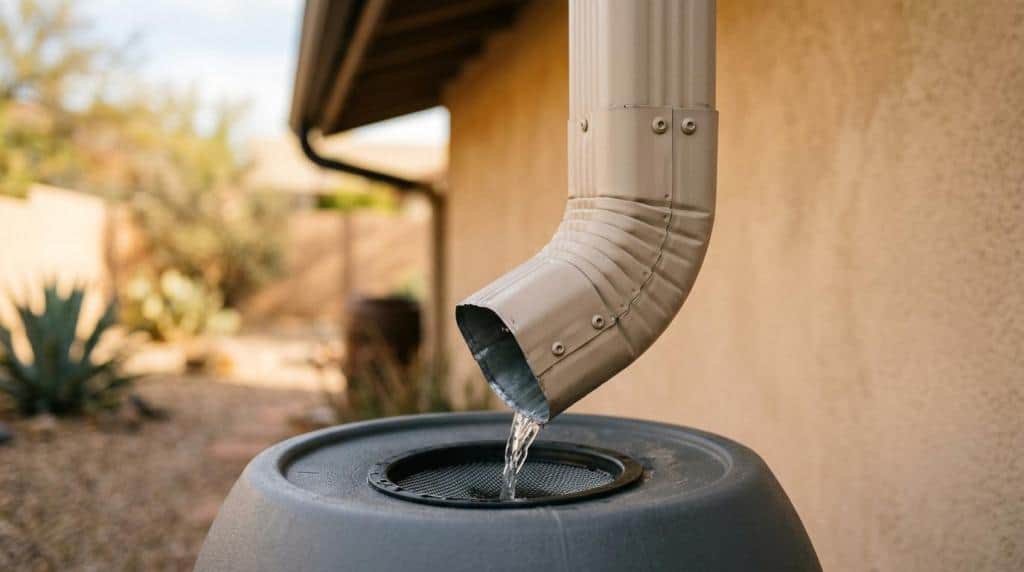
If you live in Tucson, you already know rain gutters are not just about rain. They are about protecting stucco, foundations, walkways, fascia boards, and landscaping when a monsoon storm hits hard for 20 minutes and dumps water where you do not want it. A properly installed seamless gutter system gives that runoff a controlled path instead of letting it sheet off the roof edge and pound the ground below.
For most homes in Southern Arizona, seamless rain gutter installation makes more sense than pieced-together sectional gutters. There are fewer joints, fewer places to leak, and a cleaner look along the roofline. In a climate with intense sun, dust, and sudden heavy runoff, that matters.
Seamless rain gutter installation for Tucson homes
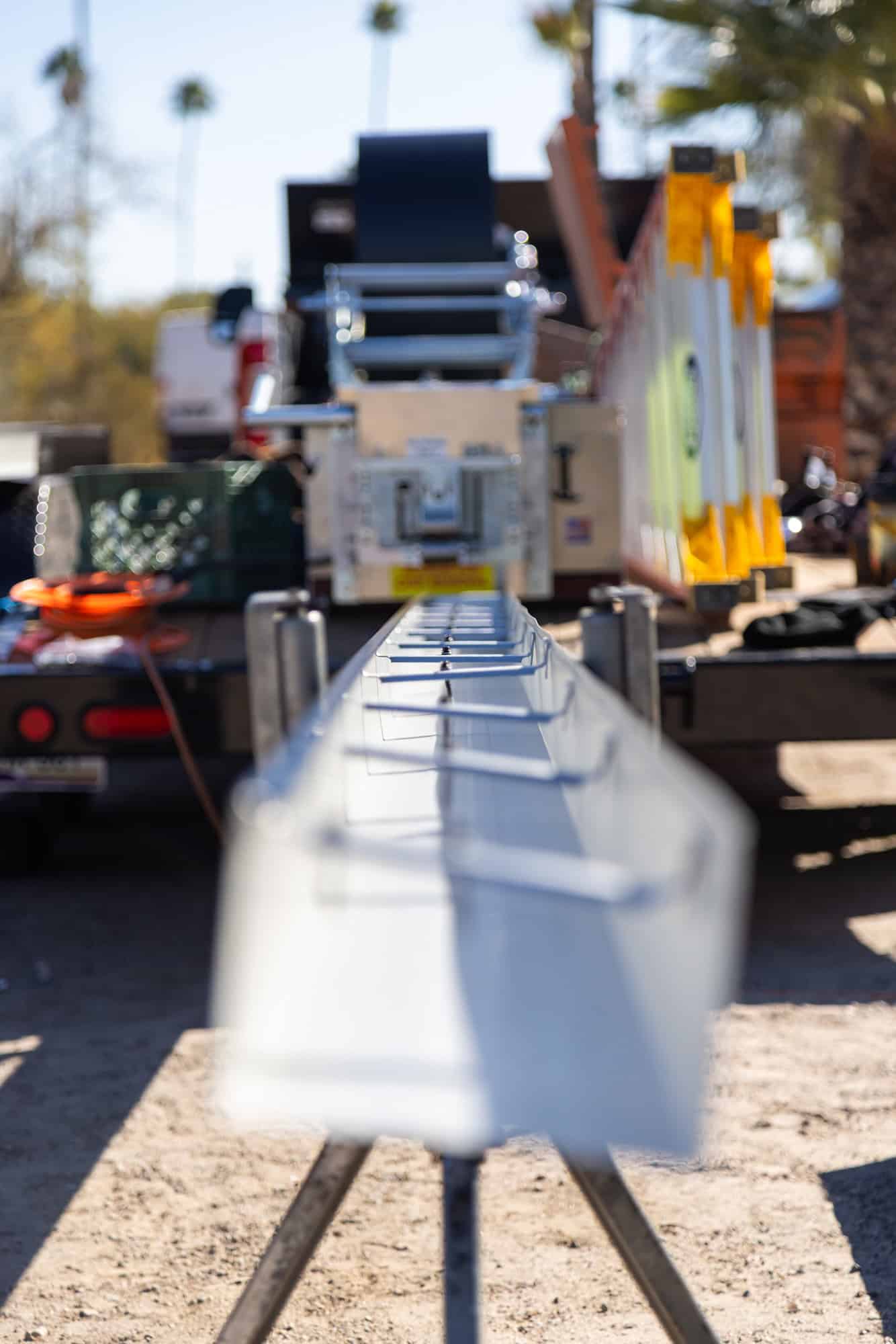
Seamless gutters are formed on site from a continuous coil of metal, then cut to the exact length of each roof section. That means one long piece instead of several smaller pieces patched together with connectors and sealant every few feet. You still have joints at corners, end caps, and downspout outlets, but the long straight runs are one piece.
That simple difference is why seamless gutters usually hold up better. Sectional systems tend to fail at the seams first. In Tucson, heat bakes sealants, wind shakes loose connections, and monsoon water finds every weak point. With seamless gutters, there are just fewer weak points to begin with.
They also look better. A clean K-Style profile that matches the trim does not call attention to itself. It just belongs on the house.
Why seamless gutters perform better in Southern Arizona weather
Our climate is rough on exterior materials. UV exposure dries out paint, cooks caulk, and shortens the life of lower-grade products. Then monsoon season shows up and tests everything at once.
A seamless gutter system helps with that because it is built for flow and support. We pay close attention to slope, hanger spacing, outlet size, and downspout placement. If any one of those is off, water can back up, overshoot the gutter, or sit in the trough and leave stains.
After looking at a home, these are usually the main reasons people switch to seamless gutters:
- Fewer leak points
- Cleaner roofline appearance
- Better support during heavy storms
- Less debris catching in joints
- Longer service life
When the house has exposed wood trim that is already weathered, fascia wrap often becomes part of the conversation too. In the desert, sun damage is real. Wrapping fascia in aluminum helps protect the wood and gives the new gutter a solid, finished mounting surface.
What happens during seamless gutter installation
A good installation starts with measuring, not with a price per foot thrown out over the phone. Roof area, pitch, roof type, valleys, scuppers, fascia condition, and drainage paths all affect the layout.
Once the plan is set, the gutter is roll-formed on site. That allows each run to be custom-made to the house rather than forced to fit. Corners are cut and joined carefully, outlets are placed where they actually need to be, and the whole system is pitched so water moves toward the downspouts instead of standing in the channel.
A typical installation usually includes a few key steps.
- Measurement and layout: checking roof edges, downspout locations, and drainage away from the foundation
- On-site fabrication: forming seamless runs in the selected profile and color
- Installation and sealing: fastening with hangers, setting pitch, and sealing corners and end caps
- Water management: tying downspouts into splash blocks, extensions, drains, or harvesting lines
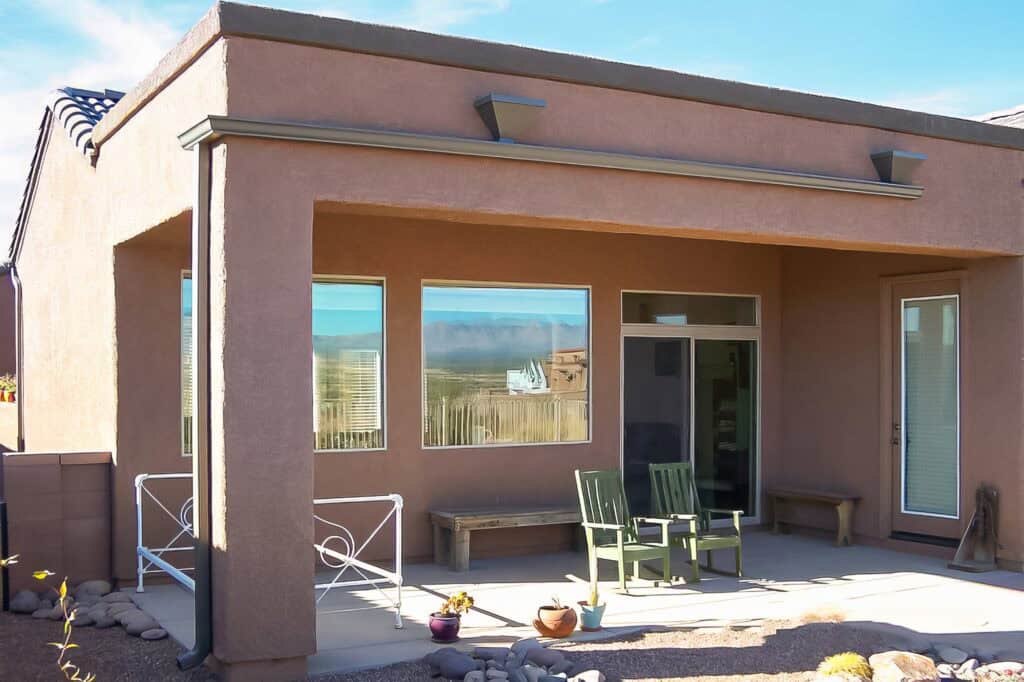
On some Tucson homes, especially flat-roof homes, scupper boxes are part of the system. On others, 5-inch or 6-inch K-Style gutters are the best fit. The right answer depends on how much roof area is feeding that edge and how fast that water needs to move.
Gutter profiles and materials for seamless gutter installation
Most residential projects use aluminum because it is light, rust-resistant, and available in a wide range of colors. It is a practical choice for Southern Arizona and works well on most stucco and tile-roof homes.
Copper is a premium option. It costs more, but it lasts a very long time and develops a natural patina that some homeowners want for architectural reasons. Galvanized steel can also be used where extra rigidity is needed, though aluminum remains the most common material for residential work here.
The gutter profile matters too. K-Style is the standard for many homes because it carries a good amount of water and fits the look of typical residential fascia. Half-round gutters have a softer, more traditional appearance. Box-style profiles are used on some modern or commercial buildings.
| Feature | Seamless Gutters | Sectional Gutters |
|---|---|---|
| Long runs | One continuous piece | Multiple pieces joined together |
| Leak risk | Lower | Higher |
| Maintenance | Less joint cleanup and resealing | More frequent seam issues |
| Appearance | Cleaner and more uniform | More visible connections |
| Best use | Long-term home protection | Budget-minded short-term fix |
Seamless gutters and rainwater harvesting systems
In Tucson, it makes sense to think beyond drainage alone. If water is leaving your roof, that water can often be directed into a harvesting setup instead of wasted onto bare ground or pavement.
A seamless gutter system is a strong starting point for rainwater harvesting because it gives you controlled collection. Water can be routed into barrels, larger tanks, or full cisterns depending on the property and goals. On bigger systems, screened inlets and UV-protected storage matter, especially in the desert where heat and algae growth can become issues.
That is one reason gutter layout needs to be planned with the whole site in mind, not just the eave line.
If a homeowner is interested in water conservation, we usually look at a few things during planning:
- Roof yield: how much water the roof can actually collect
- Storage goals: small decorative barrel or larger cisterns
- Use of water: landscape irrigation, trees, garden beds
- Overflow control: where excess water goes during a big storm
Even if you do not install tanks right away, it is smart to set up the gutters and downspouts so a harvesting system can be added later without redoing the whole job.
Common problems we fix during gutter replacement
A lot of gutter jobs in Southern Arizona are not just new installs. They are corrections. The old system may have been undersized, poorly sloped, or attached to fascia that should have been repaired first.
We also see gutters that are technically present but not doing the job. Water spills over at valleys, downspouts dump too close to the slab, or long runs sag because the hanger spacing was too wide. During a summer storm, those problems show up fast.
Here are some common issues that point to replacement or redesign:
- Water near the foundation: downspouts are too short or poorly placed
- Overflow at one corner: the gutter is undersized or pitched wrong
- Peeling fascia paint: long-term moisture exposure or sun-damaged wood
- Staining on stucco: runoff is missing the gutter or splashing back
Sometimes the fix is as simple as improving downspout placement. Sometimes the right answer is a full seamless system with larger capacity and better support.
What to expect from a professional gutter estimate in Tucson
A solid estimate should cover more than linear footage. It should explain the profile, material, size, color, downspout count, and any related work like fascia wrap or drainage extensions.
It should also account for how Tucson homes are built. Tile roofs, flat roofs, parapets, courtyards, and mixed rooflines all affect installation. A one-size-fits-all gutter plan usually leaves a problem area somewhere.
If you are comparing options, ask how the system handles monsoon volume, how the downspouts discharge, and whether the layout leaves room for rainwater harvesting later. Those are the details that make the difference between gutters that simply hang on the house and gutters that actually protect it.
For homeowners planning to stay in their property, seamless rain gutter installation is usually the better long-term move. It gives you cleaner lines, fewer repairs, better storm control, and a system that can be built around the way water moves on your lot.
Common Questions About Seamless Gutter Installation
How long do seamless aluminum gutters typically last in the Tucson climate?
Properly installed aluminum seamless gutters generally last 20 years or more, though Southern Arizona's conditions create some specific wear patterns. UV exposure is the bigger aging factor here, not rust or moisture: aluminum handles our dry climate well. What shortens lifespan faster than the material itself is improper pitch, undersized hangers, or fastening into deteriorated fascia. A system that was installed correctly from the start, with good support and slope, tends to hold up through many monsoon seasons without significant issues.
Do seamless gutters work on homes with no visible fascia board, like many flat-roof or parapet-style Tucson homes?
Flat-roof and parapet homes require a different approach than standard fascia-mounted systems. On these homes, scupper boxes and internal drains are typically the primary drainage method, sometimes combined with short gutter sections at covered entries or patios. The installation method depends on what the roofline actually offers as a mounting surface. This is one reason a site visit matters more than a phone quote: the right solution for a flat-roof home in the Foothills may look very different from a pitched-roof ranch in Marana.
How often should seamless gutters be cleaned in Southern Arizona?
Twice a year is a reasonable baseline for most Tucson homes, but the actual frequency depends on the tree cover around the property. Homes near mesquite, palo verde, or pine trees typically need more attention because seed pods, needles, and small debris accumulate faster. The period just before monsoon season, late May or early June, is a practical time for a cleaning and inspection, so the system is clear when the heavy runoff starts. After monsoon season ends is a good second window.
Can gutter guards or leaf protection screens be added to seamless gutters?
Yes, most gutter guard systems are compatible with seamless gutters. The main options are micro-mesh screens, reverse-curve covers, and simple insert filters. In Tucson, micro-mesh tends to perform better than open designs because it blocks the fine debris that wind carries onto rooftops here: dust, seed pods, and dried palm fronds. No guard eliminates maintenance entirely, but the right one can significantly reduce how often the troughs need clearing. Guard selection should be matched to the gutter profile and the debris type typical for that specific yard.
What is the difference between a splash block and a downspout extension, and which one does Tucson soil need?
A splash block is a small concrete or plastic pad placed at the base of a downspout to prevent soil erosion directly under the discharge point. A downspout extension carries the water farther from the house before releasing it. In Tucson, where soil can be compacted caliche close to foundations, extensions are often the more effective option because they move water far enough away that it disperses before it can pool near the slab. On sloped lots, underground drainage pipes tied into dry wells or swales can work even better. The goal in all cases is the same: water should be moving away from the structure, not sitting next to it.
Is it possible to match seamless gutter color to existing trim on a stucco home?
Aluminum seamless gutters are roll-formed from pre-painted coil stock, which comes in a wide range of standard colors. Most manufacturers offer 20 to 30 color options including whites, tans, browns, and grays that are common on Tucson stucco homes. An exact match to painted wood trim is not always possible since paint formulas differ from coil coatings, but a very close visual match usually is. If you are also having fascia wrapped in aluminum at the same time, the wrap and gutter can be ordered in the same color for a unified roofline appearance.
Does seamless gutter installation require a permit in Tucson or the surrounding municipalities?
For standard residential gutter installation, a permit is generally not required in most Tucson-area jurisdictions. However, if the project involves significant drainage modifications, tie-ins to underground systems, or is part of a larger permitted project, local requirements may apply. Rules can also vary between the City of Tucson, Pima County, and incorporated towns like Oro Valley or Marana. When in doubt, your contractor should be able to confirm what applies to your specific address and project scope before work begins.