ES
ES 
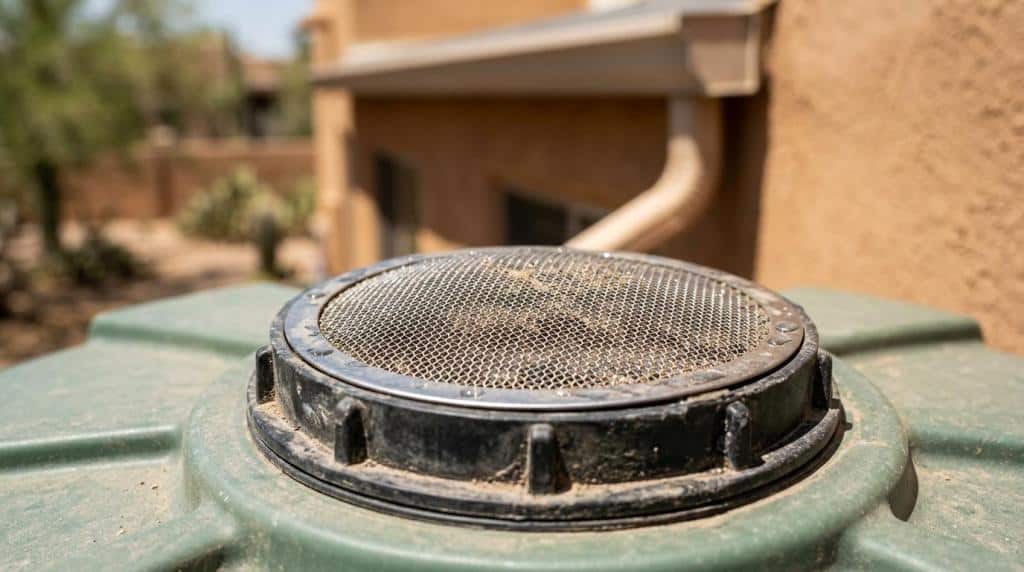
Passive vs active rainwater harvesting comes down to a simple question for Tucson property owners. Do you shape the land so rain soaks into the soil, or do you store roof runoff in a tank for later use? Both approaches capture the same monsoon rain. They just send it to different places, and the right choice depends on your yard, your goals, and how much water you want on hand. If you are weighing the options, our rainwater harvesting work in Tucson covers the active side of that decision.
This guide compares the two approaches as concepts, not as a step by step install. Passive harvesting is landscape shaping that anyone planning a desert yard should understand. Active harvesting is storage, and it is where Southern Arizona Rain Gutters fits, with tanks, cisterns, and a drainage option that ties into your gutter system. What follows is a clean side by side, a look at how storage scales, and the rebate and legal points to confirm before you commit to a plan.
What passive rainwater harvesting means
Passive rainwater harvesting shapes the land so rain soaks into the ground where plants can use it. Instead of piping water into a container, you contour the soil into basins, swales, and mulched beds that slow the runoff and let it sink in. There is no tank and no pump. The soil and the root zone become the storage.
In a desert climate, this is a common first move for a planting area, because it puts water directly under trees and shrubs during the monsoon. The elements are simple: a shallow basin around a tree, a graded swale that guides water off a hard surface, or a mulched bed that holds moisture longer. Passive work is landscape design more than plumbing, so it is best understood as general education here. Confirm with the company what parts of a passive plan fall within its scope, since Southern Arizona Rain Gutters is focused on the storage side.
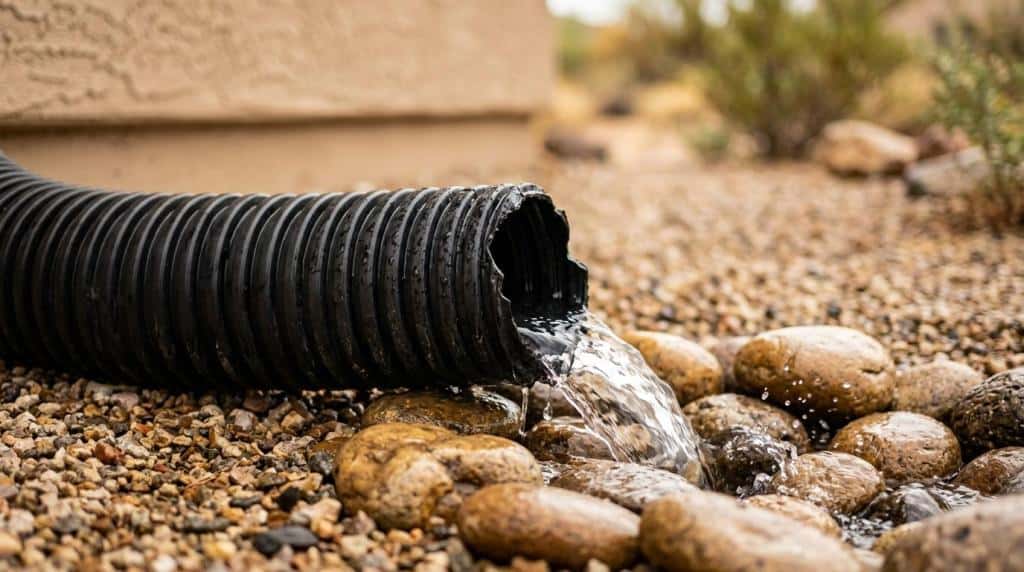
What active rainwater harvesting means
Active rainwater harvesting stores roof runoff in tanks and cisterns for later use. Gutters and downspouts route water from the roof into a container, where it waits until you need it for landscape irrigation or another approved use. This is the side of the choice that involves real hardware, and it is what our crews install across the Tucson area.
Southern Arizona Rain Gutters offers three storage lines: above-ground plastic tanks, steel culvert cisterns, and commercial storage tanks. A plastic tank is the everyday choice for a home garden. A steel culvert cistern holds more and suits a property that wants serious capacity. Commercial tanks scale up for businesses and larger sites. Best practice across the trade is to use UV-stabilized tank bodies, screened inlets, sealed openings, and an overflow plan, all of which keep the stored water cleaner. The gutters do the collecting, so a clean, well-supported gutter run feeds the tank as much as the tank itself matters. Active systems give you water on demand, which is the main thing passive shaping cannot do.
Passive vs active rainwater harvesting side by side
Passive vs active rainwater harvesting differ in one core way. Passive keeps water in the soil for plants, and active keeps water in a tank for you to direct. Everything else follows from that split. The table below lines up what each approach actually does, with the storage details drawn from the lines Southern Arizona Rain Gutters installs.
| Feature | Passive harvesting | Active harvesting |
|---|---|---|
| How it works | Shapes the land with basins and contouring so rain soaks into the soil | Stores roof runoff in tanks and cisterns for later use |
| Typical elements | Basins, swales, mulched beds, and land contouring (general landscape work) | Above-ground plastic tanks, steel culvert cisterns, and commercial storage tanks |
| Where the water ends up | In the root zone and the surrounding soil | In storage, then sent to irrigation or another approved use |
| Best suited for | Planting areas and low-effort landscape watering | On-demand irrigation and larger storage needs |
| SARG role | General education, confirm scope with the company | Installs the tanks and cisterns, plus a drainage entry option |
| Rebate note (hedged) | May qualify under Tucson Water programs, confirm current terms | May qualify under Tucson Water programs, confirm current terms |
How much water active storage can hold
Active storage scales from a small garden tank to a whole-property system, and the size gap is large. Most garden irrigation setups run in the low hundreds of gallons, while a whole-property residential system can reach several thousand gallons. Commercial storage goes larger still. The chart below shows typical industry capacity points so you can picture the range before sizing anything for your own roof.
Those figures are typical trade ranges, not a fixed rule for your property. Real sizing depends on your roof area, how much of that roof drains to the tank, and what you plan to water. That is a conversation for a site review, not a number to guess from a chart.
Where underground drainage fits between the two
Underground drainage is a middle option for owners who are not ready for a full tank. It ties into the gutter system and carries roof water to a safe runoff area away from the foundation, so heavy monsoon flow has somewhere controlled to go. It is not storage the way a tank is, but it is an active piece of the same gutter setup, and it can be a sensible first step.
Think of it as a way to manage the water now and add storage later. The gutters and downspouts are already doing the collection, so a buried line simply directs that flow instead of letting it pool. If you are trying to decide between piping the water away and holding it in a tank, our breakdown of underground drainage versus a rain tank walks through that specific trade-off in more detail.
Which approach fits a Tucson property
The right approach depends on what you want the water to do. If your goal is greener planting beds and trees with little ongoing effort, passive shaping puts rain where roots can reach it. If you want water you can store and apply on your own schedule, active tanks and cisterns give you that control. Many Tucson properties use both, sending some roof runoff to basins and routing the rest to a tank.
Upkeep looks different for each. A passive setup means keeping basins clear and topping up mulch so water still sinks in where you want it. An active setup means keeping screened inlets and sealed openings clean so the stored water stays usable, with an overflow path for the days a tank fills fast. Neither is heavy work, but knowing what you are signing up for helps you pick the approach you will actually maintain.
Local conditions push the decision. Tucson gets much of its rain in short, intense monsoon bursts, so a system needs to catch a lot of water quickly and then release it slowly through the long dry stretches. Stored water in a tank stretches that monsoon supply across weeks when nothing falls, and a passive basin holds moisture in the soil for the same reason on a smaller scale. Roof size, slope, and where your downspouts already run all matter. For the mechanics of how roof water becomes usable supply, see our guide on how rainwater harvesting works for Arizona homes. We serve Tucson and nearby communities including Oro Valley, Marana, Sahuarita, Green Valley, and Three Points, so a quick site look can settle which mix suits your property.
Rebates and Arizona rules to check first
Before you plan either approach, check the current rebate and legal picture, because the details change. Arizona is among the most permissive states in the country for rainwater harvesting, with no residential collection limits and incentives available. Tucson Water offers rainwater harvesting rebates that have applied to both passive and active systems, though amounts, eligibility, and application windows shift between cycles.
Do not lock a budget to a specific rebate figure you read somewhere. Confirm the current terms directly with the authority. You can review the program details on the Tucson Water residential rebates page, and check any permit or HOA color rules that apply to your specific address. A short call to the utility, or a chat during your site review, will tell you where your project stands today.
Key Takeaways
- Passive harvesting shapes the land so rain soaks in. Active harvesting stores roof runoff in tanks and cisterns.
- Southern Arizona Rain Gutters installs the active side: above-ground plastic tanks, steel culvert cisterns, and commercial storage tanks.
- Underground drainage that ties into the gutter system is a practical middle step for owners not ready for a full tank.
- Active storage scales from a few hundred gallons for a garden up to several thousand for a whole property, with commercial larger.
- Many properties combine both approaches, using basins for planting areas and a tank for on-demand irrigation.
- Tucson Water rebates and Arizona rules change, so confirm current terms before you plan.
Passive and Active Harvesting Questions from Tucson Property Owners
What is the main difference between passive and active rainwater harvesting?
The difference is where the water goes. Passive harvesting moves rain into the soil through basins and contouring, while active harvesting captures roof runoff in tanks and cisterns you can draw from later.
Does Southern Arizona Rain Gutters install passive earthwork systems?
Southern Arizona Rain Gutters focuses on the active side, meaning tanks and cisterns, plus an underground drainage option that ties into the gutter system. For basins and earthworks, ask the company what falls within its scope.
Can I combine passive and active harvesting on the same property?
Yes. Many Tucson properties do both, guiding some roof runoff into planting basins and sending the rest to a storage tank. The two approaches work well together.
Which approach saves more water on a Tucson property?
It depends on your goals. Active storage holds water for irrigation on your own schedule, while passive shaping keeps water in the soil where plants use it directly. The best result often comes from using both.
Do passive and active systems qualify for the Tucson Water rebate?
Tucson Water has offered rainwater harvesting rebates covering both passive and active systems, but amounts, eligibility, and application windows change over time. Confirm the current terms with Tucson Water before you plan.
Is rainwater harvesting legal in Arizona?
Arizona is among the most permissive states for rainwater harvesting, with no residential collection limits and incentives available. Always confirm any local permit or HOA rules that apply to your specific address.
How large a tank do I need for active harvesting?
Garden systems commonly run from about 50 to 500 gallons, and whole-property systems commonly reach several thousand up to around 10,000 gallons. Correct sizing depends on your roof area and how you plan to use the water, so a site review is the best guide.