ES
ES 
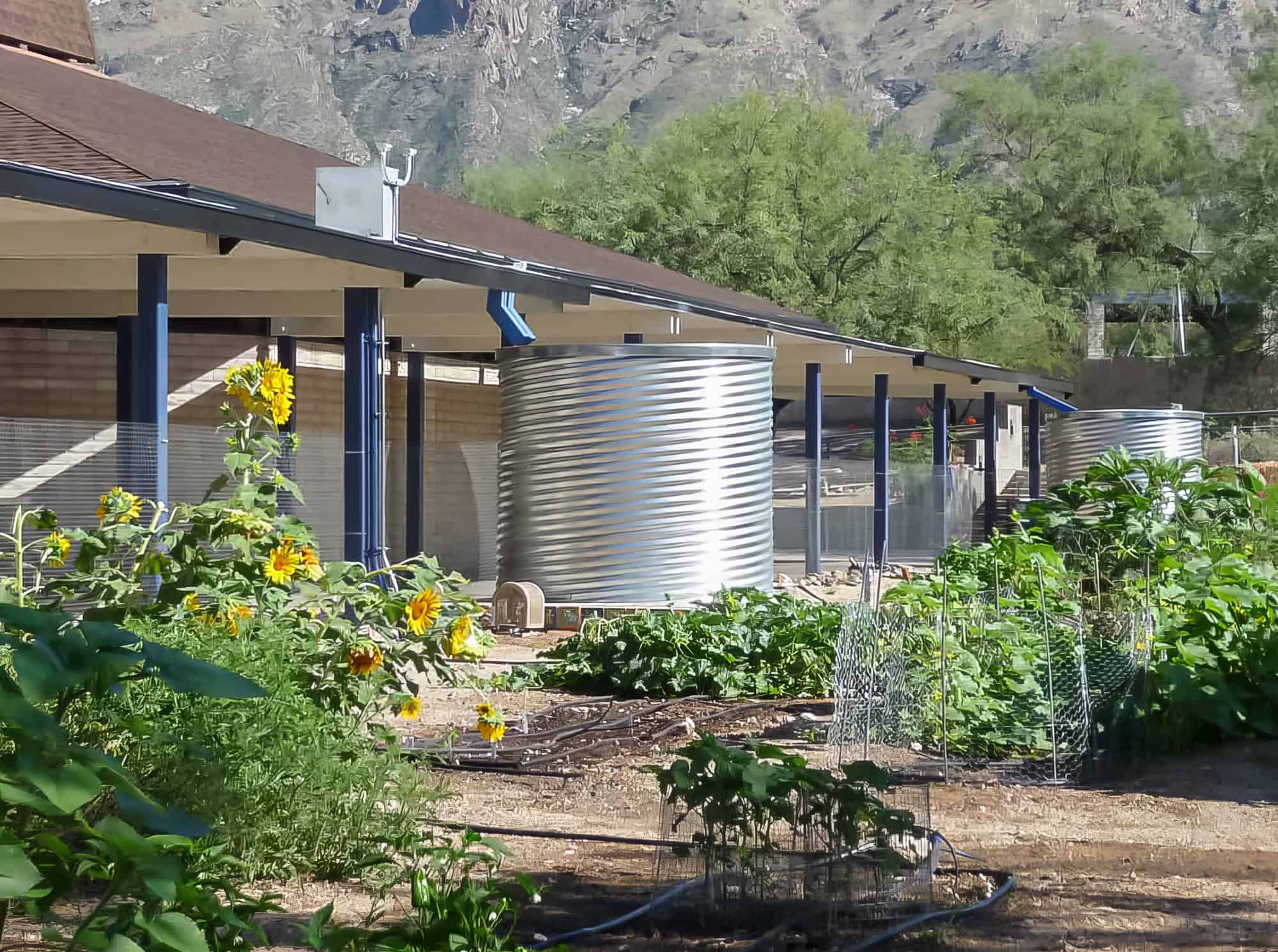
Underground drainage vs rainwater tank is a choice about the same water. Both start with rain landing on your roof and running into the gutters. The difference is what happens at the bottom of the downspout: drainage carries the water away from the house, and a tank keeps it.
Most people arrive at this question from one of two directions. Either something is going wrong, water pooling by the foundation or cutting a channel through the yard, or they have decided they would rather irrigate with rain than with treated municipal water. Those are different problems and they point at different answers. Our water harvesting work covers both ends, and the useful thing to understand first is that these are not competing options so much as two stages of the same system.
Underground Drainage vs Rainwater Tank at a Glance
Drainage removes the water, a tank retains it. If your problem is that water is going somewhere it should not, drainage solves it directly. If your goal is to use the water, you need storage. The table below sets out the practical differences.
| Consideration | Underground drainage | Rainwater tank |
|---|---|---|
| What it does with the water | Carries it to a safe runoff area away from the house | Stores it for later use |
| Problem it solves | Pooling, erosion, runoff hitting the wrong place | Irrigation supply and a lower water bill |
| Presence on the property | Buried, nothing visible once backfilled | A visible structure that needs a prepared location |
| Rebate relevance | Not the purpose of the work | A qualifying system may be eligible through Tucson Water |
| Usual trigger | A water problem happening now | Wanting to put the water to work |
| Adding the other later | Storage can be added to the same collection layout | Overflow still has to be routed somewhere safe |
What Underground Drainage Actually Does
Underground drainage is buried piping that ties into the gutter system and moves water to a safe runoff area. Instead of a downspout discharging against the house and letting the water find its own path, the flow is captured and taken to a location you chose deliberately.
That matters here because our rain is concentrated. A monsoon storm can deliver a large volume in a short window, and a downspout emptying beside a foundation during that burst is doing real work in the wrong direction. The visible symptoms are familiar: a scoured channel across the yard, standing water that takes days to clear, soil pulling away from the slab, or a patio that keeps silting up.
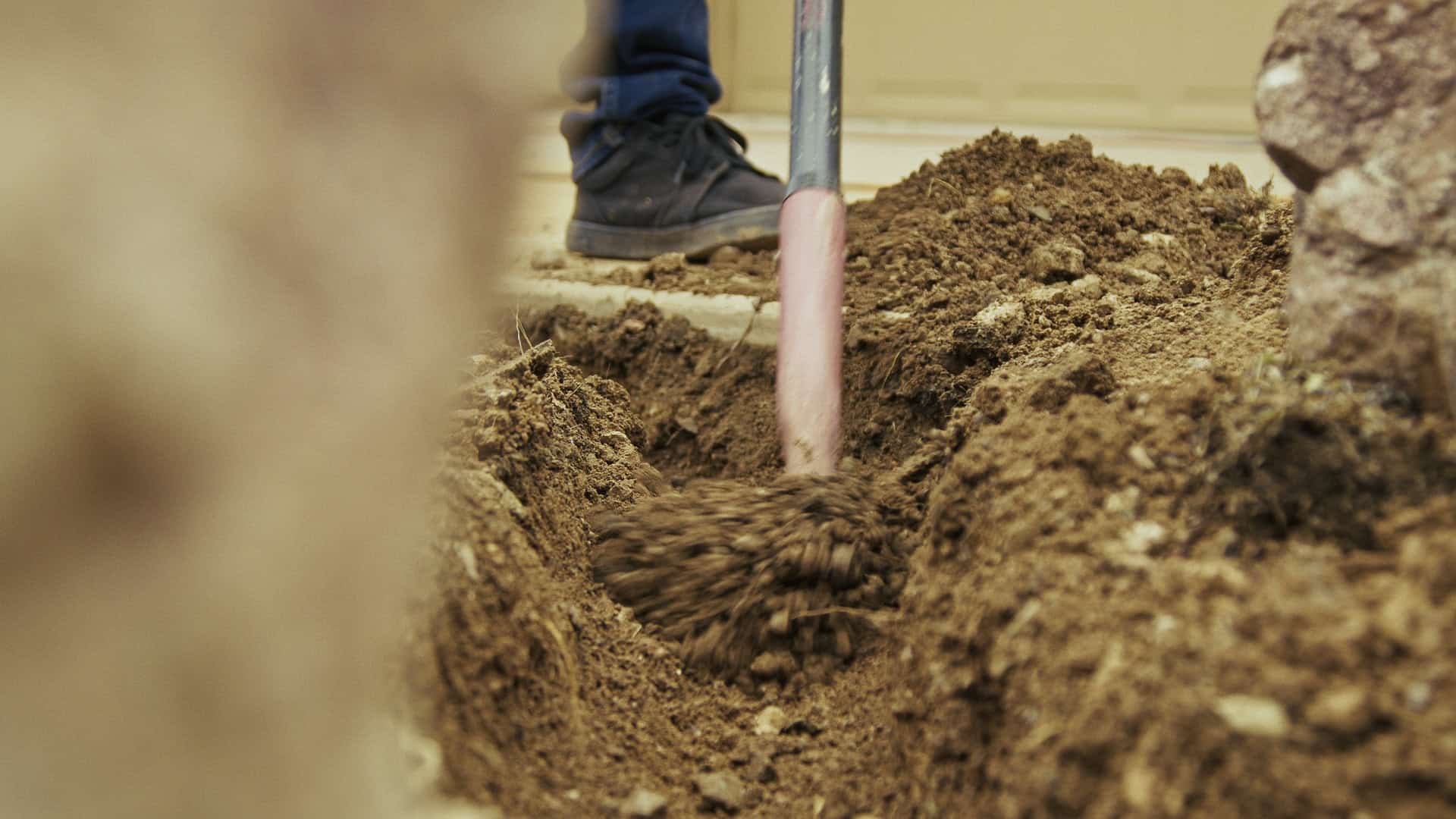
The appeal is that it is invisible once finished and it requires nothing from you afterward. There is no tank taking up space, nothing to look at, and no equipment to maintain. For an owner whose only goal is to stop water damaging the property, it is often the whole answer. We go deeper on that specific failure mode in our guide to preventing foundation erosion with proper drainage.
What a Rainwater Tank Actually Does
A tank captures the same runoff and holds it so you can use it later, usually for landscape irrigation. It turns a drainage liability into a supply, and in a climate where outdoor watering is a meaningful share of household use, that is not a small thing.
There are three storage lines: above-ground plastic tanks, steel culvert cisterns, and commercial storage tanks. Which suits you depends on capacity, available space, and how the installation needs to look. Steel culvert cisterns tend to appeal where a larger volume is wanted and the tank will be a permanent visible feature rather than something tucked out of sight.
Storage also brings benefits drainage does not. A working system lowers your water bill, can make you eligible for a Tucson Water rebate, supplies landscape irrigation, and adds to property value. If the rebate is part of your thinking, read our walkthrough of the Tucson Water rainwater rebate before you buy anything, because the program expects certain steps to happen before installation rather than after.
One caveat worth stating plainly: a tank does not remove the drainage question. Every tank fills, and when it does the overflow has to go somewhere deliberate. Standard practice is UV-stabilized tank bodies, screened inlets, sealed openings, and a planned overflow route, and that last item is exactly the same problem underground drainage solves.
Both Options Start at the Downspout
The collection side is shared. Whichever path you take, the water has to be gathered by gutters and delivered to a fixed set of connection points, and those points are the downspouts. Get that layout right and either option can be attached to it.
Seamless gutters are formed on site in one continuous piece, which removes the joints that leak during heavy flow. Downspouts come in standard 2x3 and 3x4 inch sizes, with larger sections for bigger roofs, and industry guidance puts one downspout at roughly every 30 to 35 feet of gutter. That spacing determines how many connection points your roof has to offer.
This is the argument for planning the whole thing at once even if you only build part of it. If the downspout positions are chosen with storage in mind, adding a tank in two years is a connection job. If they were not, it can mean redoing the collection layout you already paid for.
Trenching, Permits, and Where the Water Goes
Underground drainage means trenching, and trenching can bring local requirements into play. What applies depends on your jurisdiction and the scale of the work, so this is an area to confirm rather than assume.
In unincorporated Pima County, the county's published grading requirements set out when a permit is needed. A Type I grading permit is listed for single dwelling residential development on a single lot with a graded area of 14,000 square feet or more, while residential development on a single non-hillside lot with a development envelope under that figure is listed among the exemptions. Separately, a fugitive dust permit is listed as required if more than 300 feet of trench is cut. Depending on scope, applications may also need prior approval from the Regional Flood Control District or other county departments.
Those are county rules and they can change. If your property sits inside Tucson city limits or within another incorporated community, a different set applies, and requirements are periodically updated. Treat the summary above as a reason to check rather than as a substitute for checking, and confirm with the authority having jurisdiction over your address before work starts.
The other half of the question is where the water is being taken. A safe runoff area means somewhere the discharge does not create a new problem, for you or for a neighbor. Moving water off your foundation and onto the property next door is not a solution, it is a relocated fault.
Which One Should Come First
Deal with active damage first. If water is undermining a foundation, scouring a slope, or flooding a walkway every monsoon, drainage is the urgent work and storage is the upgrade that can follow. Damage compounds while you deliberate, and storage does not stop it.
If nothing is actively failing and the motivation is irrigation or the rebate, you can go straight to a tank, provided the overflow is routed properly as part of the design. Skipping that step just recreates the drainage problem on the days the tank is full, which in a good monsoon is exactly when the most water is moving.
Properties across Tucson, Oro Valley, Marana, Vail, Sahuarita, Green Valley, and Three Points differ enough in slope, soil, and lot size that underground drainage vs rainwater tank is genuinely a site question. A short review on the property answers it faster than any amount of reading.
Key Takeaways
- Drainage removes runoff, a tank retains it, and both are fed by the same gutters and downspouts.
- A tank does not eliminate the drainage question, because overflow still has to reach a safe runoff area.
- Downspout positions are the connection points for either option, so plan their layout before building only one stage.
- Active damage takes priority. Storage is an upgrade, not a remedy for water already undermining a foundation.
- Trenching can trigger local requirements, and county rules differ from city rules, so confirm for your specific address.
- Discharging runoff onto a neighboring property moves the problem rather than solving it.
Drainage and Storage Questions from Tucson Homeowners
Should I install underground drainage or a rainwater tank first?
Deal with active damage first. If water is undermining a foundation or scouring the yard every monsoon, drainage is the urgent work and a tank is the upgrade that follows. If nothing is failing and the goal is irrigation, you can go straight to storage as long as overflow is routed properly.
Can I add a tank later if I put in drainage now?
Yes, and it is straightforward when the collection layout was planned with storage in mind. Both systems connect at the downspouts, so if those positions suit a future tank, adding one becomes a connection job rather than a rebuild of the gutter layout.
Does a rainwater tank stop drainage problems by itself?
No. Every tank eventually fills, and the overflow has to be directed to a safe runoff area. Planning that route is part of a proper installation, because otherwise the original drainage problem returns on the days the heaviest rain is falling.
Do I need a permit for underground drainage in Tucson?
It depends on your jurisdiction and the scale of the work. Pima County publishes grading requirements covering when a permit applies, including thresholds tied to graded area and trench length, and city rules differ from county rules. Confirm with the authority having jurisdiction over your address before work begins.
Where does underground drainage take the water?
To a safe runoff area chosen deliberately during design. That means a location where discharge will not create a new problem on your property or a neighboring one. Routing water off your foundation and onto adjacent land relocates the fault rather than fixing it.
Is underground drainage visible once it is finished?
No. The piping is buried and the ground is restored over it, so nothing shows above the surface. That is part of the appeal for owners who want the water problem handled without a tank occupying space on the property.
Can drainage work qualify for the Tucson Water rebate?
The rebate is aimed at rainwater harvesting systems rather than drainage on its own, and the utility sets the qualifying conditions. If a rebate is part of your plan, check the current program requirements before any work starts, since the process is designed to happen before installation.