ES
ES 
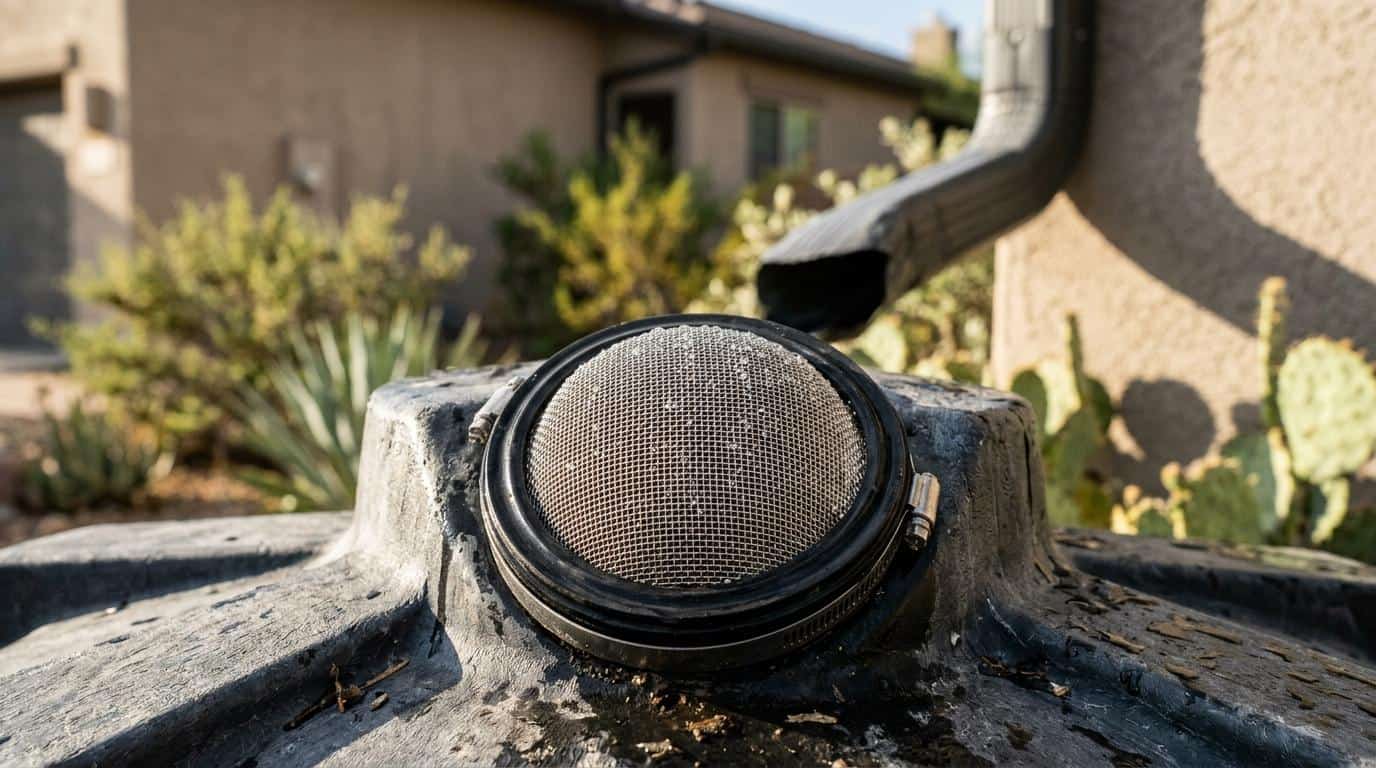
A lot of homeowners use the words tank and cistern like they mean the same thing. In everyday conversation, that is usually fine. But when you are planning a rainwater harvesting system for a Tucson home, the difference matters because the material, size, placement, and cost can change quite a bit.
Here in Southern Arizona, storage is not just about holding water. It is about handling hard monsoon bursts, standing up to brutal sun, keeping algae out, and making the most of every inch of rain we get. A setup that works great in a mild climate may not hold up the same way on a west-facing wall in July.
If you are deciding between an above-ground water tank and a cistern, the best way to look at it is this: both store water, but they are not always built, installed, or used the same way.
Above-Ground Water Tanks and Cisterns: The Basic Difference
An above-ground water tank is usually a prefabricated storage unit that sits on a level pad or base. Around Tucson, the most common ones are polyethylene tanks, often in the 200 to 5,000 gallon range for residential use. They are straightforward, visible, and relatively easy to install.
A cistern is usually a heavier-duty storage system, often larger and more permanent. Some cisterns are underground concrete or masonry structures. Others are above-ground corrugated steel units with liners and sealed lids. In day-to-day jobsite talk, people often call large steel storage units cisterns even when they sit above grade.
That is why the terms overlap. A cistern can be above ground. A tank can be part of a cistern system. What matters more is how it is built and what job it needs to do.
- Above-ground tank: Usually prefabricated, easier to place, and common for residential garden or landscape use
- Cistern: Often larger, heavier-duty, and built for longer-term or higher-volume storage
- Above-ground cistern: Common in Arizona, especially corrugated steel systems
- Underground cistern: Hidden from view, cooler, and more expensive to install
Above-Ground Water Tanks vs Cisterns Comparison Table
If you want the quick version, this table covers the main differences homeowners ask about.
| Feature | Above-Ground Water Tanks | Cisterns |
|---|---|---|
| Typical materials | Polyethylene, fiberglass, some steel | Concrete, corrugated steel, heavy poly, masonry |
| Usual placement | Above grade on pad or stand | Above ground or underground |
| Common residential size | 200 to 5,000 gallons | 800 to 20,000+ gallons |
| Installation | Simpler, less site work | More involved, especially if buried |
| Cost | Lower starting cost | Higher starting cost in most cases |
| Appearance | Visible, can be slimline or round | Can be visible feature or hidden underground |
| Sun exposure | Direct exposure unless shaded | Underground units protected from sun |
| Water temperature | Warmer in summer | Cooler, especially underground |
| Maintenance access | Easy to inspect and clean | Above-ground is easy, underground takes more effort |
| Best fit | Smaller budgets, garden use, simpler retrofits | Larger storage goals, tighter sites, long-term systems |
The short version is that an above-ground tank is usually the simpler answer, while a cistern is often the bigger and more permanent answer.
Above-Ground Water Tanks for Tucson Homes
For a lot of houses in Tucson, an above-ground tank is the first place I tell people to look. It gives you solid storage without excavation, major site work, or a giant jump in budget. If the goal is watering trees, shrubs, or a vegetable garden, a poly tank can do that job very well.
These tanks are popular because they install fast when the site is prepared correctly. A proper level pad matters. So do screened inlets, sealed openings, and a clean tie-in from the gutter downspout. If the tank is opaque and UV-stabilized, you cut down on algae issues and help the tank hold up better under desert sun.
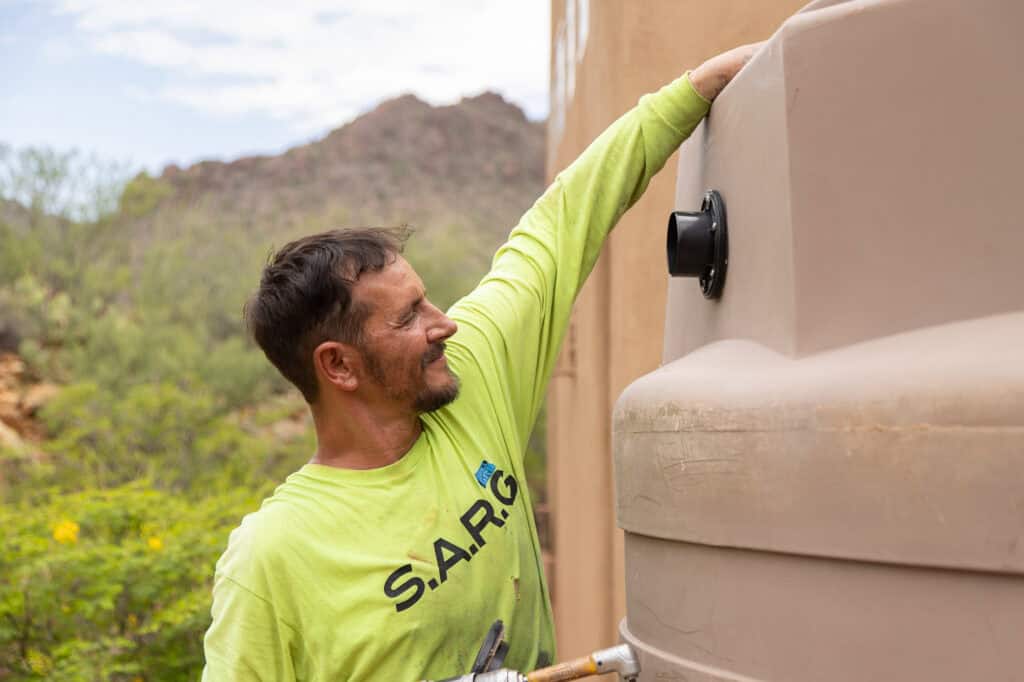
They also work well when space is limited but not impossible. Round tanks fit side yards. Slimline profiles can fit along a wall where a round tank would stick out too far. I have seen homeowners tuck a tank beside a garage, behind a gate, or near a garden area and make very good use of a small footprint.
And if you ever need to inspect a fitting, clean sediment, or check the water level, you can get to it without much trouble.
After you have a good collection surface and a decent pad, above-ground tanks offer some clear advantages:
- Lower upfront cost
- Faster installation
- Easy visual inspection
- Good access for cleaning
- Great for irrigation
- Flexible sizes
That said, they are not invisible. Some homeowners do not like the look of them, and some HOAs like them even less. They also take the full hit from summer heat, UV exposure, wind, and blowing dust. Good materials help a lot, but in Arizona, sun damage is real. Cheap plastic is a mistake out here.
Cistern Benefits and Tradeoffs for Larger Water Harvesting Systems
When homeowners want more storage, longer reserve time, or a cleaner architectural look, the conversation usually shifts toward cisterns.
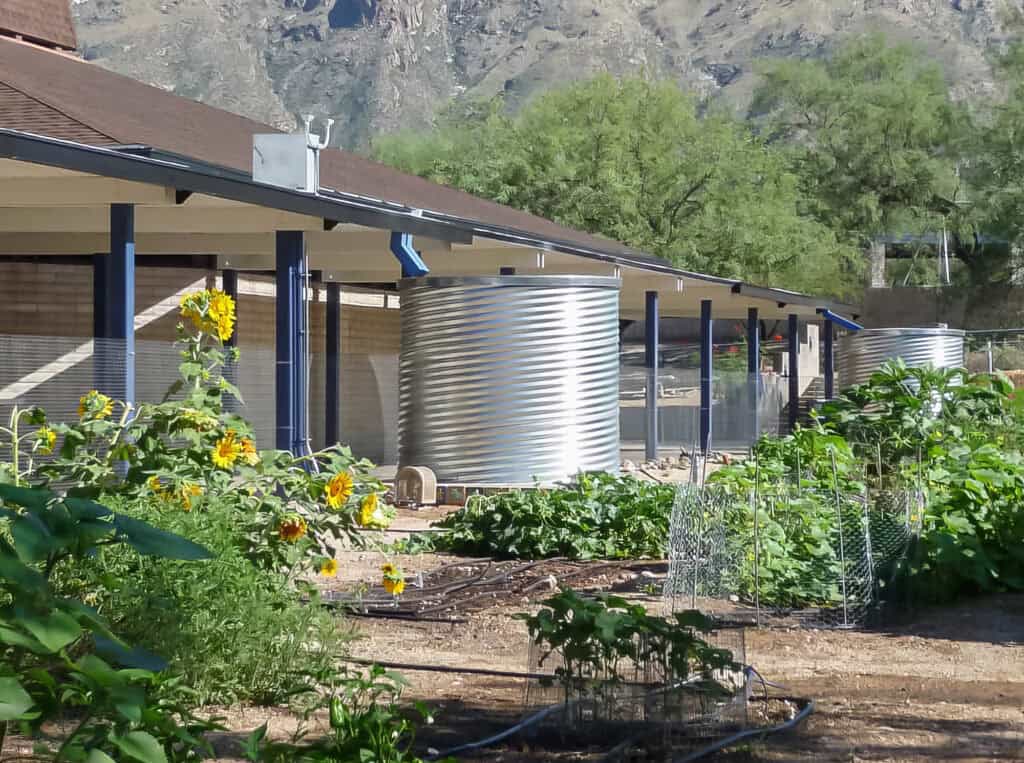
In practical terms, that often means a larger corrugated steel cistern above ground, or an underground concrete or poly cistern. Steel culvert-style cisterns are a strong option in Southern Arizona because they can hold a lot of water without taking up a huge spread of space. They also tend to look more intentional on the property, especially when matched to the home and landscape.
Underground cisterns solve a different problem. They hide the storage completely and protect the water from direct sun and temperature swings. That can be appealing if yard space is tight, views matter, or local rules make visible tanks difficult. Water also stays cooler underground, which many homeowners like.
But this is where the tradeoffs become real. Buried cisterns need excavation, site access, and careful engineering. Tucson lots can have caliche, rock, tight access, or existing hardscape that makes underground work more difficult than it sounds on paper. If you are putting a cistern under a patio, driveway, or other load-bearing area, the structure has to be built for that use.
Pumps matter more with these systems too. A buried cistern usually needs a pump to move water where you want it. A good setup may include internal or external pumps, float switches, and filtration, depending on whether the water is for irrigation, indoor use, or potable treatment.
A larger storage system can make a lot of sense here, especially because our rain often comes in short, heavy monsoon events. If your roof sheds a big volume in 20 or 30 minutes, a small tank may fill quickly and send the rest to overflow. A bigger cistern gives that storm somewhere to go.
Climate, Space, and Water Use Should Drive the Decision
The right choice is less about which word sounds better and more about what your property can collect and what you want the water to do.
Tucson gets roughly a foot of rain a year on average, but it does not arrive gently and evenly. We get long dry stretches, then a monsoon storm dumps a lot of water fast. That means your gutters, downspouts, and storage all need to work as one system. A small storage container tied to a large roof can overflow fast. A huge cistern tied to a tiny roof may never fill enough to justify the cost.
Your site matters just as much. Some homes have a perfect side yard for a visible tank. Others have almost no usable exterior space, or the best location is right where a walkway, gate, or vehicle access needs to stay clear.
Before picking a tank or cistern, I would look at these things first:
- Roof collection area: Bigger roofs can justify bigger storage
- Water use: Trees and landscape irrigation need a different setup than backup household use
- Available space: Side yards, setbacks, access, and HOA rules can limit visible storage
- Sun exposure: Full afternoon sun is harder on any above-ground unit
- Budget: The container cost is only part of the system cost
One more thing homeowners sometimes miss is timing. If you are already replacing gutters, repainting trim, or fixing fascia, that is a smart time to plan storage too. It is often easier to route downspouts and overflow lines while that work is happening than to retrofit everything later.
Gutter System Details Matter as Much as the Storage Container
I have seen people spend good money on a tank and then connect it to a poor collection system. That is like buying a new safe and leaving the door open.
The roof is your catchment. The gutters and downspouts are your delivery system. If those parts are undersized, poorly sloped, or pulling away from the fascia during storm flow, your storage choice will never perform the way it should. Around Tucson, K-Style gutters are common because they handle roof runoff well and fit most residential profiles cleanly. On some homes, fascia wrap is worth doing at the same time, especially if the existing wood has been baked by the sun and needs protection before new gutters go up.
A solid harvesting setup usually includes leaf screening, mosquito protection at inlets and overflows, and a way to manage debris before it reaches storage. For potable or near-potable uses, filtration and approved materials matter even more. Not every container sold as a water tank is the right choice for stored rainwater.
Monsoon overflow planning is another big one. When the tank or cistern is full, that water needs somewhere useful to go. Ideally, overflow is directed to basins, trees, or a planned drainage area, not dumped against the foundation.
Maintenance and Lifespan of Above-Ground Tanks and Cisterns
No storage system is maintenance-free, but good design keeps maintenance reasonable.
Above-ground tanks are easier to inspect. You can check fittings, screens, lids, and water level with minimal effort. An annual sediment cleanout is usually enough for many residential systems, assuming the gutters are in decent shape and the tank stays sealed from light and pests.
Cisterns need the same basic care, but access can be different. An above-ground steel cistern is still fairly easy to inspect. An underground cistern takes more planning because access points are limited and cleaning is more involved. That does not make it a bad option. It just means you should go into it with open eyes.
A few habits go a long way:
- Inspect screens: Keep mosquitoes, roof grit, and leaves out
- Check seals and lids: Light leaks lead to algae problems
- Flush sediment: Usually once a year, or when the tank is mostly empty
- Watch the overflow: Make sure monsoon water exits where it should
- Service pumps and filters: Especially on larger or indoor-use systems
Material choice affects lifespan too. Good UV-stabilized poly tanks can last for decades. Steel cisterns are very strong and well suited for larger capacities when lined and assembled properly. Concrete cisterns can last a very long time, but the build quality has to be right, especially below grade.
If you are trying to choose between the two, start with roof area, water use, and available space. A modest above-ground tank can be a smart, practical fit for many homes. A larger cistern makes more sense when you need serious storage, better concealment, or a system built around longer dry periods between storms. In Tucson, both can work very well when the gutters, overflow, pad, pump, and layout are planned as a complete system.
Questions Homeowners Ask About Rainwater Storage in Tucson
Does Tucson or Pima County require a permit to install a rainwater storage tank or cistern?
Permit requirements depend on the size of the system and whether it involves structural changes, grading, or connections to plumbing. Small above-ground tanks used strictly for outdoor irrigation often fall below the permit threshold, but larger cisterns, especially underground ones, typically require permits and inspections. It is worth checking with the City of Tucson Development Services or Pima County before you purchase anything, because requirements can also vary by municipality within the metro area.
Does Arizona offer any incentives for rainwater harvesting?
Yes. Arizona has been one of the more rainwater-friendly states for years. The state income tax credit for purchasing a water conservation system, including qualifying rainwater harvesting equipment, has been available to homeowners for residential installations. Tucson Water has also offered rebate programs for harvesting systems in the past, though availability and amounts change. Checking with Tucson Water directly before you buy is the best way to know what is currently active.
What is a first flush diverter and do I need one?
A first flush diverter is a device that automatically discards the initial runoff from a rain event before it reaches your storage. That first portion of water picks up the most debris, bird waste, dust, and roof grit that has built up since the last rain. For most Tucson roofs, especially those going months between rain events, a first flush diverter is a smart addition. It reduces sediment buildup in the tank, keeps the stored water cleaner, and extends the time between full cleanouts.
Can harvested rainwater be used indoors or for drinking?
It depends on the intended use and how the system is built. Rainwater collected from a standard residential roof is not potable without treatment. For outdoor landscape irrigation, untreated harvested water is generally fine. For indoor non-potable uses like toilet flushing, some jurisdictions allow it with proper cross-connection controls. For drinking or cooking, the system needs filtration, UV treatment, and approved materials throughout, and local health codes apply. Most residential systems in Southern Arizona are designed for landscape use, where treatment requirements are far simpler.
How do I figure out how much storage capacity I actually need?
A rough starting point is to calculate how much water your roof sheds in a typical monsoon storm and match storage to that volume. A common formula multiplies the roof collection area in square feet by the rainfall amount in inches, then by 0.623 to convert to gallons. A 1,500-square-foot roof footprint during a one-inch storm sheds roughly 935 gallons. If your goal is capturing a full storm event, your storage should be close to that number. If you mostly want a reserve for dry spells between rains, you can size up based on how much water your landscape uses per week and how long you want that reserve to last.
Will a rainwater harvesting system affect my home's resale value?
In Southern Arizona, water-conscious features are generally viewed positively by buyers, especially as water supply conversations become more prominent in the region. A well-built, properly maintained system with clean installation can be a selling point. A poorly installed or visually awkward setup can work the other way. How the system looks and integrates with the home matters. A slimline tank tucked neatly into a side yard reads differently than a deteriorating barrel sitting in plain view of the street.