ES
ES 
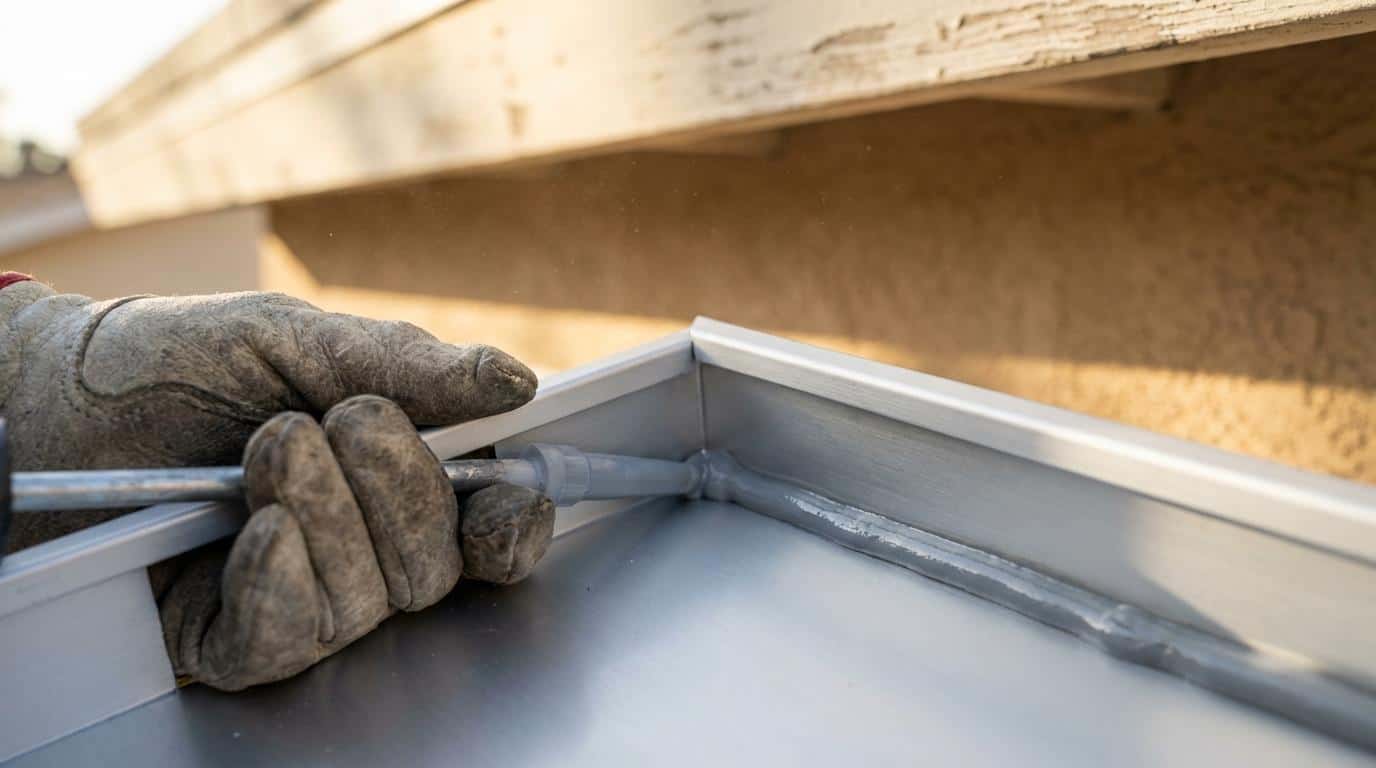
Aluminum gutter installation is the process of fabricating and mounting rust-resistant aluminum channels along a roofline to collect rainwater and route it away from the foundation through downspouts. In the Tucson area, it is a core defense against monsoon runoff, stucco staining, and foundation erosion.
A well-installed aluminum gutter system does more than catch rain. It protects stucco, fascia, foundations, walkways, and landscaping from the sudden runoff that arrives with Southern Arizona storms.
In Tucson and the surrounding region, aluminum gutter installation has to account for intense sun, long dry periods, blowing dust, and short bursts of heavy monsoon rain. That mix is exactly why aluminum remains a strong choice for residential and commercial properties: it resists rust, handles heat well, and offers a clean finished look that fits both traditional and modern architecture.
Why aluminum is a smart fit for Southern Arizona
Aluminum gutters offer a practical balance of durability, appearance, and value. They are light enough to reduce strain on the roof edge, yet strong enough to move a large volume of water when the system is sized correctly. Unlike steel, aluminum does not rust. Unlike vinyl, it is far less likely to soften, crack, or distort under prolonged desert heat.
That matters here. A gutter system may sit dry for weeks, then suddenly need to carry a major roof runoff event. If the material, hangers, slope, and seal points are not right, water can spill behind the gutter, stain exterior walls, or pool near the base of the building.
After the roofline is measured and the runoff demand is reviewed, aluminum also gives homeowners plenty of design freedom. It is available in a wide range of colors and finishes, so the gutters can blend into trim, fascia, or stucco rather than look like an afterthought.
After a paragraph like that, the main benefits are easy to see:
- Rust resistance
- Strong heat performance
- Light structural load
- Clean architectural lines
- Long service life
- Broad color selection
What proper installation actually includes
Good installation starts before any metal is cut. The roof edge and fascia should be checked for rot, movement, or old fastener damage, and weathered boards may need aluminum fascia wrap installation before new gutters go up. If the substrate is weak, even a premium gutter will struggle over time. Layout comes next: roof dimensions, downspout locations, drainage paths, and the direction of pitch all need to be mapped carefully.
For many homes, the gutter is sloped about 1/4 inch per 10 feet toward the downspout. That slight angle is enough to keep water moving without making the line look uneven from the ground. Downspouts are placed where runoff can leave the building efficiently and discharge well away from the foundation.
Small errors in pitch can create big drainage problems.
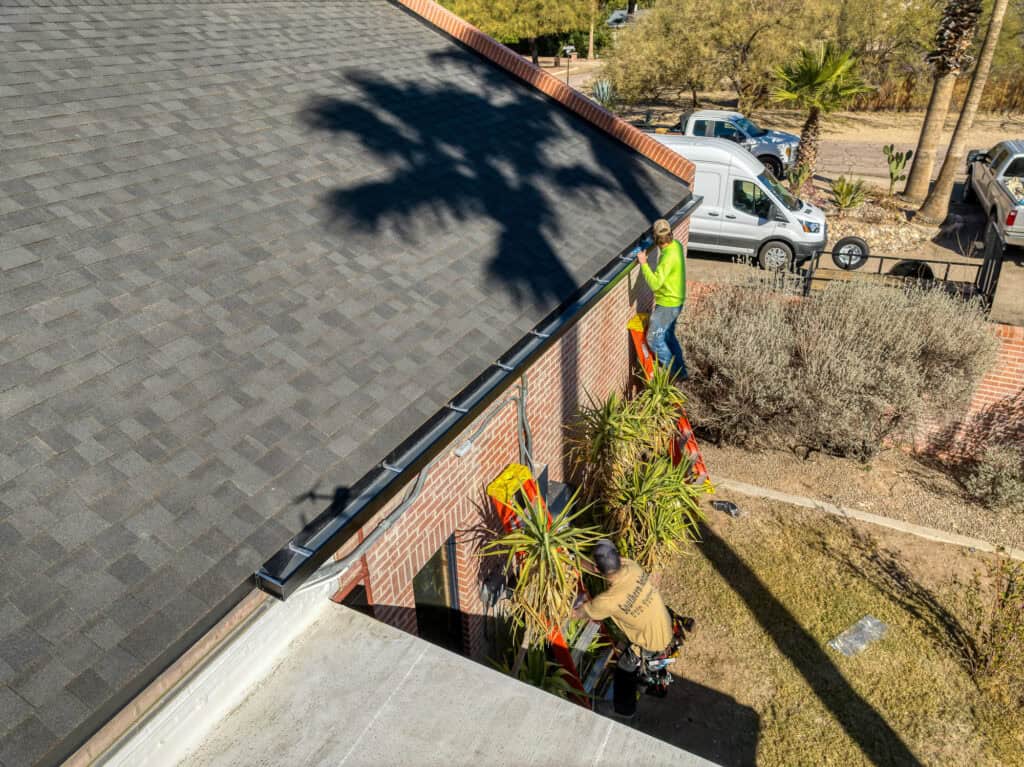
Once layout is finalized, the gutter sections are formed or cut to fit the structure, corners are fitted, outlets are placed, and supports are secured along the fascia. Southern Arizona Rain Gutters installs supports every two feet, which helps the system stay stable when a long run fills with water. Joints, end caps, and outlets are then sealed with a flexible sealant chosen for high-heat conditions.
Sizing options for different properties
Not every building needs the same gutter profile. Roof area, roof pitch, valley concentration, and desired water collection all influence sizing. A compact single-story home may perform well with a 5-inch system, while a larger residence or a commercial roofline may benefit from 6-inch gutters and larger downspouts.
| Gutter Size | Common Use | Downspout Pairing | Best Fit |
|---|---|---|---|
| 5-inch aluminum | Standard residential roofs | 2x3 or 3x4 downspouts | Most homes with moderate roof area |
| 6-inch aluminum | Large roofs or heavy runoff zones | 3x4 or 4x5 downspouts | Larger homes, valley-heavy roofs, some commercial buildings |
A site review helps determine whether standard sizing will perform well or whether a larger profile makes sense. That is especially useful for homes with tile roofs, long eave runs, or concentrated drainage points.
Materials, fasteners, and sealants matter
Appearance is only part of the story. The strength of an aluminum gutter system comes from the material thickness, the hanger spacing, the fastener quality, and the sealant used at every joint. A properly built system should stay attached, keep its line, and remain watertight through heat cycles and summer storms.
For many projects, heavy aluminum in the .027-inch range offers an excellent balance of value and durability. Heavier material may be chosen where roof runoff is more demanding. Corrosion-resistant screws and rivets help prevent premature failure, and a polyurethane-based sealant is a strong fit in hot climates because it stays flexible longer than many standard caulks.
A reliable installation usually includes these details:
- Material thickness: commonly .027-inch aluminum, with heavier options available for demanding rooflines
- Support spacing: hangers set every two feet for added strength
- Joint sealing: polyurethane sealant that remains flexible in desert heat
- Fastener choice: corrosion-resistant screws and rivets matched to the system materials
Those details may seem small during installation, yet they often decide how the gutter performs five, ten, or fifteen years later.
More than simple drainage
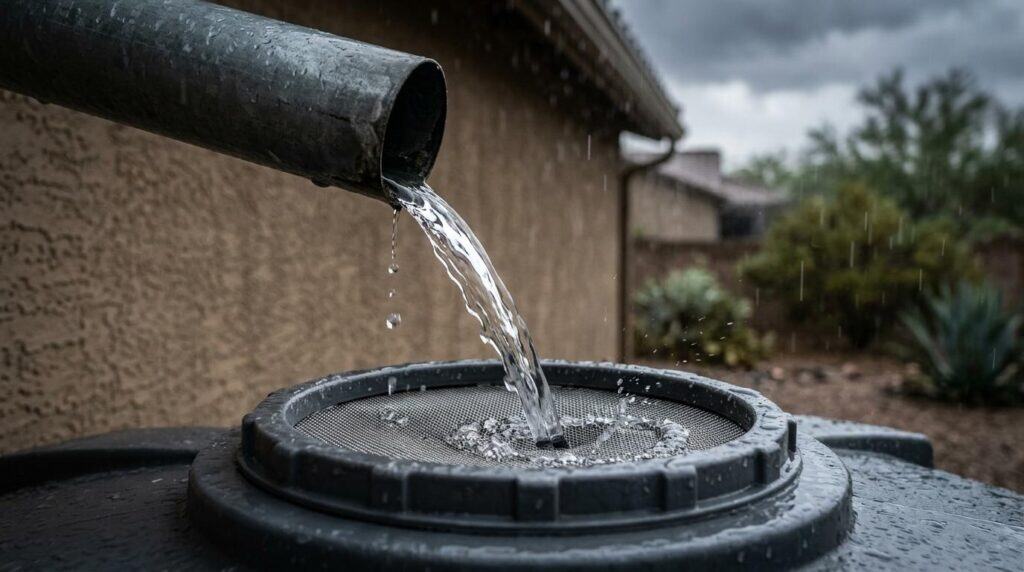
For many property owners, gutters are also the starting point for rainwater capture. Aluminum systems can be installed to feed collection tanks, landscape basins, or larger storage setups. That is a strong fit for Southern Arizona, where every storm can become a water resource instead of runoff.
Southern Arizona Rain Gutters designs and installs rainwater harvesting systems ranging from 200 gallons to more than 10,000 gallons. Tanks can be sealed and UV-protected, with screened openings that help limit algae growth and mosquito intrusion. For homeowners interested in water reuse, gutter layout and downspout planning should be done with the storage system in mind from the start.
Residential and commercial installation
Homes, rental properties, and commercial buildings all benefit from well-planned rain gutter installation, though the design priorities can differ. A homeowner may focus on protecting stucco and improving curb appeal. A property manager may be more focused on drainage reliability, maintenance access, and long-term repair cost. Commercial sites often need wider profiles, more downspout capacity, and careful routing around entries, sidewalks, and equipment.
Service across the greater Tucson area often includes Tucson, Oro Valley, Marana, Vail, Sahuarita, Green Valley, Nogales, Rio Rico, Sonoita, and 3 Points.
What the installation process looks like
Most projects follow a clear sequence. That helps keep the work organized and gives the property owner a better idea of what to expect on installation day.
- Site review and measurement
- Drainage planning and downspout placement
- Material selection and color matching
- Fabrication, fitting, and mounting
- Sealing, testing, and cleanup
After installation, water testing is a valuable step. Running water through the system can reveal slow spots, missed seal points, or discharge issues before the next storm arrives.
Maintenance after installation
Aluminum gutters are low-maintenance, not no-maintenance. In Southern Arizona, dust, seed pods, leaves, and fine debris can collect in the trough and harden into mud after rainfall. A yearly cleaning is wise for many homes, and a second inspection after monsoon season is often a good idea.
A yearly cleaning is wise for many homes, and a second inspection after monsoon season is often a good idea. You can follow our free seasonal gutter maintenance checklist for Tucson to stay on schedule through the monsoon cycle.
Watch for a few signs that service may be needed: water spilling over the front edge, brown streaking on stucco, visible sagging between hangers, or downspouts that drain too close to the foundation. Cleaning, minor resealing, and occasional adjustment can help preserve the system and prevent larger repairs.
For properties that also use rainwater harvesting, routine upkeep becomes even more important. Screens, first-flush components, outlets, and storage inlets should stay clear so the full system continues to work as intended.
A cleaner roofline, stronger drainage, and a better plan for rain
Aluminum gutter installation is one of those upgrades that improves both protection and appearance when it is done correctly. With proper sizing, secure support, heat-ready sealants, and drainage planning that fits the building, the system can perform for years while looking right at home on the property.
Southern Arizona Rain Gutters provides custom aluminum gutter installation for homes and businesses throughout the region, with options for continuous gutter runs, fascia wraps, coordinated finishes, rainwater harvesting integration, and even parts pickup for DIY-minded customers who want the right materials from the start.
Common Questions About Aluminum Gutter Installation
Are aluminum gutters a good choice for Tucson's climate?
Yes. Aluminum handles intense sun and high heat without rusting, softening, or cracking the way steel or vinyl can. It stays stable through long dry periods and performs well during sudden monsoon runoff, which makes it one of the most reliable gutter materials for homes and businesses across Southern Arizona.
How much does aluminum gutter installation cost in the Tucson area?
Pricing depends on the total length of gutter, whether the home needs 5-inch or 6-inch profiles, the number of downspouts, roof height and complexity, and any rainwater harvesting tie-ins. A long single-story run costs far less than a two-story home with multiple valleys. Because these factors vary by property, a free on-site measurement gives a far more accurate figure than a phone estimate.
Should I choose aluminum or copper gutters for my home?
For most Southern Arizona homes, aluminum offers the best balance of cost, rust resistance, and color choice. Copper lasts longer and develops a distinctive patina over time, but it carries a significantly higher price and is usually reserved for architectural or high-end projects. If you are weighing the two, our guide on copper vs aluminum gutterscompares cost, lifespan, and appearance in detail.
How often should aluminum gutters be cleaned in Southern Arizona?
Once a year is a reasonable baseline for most Tucson homes, with an extra inspection after monsoon season. Dust, seed pods, palo verde debris, and fine sediment can harden into mud inside the trough and block flow. Properties near heavy vegetation or with rainwater harvesting systems often benefit from more frequent checks. For an easy way to stay on track, download our free seasonal maintenance checklist built for the Tucson monsoon cycle.
Can aluminum gutters be color-matched to my home or HOA requirements?
Yes. Aluminum gutters come in a wide range of factory finishes, so they can be matched to your fascia, trim, or stucco rather than standing out. This also makes it easier to meet the HOA color requirements common in communities around Oro Valley, Marana, and Sahuarita. Color is reviewed during the site visit so the finished gutters complement the home.
How long does aluminum gutter installation take?
Most residential aluminum gutter installations are completed in a single day. Larger homes, two-story rooflines, commercial buildings, or projects that include fascia work or rainwater harvesting integration can take longer. Because seamless gutters are fabricated on site to fit each run, the work moves efficiently once measurement, drainage planning, and color selection are finalized.
How long do aluminum gutters last in Tucson?
With proper installation, correct hanger spacing, and heat-ready sealants, aluminum gutters commonly last 20 years or more in the Tucson climate. Service life depends heavily on material thickness, fastener quality, and whether annual cleaning and post-monsoon inspections are kept up.
What's included in a professional aluminum gutter installation?
A proper installation includes a fascia and roof edge review, drainage and downspout planning, custom fabrication of seamless runs, hangers set every two feet, polyurethane sealant at joints and outlets, and a final water test. Southern Arizona Rain Gutters follows this sequence on residential and commercial projects throughout Tucson, Oro Valley, Marana, Vail, Sahuarita, Green Valley, and surrounding communities.