ES
ES 
Southern Arizona Rain Gutters designs and installs rainwater harvesting systems for Green Valley homeowners who want to make better use of monsoon rain, reduce wasteful runoff, and support their landscape with stored water. We build complete systems with seamless gutters, downspouts, storage tanks, and cistern options that fit the way Southern Arizona homes actually handle rain.
In Green Valley, a good system has to do more than collect water. It has to stand up to harsh sun, handle fast summer storms, and make sense for the way you use your yard. Southern Arizona Rain Gutters custom-designs systems from 200 gallons to 10,000+ gallons, so you are not stuck with a one-size-fits-all barrel that does not match your roof, lot, or water goals.
Rainwater harvesting systems in Green Valley AZ built for monsoon runoff and desert sun
A Green Valley roof can send a surprising amount of water off the edge in one hard monsoon storm. Southern Arizona Rain Gutters captures that runoff with seamless gutter systems and directs it into above-ground plastic tanks or steel culvert cisterns, so more water stays on your property where you can use it.
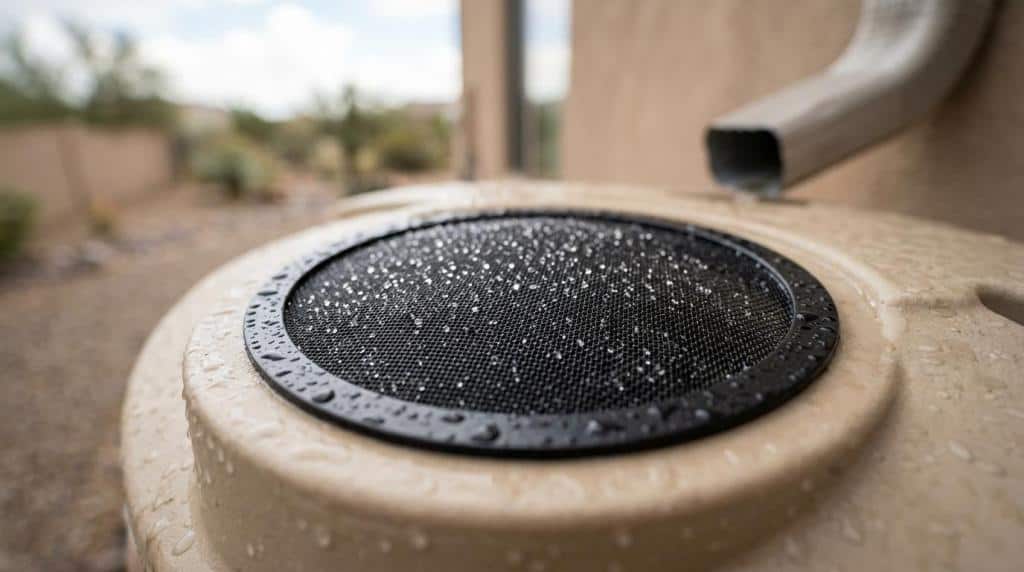
We size each system around your roofline, drainage points, available space, and how much storage you want. Just as important in this climate, Southern Arizona Rain Gutters uses sealed, UV-protected tanks with screened openings to help prevent algae growth and mosquitoes while holding up better in desert sun.
"Southern Arizona Rain Gutters designs custom rainwater harvesting systems from 200 gallons to 10,000+ gallons for Southern Arizona properties."
Depending on your property, the system can be simple and practical or built for larger storage and a cleaner finished look. We will help you choose the right mix of collection, storage, and exterior materials.
A typical Green Valley rainwater harvesting project may include:
- Seamless aluminum gutters in multiple colors for dependable roof-water collection
- Copper gutters with patina options when appearance matters as much as function
- Fascia wrap where the roof edge needs added protection and a more finished look
- Above-ground plastic tanks or steel culvert cisterns based on capacity, placement, and budget
Southern Arizona Rain Gutters plans the gutter side and the storage side together, which matters because a tank only works well when the collection system feeding it is properly laid out. That means fewer drainage headaches, less washout around the house, and a system that looks intentional instead of pieced together.
Custom gutter profiles, downspouts, and cistern placement for Green Valley homes
Not every home in Green Valley sheds water the same way. Roof pitch, patio covers, lot slope, existing fascia, and where you have room for tanks all affect the design. Southern Arizona Rain Gutters looks at those details before we recommend gutter profiles, K-Style runs where appropriate, downspout locations, and cistern placement.
That design work makes daily use easier for you. Instead of dragging hoses across the yard or watching water dump into one gravel corner, you get a system that sends runoff where it can be stored or put to use more effectively.
Southern Arizona Rain Gutters also helps you match materials to the home. Aluminum gutters with long-lasting finishes are a solid choice when you want lower maintenance, while copper can be the right fit if you want a more custom exterior look. If your fascia is weathered or exposed, fascia wrap can improve the finish while helping protect that roof edge from more sun and weather exposure.
"Southern Arizona Rain Gutters uses sealed, UV-protected tanks and screened openings to help prevent algae and mosquitoes in Southern Arizona conditions."
Green Valley rainwater harvesting for landscape irrigation and water conservation
For many homeowners, the goal is straightforward. You want to use stormwater on your property instead of paying to irrigate everything with drinking water. Arizona state guidance supports that approach, noting that rainwater and gray water harvesting can reduce drinking-water use for landscape irrigation, especially when paired with low-water-use plants.
Southern Arizona Rain Gutters builds systems for that real-world use. If you want stored rainwater to support trees, native plantings, or drought-tolerant beds after a storm, we can design around that. If you want to reduce nuisance runoff and direct water into better places on the property, we can plan for that too.
The City of Tucson also describes water harvesting as a way to capture storm runoff for landscape plants while reducing stormwater flowing into streets and adjacent properties. That matters in Green Valley because one heavy storm can do a lot of erosion in a short amount of time if roof runoff is not controlled.
Southern Arizona Rain Gutters also plans for what happens when storage is full. Overflow routing is part of a smart system, especially during monsoon season, so extra water does not turn into a washout problem near walkways, patios, or planting areas.
Tucson Water rebate and financing rules that may affect your Green Valley project
If your installation address has active Tucson Water service, there may be a rebate path for your system. According to Tucson Water, qualifying single-family residential customers and some small commercial properties may be eligible if the address had active service before purchase and installation, the project receives pre-approval, and the applicant completes an approved workshop. The rebate is based on total storage capacity and is capped at $2,000 per property.
"For properties with active Tucson Water service, Southern Arizona Rain Gutters installs storage systems that may fit rebate rules capped at $2,000 per property."
That eligibility detail matters in Green Valley because not every property is served the same way. Before you buy parts or commit to storage size based on a rebate assumption, it is smart to verify the water account at the installation address and check current program timing. Tucson Water has also stated that funding is limited, and on its June 11, 2026 update it noted that no pre-approval applications would be accepted after March 15, 2026, with the rebate expected to reopen in July 2026.
For qualifying low-income homeowners, Tucson Water also offers added help through grants and zero-interest loans in partnership with Sonora Environmental Research Institute. Current published guidelines list grants up to $1,000 for families at or below 100% of Federal Poverty Guidelines, grants up to $750 for families between 100% and 200%, and zero-interest loans up to $2,000 with 12-month payment plans.
Southern Arizona Rain Gutters cannot change program rules, but we can design your system around realistic storage goals and help you understand the physical components you are pricing out, from gutters and downspouts to cistern capacity. That makes it easier to compare options before you spend money.
Professional installation or DIY parts pickup for Green Valley homeowners
Some Green Valley homeowners want a full install. Others are comfortable doing part of the work themselves and mainly need the right materials and layout. Southern Arizona Rain Gutters offers both professional installation and DIY parts pickup, so you can choose the level of help that fits your budget, schedule, and skill level.
We are usually a good fit when:
- You want a custom rainwater harvesting system instead of an off-the-shelf barrel setup
- You need new seamless gutters, fascia wrap, and storage planned as one project
- You want storage sized for your property, whether that is a smaller 200-gallon setup or a much larger cistern system
- You want materials that hold up better in Southern Arizona sun and storms
Southern Arizona Rain Gutters also offers flexible payment plans, which can help if you would rather install a better long-term system now than settle for a temporary fix that you will outgrow after one monsoon season.
Talk with Southern Arizona Rain Gutters about your Green Valley rainwater harvesting system
If you are ready to capture roof runoff, support your landscape, and build a system that makes sense for Green Valley conditions, Southern Arizona Rain Gutters can help you sort through the options. Reach out to discuss your roof, your yard, your storage goals, and whether you want a full installation or parts for a DIY project.
Questions Green Valley homeowners often ask before they start
How much water can a Green Valley roof actually collect during a storm?
More than most people expect. As a general rule, every 1,000 square feet of roof captures roughly 600 gallons for each inch of rain that falls. Even a modest summer storm can fill a good portion of a tank, which is why sizing your storage to your roof area and local rainfall matters more than just picking a round number off a shelf.
Do I need a permit to install a rainwater harvesting system in Green Valley?
For most residential setups used for landscape watering, no special permit is typically required in Arizona. Requirements can change based on system size, placement, and whether any plumbing ties into the home, so it is worth confirming with your local jurisdiction before a larger project. We can talk through how your planned setup fits the common residential approach.
Can harvested rainwater be used for anything besides watering plants?
In practice, most Green Valley systems we build are intended for landscape and outdoor use, since that is where homeowners see the clearest payoff. Using stored rainwater for indoor or potable purposes involves additional filtration and treatment that go beyond a standard collection setup, so we generally design around irrigation and outdoor needs unless you have a specific plan in mind.
How much upkeep does a system need once it is installed?
Day to day, it is fairly low effort. The main things are keeping gutters clear of leaves and debris so water flows cleanly into storage, glancing at inlet screens now and then, and checking that overflow routing stays unobstructed before monsoon season. A system that is laid out well from the start tends to need far less attention than one that was patched together.
Can a system be added to a home that already has gutters?
Often, yes, though it depends on the condition and layout of what is already there. Existing gutters sometimes need new downspout placement or adjustments to feed a tank properly, and in some cases worn runs are better replaced than worked around. We look at your current setup first and tell you honestly what can be reused and what is worth upgrading.
How long does a typical installation take?
It varies with the size and complexity of the project. A straightforward setup with gutters and a single tank moves quickly, while a larger multi-cistern system with fascia work takes longer to plan and install. Once we have seen your roof, lot, and storage goals, we can give you a realistic timeline rather than a rough guess.