ES
ES 
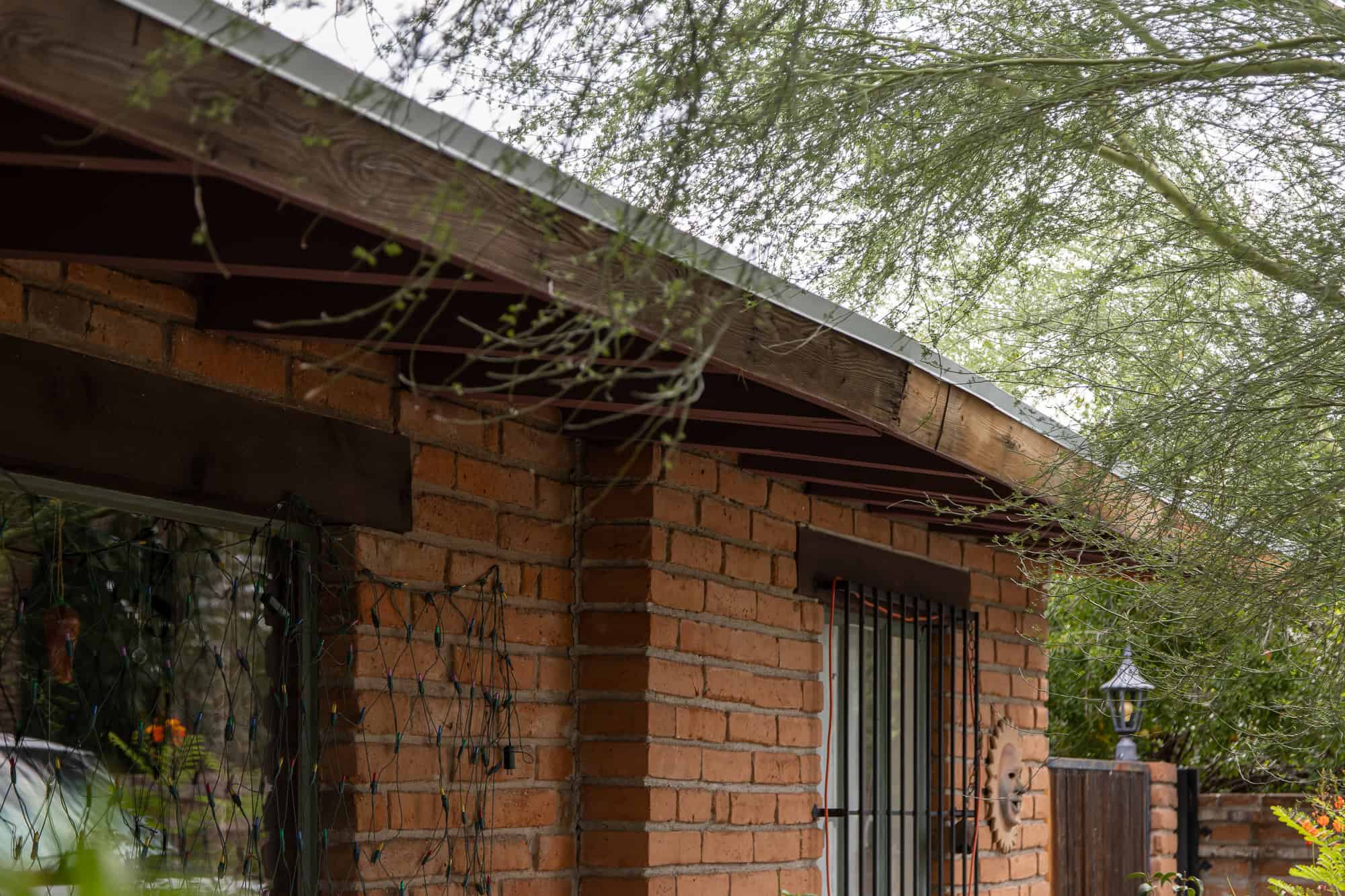
Fascia board repair is the step people hope to skip. The appeal of a fascia wrap is that it covers tired wood in maintenance-free aluminum, so the natural assumption is that whatever condition the board is in stops mattering once the aluminum goes on.
It does not work that way. A wrap is a covering, not a structural repair. The wood underneath still has a job to do after the aluminum is installed, and if it cannot do that job, wrapping it just puts a very long-lived finish over a problem that keeps developing out of sight. This post covers how to tell the difference between a board that is simply weathered and one that needs work first.
Can You Wrap Damaged Fascia Board
Sound wood can be wrapped as it stands, even if it looks rough. Peeling paint, faded color, and general weathering are surface conditions, and none of them stop a wrap from going on. Compromised wood is different. Boards that are cracked, warped, or soft need to be repaired or replaced before anything is installed over them.
The dividing line is not how the board looks. It is whether the wood can still hold a fastener and carry a load. Aluminum is fixed to the fascia, and on most homes the gutter line hangs off that same board. Both of those depend on wood with enough integrity left to grip a fastener and keep gripping it through years of heat cycling and monsoon loading.
That is why an honest assessment happens before a quote is finalized rather than after the crew arrives. Ugly and unsound are two different findings, and only one of them adds work.
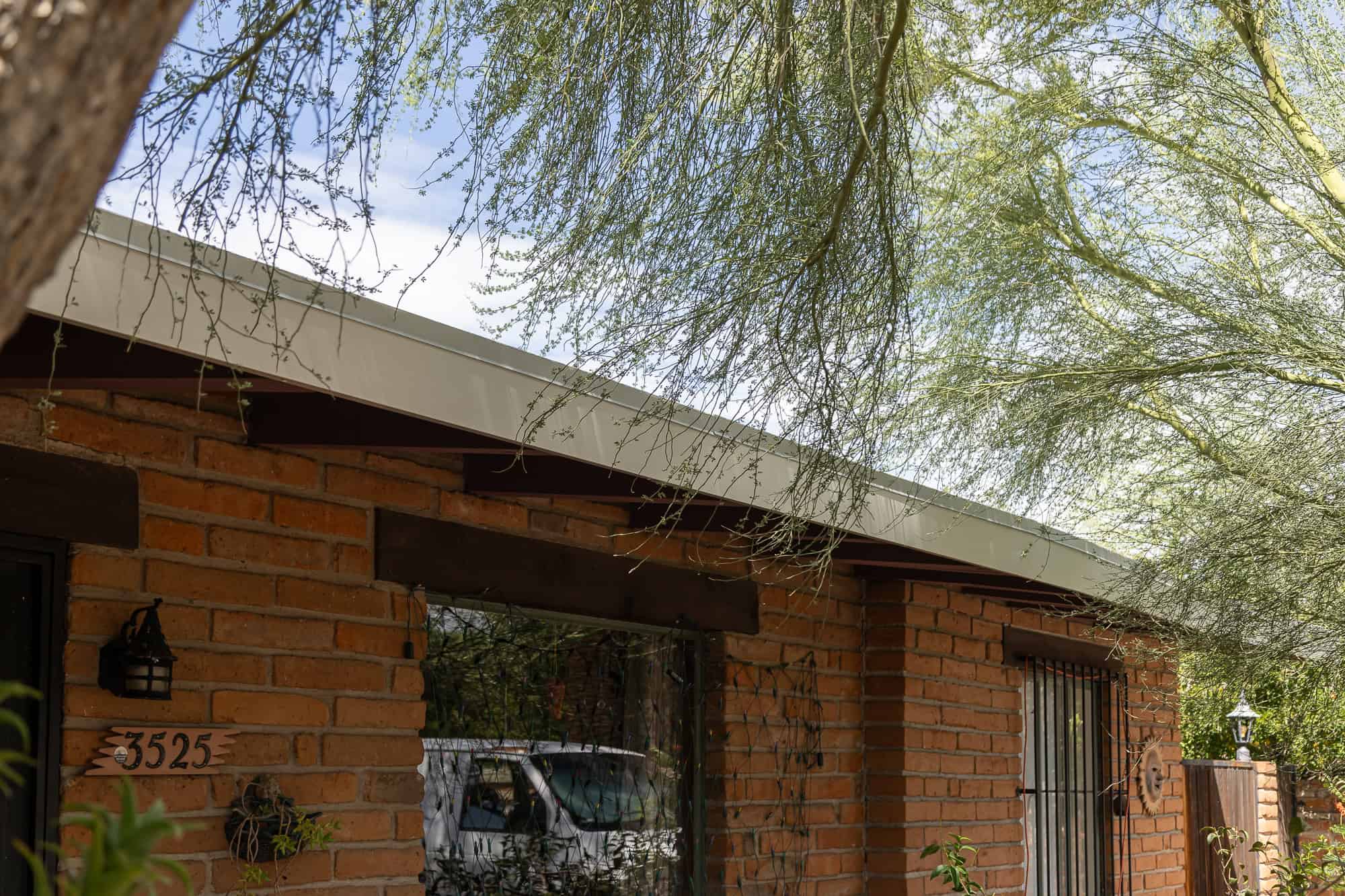
How to Tell Sound Fascia From Failing Fascia
Most of it you can assess from the ground with a decent look and a ladder for a closer check. What you are separating is cosmetic weathering, which is common and harmless, from structural loss, which is not. The table below maps what you see to what it usually means.
| What you see | What it usually means | Likely action |
|---|---|---|
| Peeling or fading paint, wood firm underneath | Surface weathering only | Usually wraps directly |
| Cracking or warping along the board | Wood has moved through heat and moisture cycling | Assess on site, sections may need replacing |
| Soft or spongy spots, fasteners not holding | Moisture has broken the wood down | Repair or replace before wrapping |
| Dark staining or mold after monsoon season | Moisture has been present and sustained | Find the source before covering anything |
| Gutter sagging or pulling away from the roofline | Fasteners are losing their grip in the board | Board condition checked before rehanging |
The soft spot test is the one that settles most arguments. Firm pressure with a screwdriver on a suspect area tells you quickly whether you are dealing with a surface problem or a board that has lost its structure.
Why Fascia Fails in Southern Arizona
Wood decay needs sustained moisture. Fungi that break wood down depend on suitable temperature, moisture, and oxygen, which is why wood that stays genuinely dry does not rot, and why the failures we find are almost always where water has been sitting or repeatedly wetting the same spot. The US Forest Service covers the mechanism in its Wood Handbook chapter on biodeterioration of wood.
That sounds like it should make the desert safe, and mostly it does. Our fascia problems are not slow constant damp the way they are in a wet climate. They are concentrated and local. A gutter that overflows in a monsoon burst and dumps behind the board. A joint where water gets in and cannot dry. A section shaded enough to stay wet for days after a storm while everything around it dried in hours.
Sun does the other half of the damage, and it does it everywhere at once. Intense ultraviolet exposure breaks down the paint film and the wood surface beneath it, opening cracks and lifted edges. Then the monsoon arrives and drives water into every opening the heat created. That pairing, not humidity, is what takes fascia apart here, and it explains why the worst boards are usually on the west and south elevations.
What Fascia Board Repair Involves
Repair is usually partial rather than wholesale. Damage tends to be localized around a specific water path, so the common outcome is replacing affected sections rather than every board on the house. A run that looks bad along its whole length often turns out to have two or three genuinely failed areas and a lot of cosmetic weathering between them.
The sequence matters. The gutter comes off, the board is assessed properly with the gutter out of the way, failed sections are replaced, and only then does the aluminum go on. Because the gutter has to come down anyway for a wrap, that is the natural moment to find out what the board behind it has actually been doing. Our fascia wrap installation process covers the full sequence from assessment through the finished roofline.
Finding the water source is part of the job, not an extra. Replacing a rotted section without working out why that specific spot stayed wet just resets the clock on the same failure, this time hidden under aluminum where nobody will see it developing.
Why the Gutter Line Raises the Stakes
The fascia is not just trim. On most homes it carries the entire gutter system, and during a storm a loaded gutter can hold the weight of a full-grown person. All of that load transfers into the board through the hangers.
The accepted standard is hangers set roughly every 24 inches, which means a long run puts a substantial number of fastening points into the same board. Every one of them needs wood that will hold. The chart below works through what that spacing implies across typical run lengths.
Seamless rain gutters are formed on site in one continuous piece, so a run is a single length of metal transferring load into a single line of fasteners. If a stretch of that board is soft, the hangers there stop contributing and the neighboring fasteners take more than they were meant to.
What Happens If You Wrap Over Bad Wood
The damage continues, and you lose the ability to see it. That is the real cost. Aluminum sheds water well, but a wrap is not a sealed enclosure, and it does nothing about a water path that was already delivering moisture behind the board.
What you have then is decay progressing underneath a finish designed to last 50 to 100 years. The visual warnings that would normally prompt action, the peeling and the staining, are now hidden. The first sign tends to be mechanical instead: a gutter starting to sag, or fasteners that will not stay tight.
Correcting it later means removing aluminum that was installed to be permanent. Doing the repair first costs comparatively little. Doing it second means paying for the wrap twice.
Getting the Order Right
The correct sequence is assess, then fascia board repair wherever it is needed, then wrap. It is worth insisting on that order, because everything downstream depends on the board being sound at the moment the aluminum goes on.
If you are still deciding whether to wrap at all rather than repaint again, that is a separate question with a different answer, and we work through it in fascia wrap versus painting. Board condition matters either way. Paint over compromised wood fails faster than paint over sound wood, so a bad board is bad news whichever finish you choose.
Homeowners across Tucson, Oro Valley, Marana, Vail, Sahuarita, and Green Valley usually reach this question the same way, by noticing something about the gutter rather than the fascia. Sagging, loose fasteners, or overflow in a storm are all worth a look at the board behind them.
Key Takeaways
- A wrap is a covering, not a structural repair, so the board still has to hold fasteners after the aluminum is on.
- Ugly and unsound are different findings. Weathered paint over firm wood usually wraps directly.
- Firm pressure on a suspect area separates surface weathering from a board that has lost its structure.
- Repairs are usually partial, because damage concentrates around a specific water path rather than spreading evenly.
- Finding why that spot stayed wet is part of the repair, otherwise the same failure repeats out of sight.
- Wrapping over bad wood hides the warning signs behind a finish meant to last decades, and correcting it later means removing that finish.
Fascia Repair Questions from Tucson Homeowners
Can a fascia wrap go over rotted wood?
No. Rotted sections need repair or replacement first, because the board still has to hold the fasteners for the aluminum and usually for the gutter line as well. Wrapping over failing wood hides the problem rather than solving it, and the decay continues underneath.
How do I know if my fascia is rotted or just weathered?
Press a suspect area firmly. Wood that stays firm is weathered but sound, and peeling paint alone is a surface condition. Wood that feels soft or spongy, or that will not hold a fastener, has lost structural integrity and needs attention before anything is installed over it.
Does the whole fascia need replacing if part of it is bad?
Usually not. Damage tends to concentrate around a specific water path, so replacing affected sections is the common outcome rather than redoing every board. A run that looks poor along its length often has only two or three genuinely failed areas.
Why does fascia rot in a dry climate like Tucson?
Because the moisture here is concentrated rather than constant. Overflowing gutters, joints that trap water, and shaded sections that stay damp after a storm create the sustained wetting that decay needs. Intense sun opens cracks in the paint and wood first, and monsoon rain then drives water into them.
Do the gutters have to come off for fascia repair?
Generally yes, and that is useful rather than inconvenient. With the gutter down the board can be inspected properly along its full length. Since a wrap requires the gutter to come off anyway, repair and wrapping are efficiently handled in the same visit.
How long does an aluminum fascia wrap last once the board is sound?
The finish is chemically bonded and carries a 50 to 100 year lifespan, and it will not fade, rust, or peel. That longevity is exactly why the wood underneath needs to be right first, because the covering is intended to stay put far longer than a paint finish would.
Can I just replace the fascia instead of wrapping it?
You can, though new wood starts the same maintenance cycle over again in the same sun and monsoon conditions. Wrapping repaired boards in aluminum addresses the exposure that caused the failure. A site review is the practical way to compare the two for your roofline.