ES
ES 
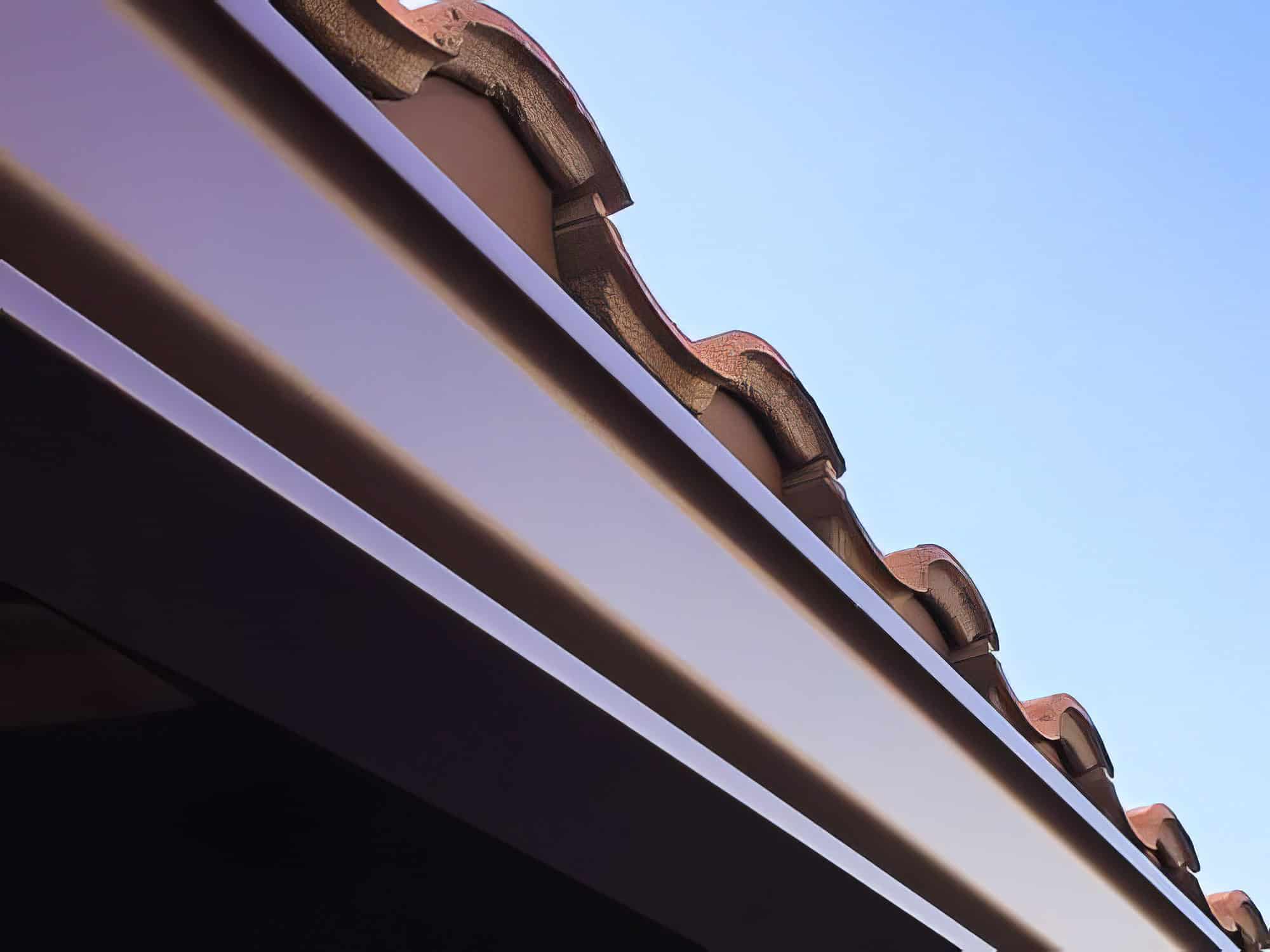
Gutters for tile roofs are not a different product, they are a different installation. The materials are the same ones we hang on any Tucson home, aluminum or copper, formed seamlessly on site. What changes is where the gutter sits, how it is sized, and how the crew works around a roof covering that does not tolerate being walked on carelessly.
Clay and concrete tile is everywhere in Southern Arizona, on everything from 1970s ranch houses to new builds in Oro Valley and Marana. Yet most gutter advice online is written for asphalt shingle, which behaves differently at the eave in ways that matter. This post covers what actually changes. If you are still choosing a profile, our rain gutter options are the starting point.
Do You Need Special Gutters for Tile Roofs
No. There is no separate tile roof gutter you need to buy. The same K-style, half-round, and European box profiles are used, in the same aluminum and copper, and they are formed on site the same way.
What tile changes is the geometry at the eave and the behavior of the water arriving. Those two things affect placement, size, and downspout count. So the honest answer is that the gutter is standard and the install is not, which is the opposite of how it is usually sold. For a broader look at what suits this climate generally, we cover that in the best rain gutters for Tucson.
Why Tile Changes Where the Gutter Sits
Tile projects further past the fascia than shingle does, so water leaves the roof further out from the wall. A gutter positioned by eye against the fascia can end up behind the line the water is actually falling on, which produces the classic complaint of a roof that overshoots its gutters in a hard storm.
This is understood in the tile trade rather than being a gutter-side opinion. Tile roofing installation guidance treats the eave and gutter detail as part of working out the desired overhang, alongside tile dimensions and eave closure. The Tile Roofing Industry Alliance publishes the installation manuals that cover those eave details. In other words the gutter is part of the roof edge detail, not an accessory bolted on afterward.
In practice that means measuring where the discharge line falls before setting the gutter, not just hugging the fascia board. On a re-roof this is worth raising early, because if tile is being replaced the overhang may change and the gutter position should be confirmed against the new edge rather than the old one.
How Water Actually Leaves a Tile Roof
Barrel and S-profile tile does not shed water evenly along the eave. The shape channels flow into the pans between the raised sections, so runoff arrives at the gutter concentrated into streams rather than spread as a sheet. Flat tile behaves more evenly, but still overhangs.
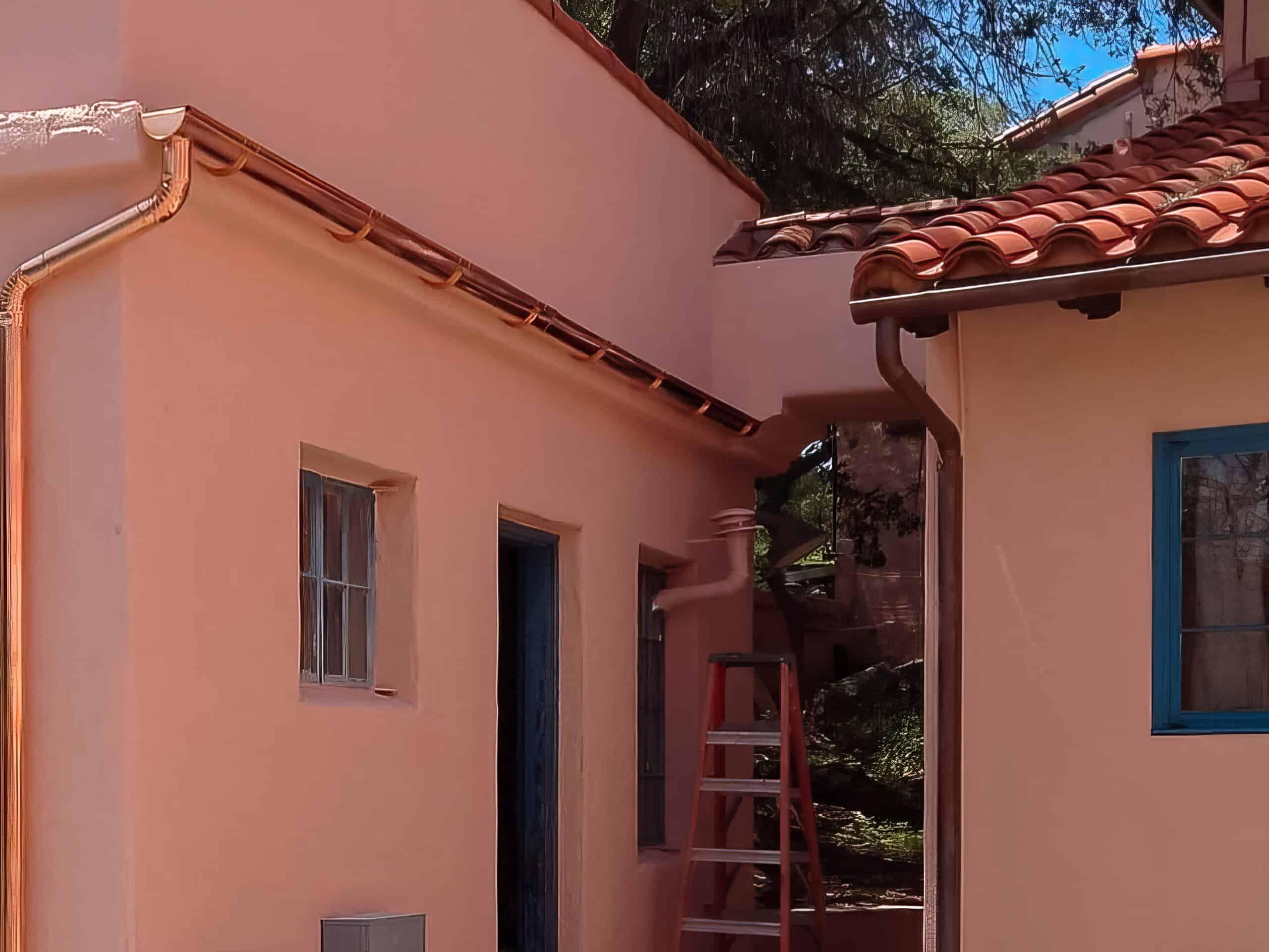
Concentrated flow matters during monsoon season, when a large volume arrives in a short window. A trough that would handle the same total spread evenly can be overwhelmed at the specific points where the pans discharge. That pushes toward being generous on sizing and deliberate about where downspouts go, rather than spacing them out by habit.
| Tile roof factor | Why it matters at the gutter | What it changes |
|---|---|---|
| Tile overhangs the fascia | Water leaves the roof further out than on shingle | Gutter set to the discharge line, not just to the board |
| Barrel and S-profile pans | Runoff concentrates into streams rather than a sheet | Sizing and downspout placement account for point flow |
| Grit and debris from tile | Material works loose and collects in the trough | Clearing stays part of routine maintenance |
| Tile is brittle underfoot | Careless access can crack tile and cost a repair | Work approached from the gutter line where possible |
| Fascia sits beneath the tile edge | The board carries the entire gutter load | Condition assessed before anything is hung |
Getting the Slope Right on a Long Run
A gutter has to fall toward its outlets or water sits in it. The accepted standard is about a quarter inch of fall per 10 feet of run, and up to half an inch per 10 feet where rainfall is heavy. That sounds trivial until you work it out across a long elevation.
On a tile roof that drop has to be achieved while staying under the tile edge along the whole run, which is why long elevations are often split into two runs draining to separate downspouts rather than forced into one continuous fall. Seamless rain gutter installation helps here, because a run formed on site in one piece has no joints competing with the pitch.
Aluminum or Copper Under Tile
Both work well under tile and the choice is mostly about appearance and budget horizon. Aluminum does not rust, handles the heat and ultraviolet load without becoming brittle, and is built to last 30 or more years. It can be finished to sit quietly against the roof rather than drawing attention.
Copper is the choice when the gutter is meant to be seen. It develops a natural patina over time and can last up to four times longer than a standard system, and the weathered tone sits particularly well against terracotta and earth-toned tile. Copper gutter installation is common on Spanish and Mediterranean styles for exactly that reason.
On profile, K-style is offered in 5, 6, and 8 inch and covers most homes. Half-round suits traditional and Spanish designs and pairs naturally with copper. Downspouts come in standard 2x3 and 3x4 inch sizes with larger sections for bigger roofs, and given the concentrated flow off barrel tile, sizing up is worth discussing rather than defaulting to the smallest that fits.
Protecting the Tile During Installation
Cracked tile is the avoidable cost on this kind of job. Clay and concrete tile is brittle, and weight in the wrong place breaks it, which turns a gutter installation into a roofing repair and a color-matching exercise on tile that may no longer be manufactured.
The practical answer is to minimize time on the roof field and work from the gutter line and ladders wherever the job allows. Where access across tile is unavoidable, it is done deliberately and in the right places rather than casually. It is a fair question to ask any contractor before they start, and a vague answer tells you something.
The Fascia Underneath Matters
The gutter does not hang from the tile, it hangs from the fascia board underneath. During a storm a loaded gutter can hold the weight of a full-grown person, and all of that transfers into the wood through hangers set at roughly every 24 inches.
Fascia under a tile edge is partly shaded by the overhang, which helps, but it still takes monsoon moisture and years of heat cycling. Because the tile edge sits above it, deterioration can develop with less of it visible from the ground than on an exposed roofline. If the board is soft or the existing gutter is sagging, that gets addressed before new gutter goes up, not after.
Homeowners across Tucson, Oro Valley, Marana, Vail, Sahuarita, Green Valley, and Three Points live under tile more often than not, so this comes up on most jobs. It is a short check during the site visit rather than a separate exercise.
Key Takeaways
- Gutters for tile roofs use the same profiles and materials as any other roof, and it is the installation that differs.
- Tile overhangs further than shingle, so the gutter is set to where water actually falls rather than tight to the fascia.
- Barrel and S-profile tile concentrates runoff into streams, which argues for generous sizing and deliberate downspout placement.
- Achieving proper fall under a tile edge often means splitting a long elevation into two runs rather than one.
- Cracked tile is the avoidable cost, so how a contractor plans to access the roof is a fair question to ask up front.
- The fascia carries the load, and under a tile edge its condition is less visible from the ground.
Tile Roof Gutter Questions from Tucson Homeowners
Do tile roofs need special gutters?
No. The same profiles and the same aluminum or copper are used as on any other roof. What differs is the installation, specifically where the gutter is positioned relative to the tile overhang, how it is sized for concentrated runoff, and how the roof is accessed during the work.
Why does water overshoot my gutters on a tile roof?
Usually because the gutter sits behind the line the water is actually falling on. Tile projects further past the fascia than shingle, so a gutter positioned tight to the board can miss part of the discharge during heavy rain. Correcting the position generally solves it.
Does barrel tile need bigger gutters?
It is worth discussing. Barrel and S-profile tile channels runoff into the pans, so water arrives concentrated at points rather than spread evenly along the eave. That makes generous sizing and well placed downspouts more important than they would be under flat roofing.
Will installing gutters crack my roof tiles?
It should not, provided access is planned. Tile is brittle and weight in the wrong place breaks it, so the work is approached from the gutter line and ladders wherever possible. Ask any contractor how they intend to access the roof before work begins.
Should I choose copper or aluminum under clay tile?
Both perform well, so it comes down to appearance and how long you want the system to last. Aluminum does not rust and is built for 30 or more years. Copper develops a patina that suits terracotta tile and can last up to four times longer than a standard system.
Do gutters attach to the tile or the fascia?
To the fascia board underneath the tile edge. Nothing hangs from the tile itself. That is why the condition of the fascia is checked first, since it carries the full weight of a loaded gutter during a storm.
Should gutters go on before or after a tile re-roof?
Raise it early either way. If tile is being replaced the overhang can change, so gutter position should be confirmed against the finished roof edge rather than the old one. Coordinating the two avoids setting a gutter to a line that is about to move.