ES
ES 
Fascia gutter support is the structural relationship between your gutters and the wood board they hang from. On most Tucson homes the gutters do not attach to the roof itself. They attach to the fascia, the flat board that runs along the lower edge of the roofline just below the shingles, and that board carries the entire run. When the fascia is sound, the gutters stay level and tight to the house. When it is not, no amount of quality gutter can make up for a mounting surface that has started to fail. That is why fascia condition and gutter performance are really one subject, and it is a big part of why our fascia wrap service exists in the first place.
This matters more in Southern Arizona than people expect. Our climate looks gentle on wood for most of the year, then the monsoon arrives and loads the system fast. A gutter full of moving water pulls hard on every fastener, and every one of those fasteners is anchored in the fascia. Understanding how that support works helps you catch trouble early, before a sagging gutter turns into water running against your foundation.
What fascia gutter support actually means
Fascia gutter support means the fascia board acts as the mounting surface and the load-bearing anchor for the gutter run. The fascia is the finished board along the edge of the roof, sitting just under the shingles. Gutters hang from it with metal hangers, so the board carries the weight of the gutter, the water inside it, and any debris that collects along the way. Put simply, the gutters do not float on the roof. They lean on the fascia for their entire length.
Because that connection is continuous, a weak spot in the fascia becomes a weak spot in the gutter above it. A short section of soft or cracked wood can let one part of the run drop while the rest stays put, which throws off the slope and creates standing water where there should be flow. Keeping the board healthy is the quiet half of keeping gutters working, and it is the half most homeowners never think about until something starts to sag.
How your gutters attach to the fascia
Gutters attach to the fascia with hangers that fasten through the board, and the strongest installations reach past the wood into the rafter tails behind it. Hidden hangers are the common choice on residential K-style gutters. They clip into the front lip of the gutter and screw through the back into the fascia. Most installers set these hangers roughly every 24 inches, which is the accepted standard for solid support, although the right spacing can shift with the gutter size and local conditions.
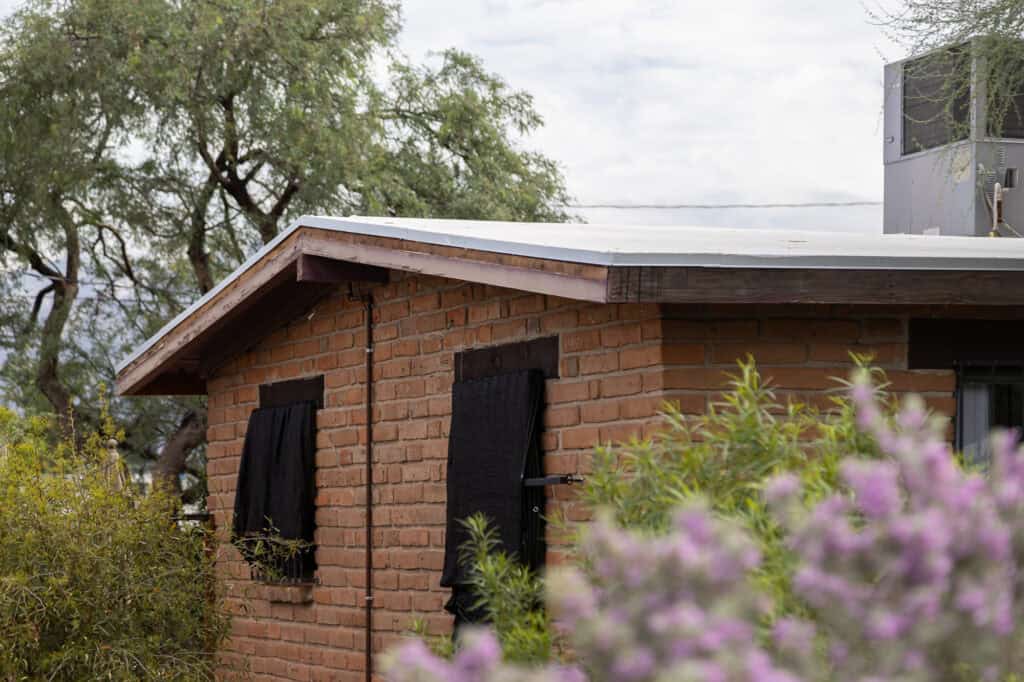
The key point is that every hanger is only as good as the wood it bites into. Home inspection guidance stresses checking the connection where the gutter meets the fascia, looking for gaps, loose spikes, and daylight between the back of the gutter and the board. You can see how inspectors evaluate that connection in this guide to inspecting gutters and downspouts from a national home inspection association. When the fastening is right and the board is solid, the whole gutter system stays put through years of weather.
Why the load matters during a Tucson monsoon
The load matters because a gutter in use is far heavier than it looks when empty. Seamless gutters are custom-formed on site in one continuous piece, and during a storm a gutter can hold the weight of a full-grown person. All of that weight transfers straight into the fascia through the hangers. During a hard monsoon cell, water fills the run faster than it can drain, and the fascia has to bear that surge without flexing or letting go.
Tucson does not deal with the snow and ice loads that push northern installers toward tighter hanger spacing, so the local test is a different one. Here it is repeated cycles of intense sun followed by sudden heavy rain. That pattern is hard on wood, and it is hard on the fasteners holding your gutters to that wood. Support that seemed perfectly fine in April can be put to the test in July, which is exactly why good fascia gutter support is worth attention before the season starts, not after.
What happens when the fascia can no longer hold
When the fascia can no longer hold, the gutters usually show it before the board does. The first signs are a section that begins to sag, a gutter that pulls away from the house along its top edge, or fasteners that back out and leave gaps. Once the seal between the gutter and the fascia opens up, water starts running behind the gutter instead of through it, and that is when the trouble spreads.
From there the damage tends to feed itself. Water behind the gutter soaks the fascia, the soffit, and sometimes the rafter tails, which softens the very wood the hangers depend on. A softer board grips fasteners less well, so more of the run loosens, and more water gets in behind it. Catching this while the wood is still solid is the difference between a straightforward correction and a much larger repair down the line.
How a fascia wrap protects the surface your gutters mount to
A fascia wrap protects the surface your gutters mount to by sealing the wood inside a custom-fit aluminum covering. The wrap is installed over the existing wood fascia in long overlapping sections and tucked under the drip edge to seal out water. Its finish is chemically bonded and rated to last 50 to 100 years, and it will not fade, rust, or peel. That keeps the board dry and stable, which is exactly the condition the hangers need in order to keep their hold over the long run.
The practical payoff is longevity. Aluminum gutters commonly last 30 years or more in our climate, and a wrapped fascia is built to outlast even that. The chart below compares the two, and it makes the point plainly: the mounting surface can stay sound far longer than any single set of gutters.
Because the surface behind the gutters stays sound for so long, a wrap means you are not remounting new gutters onto tired wood years from now. The support stays there, ready for whatever gutters hang on it next.
Signs your fascia may not be supporting your gutters well
The clearest signs are visible from the ground: peeling or fading paint, cracking or warping wood, and any spot where the gutter has begun to pull away from the house. Homes with east or west sun exposure, and areas that trap monsoon moisture or mold, tend to show wear first. The table below sums up what to look for and why each sign matters for the support underneath.
| Warning sign on the fascia | What it can mean for the gutters |
|---|---|
| Peeling or fading paint | The wood is losing its protective barrier and starting to dry out. |
| Cracking or warping wood | The mounting surface is moving, so hangers and fasteners can loosen over time. |
| East or west sun exposure | Intense afternoon sun bakes and dries the board, which speeds up wear. |
| Monsoon moisture or mold | Trapped water can soften the wood and weaken its hold on the fasteners. |
| Wanting a maintenance-free surface | A wrap seals the wood so the surface behind the gutters stays sound. |
One important caution. A wrap goes over wood that is still structurally sound. If a board is already rotted or crumbling, it needs attention first, because aluminum cannot add strength to wood that has failed. We walk through that situation in our guide to fascia board repair before a wrap. If you are not sure which situation you are in, a look from a professional settles the question quickly.
Key Takeaways
- Gutters hang on the fascia, so the strength of that board is what keeps the run level and in place.
- Hangers are commonly set about every 24 inches, and that spacing only holds if the wood behind it is solid.
- A loaded gutter in a storm can carry the weight of a full-grown person, so the fascia bears real load.
- A fascia wrap is a custom-fit aluminum covering over the existing wood, with a finish rated to last 50 to 100 years.
- Watch for peeling paint, cracked or warped wood, heavy sun exposure, and monsoon moisture or mold.
- Boards that are already rotted may need repair before a wrap can go on.
Fascia and Gutter Questions from Tucson Homeowners
Do gutters attach to the fascia or to the roof?
Gutters attach to the fascia on most homes. Hangers fasten through the fascia board, and the sturdiest installs reach into the rafter tails behind it for a stronger grip.
Can gutters stay up if the fascia is rotting?
Not reliably. A hanger is only as strong as the wood it is fastened to, so soft or crumbling fascia lets gutters sag or pull away from the house.
How far apart are gutter hangers usually placed?
Most installers space hangers roughly every 24 inches. The right spacing can vary with gutter size and local conditions, so it is worth confirming what suits your roof.
Does a fascia wrap add support to my gutters?
A wrap protects the wood your gutters mount to. It seals and covers the board so the surface stays sound, which helps the fasteners keep their hold over time.
Is a fascia wrap the same as replacing the fascia?
No. A wrap is a custom-fit aluminum covering installed over existing wood. If the board underneath is already rotted, it may need repair before the wrap goes on.
Why does gutter support matter more in monsoon season?
Heavy monsoon runoff loads the system quickly. A full gutter can carry serious weight, so the fascia and the fasteners have to hold up under that strain.
How do I know if my fascia is starting to fail?
Peeling or fading paint and cracked or warped wood are common early signs. Sun exposure and trapped moisture tend to speed the process along in the Tucson climate.
Fascia wrap colors are a long term decision, not a paint color you redo in a few seasons. A fascia wrap is a custom fit aluminum covering installed over your existing wood fascia, and the finish on that aluminum is chemically bonded, paintable, and built to hold up without fading, rusting, or peeling for 50 to 100 years. Whatever color goes up at the roof edge is the color the house wears for a very long time. That is why the question comes up on nearly every aluminum fascia wrap job we quote around Tucson.
The choice gets simple once you know what to look at. Fascia sits at the top edge of the wall with stucco below it and roof above it, so it reads as a line rather than a surface. Coordinate that line with what is already on the house and it settles into the architecture. Miss it and it is the first thing anyone notices from the driveway.
Why Fascia Wrap Colors Last Longer Than Paint Colors
A fascia wrap color lasts because it is a factory finish bonded to aluminum, not a coat of paint brushed onto wood in the field. That finish carries a 50 to 100 year rating and is made not to fade, rust, or peel. Painted wood at the roof edge does not behave that way in Southern Arizona.
So you are choosing a color on a different timeline than you are used to. Exterior paint gets revisited. A bonded aluminum finish usually does not. The safer approach is to tie the fascia color to the parts of the house that are not going to change, which normally means the roof tile, any stone or brick at the base, and the overall tone of the stucco, rather than a color that feels current this year.
The color also sits on a product doing a structural job. Panels are formed in long overlapping sections and tucked under the drip edge so water cannot get behind them, which our page on how a fascia wrap goes on covers in detail. Color is the visible layer of a repair that is really about keeping water off wood.
How Finish Grades Affect the Color You See Later
Not every factory finish on architectural aluminum is held to the same standard. The trade uses a good, better, best set of voluntary specifications, published as AAMA 2603, 2604, and 2605 by the Fenestration and Glazing Industry Alliance. The difference that matters to a homeowner is how much outdoor weathering the coating has to survive, color still intact, before it can carry that designation.
Published versions of those specifications set color retention testing at roughly one year of South Florida exposure for 2603, five years for 2604, and ten years for 2605. South Florida is used because it is the harshest natural weathering site in the country, not because it resembles Tucson. The ranking still tells you something useful. Ask which finish specification applies to the coil going on your house, whoever you hire. It is a fair question and a straight answer is easy to give.
Start With the Stucco, Not the Fascia
On most Tucson homes the stucco decides the fascia color, because the stucco is the largest color field on the building and everything else is read against it. Pick the fascia first and you end up working backward, trying to make a large surface agree with a narrow band.
Warm stucco tones, the tans, sands, and adobe colors common across the valley, sit comfortably with a fascia in a deeper version of the same family. Cooler grays want a fascia that is either close in tone or a clear step darker, because a warm fascia against cool stucco can look accidental. If the house has a body color and a separate trim color, the trim is usually the stronger cue, since it already appears around windows and the entry.
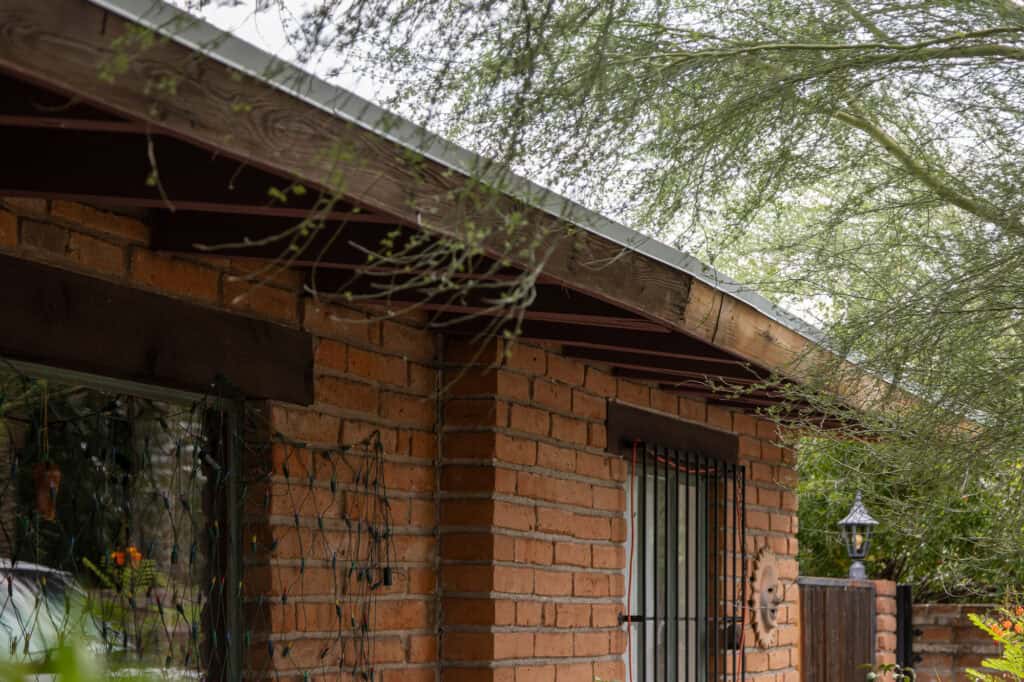
Finish and sheen belong in the same decision. A flatter finish absorbs light and keeps a color close to the sample, while a glossier one throws highlights and can look lighter along the top edge where the sun hits it. Options vary by supplier, so ask what is stocked before you settle on a color.
| Exterior element | Why it drives the fascia color | Common coordination approach |
|---|---|---|
| Stucco body color | Largest color field on the house, everything else is read against it | Stay in the same color family, usually a step deeper |
| Trim color | Already frames the windows and the entry | Repeat the trim tone at the roof edge for a quiet roofline |
| Roof tile or shingle | Sits directly above the fascia and is often multi toned | Pull a quieter tone out of the blend and match the undertone |
| Rain gutters | Hang on the fascia and read as one horizontal band | Match them unless you want a deliberate two tone edge |
| Soffit | Sits in shade and reads darker than the sample looks | Keep it the same tone or lighter, not darker |
| Stone or brick accents | Permanent and expensive to change | Treat as a fixed reference and coordinate to it |
Let the Roof Tile Set the Undertone
The roof is the second thing to check, because a tile roof carries several tones at once and the fascia sits directly beneath it. Hold a sample against the roof edge and you will see quickly whether the undertones agree. A fascia with a red undertone under a gray and charcoal tile roof looks off even when both colors are fine on their own.
Blended tile is common here, and it gives you options. Pull one of the quieter tones out of the blend rather than the loudest one and the roof edge looks intentional. If the roof is a single flat color, a fascia close to it makes the roofline read as one continuous element, while a lighter fascia draws a visible line between roof and wall. Neither is wrong. It depends on whether you want that line emphasized or quiet.
Should Fascia and Gutters Be the Same Color
Matching them is the most common approach, and for good reason. The gutter hangs on the fascia, so the two are physically stacked and read as one horizontal band from the street. Same color, one band. Different colors, two stripes.
There are homes where a split works. A darker fascia with a gutter matched to the stucco can help the gutter disappear on a long elevation. If you are weighing that, our guide to picking gutter colors for a Southwestern exterior walks through the families that hold up best on stucco homes. Just decide both in the same conversation. The mismatches we see almost always come from picking them months apart.
Downspouts are part of this too. They run down the wall rather than along the roof edge, so they are read against the stucco, not against the fascia. On a home with a deep accent fascia, a downspout in that same tone can draw a dark vertical line across a light wall.
Color Rules Vary by Community Around Tucson
If you live in a managed community, fascia wrap colors may not be entirely your call. Many neighborhoods in Oro Valley, Marana, Sahuarita, Green Valley, and Vail have architectural guidelines covering exterior colors, and some treat roof edge trim as part of the approved palette. Rules differ from one community to the next and get revised over time, so confirm yours before any material is ordered.
The document you want is usually the CC and Rs, or a separate architectural guideline packet from the HOA or the management company. Where color is regulated there is often an approved list, a submittal form, and a review window. None of that is hard, but it takes time, and it is far easier to handle before the order is placed. Do not assume the color the builder used is still approved either, since palettes get updated.
See It at the Roofline Before You Order
Fascia wrap colors look different outdoors than they do in your hand, so view any sample at the roof edge, from the distance you actually see your house. A chip held at eye level in the garage tells you almost nothing about how that color reads twenty feet up against sunlit stucco. Colors go lighter and flatter in full Tucson sun, and a tone that looked safe indoors can wash out completely.
Check it in the morning and again in the late afternoon, on more than one elevation. The same fascia looks different on a shaded north face than on a west wall at four in the afternoon. And if the house gets a new exterior color in fifteen years, the finish is paintable, so you are not locked in permanently. That is an option to keep in your pocket, not a plan.
Key Takeaways
- Fascia reads as a line, not a surface, so contrast shows up more there than it does on a wall.
- Tie the color to the permanent parts of the house, the roof tile and any stone or brick, rather than to a paint color that will be replaced.
- Matching the fascia and the gutter keeps the roof edge as one clean band, which suits most Tucson elevations.
- Ask which finish specification applies to the coil on your job, since the grades differ in how long they hold color under weathering.
- Confirm community color rules in writing before material is ordered, because the approval window is the part that delays jobs.
Fascia Color Questions from Tucson Homeowners
Does the fascia wrap color have to match the soffit?
No. The soffit and the fascia can be different colors, and many homes keep the soffit lighter because it sits in shade most of the day. Keeping both in the same tone is the simplest way to make the roof edge read as one band.
What color works on a house with two stucco tones?
Tie the fascia to the trim tone rather than the body tone. The trim already appears around the windows and the entry, so repeating it at the roof edge keeps the eye moving instead of stopping at the roofline.
Can a fascia wrap be color matched to an exact paint color?
Usually not exactly. Factory finish colors come from the range a supplier stocks, so the normal approach is to pick the closest available color. If an exact match matters, the paintable finish lets you handle it after installation.
Can a fascia wrap be painted a different color later?
Yes. The bonded finish is paintable, so a wrap installed in one color can be repainted when the rest of the exterior is repainted. Use a coating rated for exterior aluminum and follow the manufacturer preparation instructions.
Where do I find the approved exterior colors for my neighborhood?
Check your community documents, normally the CC and Rs or a separate architectural guideline packet from the HOA or management company. Requirements differ by community and get revised, so confirm current rules in writing.
Is white still a reasonable fascia color?
Yes. White is easy to coordinate and remains common on Southern Arizona rooflines. It does show dust and water streaking more plainly than mid tone colors, so weigh how visible your fascia is from the street.
Does the color choice change how the wrap is installed?
No. The color is a finish on the coil stock, so the panels are formed, lapped, and tucked under the drip edge the same way in any color. Availability can vary by supplier, so confirm stock before scheduling.
Fascia and soffit are the two pieces that finish the edge of your roof, and most homeowners only learn the difference between them when one starts to fail. The fascia is the vertical board that runs along the roof edge. The soffit is the panel tucked underneath the overhang. Together they close off the roof structure, guide water away from the house, and keep the space above your ceiling protected. If you have started looking into a fascia wrap for your Tucson home, it helps to understand these two parts first.
This guide keeps it plain. We will define fascia and soffit, show how they fit together at the roofline, and explain why the fascia is the part your gutters lean on the hardest. Because Tucson runs on strong sun and heavy monsoon rain, the wood version of these parts tends to wear here faster than it would in a milder climate. Knowing what each part does makes it much easier to spot a problem early and to understand any quote you get for fixing it.
What fascia and soffit actually are
Fascia is the board that caps the ends of your roof rafters along the edge of the roof. Soffit is the finished underside of the eave, the section of roof that hangs out past your exterior wall. One faces outward and you see it from the street, the other faces down and you see it only when you stand under the overhang and look up.
The fascia does the visible structural work at the edge. It ties the rafter tails together in one straight line, gives the roof a clean finished border, and, most important for a gutter company, it is the surface your gutters bolt onto. On many older Tucson homes the fascia is painted wood, which is exactly the material that struggles most in this climate.
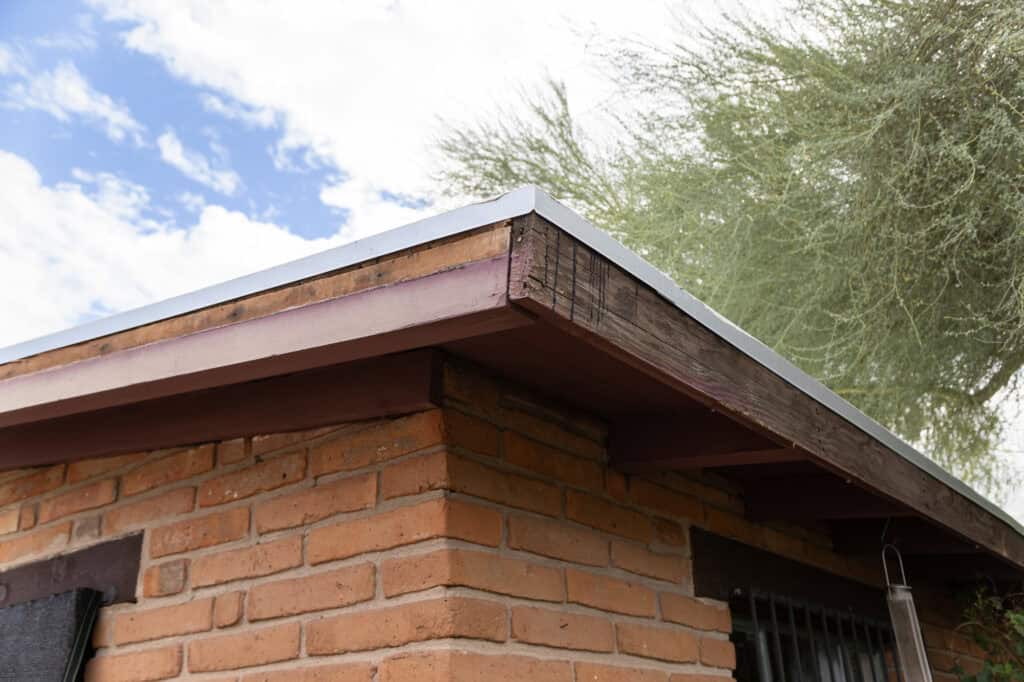
The soffit sits behind and below the fascia, bridging the gap from the fascia back to the wall. It hides the underside of the rafters and, on a lot of homes, it carries vents that let air move into the attic. Soffit materials vary widely from home to home, so it is worth looking at your own before assuming what it is made of.
How to tell fascia and soffit apart on your own home
To tell them apart, stand back from the house and look at the roof edge. The flat vertical band running along the edge is the fascia. Then step closer and look straight up under the overhang, and the panel over your head is the soffit. That is the whole difference in one look.
A simple memory aid is that fascia faces the street while soffit faces the ground. The gutter is the giveaway, since it always hangs on the fascia and never on the soffit. Once you can point to each part by name, it becomes far easier to describe an issue to a contractor and to read any estimate you receive without guessing.
How fascia and soffit work together at the roof edge
Fascia and soffit form an L shape at the edge of the roof, with the fascia standing vertical and the soffit lying flat underneath it. That corner is where the roof meets open air, so both parts share the job of sealing the structure while still letting the roof breathe. Neither one works well for long if the other is failing.
The fascia takes the weather head on. Rain runs off the roof, meets the drip edge, and drops into the gutter that hangs on the fascia. The soffit stays more sheltered but does quieter work, closing the underside so pests and windblown debris stay out while air still moves through any vents it holds. Here is how the two compare side by side.
| Feature | Fascia | Soffit |
|---|---|---|
| Location | Vertical board along the roof edge | Horizontal underside of the eave |
| Main job | Caps the rafter ends and gives gutters a solid surface to mount to | Closes the underside of the overhang and often allows attic airflow |
| Typical material | Often painted wood on older Tucson homes, and the surface SARG wraps in aluminum | Wood, plywood, or vented panels, varies by home |
| Gutter connection | Gutters and the drip edge fasten directly to it | Sits behind the gutter line and is not a mounting point |
Why the fascia is the part your gutters depend on
Your gutters depend on the fascia because that board is what they physically hang from. Gutter hangers and the drip edge fasten straight into the fascia, so a soft or rotted board simply cannot hold a gutter safely. The soffit plays no part in carrying that weight.
This matters more than most people expect. During a hard monsoon cell, a full run of gutter loaded with water can hold the weight of a grown adult, and all of that load pulls on the fascia behind it. If the wood is sound, it holds. If sun and moisture have softened it, the fasteners loosen and the gutter begins to sag or pull away from the house. Installers generally set gutter hangers into the fascia every couple of feet as a standard, which spreads the load along the board, but that only works when the board itself is solid. You can read more about how monsoon storms stress a home without solid drainage and why the roof edge takes so much of that pressure.
What Tucson sun and monsoon moisture do to wood fascia
In Tucson, wood fascia usually fails from two directions at once. The sun bakes and fades the finish, and monsoon moisture works its way into any crack that opens up. West and east facing runs take the worst of the direct sun and tend to show wear first, since they catch hours of low, intense light.
Signs to watch for are peeling or fading paint, cracking or warping in the board, and any soft spots or mold that show up after a wet summer. None of that means your roof is failing, but it does mean the board that holds your gutters is losing its protective surface. Staying ahead of it comes down to the finish, because a sealed, intact surface is what keeps water out of the wood in the first place.
The soffit plays a supporting role here too. Because the soffit is usually where intake air enters the attic, it is part of how the roof sheds heat and moisture through the seasons. Building science groups such as Penn State's Housing Research Center describe soffit vents as the intake side of attic ventilation, though the right setup varies from home to home, so confirm your own arrangement with a qualified contractor rather than assuming.
What happens when fascia or soffit goes unaddressed
When fascia or soffit is left to deteriorate, the damage rarely stays put. A failing fascia lets water reach the rafter ends and lets the gutters work loose, while a damaged soffit can open the attic to pests and weather. Small surface problems at the roof edge have a way of growing into structural ones.
That is the practical reason to treat the roof edge as one system rather than two unrelated boards. Water that slips past a cracked fascia can travel back into the framing, and once the gutters lose their anchor they stop moving runoff where it belongs. Catching a fading or splitting board while it is still only a surface issue is far cheaper and simpler than repairing rot after several monsoon seasons have worked into the wood.
What an aluminum fascia wrap is and how it protects the board
An aluminum fascia wrap is a custom-fit aluminum cover installed over your existing wood fascia. It goes on in long overlapping sections that tuck under the drip edge, so water is sealed out at the top and the wood underneath stays dry. The wrap follows the shape of the board rather than sitting on it loosely, which is why it is cut and fitted on the job.
The finish is chemically bonded to the metal instead of brushed on as a surface coat, and that is why it holds up so well. It will not fade, rust, or peel the way exterior paint does, and it stays paintable later if you ever want a different color. It also takes the yearly maintenance of a wood edge off your list. Measured against a paint cycle you would otherwise repeat every few years, the aluminum is built to outlast it by a wide margin, as the figures below show. SARG installs the wrap over sound fascia, and our fascia wrap installation process is where the details of fit and sealing get handled.
The point is straightforward. The aluminum at the roof edge is meant to last for decades, not for the few years a coat of exterior paint holds in the Tucson sun.
Does a fascia wrap cover the soffit as well?
A fascia wrap covers the fascia board only, not the soffit. The two parts are separate, and wrapping the fascia does not replace or change the soffit underneath it. It is a common question, so it is worth stating plainly.
That distinction matters when you plan a project. SARG's product is the aluminum fascia wrap, which protects the exact board your gutters mount to. The soffit is its own part of the eave, built and finished its own way from one home to the next. If your main concern is a weathered board along the roof edge and the gutters hanging off it, the fascia is the part a wrap is made to address.
Key Takeaways
- Fascia is the vertical board at the roof edge, and soffit is the horizontal underside of the eave.
- Gutters, hangers, and the drip edge all fasten to the fascia, never to the soffit.
- A loaded gutter in a storm can pull the weight of an adult on the fascia, so the board has to stay sound.
- The soffit is commonly where intake air enters the attic, and its material varies from home to home.
- A fascia wrap is a custom-fit aluminum cover over the wood fascia, with a bonded finish rated for 50 to 100 years.
- A fascia wrap protects the fascia only and does not include the soffit.
Fascia and Soffit Questions from Tucson Homeowners
Which part of my roof do gutters attach to?
Gutters attach to the fascia, not the soffit. Hangers and the roof drip edge anchor into that edge board, so it has to be strong enough to hold a full gutter. The soffit below plays no part in supporting it.
What is the underside of my roof overhang called?
That underside is the soffit. It closes the gap beneath the eave, which is the part of the roof that hangs past the exterior wall, and it often carries vents for attic airflow.
Can a home have fascia without a soffit?
Yes. Some homes leave the rafter tails exposed and have no finished soffit, yet still have a fascia board at the roof edge. Whether a soffit is present depends on how the home was built.
Does a fascia wrap cover the soffit too?
No. A fascia wrap is aluminum fitted over the wood fascia only. The soffit is a separate part of the eave, so it is not included when the fascia is wrapped.
What is a fascia wrap made from?
Aluminum. It is a custom-fit aluminum covering set over the existing wood fascia, then finished so the surface will not rust or peel in the Tucson climate.
How long does an aluminum fascia wrap finish last?
The bonded finish is rated for roughly 50 to 100 years. It is also paintable, so the color can be changed later without stripping the metal.
Does the fascia really carry the weight of a full gutter?
In a storm a water-filled gutter can weigh as much as a grown adult, and all of that weight rests on the fascia. A rotted board cannot take that load, which is why the fascia has to stay solid.
Sun damage to wood fascia is the most common reason Southern Arizona homeowners end up looking at their roofline and wondering when it started looking so tired. It rarely announces itself. The finish goes chalky, the color flattens, and one summer you notice the boards have gone from painted to weathered without any single event to blame.
Fascia sits in the worst possible position for this. It runs along the outermost edge of the building, fully exposed, with nothing shading it and nothing behind it to moderate the temperature. Understanding what the sun is actually doing to those boards makes it much easier to judge whether you are looking at a cosmetic issue or the start of a real problem. Our fascia wrap work exists largely because of what follows.
What Sun Damage to Wood Fascia Looks Like
It progresses in a recognizable order. First the finish loses its sheen and the color fades, often unevenly along the run. Then the film starts to crack and lift at the edges. Then the wood itself greys, splits along the grain, and develops the fine surface checking that tells you the board has been exposed rather than protected.
What makes it deceptive is that the early stages look like a paint problem. People assume they need a painter. By the time the wood is visibly greyed and checked, the surface underneath has degraded to the point where new paint will not bond well to it, which is why repaint jobs on old fascia often fail faster than the owner expects.
The Heat Load Those Boards Actually Take
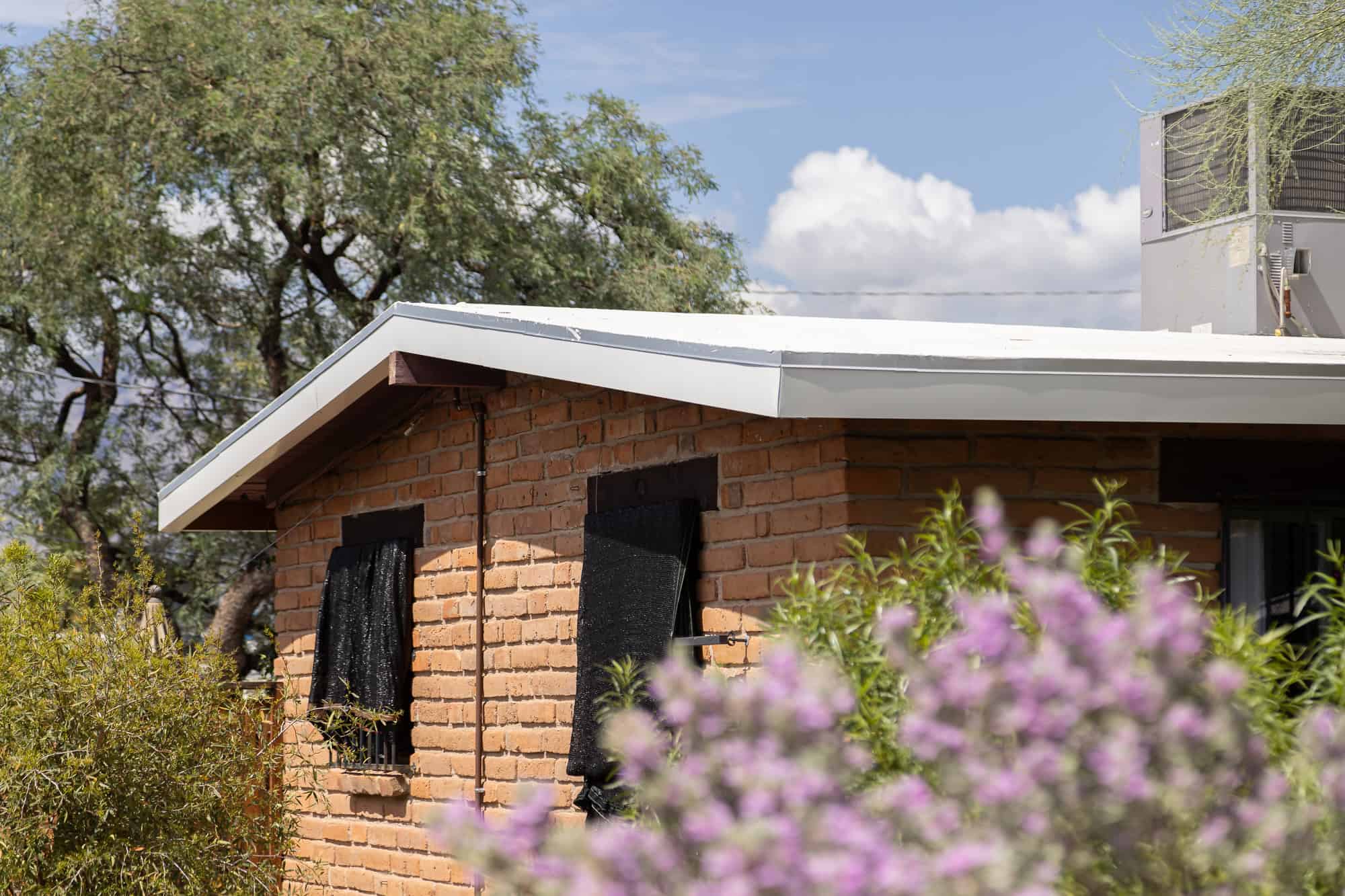
The scale of it is easy to underestimate because we live with it. National Weather Service normals for Tucson, covering 1991 to 2020, put the average high at 101.2 degrees in June, 100.2 in July, and 98.6 in August. That is three consecutive months averaging at or near triple digits, against a December normal high of 65.5.
Those are air temperatures in the shade. A dark painted board in direct afternoon sun runs hotter than the air around it. You can check the full record on the National Weather Service Tucson normals page. The point is not the peak, it is the duration. Materials on the outside of a Tucson house spend a third of the year in conditions that would be an extreme event almost anywhere else.
Why the Sun Breaks Wood Down
Two things happen at once, and they compound. Ultraviolet radiation degrades the wood surface itself, breaking down the fibers in the top layer so it becomes weak and powdery. Separately, heat cycles the board through daily expansion and contraction, working at the paint film until it cracks and lifts.
Once the film is breached, the newly exposed wood degrades faster, which loosens more of the surrounding coating, which exposes more wood. That is why sun damage accelerates rather than progressing steadily, and why the gap between repaints tends to shorten over a board's life instead of holding constant. Each cycle starts from a worse surface than the one before.
Why Some Elevations Fail First
Damage is almost never even around a house. Orientation decides which boards go first, and the difference between the best and worst elevation on the same property is often years. Peeling or fading paint combined with east or west sun exposure is one of the standard signals that a wrap is worth pricing.
| Elevation | Typical exposure | What we usually find |
|---|---|---|
| West facing | Afternoon sun at a low angle, striking the fascia face directly during the hottest hours | Often the worst deterioration on the house |
| South facing | Long daily exposure across most of the year | Widespread fading and chalking along the run |
| East facing | Direct morning sun, hitting the face at a low angle in cooler air | Real deterioration, commonly lagging the west side |
| North facing | Least direct exposure of any elevation | Frequently still sound when other sides have failed |
The practical use of this is diagnostic. If you want to know how your fascia is really doing, do not judge from the elevation you see when you pull into the driveway. Look at the west side, then compare it against the north. That comparison tells you what the sun has been doing rather than what one viewpoint suggests.
Then the Monsoon Arrives
Sun creates the openings and monsoon rain exploits them. The cracks, lifted edges, and checked grain that months of heat produce are exactly the paths water needs, and the heaviest rain of the year arrives immediately after the hottest stretch.
That sequencing is why fascia fails here despite the dry climate. It is not slow constant damp the way it is in a wet region. It is a board that has been opened up by heat and ultraviolet exposure, then repeatedly wetted during a concentrated season. Sustained moisture in degraded wood is what turns a finish problem into a structural one, and at that point you are past wrapping and into repair. We cover that threshold in detail in fascia board repair before a wrap.
What Actually Stops It
Covering the wood is the only approach that removes the cause rather than resetting the clock. A fascia wrap is a custom-fit aluminum covering installed over the existing wood, fitted in long overlapping sections tucked under the drip edge so water is sealed out.
The finish is chemically bonded to the aluminum rather than applied as a surface coat, and it carries a 50 to 100 year lifespan. It will not fade, rust, or peel, and it is paintable if you want a different color later. Since fading, cracking, and peeling are precisely the three failures the sun produces in a painted board, eliminating them is the entire point.
Aluminum handles the exposure that wood cannot. It does not have a lignin structure for ultraviolet light to break down, it does not swell and shrink with moisture, and it does not rust. The wood stays in place doing its structural job, including carrying the gutter line, while the aluminum takes the weather.
Is It Worth Doing Before It Gets Bad
Generally yes, and the reason is condition rather than appearance. Sound wood can be wrapped as it stands, so wrapping while boards are merely weathered keeps it to a single job. Waiting until sections have gone soft adds repair work before the aluminum can go on.
If you are weighing one more coat of paint against wrapping, that comparison has its own answer and we work through it in fascia wrap versus painting. Homeowners across Tucson, Oro Valley, Marana, Vail, Sahuarita, Green Valley, and Three Points reach this decision on roughly the same schedule, usually the second or third repaint. You can see how those projects turn out on our customer testimonials.
Key Takeaways
- Sun damage to wood fascia follows an order: loss of sheen, then fading, then cracking and lifting, then greyed and split wood.
- The early stages look like a paint problem, which is why the usual response is a repaint that then fails early.
- Tucson normal highs run at or near 100 degrees for three consecutive months, so the issue is duration of exposure rather than any single peak.
- Ultraviolet light degrades the wood surface while heat cycling works the paint film loose, and the two compound.
- Compare your west elevation against your north one. That contrast shows what the sun has actually done.
- Wrapping while boards are still sound keeps it to one job, because soft wood has to be repaired before aluminum goes on.
Sun Damage Questions from Tucson Homeowners
How can I tell if my fascia has sun damage or something else?
Sun damage follows a predictable sequence: dulling, then fading, then cracking and lifting of the finish, then greying and splitting of the wood along the grain. Moisture damage instead shows as dark staining, softness, or mold, and tends to be localized around one water path rather than spread along a whole sunlit run.
Which side of the house usually fails first?
Usually the west facing elevation, because it takes low angle sun during the hottest part of the day. South facing runs suffer long duration exposure, and east facing boards take direct morning sun. North facing fascia is often still sound when the other sides have deteriorated.
Why does repainting sun damaged fascia not last?
Because the wood surface itself has been degraded, not just the coating. Ultraviolet exposure weakens the top layer of the board, and paint applied over a degraded surface cannot bond as well as it would to sound wood. Each repaint therefore starts from a worse surface than the last.
Does an aluminum fascia wrap fade in the Arizona sun?
No. The finish is chemically bonded to the aluminum rather than applied as a separate surface coat, and it is rated not to fade, rust, or peel. Aluminum also has no lignin for ultraviolet light to break down, which is the mechanism that degrades exposed wood.
Should I wrap fascia before it looks bad?
It is usually the cheaper sequence. Sound wood can be wrapped as it stands, so acting while boards are only weathered keeps the project to a single job. Once sections have gone soft, repair has to happen before any aluminum is installed.
How hot does it actually get on a Tucson roofline?
National Weather Service normals for Tucson put average highs at 101.2 degrees in June, 100.2 in July, and 98.6 in August, measured as shade air temperature. A dark painted surface in direct sun runs hotter than the surrounding air, and that exposure continues for months at a time.
Can sun damage lead to gutter problems?
Yes, indirectly. The fascia carries the gutter line on most homes, so once sun and moisture have degraded the board, fasteners lose their grip. Sagging gutters or loose fasteners are often the first mechanical sign that the fascia behind them needs attention.
Fascia board repair is the step people hope to skip. The appeal of a fascia wrap is that it covers tired wood in maintenance-free aluminum, so the natural assumption is that whatever condition the board is in stops mattering once the aluminum goes on.
It does not work that way. A wrap is a covering, not a structural repair. The wood underneath still has a job to do after the aluminum is installed, and if it cannot do that job, wrapping it just puts a very long-lived finish over a problem that keeps developing out of sight. This post covers how to tell the difference between a board that is simply weathered and one that needs work first.
Can You Wrap Damaged Fascia Board
Sound wood can be wrapped as it stands, even if it looks rough. Peeling paint, faded color, and general weathering are surface conditions, and none of them stop a wrap from going on. Compromised wood is different. Boards that are cracked, warped, or soft need to be repaired or replaced before anything is installed over them.
The dividing line is not how the board looks. It is whether the wood can still hold a fastener and carry a load. Aluminum is fixed to the fascia, and on most homes the gutter line hangs off that same board. Both of those depend on wood with enough integrity left to grip a fastener and keep gripping it through years of heat cycling and monsoon loading.
That is why an honest assessment happens before a quote is finalized rather than after the crew arrives. Ugly and unsound are two different findings, and only one of them adds work.
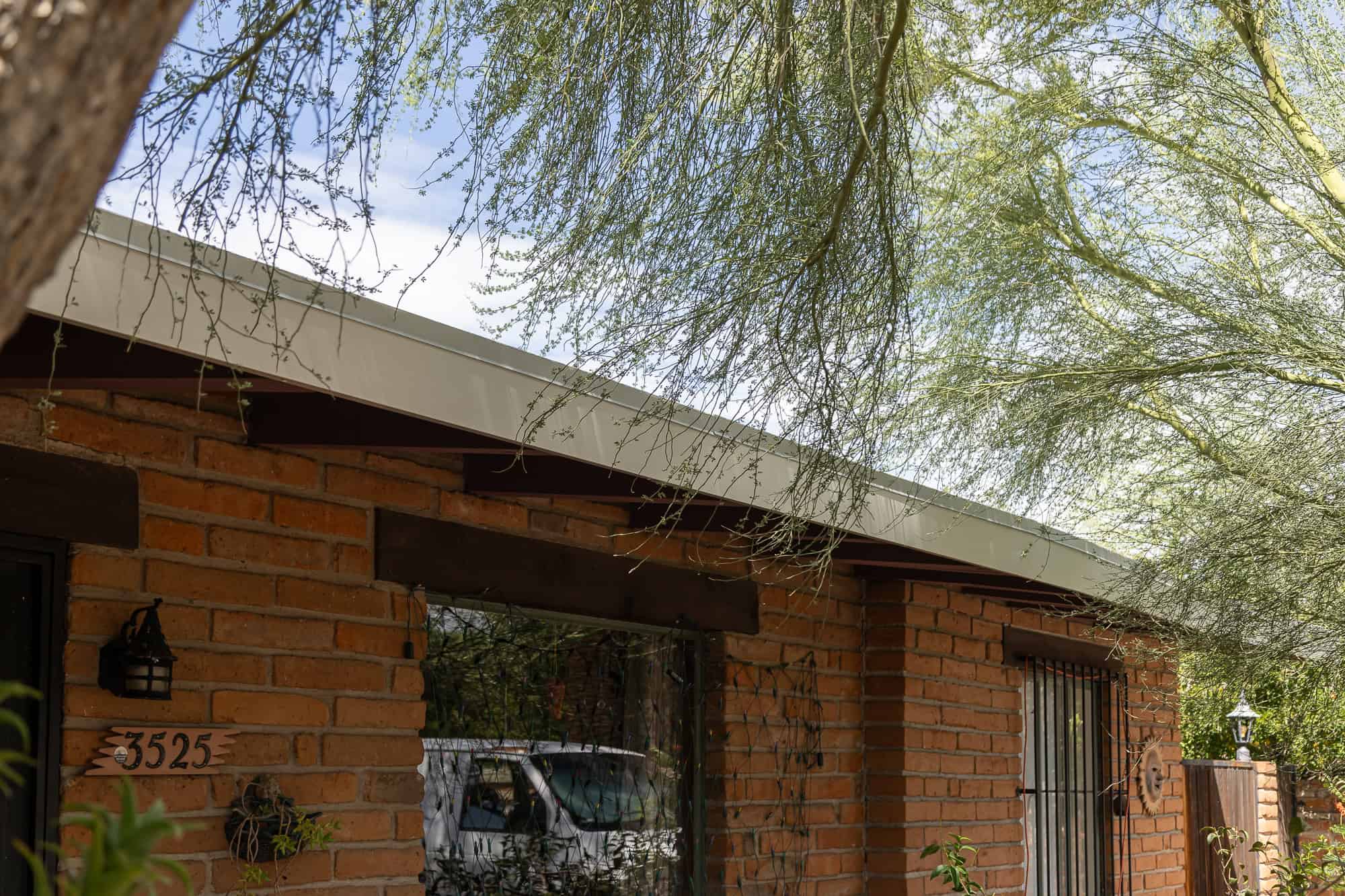
How to Tell Sound Fascia From Failing Fascia
Most of it you can assess from the ground with a decent look and a ladder for a closer check. What you are separating is cosmetic weathering, which is common and harmless, from structural loss, which is not. The table below maps what you see to what it usually means.
| What you see | What it usually means | Likely action |
|---|---|---|
| Peeling or fading paint, wood firm underneath | Surface weathering only | Usually wraps directly |
| Cracking or warping along the board | Wood has moved through heat and moisture cycling | Assess on site, sections may need replacing |
| Soft or spongy spots, fasteners not holding | Moisture has broken the wood down | Repair or replace before wrapping |
| Dark staining or mold after monsoon season | Moisture has been present and sustained | Find the source before covering anything |
| Gutter sagging or pulling away from the roofline | Fasteners are losing their grip in the board | Board condition checked before rehanging |
The soft spot test is the one that settles most arguments. Firm pressure with a screwdriver on a suspect area tells you quickly whether you are dealing with a surface problem or a board that has lost its structure.
Why Fascia Fails in Southern Arizona
Wood decay needs sustained moisture. Fungi that break wood down depend on suitable temperature, moisture, and oxygen, which is why wood that stays genuinely dry does not rot, and why the failures we find are almost always where water has been sitting or repeatedly wetting the same spot. The US Forest Service covers the mechanism in its Wood Handbook chapter on biodeterioration of wood.
That sounds like it should make the desert safe, and mostly it does. Our fascia problems are not slow constant damp the way they are in a wet climate. They are concentrated and local. A gutter that overflows in a monsoon burst and dumps behind the board. A joint where water gets in and cannot dry. A section shaded enough to stay wet for days after a storm while everything around it dried in hours.
Sun does the other half of the damage, and it does it everywhere at once. Intense ultraviolet exposure breaks down the paint film and the wood surface beneath it, opening cracks and lifted edges. Then the monsoon arrives and drives water into every opening the heat created. That pairing, not humidity, is what takes fascia apart here, and it explains why the worst boards are usually on the west and south elevations.
What Fascia Board Repair Involves
Repair is usually partial rather than wholesale. Damage tends to be localized around a specific water path, so the common outcome is replacing affected sections rather than every board on the house. A run that looks bad along its whole length often turns out to have two or three genuinely failed areas and a lot of cosmetic weathering between them.
The sequence matters. The gutter comes off, the board is assessed properly with the gutter out of the way, failed sections are replaced, and only then does the aluminum go on. Because the gutter has to come down anyway for a wrap, that is the natural moment to find out what the board behind it has actually been doing. Our fascia wrap installation process covers the full sequence from assessment through the finished roofline.
Finding the water source is part of the job, not an extra. Replacing a rotted section without working out why that specific spot stayed wet just resets the clock on the same failure, this time hidden under aluminum where nobody will see it developing.
Why the Gutter Line Raises the Stakes
The fascia is not just trim. On most homes it carries the entire gutter system, and during a storm a loaded gutter can hold the weight of a full-grown person. All of that load transfers into the board through the hangers.
The accepted standard is hangers set roughly every 24 inches, which means a long run puts a substantial number of fastening points into the same board. Every one of them needs wood that will hold. The chart below works through what that spacing implies across typical run lengths.
Seamless rain gutters are formed on site in one continuous piece, so a run is a single length of metal transferring load into a single line of fasteners. If a stretch of that board is soft, the hangers there stop contributing and the neighboring fasteners take more than they were meant to.
What Happens If You Wrap Over Bad Wood
The damage continues, and you lose the ability to see it. That is the real cost. Aluminum sheds water well, but a wrap is not a sealed enclosure, and it does nothing about a water path that was already delivering moisture behind the board.
What you have then is decay progressing underneath a finish designed to last 50 to 100 years. The visual warnings that would normally prompt action, the peeling and the staining, are now hidden. The first sign tends to be mechanical instead: a gutter starting to sag, or fasteners that will not stay tight.
Correcting it later means removing aluminum that was installed to be permanent. Doing the repair first costs comparatively little. Doing it second means paying for the wrap twice.
Getting the Order Right
The correct sequence is assess, then fascia board repair wherever it is needed, then wrap. It is worth insisting on that order, because everything downstream depends on the board being sound at the moment the aluminum goes on.
If you are still deciding whether to wrap at all rather than repaint again, that is a separate question with a different answer, and we work through it in fascia wrap versus painting. Board condition matters either way. Paint over compromised wood fails faster than paint over sound wood, so a bad board is bad news whichever finish you choose.
Homeowners across Tucson, Oro Valley, Marana, Vail, Sahuarita, and Green Valley usually reach this question the same way, by noticing something about the gutter rather than the fascia. Sagging, loose fasteners, or overflow in a storm are all worth a look at the board behind them.
Key Takeaways
- A wrap is a covering, not a structural repair, so the board still has to hold fasteners after the aluminum is on.
- Ugly and unsound are different findings. Weathered paint over firm wood usually wraps directly.
- Firm pressure on a suspect area separates surface weathering from a board that has lost its structure.
- Repairs are usually partial, because damage concentrates around a specific water path rather than spreading evenly.
- Finding why that spot stayed wet is part of the repair, otherwise the same failure repeats out of sight.
- Wrapping over bad wood hides the warning signs behind a finish meant to last decades, and correcting it later means removing that finish.
Fascia Repair Questions from Tucson Homeowners
Can a fascia wrap go over rotted wood?
No. Rotted sections need repair or replacement first, because the board still has to hold the fasteners for the aluminum and usually for the gutter line as well. Wrapping over failing wood hides the problem rather than solving it, and the decay continues underneath.
How do I know if my fascia is rotted or just weathered?
Press a suspect area firmly. Wood that stays firm is weathered but sound, and peeling paint alone is a surface condition. Wood that feels soft or spongy, or that will not hold a fastener, has lost structural integrity and needs attention before anything is installed over it.
Does the whole fascia need replacing if part of it is bad?
Usually not. Damage tends to concentrate around a specific water path, so replacing affected sections is the common outcome rather than redoing every board. A run that looks poor along its length often has only two or three genuinely failed areas.
Why does fascia rot in a dry climate like Tucson?
Because the moisture here is concentrated rather than constant. Overflowing gutters, joints that trap water, and shaded sections that stay damp after a storm create the sustained wetting that decay needs. Intense sun opens cracks in the paint and wood first, and monsoon rain then drives water into them.
Do the gutters have to come off for fascia repair?
Generally yes, and that is useful rather than inconvenient. With the gutter down the board can be inspected properly along its full length. Since a wrap requires the gutter to come off anyway, repair and wrapping are efficiently handled in the same visit.
How long does an aluminum fascia wrap last once the board is sound?
The finish is chemically bonded and carries a 50 to 100 year lifespan, and it will not fade, rust, or peel. That longevity is exactly why the wood underneath needs to be right first, because the covering is intended to stay put far longer than a paint finish would.
Can I just replace the fascia instead of wrapping it?
You can, though new wood starts the same maintenance cycle over again in the same sun and monsoon conditions. Wrapping repaired boards in aluminum addresses the exposure that caused the failure. A site review is the practical way to compare the two for your roofline.
Fascia wrap vs painting is the decision most Tucson homeowners reach the second or third time their fascia boards start looking tired. Painting is familiar and it is what almost everyone tries first. A fascia wrap is a custom-fit aluminum covering installed over the existing wood fascia, and it changes the job from something you repeat into something you finish.
That difference matters more here than it would in a mild climate. Fascia runs along the roofline on the most exposed edge of the building. It takes direct sun for most of the year on west and south elevations, then takes driving moisture during monsoon season. That combination is hard on paint and harder on the wood underneath. So the real question is not which one looks better on day one. It is how many more times you want to do this.
What a Fascia Wrap Actually Is
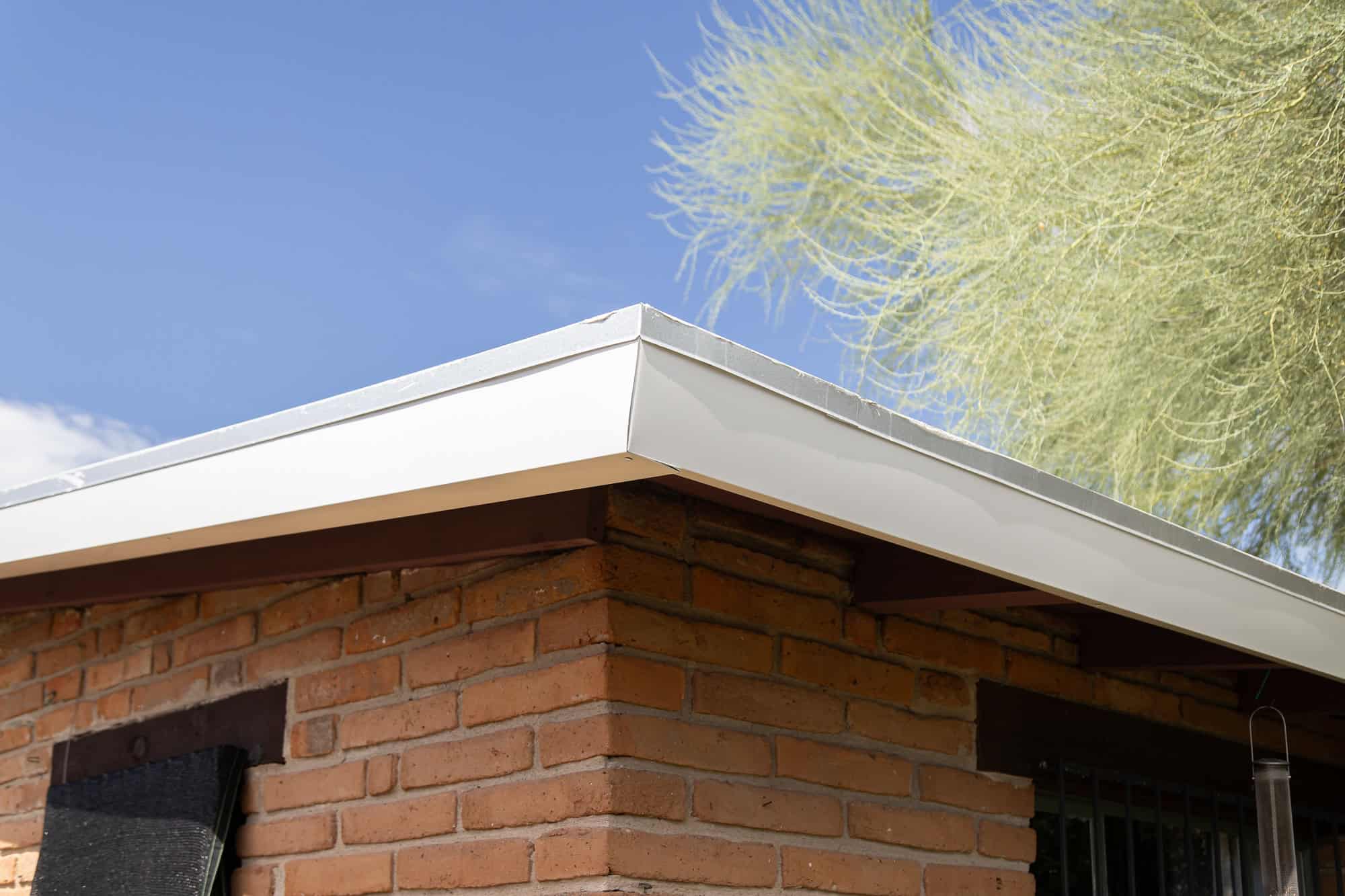
A fascia wrap is a custom-fit aluminum covering installed over your existing wood fascia. It is not a paint, a coating, or a sealer. It is a physical aluminum skin formed to the profile of your boards and fastened in long overlapping sections that tuck under the drip edge, so water is sealed out instead of finding a path behind the material.
The finish is chemically bonded to the aluminum rather than applied on top of it as a separate layer. That finish carries a 50 to 100 year lifespan, it is paintable if you want a different color later, and it will not fade, rust, or peel. Those three failure modes are precisely what sends people back up a ladder with a paint can every few years, so eliminating them is the entire point of the product.
The wood does not go anywhere. Sound fascia board stays in place and keeps doing its structural job, including carrying the gutter line. The aluminum simply takes over facing the weather.
Why Painted Wood Fascia Fails Faster in the Desert
Painted wood fascia fails faster here because sunlight degrades the wood surface underneath the paint film, not just the paint on top of it. Once that thin surface layer breaks down, the coating has nothing solid to hold onto, and the next failure arrives sooner than the last one did.
US Forest Service research on the weathering of wood describes the mechanism directly. Weathering degrades the wood surface, and a degraded surface will not form a good paint bond. When paint eventually peels, it lifts the damaged layer of wood away with it. Each repaint therefore begins on a slightly worse surface than the one before it, which is why repaint intervals tend to shorten across the life of a board instead of holding steady.
Local conditions accelerate every step of that. East and west facing rooflines take low angle sun straight onto the fascia face for hours at a time. Summer surface temperatures on a dark painted board climb well above air temperature. Then monsoon rain drives moisture into any crack or lifted edge the heat opened up, and mold gets a foothold in the damp wood behind the film.
Those pressures produce a recognizable list of symptoms: peeling or fading paint, cracking or warping wood, east or west sun exposure, and monsoon moisture or mold. Any of them, or simply wanting a maintenance-free solution, is a sign a wrap is worth pricing.
Fascia Wrap vs Painting Side by Side
The two options differ on what they actually protect. Paint lays a film over a surface the sun is steadily breaking down. A wrap covers the wood in aluminum, so the weather never reaches the board at all. The table below compares the specifics homeowners ask about.
| Factor | Painting wood fascia | Aluminum fascia wrap |
|---|---|---|
| What it is | A coating applied to the existing wood surface | A custom-fit aluminum covering installed over the existing wood |
| Finish life | Varies with exposure, prep, and board condition, with repeat cycles expected | Chemically bonded finish with a 50 to 100 year lifespan |
| Fading, rust, peeling | Paint can fade, crack, and peel as the wood surface weathers | Will not fade, rust, or peel |
| Color change later | Yes, by repainting | Yes, the wrap is paintable |
| Wood underneath | Stays exposed to sun and moisture between coats | Covered by long overlapping sections tucked under the drip edge |
| Typical trigger | Sound wood that needs a cosmetic refresh | Peeling or fading paint, cracking or warping wood, sun exposure, monsoon moisture or mold |
How Long Each Option Is Rated to Last
The fascia wrap finish is rated for 50 to 100 years, which puts it in a different category from any repaint schedule. For comparison, aluminum rain gutters are built to last 30 or more years, and most homeowners already consider that a long-term component of the house rather than a maintenance item.
Painted wood is deliberately left off the chart below. Repaint intervals depend so heavily on exposure, surface preparation, and the starting condition of the board that publishing a single number would be misleading. What the weathering research supports is the direction, not a figure: the interval shortens as the wood surface degrades.
How a Fascia Wrap Goes On
Aluminum is formed to match the profile of your fascia and installed in long overlapping sections that tuck under the drip edge. The overlap and the tuck are what make it a water management detail rather than decorative trim, because they give runoff no seam to work its way into and no exposed top edge to sit against.
Before any aluminum goes up, the existing boards get assessed. Sound wood can be wrapped as it stands. Boards that are cracked, warped, or soft need attention first, because the fascia has to be solid enough to hold fasteners and, on most homes, to carry the gutter line hanging off it. Covering compromised wood without addressing it simply hides a problem behind a very long-lived finish.
If you want the full walkthrough of the process, our fascia wrap installation breakdown covers what happens on site from assessment through the finished roofline.
When Painting Is Still the Right Call
Painting still makes sense when the wood is genuinely sound and the goal is cosmetic. If your fascia is in good condition, sits on a shaded or north facing elevation, and you simply want a different color to match a repaint of the house, a coat of paint is a reasonable and proportionate answer.
It is also the right call when the fascia is new. Freshly installed boards have not weathered yet, so paint bonds far better than it does to a surface that has sat in the sun for years. The weathering research is specific here: even a week or two of bare exposure measurably reduces how well a coating adheres.
Where fascia wrap vs painting stops being a close call is the third or fourth cycle on a sun beaten elevation. By then you are resurfacing something that keeps degrading underneath, and the interval between visits keeps shrinking.
Why Fascia and Gutters Get Decided Together
Gutters hang on the fascia, so the two decisions are physically linked. If your gutters are being replaced or installed anyway, wrapping the fascia first is the efficient order of operations, because it avoids taking a gutter line down and rehanging it later purely to get at the boards behind it.
It works the other way too. Fascia damage is frequently discovered during a gutter project, since that is when anyone gets a close look at the boards. Seamless rain gutters are formed on site in one continuous piece and, during a storm, a loaded gutter can hold the weight of a full grown person. All of that weight transfers into the fascia, which is a good reason to know the boards are sound before hanging anything on them.
Across Tucson, Oro Valley, Marana, and Sahuarita the sequence is the same: the gutters prompt the inspection, and the inspection surfaces the fascia question. Handling both in one visit is almost always less disruptive than splitting them into two projects.
Key Takeaways
- Paint and a wrap solve different problems. Paint refreshes a surface the weather still reaches, while aluminum replaces the surface that faces the weather.
- Peeling paint lifts degraded wood away with it, so each repaint starts on a worse surface than the last and intervals tend to shorten.
- The wrap is installed in long overlapping sections tucked under the drip edge, which seals water out rather than channeling it behind the material.
- Sound boards can be wrapped as they stand. Cracked, warped, or soft boards are evaluated and addressed before anything is installed over them.
- Gutters hang on the fascia, so wrapping before or during a gutter project avoids paying to hang the same line twice.
- North facing and newly installed fascia in good condition are the cases where painting is still the proportionate choice.
Fascia Questions from Tucson Homeowners
Is a fascia wrap better than painting wood fascia?
For most sun exposed rooflines in Tucson, yes. Painting is a maintenance cycle that restarts as the wood surface weathers, while an aluminum wrap carries a chemically bonded finish rated for 50 to 100 years that will not fade, rust, or peel. Painting remains a fair choice on sound wood when you only want a color change.
Can you wrap fascia that already has peeling paint?
Usually yes, provided the wood underneath is still sound. Peeling or fading paint is one of the common signals that a wrap is worth considering. Boards that are cracked, warped, or soft get assessed first, because the fascia has to be solid enough to hold fasteners.
Does a fascia wrap need to be painted?
No. The wrap arrives with a chemically bonded finish and needs no paint to perform. It is paintable if you decide to change colors later, which helps when you repaint the house or your community updates its palette.
Will an aluminum fascia wrap fade in the Arizona sun?
No. The finish is chemically bonded to the aluminum rather than applied as a separate surface coat, and it is rated not to fade, rust, or peel. That is the main reason it holds up on west and south facing rooflines where painted wood tends to give out first.
How often does painted wood fascia need repainting in Tucson?
There is no single honest number, because it depends on exposure, surface preparation, and the condition of the board. What weathering research does establish is the direction of travel: once the wood surface has degraded, coatings bond less well, so intervals tend to shorten rather than stay constant. A site review is the only reliable way to judge your own boards.
Does wrapping the fascia affect my rain gutters?
It can, because gutters hang directly on the fascia. If the gutters are coming down or going up anyway, wrapping at the same time is the efficient sequence. Combining the work in one visit avoids removing and rehanging the same gutter line twice.
Do I need HOA approval for a fascia wrap color?
Possibly, and it varies by community. Color rules differ between neighborhoods in Tucson, Oro Valley, Marana, and Sahuarita, so check your own association guidelines before selecting a finish. Because the wrap is paintable, you always have a way to match an approved palette later.
If your gutters are only as strong as the wood behind them, the fascia matters more than most homeowners realize. Along the roof edge, that board takes sun, wind, dust, and every hard monsoon downpour we get in Tucson. Once the paint fails or water starts getting behind the gutter line, the fascia can soften, split, and stop holding fasteners the way it should.
Wrapping that board with formed aluminum is a practical fix. It protects the wood, cuts down on repainting, and gives the roofline a clean finished look. On many homes in Southern Arizona, it also makes the gutter system work better, especially when the goal is to move stormwater cleanly away from the house or into a harvesting setup with barrels or cisterns.
Why fascia wrap matters on Tucson homes
The fascia is the trim board at the edge of the roof where gutters are mounted. When that board is exposed wood, it sits in a rough spot. It gets baked by UV, hit by windblown dust, and then soaked during summer storms. That cycle of extreme heat followed by sudden water is hard on paint and harder on wood.
A properly formed aluminum cover goes over the fascia and tucks under the drip edge so water sheds over the face of the wrap instead of soaking into the board. Done right, it helps stop rot, peeling paint, and the hidden moisture that can work its way behind gutters.
It also solves a cosmetic problem. A lot of rooflines look tired long before the roof itself is at the end of its life. Fascia wrap cleans that up without asking you to keep scraping, priming, and repainting every few years.
After inspecting homes across Tucson, Oro Valley, Marana, Vail, and Green Valley, the same problem areas show up again and again:
- peeling paint
- sun-checked wood
- gutter fasteners loosening
- water staining behind the gutter
- soft spots near corners and downspouts
How aluminum fascia wrapping is typically installed
Good fascia work starts with the wood underneath. If the board is sound, wrapping it makes sense. If sections are rotted, split, or no longer holding screws, those areas should be repaired first. Wrapping over bad wood only hides the problem for a while.
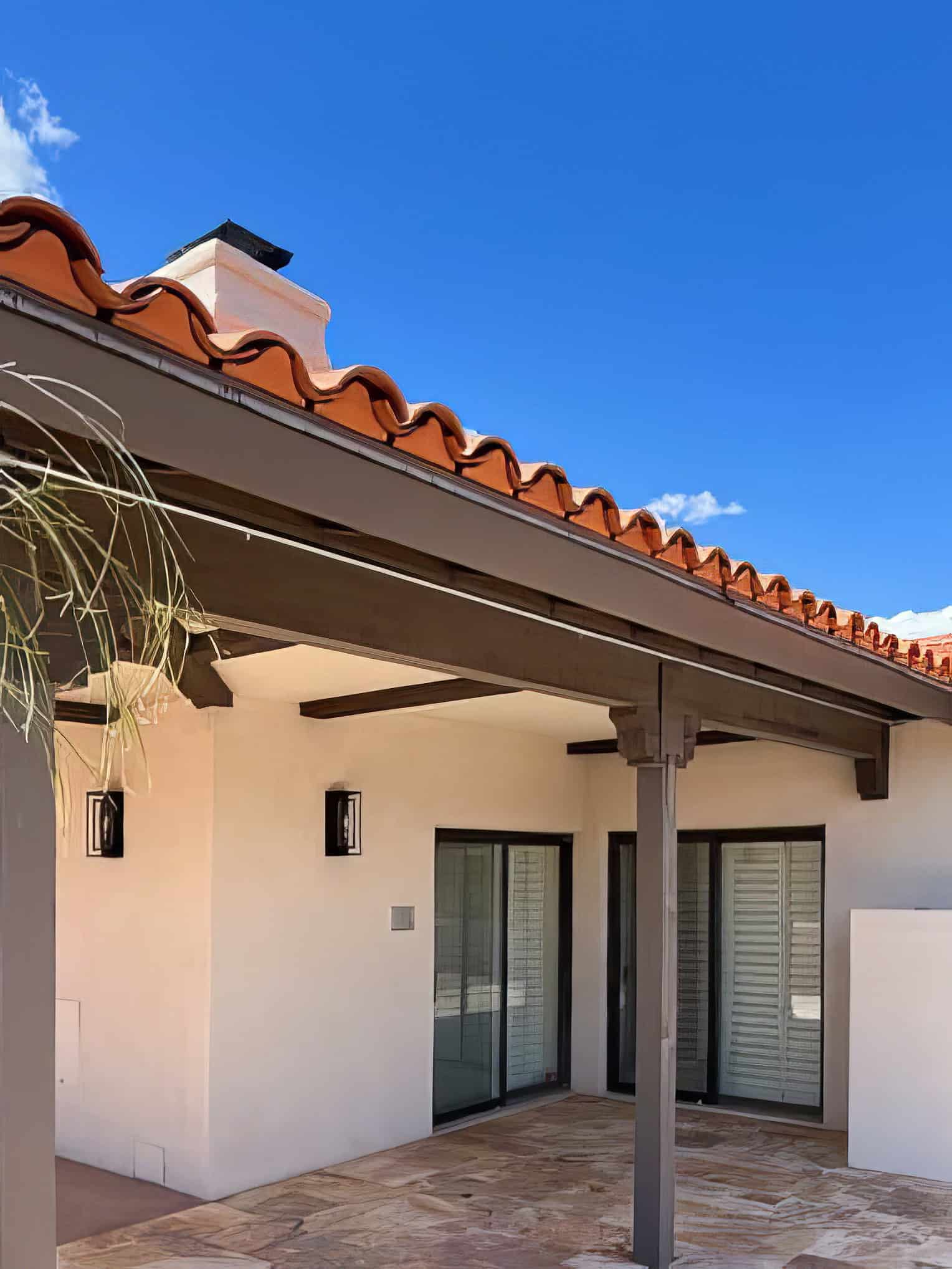
On most projects, the gutter is removed so the roof edge can be checked and measured accurately. The aluminum is then bent to fit the exact profile of the fascia. That matters because rooflines are rarely as uniform as they look from the ground. Corners, rake edges, and transitions around porches or window returns need custom bends, not guesswork.
The top of the wrap should slide under the drip edge, and the sections should overlap so water stays on the outside of the system. The lower edge is fastened in a low-profile way so the finished look stays clean. After that, the gutter can be reinstalled or replaced.
When fascia board repair comes before metal wrap
This is the step that saves trouble later. If a fascia board has been wet for years, the wood can lose its grip. That matters because gutter hangers are only as reliable as the material they are fastened into.
A solid repair plan usually includes the following:
- Inspection: check for rot, delamination, insect damage, and failed joints
- Replacement: swap out sections that are too soft or too far gone to support gutters
- Fitment: bend the new aluminum wrap to the actual roofline, not a stock guess
- Reattachment: mount the gutter back into sound framing through the finished fascia area
Why aluminum works better in the desert climate
In Southern Arizona, material choice matters. Vinyl and lower-grade trims may be fine in milder climates, but our sun is different. Long stretches of heat and UV exposure can make lighter materials brittle, faded, or warped over time.
Painted aluminum holds up well here because it resists rust, stands up to sun better, and gives a crisp finish that matches modern gutter systems. A factory-coated aluminum wrap also cuts down on maintenance. You are not out there with a ladder and brush trying to keep exposed fascia looking decent year after year.
Monsoon season is the other half of the equation. In Tucson, we can go weeks with no rain, then get a fast, heavy storm that tests every edge on the house at once. Fascia wrap helps because it directs water over the face of the trim instead of letting it sneak behind the gutter line.
That matters even more on homes set up for rainwater harvesting. If you are routing roof runoff into storage tanks or cisterns, you want water going where it is supposed to go. Lost water behind a gutter is wasted water, and in the desert, wasted water should get your attention.
For homeowners planning a rainwater harvesting setup, fascia condition is not a small detail. It affects how cleanly water enters downspouts and how reliably it gets to tanks or cisterns.
Bare fascia vs wrapped fascia at the roof edge
Here is the practical difference homeowners usually care about most:
| Roofline condition | Bare painted fascia | Aluminum-wrapped fascia |
|---|---|---|
| Sun exposure | Paint breaks down faster | Coated surface holds up better |
| Monsoon water | Can soak cracks and joints | Water sheds off the metal face |
| Gutter support | Fasteners loosen as wood ages | Better protection for the wood behind hangers |
| Maintenance | Scraping, caulking, repainting | Occasional cleaning only |
| Appearance | Shows peeling, swelling, stains | Clean, uniform finish |
How fascia protection helps gutters last longer
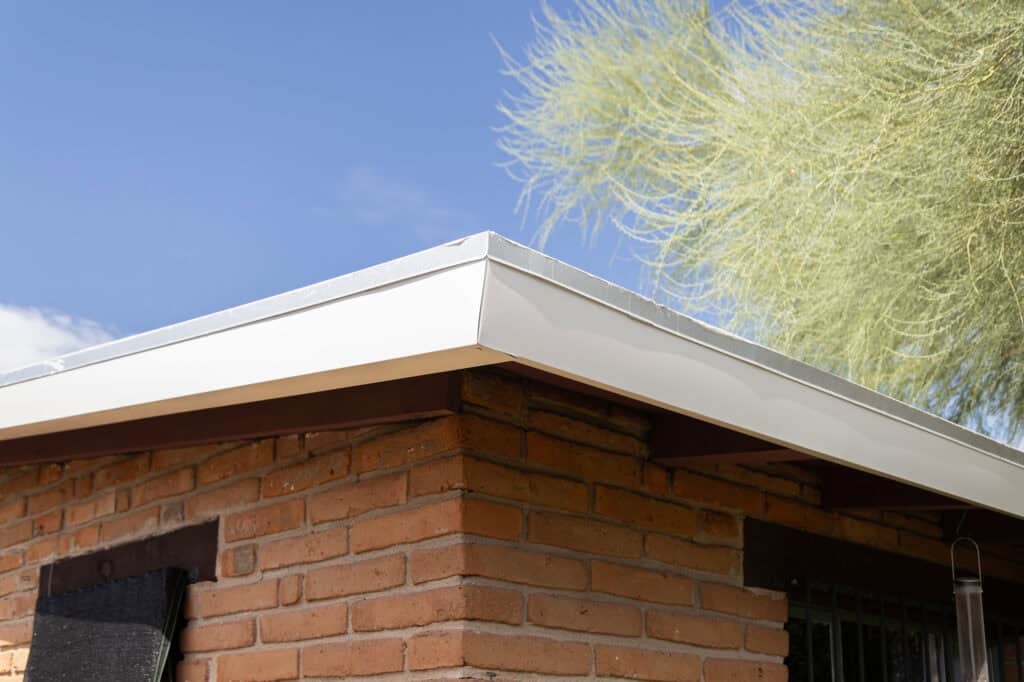
Gutters do not fail only because the trough wears out. A lot of failures start at the mounting surface. If the fascia softens, hangers can pull, spikes loosen, and sections start to slope the wrong way. That leads to overflow, leaks at joints, and sagging runs.
This is especially important with larger K-Style profiles, which are common on Tucson homes because they handle roof runoff well and fit the architecture. A larger gutter can move a lot of water during a storm, but it also puts more demand on the fascia and fasteners holding it in place.
When the fascia is protected, the gutter system has a better base to work from. Water is directed where it belongs, the profile stays pitched correctly, and the roof edge is less likely to trap moisture behind the system.
On a working gutter system, that steadier base shows up in a few practical ways:
- Better drainage: less chance of water slipping behind the gutter
- Stronger attachment: gutter brackets hold better when the wood stays dry
- Cleaner water path: fewer wet, dirty areas around the roof edge before runoff enters the downspout
- Less maintenance: fewer repairs at the exact spots where water load is highest
Signs your home may be ready for fascia wrapping
A lot of fascia problems are easy to miss from the ground. The paint may look fine from the driveway, but the back edge behind the gutter can already be failing. If gutters are older or have been rehung a few times, it is worth checking the fascia before installing new sections.
Watch for a few common clues. Staining, bubbling paint, soft wood near corners, and gutter screws that seem to keep backing out are all warning signs. If you see sagging along a straight run, that may be a gutter issue, but it may also be the fascia telling you it has had enough.
These are usually the first things homeowners notice:
- gutters pulling away from the house
- paint that blisters near the roof edge
- dark streaks or moisture marks
- exposed wood at joints
- carpenter bee or insect activity
- trim that looks wavy instead of straight
Color matching, finish options, and roofline appearance
Function comes first, but appearance still matters. Fascia wrap is available in colors that can match or complement existing gutters, trim, roof accents, and even copper details on specialty homes. On many projects, the goal is simple: make the roof edge look clean and intentional, not patched together.
Because the wrap is custom bent, it can also be used around rake boards and other trim areas where exposed wood tends to age badly in the sun. That gives the whole roofline a more consistent look.
If you are already replacing gutters, adding new downspouts, or tying the roof drainage into a harvesting system, that is usually the right time to look at fascia as well.
Fascia Wrapping Questions Homeowners Ask
Can fascia wrapping be done without replacing the gutters at the same time?
In many cases, yes. If the existing gutters are in good shape and properly pitched, they can be removed, the fascia wrapped, and the same gutters reinstalled. That said, if the gutters are already aging or were installed into compromised wood, it often makes more sense to address both at once. Doing it in two separate trips costs more in the long run.
How long does aluminum fascia wrap typically last in a Southern Arizona climate?
Factory-coated aluminum fascia wrap is generally expected to last several decades when properly installed. The coating resists UV degradation better than painted wood, and aluminum does not rot or absorb moisture. In practice, the wrap tends to outlast the paint on surrounding trim by a significant margin, which is part of the reason homeowners in Tucson and surrounding areas favor it over alternatives.
Will fascia wrapping affect my home's ability to meet HOA guidelines on exterior appearance?
Most HOAs in Southern Arizona allow or have no objection to aluminum fascia wrapping because the finished result is cleaner and more uniform than painted wood that has been through several monsoon seasons. That said, some associations have specific requirements around color or finish. It is worth checking your CC&Rs before committing to a color, especially if your roof accents include copper or a distinctive trim palette.
Is this something a handy homeowner can do themselves, or does it need a contractor?
The material itself is not exotic, but the bending and fitting require a metal brake and some experience reading rooflines accurately. Corners, returns around porches, and transitions at rake boards rarely go as planned without the right tooling. A poor fit at the top edge, where the wrap should tuck under the drip edge, can actually make water intrusion worse rather than better. For most homeowners, this is one of those jobs where the cost of a professional installation is justified by the precision involved.
Does fascia wrapping help with carpenter bee or wood-boring insect damage?
Yes, indirectly. Carpenter bees and similar insects target exposed, unpainted, or weathered wood. Once the fascia is covered with formed aluminum, that surface is no longer accessible to them. It does not address any existing damage already inside the board, which is why inspection and repair come before wrapping, but it does eliminate the fascia as a future target for wood-boring activity.
Are there color or finish options beyond standard white?
Yes. Aluminum fascia wrap is available in a range of painted finishes, and most contractors can order or source colors to match common gutter profiles, trim paint, or roof accents. On homes with copper gutters or decorative copper details, a natural or dark bronze option can tie the roofline together rather than create a contrast. The goal is usually a consistent finished look, not a one-size-fits-all white wrap applied to every home regardless of its color scheme.