ES
ES 
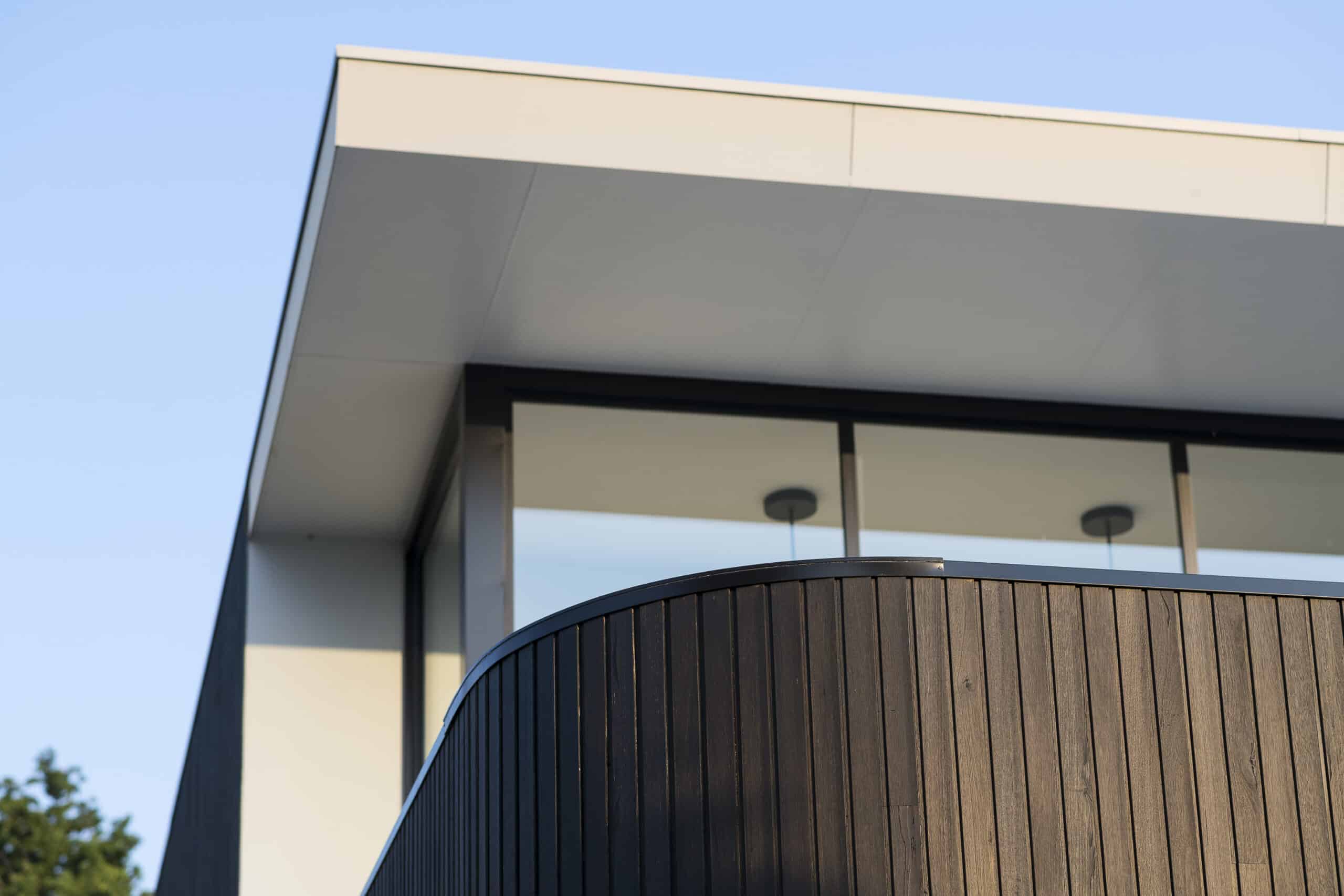
European box gutters are the squared-off profile you see on contemporary and architecturally driven homes, and they are one of the three gutter shapes we install across Southern Arizona alongside K-style and half-round. Where K-style has a decorative front edge and half-round has a curved trough, the box profile is exactly what the name says: a clean rectangular channel with straight sides.
Most homeowners meet this profile through their architect or builder rather than by shopping for it. It shows up on flat-roofed and low-slope designs, on modern desert builds, and on properties where a curved gutter would look wrong against a hard horizontal roofline. If you are weighing it against the more common options, our rain gutter lineup is the place to start, and this post covers what makes the box profile different in practice.
What a European Box Gutter Actually Is
It is a hung gutter with a rectangular cross-section, mounted to the fascia like any other gutter. The sides are straight and vertical, the bottom is flat, and the face presents as a crisp horizontal band rather than a moulded or rounded shape.
That geometry is the whole point. On a home with strong horizontal lines, a box gutter reads as part of the architecture rather than as hardware bolted on afterward. It is a deliberate design choice, which is why it turns up on custom builds far more often than on tract housing.

Not the Same Thing as a Built-In Box Gutter
This distinction matters, and it trips people up constantly. A European box gutter is a hung gutter that attaches to the fascia and can be removed or replaced like any other. A built-in box gutter, sometimes called a built-in or internal gutter, is a trough constructed into the roof structure itself.
They are very different propositions. A built-in gutter sits inside the building envelope, so a failure there puts water into the structure rather than onto the ground, and in sheet metal practice built-in gutters are treated as one of the higher-risk details, typically calling for soldered or welded joints instead of sealed laps. A hung box gutter carries none of that risk profile. It drains to the outside of the building like a conventional gutter and simply happens to be square.
So if you have read warnings about box gutters and leaks, check which type is being discussed. Most of that concern is aimed at built-in troughs, not at a hung European profile.
Why the Shape Affects Capacity
A rectangular channel uses its width more efficiently than a curved one. In a half-round gutter the trough narrows toward the bottom, so the lower portion of the profile holds less than its top width suggests. A box gutter keeps its full width all the way down, which means more cross-sectional area for the same face dimension.
This is not a marketing claim, it is geometry, and the industry treats it that way. SMACNA's downspout and gutter sizing method, drawn from its Architectural Sheet Metal Manual, sizes gutters from local rainfall intensity and the roof area draining into each run, and it explicitly accounts for the gutter width to height ratio along with section length and downspout count. Profile shape is a variable in the calculation, not an afterthought.
In practical Tucson terms, that matters because our rain does not arrive gently. Most of the annual total falls in a handful of intense monsoon storms, so the relevant question is not how much water a gutter moves over a season but whether it can handle a short, violent burst without overshooting. Sizing should be worked out from your actual roof, not assumed from what the neighbors have.
How the Three Profiles Compare
All three profiles do the same job and all three are installed seamlessly. The differences are in appearance, in how the shape uses its width, and in which architecture each one suits.
| Profile | Shape | Usually suits |
|---|---|---|
| K-style | Decorative front edge with a flat back, offered in 5, 6, and 8 inch | The default on most homes, widest size range |
| Half-round | Curved open trough | Historic, Spanish, and traditional designs, often in copper |
| European box | Straight-sided rectangular channel | Contemporary, low-slope, and architecturally driven builds |
If your decision is really between the two more common shapes, we cover that matchup in detail in half-round versus K-style gutters.
Aluminum or Copper
European box gutters are made in aluminum or copper, which are the two materials we work in. There is no steel option, and for this climate that is not a limitation. Aluminum does not rust, handles heat and ultraviolet exposure without becoming brittle, and is built to last 30 or more years here.
Copper is the other direction entirely. It develops a natural patina over time, shifting from bright metal toward the darker weathered tone people associate with older architecture, and a copper system can last up to four times longer than a standard one. On a box profile the effect is striking, because the flat faces give the patina a large uninterrupted surface to develop across.
How They Are Formed and Hung
Seamless gutters are custom-formed on site in one continuous piece, which removes the joints that otherwise become the first leak point. That matters more on a box profile than on any other shape, because straight sides and sharp corners give a seam nowhere to hide, visually or functionally.
Support is the other half of the job. During a storm a loaded gutter can hold the weight of a full-grown person, and all of that load transfers into the fascia. The accepted standard is hangers set roughly every 24 inches, with a pitch of about a quarter inch of fall per 10 feet of run so water actually moves toward the outlets. Downspouts come in standard 2x3 and 3x4 inch sections with larger sizes for bigger roofs, and one downspout typically serves somewhere around 30 to 35 feet of gutter.
Where sealant is used, it needs to be a UV-stable, flexible product rated for high heat. Rooflines here move as they expand and contract through a large daily temperature swing, and a rigid sealant simply cracks. Because box gutters are so often specified as part of a wider design intent, this work usually runs through our custom gutter design service rather than off a standard spec.
Where European Box Gutters Fit on a Tucson Home
The box profile suits homes with strong straight lines: contemporary desert builds, low-slope and flat roofs, and pueblo or territorial designs where a curved gutter would fight the parapet. On a traditional pitched roof with decorative trim, K-style or half-round usually sits better.
One local caution. Homes in managed communities across Oro Valley, Marana, Sahuarita, and parts of Tucson may be subject to guidelines covering exterior colors and finishes, and those rules vary from one association to the next. If your property is governed by an HOA, check its requirements before settling on a material or finish. Aluminum can be finished to match a palette, while copper is deliberately left to weather, and not every association treats those the same way.
Key Takeaways
- A hung European box gutter and a built-in roof trough are different systems, and most published leak warnings are about the built-in kind.
- A rectangular channel keeps its full width to the bottom, so it uses its face dimension more efficiently than a curved trough.
- The recognized sizing method treats width to height ratio, run length, downspout count, and local rainfall intensity as inputs, so sizing is calculated rather than assumed.
- Aluminum and copper are the two available materials, and neither rusts the way a steel product would.
- Seamless forming matters more on a box profile, because straight sides and sharp corners leave a seam nowhere to hide.
- HOA color and finish rules differ by community, so confirm them before choosing between a finished aluminum and a weathering copper.
Box Gutter Questions from Tucson Homeowners
What are European box gutters?
They are hung gutters with a straight-sided rectangular cross-section, mounted to the fascia like any other gutter. The squared shape suits contemporary and low-slope architecture where a curved profile would look out of place. They are one of three profiles installed in the Tucson area, alongside K-style and half-round.
Are box gutters more likely to leak?
Not when they are hung gutters. The leak concerns usually raised about box gutters refer to built-in roof troughs, which sit inside the building envelope and are a recognized high-risk detail in sheet metal work. A hung European profile drains outside the structure like a conventional gutter.
Do box gutters hold more water than K-style?
For a given face dimension a rectangular channel offers more cross-sectional area than a curved one, because it keeps its full width down to the base. Actual capacity still depends on the size specified, the length of each run, and how many downspouts serve it. Sizing should be calculated for your roof rather than assumed.
What materials are box gutters available in?
Aluminum and copper. Aluminum does not rust, handles heat and sun well, and is built to last 30 or more years. Copper develops a natural patina and can last up to four times longer than a standard system, which is why it is often chosen where appearance is part of the design.
Are box gutters seamless?
Yes, they are custom-formed on site in one continuous piece. That matters more on this profile than most, because straight sides and sharp corners make any joint obvious both visually and as a potential leak point.
Will a box gutter suit an older Tucson home?
Sometimes, though often not. The profile is at its best against strong horizontal lines such as flat roofs, parapets, and contemporary builds. On a traditional pitched roof with decorative trim, K-style or half-round usually looks more natural. It is worth reviewing on site rather than deciding from a catalog.
Do I need HOA approval for copper gutters?
Possibly, and it varies by community. Associations across Oro Valley, Marana, Sahuarita, and parts of Tucson may have rules on exterior colors and finishes, and a weathering copper behaves differently from a finished aluminum. Check your own association guidelines before committing to a material.