ES
ES 
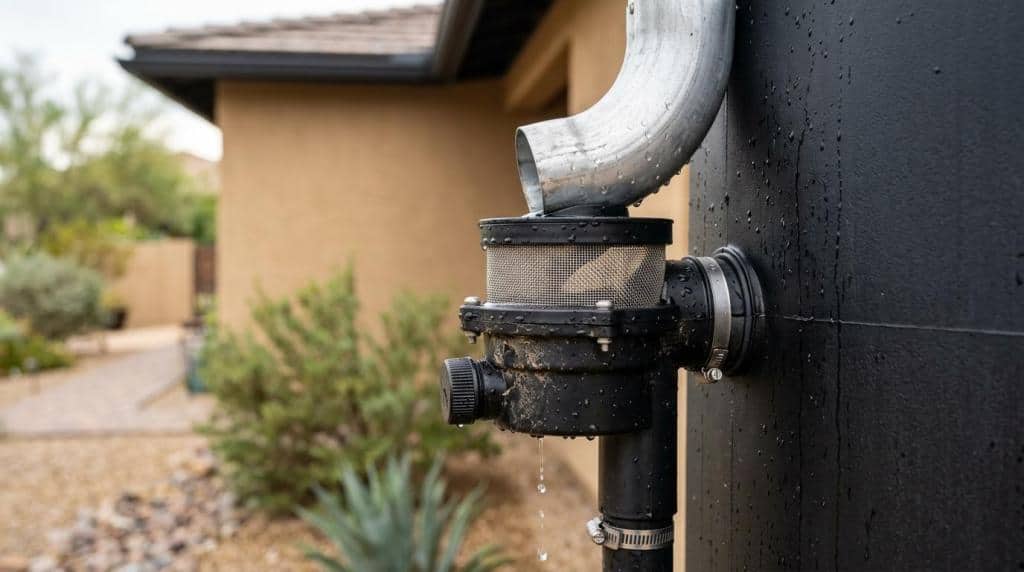
If you are wondering whether you need rain gutters in Arizona, you are not alone. A lot of homeowners look at the sky, look at the yearly rainfall totals, and figure gutters are probably optional. I get why. Most of the year, we are dealing with heat, dust, sun, and long dry stretches, not steady rain.
But here in Tucson and across Southern Arizona, the real question is not how often it rains. The real question is what your roof does when a monsoon cell parks over your neighborhood and dumps a lot of water in a short time.
In many cases, yes, rain gutters are a smart upgrade in the Arizona desert. Not every house needs them in the same way, and some homes can get by with well-planned grading and roof drainage. Still, a lot of houses benefit from gutters because they control runoff, protect stucco and fascia, reduce erosion, and make water harvesting possible.
Arizona desert rainfall patterns make gutters more useful than people think
Southern Arizona averages relatively low annual rainfall, but that number can be misleading. Tucson gets roughly 12 inches a year, and a good share of that can come during monsoon season in July, August, and September.
That means your home is often dry for weeks, then suddenly hit with fast, heavy runoff. Roof water comes off all at once. On tile roofs, flat roofs with scuppers, and long roof planes, that flow can get concentrated in a hurry.
I see this all the time on homes that were built without gutters. The owner may not notice a problem during light rain. Then one strong storm shows up and you get splashback on stucco, trenches in the landscaping, water pounding next to the slab, and muddy washouts across walkways.
The desert also adds another wrinkle. Dry soil often does not absorb that first rush of water very well, especially when the ground is compacted. So even a home in a dry climate can have a drainage problem.
When Arizona homes usually need rain gutters
Some homes in Arizona do fine without a full gutter system. If the lot slopes properly, the overhangs are generous, and roof runoff lands in a place where it can spread out safely, gutters may not be urgent.
A lot of homes do not have those conditions.
If your roof drops water near entry doors, patios, pavers, planting beds, or the foundation, gutters start making a lot more sense. The same goes for homes with short eaves, roof valleys, upper roofs draining onto lower roofs, or flat roofs that dump water through scuppers in one concentrated spot.
These are the houses where gutters usually earn their keep:
- Flat-roof homes with scuppers
- Stucco homes with splash staining
- Homes with erosion at the drip line
- Houses with sun-damaged fascia boards
- Roofs draining over walkways or patio slabs
- Properties set up for rainwater harvesting
One thing I tell homeowners all the time is this: desert climate does not cancel out drainage problems. It just changes the way they show up.
What rain gutters protect on a Tucson-area home
The first thing gutters protect is the area right below the roof edge. That sounds obvious, but it matters more than people think. Without gutters, every storm turns the drip line into a punishment zone.
On stucco homes, uncontrolled runoff causes splash marks, dirt streaking, and moisture at vulnerable spots around windows, doors, and corners. On homes with painted wood trim or exposed fascia, repeated wetting during monsoon season shortens the life of those materials. Add year-round UV exposure, and the fascia takes a beating from both sides.
Landscaping takes damage too. Desert landscapes are not maintenance-free just because they are low water. Roof runoff can gouge decomposed granite, flatten basins, wash mulch into walkways, and beat up plants sitting under roof edges.
Foundations are another concern. I am careful here, because not every home with no gutters has foundation trouble. But water collecting repeatedly next to a slab or stem wall is not something I like to ignore. Gutters and downspouts help move that water where it belongs.
Here is a quick look at what usually happens with and without managed roof drainage:
| Area of the home | Without gutters | With properly sized gutters |
|---|---|---|
| Stucco walls | Splash staining, mud marks, localized wetting | Cleaner walls, less splashback |
| Fascia and trim | More sun and moisture exposure | Better protection, especially with fascia wrap |
| Landscaping | Erosion, trenching, plant damage | Water directed to basins or safe discharge points |
| Walkways and patios | Puddling, slippery spots, washouts | More controlled runoff |
| Foundation area | Water concentration near slab edge | Water directed farther from structure |
Arizona code requirements for gutters are local, not one simple statewide rule
Homeowners often ask whether gutters are required by law in Arizona. The short answer is no, there is not one blanket statewide rule saying every house must have gutters.
What you do have are local code rules about roof drainage, grading, and keeping water away from the structure. Some jurisdictions are more direct than others. In some places, code language allows roof drains, scuppers, or gutters. In others, gutters and downspouts are specifically required unless there is an approved alternate drainage method.
In Tucson, the basic idea is that roof drainage needs to work and existing systems need to be maintained in good repair. That is the part homeowners should pay attention to. Even if gutters are not specifically mandated on your home, you still need a roof drainage setup that does not create moisture or deterioration problems.
If you are building, remodeling, or changing roof drainage, it is worth checking with your local building department, such as the City of Tucson Planning and Development Services permit office, instead of guessing.
A simple rule of thumb works here:
- Statewide: no universal gutter mandate for every residence
- Local codes: often regulate roof drainage and discharge
- Best practice: move water away from walls and foundations
- For additions or remodels: check city or county requirements before work starts
Best gutter materials and profiles for desert conditions
In Southern Arizona, material choice matters. Sun exposure is brutal, and the first cheap part to fail is usually not the gutter itself, but the finish, sealant, fasteners, or weak support points.
For most homes, seamless aluminum is the best value. It is rust-resistant, holds up well in our climate, comes in a wide range of colors, and can be formed on site for cleaner runs with fewer leak points.
Copper is the premium option. It costs more, but it lasts a very long time, handles the weather well, and develops a natural patina that some homeowners really like.
Profile matters too. K-Style is the most common on residential homes because it carries good water volume and fits a lot of architectural styles. Half-round can work nicely on certain homes, especially where appearance matters. On flat-roof houses, scupper boxes and custom leaders are often the real key because they capture water coming through the wall and get it under control fast.
This is the basic material picture I give homeowners:
| Material | Good fit for Arizona desert? | Notes |
|---|---|---|
| Aluminum | Yes | Best all-around choice for most homes |
| Copper | Yes | Long life, premium look, higher cost |
| Vinyl | Usually no | Heat and UV are hard on it |
Sizing is just as important as material. A 5-inch K-Style gutter works on many homes, but some roofs really need 6-inch gutters and larger downspouts, especially with heavy tile, steep pitches, roof valleys, or strong monsoon runoff.
Rainwater harvesting works much better with gutters
This is one of the biggest reasons gutters make sense in Arizona. We live in a place where water conservation matters, and roof runoff is one of the easiest water sources to put to use.
Without gutters, that rain just pounds the ground at random spots around the house. With gutters and downspouts, you can direct it into planting basins, above-ground tanks, or larger cisterns.
That can be a simple setup or a serious storage system. Some homes just send runoff to landscape basins. Others use sealed tanks sized from a couple hundred gallons up into the thousands, depending on roof area, budget, and goals.
If a homeowner is thinking about harvesting rainwater, these parts matter most:
- Gutters: capture roof runoff efficiently
- Downspouts: carry water to the right location
- First-flush and screening: help keep debris out of storage
- Cisterns: store water for later landscape use
- Overflow planning: sends excess water somewhere safe
In our climate, storage details matter. Tanks should be UV-protected or opaque, openings should be screened, and overflows need to be managed so you do not solve one problem and create another.
Common Arizona gutter mistakes that cause trouble
A bad gutter system can be almost as frustrating as no gutter system at all. I have seen plenty of installations that looked fine from the street and still failed the first time real weather hit.
The most common problem is undersizing. Homeowners assume a desert house does not need much capacity, then the system overflows during one hard storm. That is especially common at roof valleys and on flat-roof scupper outlets.
The second problem is poor discharge planning. If all the water ends up at one downspout with no extension, no splash block, and nowhere safe to go, you still get erosion and ponding. The gutter did only half the job.
Watch out for these issues:
- Gutters too small for the roof area
- Not enough downspouts
- Weak hanger spacing
- Bad slope
- Downspouts dumping right at the foundation
- No plan for debris and sediment
Dust is a real Arizona issue too. Palo verde leaves, seed pods, grit, and fine sediment collect in gutters, then the first rain turns it into mud. That is why layout, slope, and clean access points matter here more than people expect.
Pre-monsoon gutter maintenance is part of the system
Because it stays dry for so long, many people forget about gutters until they overflow. By then, the storm is already here.
The best maintenance window in Southern Arizona is late spring to early summer, before the monsoon starts. That is when you want to clear debris, test flow with a hose, check downspouts, and make sure discharge points are still doing their job.
Homes with flat roofs need extra attention at scuppers. Homes with trees nearby need extra attention at outlets and elbows. Homes with rainwater harvesting need tank screens, inlet baskets, and overflow paths checked before the season starts.
A simple pre-monsoon checklist goes a long way:
- Cleanout: remove dust, leaves, seed pods, and mud
- Flow test: run water and watch each outlet
- Hardware check: look for loose hangers or separation at joints
- Discharge review: confirm water moves away from the house
- Tank check: inspect screens, lids, and overflow on cisterns
If you are standing outside during a storm and seeing water jump the gutter, sheet off a roof edge, or hammer one corner of the house, that is useful information. It tells you exactly where the system is undersized or missing.
For a lot of Arizona homes, the answer is not whether gutters belong on every house. It is whether your house is showing signs that roof runoff needs to be controlled. If you see staining, erosion, splashback, fascia wear, or wasted water, the roof is already giving you the answer.
Key Takeaways
- Aluminum and copper are the two gutter materials suited to the desert. Seamless aluminum commonly lasts 30 years or more, and copper can run up to four times the life of a standard system.
- Vinyl is a poor fit for Southern Arizona, because UV exposure and heat swings break it down faster than in milder climates.
- Properly sized gutters make rainwater harvesting practical by directing roof runoff into planting basins or tanks instead of scattering it around the house.
- The most common local gutter failures are undersizing and poor discharge planning, not the material itself.
- The best time to service a gutter system in Tucson is late spring to early summer, before the monsoon starts.
Questions People Still Have About Arizona Gutters
Do gutter guards make sense for Arizona homes?
They can, but not every product works well in our conditions. The bigger issue in Southern Arizona is fine debris (dust, palo verde seed pods, decomposed granite grit) rather than large leaves. Micro-mesh guards tend to perform better than open-style covers because they block smaller particles. That said, guards reduce maintenance, not eliminate it. You still need to inspect the mesh surface and downspout outlets before monsoon season, since fine sediment can mat on top of even well-designed screens.
Will adding gutters affect my homeowner's insurance or home value?
Gutters are generally not a factor in insurance premiums the way a roof replacement would be, but documented water damage from unmanaged runoff absolutely can be. On the value side, buyers in Tucson who understand the monsoon are likely to view a well-maintained gutter system as a positive, especially if it's tied to rainwater harvesting infrastructure. It's less about adding a premium and more about not leaving a visible problem for a home inspector to flag.
How long do gutters typically last in the Arizona climate?
Seamless aluminum gutters in Southern Arizona commonly last 30 years or more when properly installed and maintained. The main failure points are usually the sealants at end caps and outlets, the fasteners holding hangers to the fascia, and the downspout connections, not the aluminum itself. Copper lasts far longer and can run up to four times the life of a standard system. The one material that struggles is vinyl, since UV exposure and thermal cycling from our temperature swings degrade it faster than in milder climates.
Is there anything I should do with my downspouts before a monsoon storm hits?
Beyond the general pre-season checkup, one thing worth doing is confirming your downspout extensions and splash blocks are still in position after a long dry stretch. They get moved, knocked loose, or buried under landscaping work more often than people realize. Also check that any buried downspout runs or dry wells haven't gotten compacted or clogged at the outlet. A simple bucket of water poured into the top of each downspout tells you quickly whether flow is clear all the way through.
Do I need a permit to install gutters on my home in Tucson?
For a standard residential gutter installation (hangers, gutters, downspouts) a permit is typically not required. Where it gets more complicated is if the work involves structural changes to the fascia, modifications to a flat roof's drainage system, or connecting to any underground drainage. If you're adding a rainwater harvesting cistern, some jurisdictions have their own requirements around tank capacity and overflow. When in doubt, a quick call to the City of Tucson's Development Services is faster than assuming.
Can I install gutters on a stucco home without damaging the exterior?
Yes, and it's done regularly on Tucson homes. The key is in the mounting method. Gutters on stucco are typically fastened through the fascia board behind the stucco face, not into the stucco itself. When done correctly, the connection is solid and the stucco isn't compromised. Where problems occur is when installation skips proper flashing or when hangers are spaced too far apart and the system flexes under monsoon load, and that movement over time can create gaps at the roofline.