ES
ES 
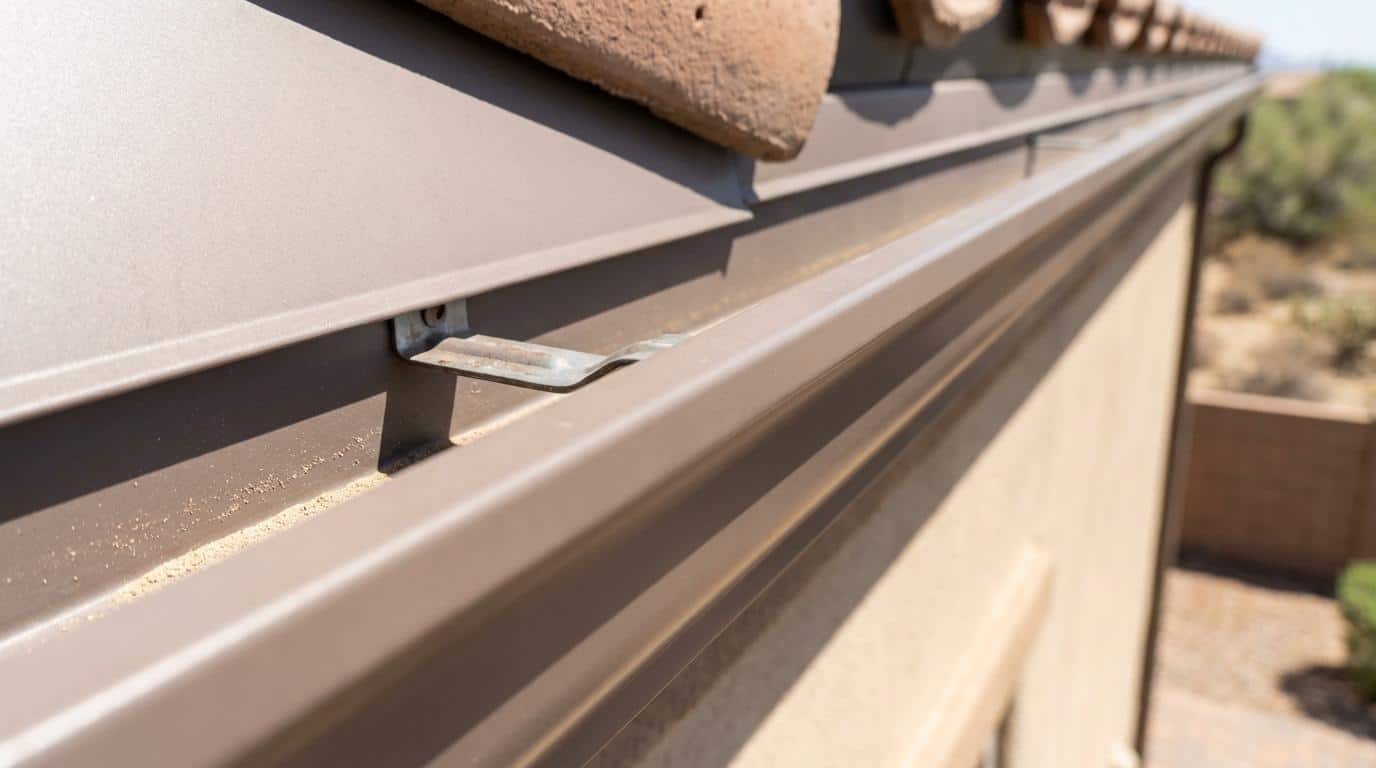
Choosing between copper and aluminum gutters is not just a matter of price. It is a choice about how long you plan to stay in the home, how much visual impact you want, and how your gutter system needs to perform through heat, dust, and sudden heavy rain.
For homeowners in Southern Arizona, that choice carries extra weight. Gutters here do not face months of constant rain, but when water comes, it often comes fast. Add intense sun, abrasive dust, and large day-to-night temperature swings, and the right material starts to look less like a decorative option and more like a long-term property decision.
What separates these two materials
Copper and aluminum are both proven gutter materials, and both can perform very well when the system is properly designed and installed. The difference is in the balance of cost, strength, appearance, and lifespan.
Aluminum is the practical favorite for many homes because it is lightweight, affordable, corrosion-resistant, and available in many colors. Copper is the premium option, chosen for its durability, architectural character, and the way it ages over time.
After looking at the two side by side, most decisions come down to a few core priorities:
- Upfront budget
- Expected lifespan
- Color and architectural style
- Maintenance preferences
- Long-term property value
Appearance matters more than people expect
Gutters sit at the roofline, which makes them surprisingly visible. On a well-designed home, they can either disappear into the trim or become part of the architecture.
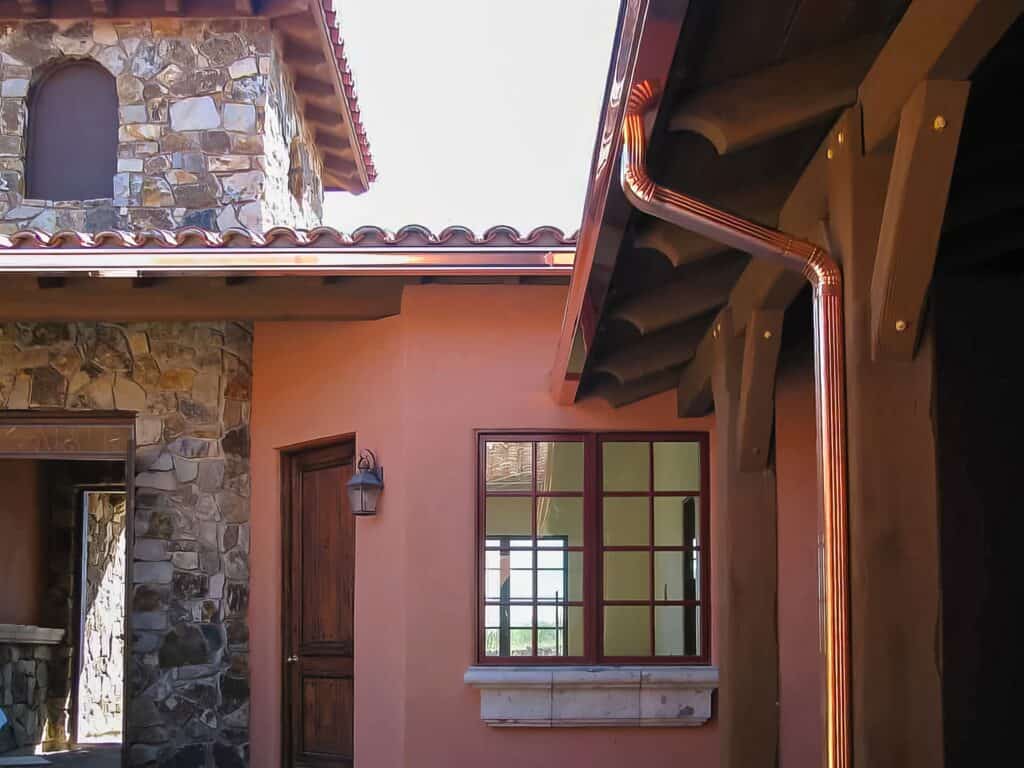
Copper stands out immediately. When new, it has a warm reddish-brown tone. Over time, it darkens and then develops its familiar patina. That aging process is part of the appeal. Many homeowners love the idea that the material changes naturally and takes on more character with age.
Aluminum offers a different kind of flexibility. It does not have the same visual drama as copper, but it can be formed into clean, modern profiles and finished in colors that match fascia, stucco, trim, or roofing. That makes it an easy fit for a much wider range of homes.
If curb appeal is high on the list, the question is not which one is prettier in the abstract. The real question is which one fits the house.
- Copper: Best suited to custom homes, historic styles, luxury exteriors, and properties where architectural detail is part of the value
- Aluminum: Best suited to homes that need color coordination, understated lines, and strong performance at a lower price
- Copper-colored aluminum: A useful middle ground for owners who like the look of copper without the full investment
Cost, lifespan, and value over time
Price is where the gap becomes impossible to ignore. Copper costs far more upfront, both in material and labor. Aluminum is far easier on the budget and still delivers a long service life.
That does not mean aluminum is always the better value. If a homeowner plans to stay in the property for decades, or if the home itself supports a premium exterior package, copper can make sense. It often lasts much longer and can reduce the need for replacement over the life of the home.
Here is a simple side-by-side view.
| Feature | Copper Gutters | Aluminum Gutters |
|---|---|---|
| Installed cost | Typically high, often around $15 to $40 per linear foot | Typically lower, often around $7 to $13 per linear foot |
| Lifespan | Often 40 to 50+ years, sometimes longer | Commonly 20 to 30 years |
| Appearance | Warm metallic finish that patinas over time | Clean, painted finish in many color options |
| Weight | Heavy | Lightweight |
| Dent resistance | Stronger, less prone to impact damage | Softer, more likely to dent |
| Maintenance | Mostly cleaning, no paint needed | Cleaning plus occasional finish-touchup over time |
| Installation complexity | Specialized work | Easier and more common |
| Best fit | Premium and architecturally distinctive homes | Most residential and commercial properties |
The table makes the broad pattern clear. Copper asks for more upfront, while aluminum makes a very strong case for efficient long-term performance per dollar spent.
Performance in Southern Arizona conditions
Climate should shape this decision.
Southern Arizona homes deal with punishing UV exposure, long dry stretches, dust storms, and short bursts of intense monsoon rain. A gutter system has to stay secure through all of it. It also has to move water fast enough to protect fascia, stucco, foundations, and landscape features.
Aluminum performs especially well in this environment because it resists rust, handles heat reliably, and can be made in seamless runs that reduce leak points. For many homes in Tucson and the surrounding region, seamless aluminum hits the sweet spot between cost and weather resistance.
Copper also performs very well here. It does not rust, it handles temperature swings with confidence, and its natural patina forms a protective surface. Its greater strength can also help it resist dents and wear over time. The main limitation is not climate performance. It is cost.
Dust is a factor people often underestimate. Fine desert particles settle into any gutter, then mix with moisture and create a muddy film that can slow drainage. This affects both materials. Copper is less vulnerable to cosmetic breakdown from that buildup, while aluminum finishes may show wear sooner if the gutters are neglected for years.
A few design choices matter just as much as material:
- Correct gutter size
- Proper slope to downspouts
- Strong hanger spacing
- Adequate downspout capacity
- Regular clearing before and after storm season
Installation is not the same experience
Aluminum is lighter and easier to handle, which makes fabrication and installation simpler. That is one reason it is so common in seamless gutter systems. It can be installed efficiently, and replacement sections or color-matched components are usually easier to source.
Copper is different. It requires more specialized handling, matching hardware, and careful detailing to avoid compatibility problems between metals. Its weight also means the support structure and attachment details matter even more.
This difference affects more than labor cost. It also affects repair strategy later. Aluminum systems are generally easier to patch, extend, or replace in sections. Copper repairs can be highly effective, but they need the right materials and the right hands.
For homeowners who want a gutter system tied into rainwater harvesting, both materials can work well. Copper brings a premium appearance to exposed collection systems, while aluminum is often chosen when budget, tank size, and practical water management are the top priorities.
Maintenance and aging patterns
Neither option is maintenance-free. Both need cleaning, inspection, and occasional adjustment after storms.
Still, the way they age is different. Copper is famous for aging gracefully. What changes on the surface is often part of what protects it. For people who like that weathered look, copper becomes more attractive over time.
Aluminum ages in a more utilitarian way. High-quality finishes can last many years, but prolonged sun exposure may eventually lead to fading or a chalky appearance. That does not mean the gutter has failed. It just means the finish may show its age before the metal itself does.
Routine care is straightforward for both:
- Before monsoon season: Clear dust, leaves, roof grit, and sediment from channels and downspouts
- After major storms: Check alignment, hanger security, and overflow marks
- Every few years: Inspect sealants, corners, and outlet connections
- For painted aluminum: Watch for finish wear in high-sun exposures
Homeowners who want the lowest visual maintenance often lean toward copper. Homeowners who want the lowest initial investment often choose aluminum and accept that touch-ups may be part of the long view.
Which homes tend to benefit most from each
Material choice gets easier when it is tied to the home itself instead of treated as a generic upgrade.
Copper often makes the most sense on homes where exterior materials already carry visual weight. Think stone, brick, wood accents, custom ironwork, or entry features with a high-end architectural feel. In that setting, copper gutters can look intentional rather than ornamental.
Aluminum is the stronger fit for the broad middle of the market. It is a smart answer for homeowners who want a dependable system, a clean finish, and strong climate performance without pushing the budget into premium territory.
A useful way to frame the choice is this:
- Choose copper if: the home is custom, you plan to stay long-term, and architecture matters as much as function
- Choose aluminum if: value, dependable performance, and color flexibility lead the decision
- Choose based on the neighborhood too: premium materials tend to make more sense when they are consistent with the surrounding homes
That last point matters. A luxury gutter material on a modest home may not produce the same return that it would on a custom property where buyers already expect upgraded finishes.
The environmental angle
Both copper and aluminum have real strengths here. Both metals are recyclable, and both avoid the short service life concerns that come with lower-grade alternatives.
Copper tends to win on longevity. A material that lasts several decades longer can reduce replacement cycles and waste. Aluminum tends to win on accessibility and efficient use across a huge range of projects.
The environmental cost of mining and processing exists for both, though in different ways. For most property owners, the most responsible choice is often the one that will last a long time on the building, be maintained properly, and avoid premature replacement.
That makes quality installation part of the sustainability story. A poorly sized or poorly fastened system wastes money and materials no matter which metal is chosen.
A practical way to make the decision
If the choice still feels close, start with three questions: How long will you stay in the home? How visible do you want the gutters to be? What level of upfront investment feels comfortable?
Those answers usually point in one direction quickly. A homeowner planning a long hold on a custom property may see copper as a natural fit. A homeowner upgrading for durability, clean lines, and strong value will often land on seamless aluminum.
Use this quick filter when comparing estimates:
- Ask about gutter size, not just material.
- Ask how the system is fastened and supported.
- Ask what finish options are available.
- Ask how the gutters will handle monsoon runoff at each roof section.
- Ask what maintenance will look like five or ten years from now.
That approach keeps the conversation centered on performance, not just price per foot.
A well-chosen gutter system protects more than the roofline. It protects stucco, foundations, walkways, landscaping, and in many cases the long-term appearance of the whole property. Copper and aluminum can both do that job well. The better choice is the one that matches the home, the climate, and the owner’s goals with confidence.
Copper vs. Aluminum Gutter Questions Homeowners Ask
Can I install copper gutters on just the front of my house and aluminum on the rest?
Yes, and it is more common than most people realize. Some homeowners use copper on the street-facing elevation where it makes the biggest visual impact, then run aluminum along the sides and back where the gutters are less visible. The two systems are kept separate — they should not be directly joined because contact between copper and aluminum can cause galvanic corrosion at the connection point. Each section gets its own downspouts and drainage path, so both materials perform independently.
Does copper react with the alkaline dust and hard water common in Tucson?
Tucson's mineral-heavy dust and hard water can leave a white or greenish residue on copper surfaces over time, which is different from the even blue-green patina most people picture. The deposits are not harmful to the metal, but they can make the aging pattern look uneven on sections that are sheltered from rain versus those that get washed regularly. A periodic rinse or light cleaning helps the patina develop more uniformly. Aluminum finishes are not affected in the same way because the painted surface acts as a barrier.
Will copper gutters stain my stucco or concrete?
They can. As copper develops its patina, rainwater washing over the surface can carry traces of copper oxide onto stucco walls, concrete walkways, and light-colored surfaces below the gutter line. The staining is usually a green or blue-green streak and can be difficult to remove once it sets. Proper drip edge detailing and splash management during installation help minimize this, and some homeowners consider the staining part of the character. If your home has white or cream stucco, it is worth discussing runoff paths with your installer before choosing copper.
Is copper-colored aluminum a convincing alternative to real copper?
From a distance, a high-quality copper-tone aluminum finish can look surprisingly close. Up close, the difference is noticeable — real copper has depth, natural variation, and surface texture that a painted finish cannot fully replicate. The bigger distinction is how they age. Copper-colored aluminum stays the same color year after year until the finish eventually fades, while real copper transforms through a visible patina progression. For homeowners who want the warm tone without the price or the aging process, copper-colored aluminum is a practical and popular choice across the Tucson area.
Do copper gutters increase home resale value?
They can, but the return depends heavily on the property. On a custom home, historic restoration, or luxury build where buyers already expect premium finishes, copper gutters reinforce the overall value proposition and can be a genuine selling point. On a standard production home in a mid-range neighborhood, the resale bump is unlikely to recover the full cost difference over aluminum. The strongest returns tend to come when copper is part of a coordinated exterior — matching downspouts, copper flashing, and complementary hardware — rather than a standalone upgrade on an otherwise standard home.
Can I let copper gutters patina naturally, or do I need to seal them?
Either approach works, and it comes down to personal preference. Most homeowners in Southern Arizona let the patina develop on its own, which progresses from bright copper to a dark brown and eventually to the classic green tone over several years. If you prefer to keep the original bright copper appearance, a clear lacquer or sealant can slow the oxidation process — but it requires reapplication every few years and can peel or cloud if it breaks down under intense UV exposure. Unsealed copper is essentially zero maintenance on the finish side, which is part of its appeal in a low-maintenance-minded climate.
How do I avoid galvanic corrosion when mixing metals on my gutter system?
Galvanic corrosion happens when two dissimilar metals are in direct contact with moisture present. The most common risk with gutter systems is connecting copper gutters to aluminum downspouts, or using steel fasteners on copper runs. The fix is straightforward: use matching hardware for each material, and when different metals must meet, install a dielectric barrier — a rubber or plastic separator — between the contact surfaces. A qualified installer will handle this as a standard detail, but it is worth asking about if you are comparing bids and one quote seems unusually low on hardware costs.
Are copper gutters harder to repair than aluminum if a section gets damaged?
Generally yes. Copper requires soldering for permanent joint repairs, and the replacement section needs to match the existing patina stage or it will stand out visually until it catches up — which can take years. Finding a contractor experienced in copper gutter work is also more limited than finding one who works with aluminum daily. Aluminum repairs are simpler: a damaged section can be cut out, a new piece spliced in, and the seams sealed with standard methods. The repair is usually color-matched on the spot. This difference in repairability is worth factoring into the long-term ownership cost, especially for properties with overhanging trees or exposure to wind-blown debris.