ES
ES 
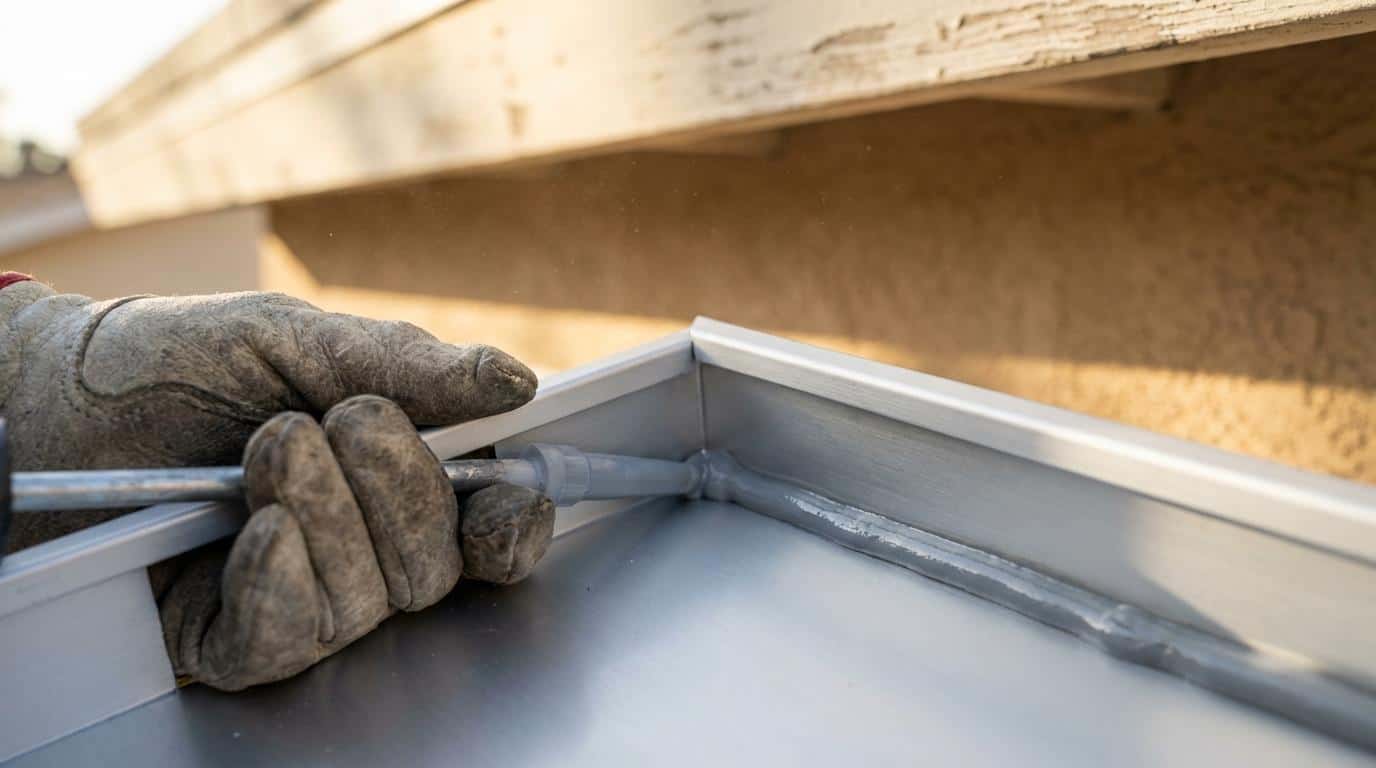
A gutter apron is a strip of roof-edge flashing that guides water coming off the roof into the gutter instead of letting it run down the back of the gutter or behind the fascia. It sits at the very edge of the roof, works alongside the drip edge, and does a quiet but important job on any home that sees real rain. In the Tucson area, where a single monsoon storm can drop a lot of water in a short window, that small piece of metal earns its keep.
Most homeowners never think about the roof edge until water shows up where it should not, on the fascia board, along the soffit, or in the soil right next to the foundation. This guide explains what a gutter apron is, how it differs from a drip edge, when a home needs one, and how it fits into a full gutter system. If you are weighing your options, our rain gutter installation in Tucson is built around getting water off the roof and away from the house cleanly.
What is a gutter apron?
A gutter apron is a piece of bent metal flashing installed at the roof edge to direct roof runoff into the gutter. Its lower leg reaches out and down over the back edge of the gutter, so water leaving the roof drops into the trough rather than slipping behind it. Think of it as a bridge between the last few inches of roof and the top of the gutter.
The apron is one member of a small family of roof-edge flashings. On many homes it takes the form of an extended or specially bent drip edge whose lower leg is long enough to lap over the gutter. Terms vary by region and by manufacturer, so one crew's gutter apron is another crew's extended drip edge. What matters is the shape and the job: a wide, angled piece of metal that closes the gap where the roof meets the gutter.
Because it is exposed to sun and water all year, the material and the fit both matter. On the systems we install, the flashing is formed from aluminum, or from copper when it needs to match a copper gutter. Matching the metal keeps the whole edge shedding water as a single unit and avoids the staining that can come from mixing different metals at the roof line.
Gutter apron vs drip edge, what is the difference?
The short answer is that a drip edge is the general term and a gutter apron is a particular style of it. A drip edge is any metal flashing run along the eaves and rake edges of a roof to carry water off the deck and past the fascia. A gutter apron is a drip edge shaped specifically to steer that water into the gutter, with a longer lower leg that laps over the back of the trough.
In practice the two overlap. A standard drip edge protects the whole perimeter of the roof, including the sloped rake edges where there is no gutter at all. A gutter apron does its work along the eaves, right above the gutter run, and is most useful where the shingles do not overhang far enough to drop water cleanly into the trough. The table below lays out how they compare.
| Feature | Standard drip edge | Gutter apron |
|---|---|---|
| Shape | L-shaped or extended flashing along the roof edge | Wider flashing with a longer lower leg that laps over the back of the gutter |
| Main job | Carries water off the roof edge and past the fascia | Steers water directly into the gutter trough |
| Where it runs | Eaves and sloped rake edges, around the roof perimeter | Along the eaves, right above the gutter |
| Best when | You need protection along the whole edge, gutter or not | Shingles do not overhang enough and water slips behind the gutter |
Why gutter aprons matter for Tucson monsoon runoff
Gutter aprons matter most during heavy rain, and in the Tucson area that means the summer monsoon. When a storm hits, the volume of water coming off a roof rises quickly, and any gap at the roof edge becomes a path for water to run behind the gutter and down the fascia. Edge flashing keeps that surge moving into the gutter, where it belongs.
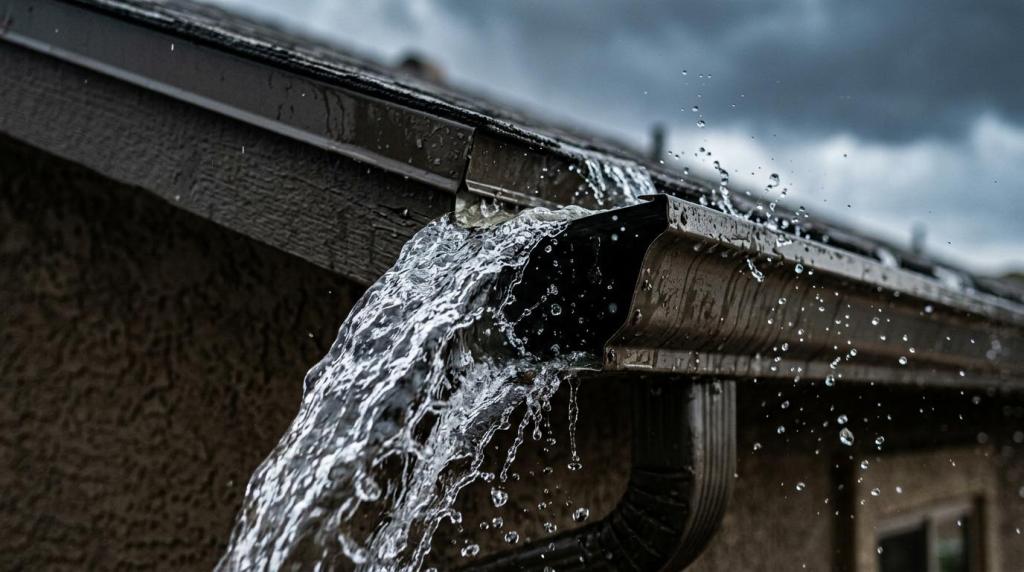
Water that gets behind a gutter does not simply disappear. It soaks the fascia board, works into the soffit, and can end up in the soil right against the foundation. Over time that leads to peeling paint, rotting wood, and the kind of ground erosion that undermines a slab. We cover the ground side of this in our guide to preventing foundation erosion with proper drainage, because the roof edge and the soil are two ends of the same system.
A well-sealed roof edge is one of several improvements that pay off in a monsoon climate. If you are getting your system ready for storm season, our list of gutter upgrades for Arizona monsoons walks through the others, from downspout placement to guard options, so the whole system moves water the same direction.
When does a home need a gutter apron or drip edge?
A home needs attention at the roof edge when water is not making it cleanly from the roof into the gutter. The clearest signs are staining or peeling paint on the fascia, water dripping behind the gutter during a storm, and dark streaks on the wall below the roof line. Any of these points to water escaping the edge instead of dropping into the trough.
Some homes were built without a proper apron, or the shingles sit flush with the edge and do not overhang enough to carry water past the fascia. Others had flashing that was damaged during a re-roof or bent out of line over the years. On a copper or aluminum gutter that is otherwise sound, adding or correcting the edge flashing is often a smaller job than replacing the gutter itself.
It is hard to judge the roof edge from the ground. The tuck of the flashing, the overhang of the shingles, and the alignment of the gutter all have to be seen up close. That is why the reliable answer is a look at the actual roof line rather than a guess. Our fascia wrap work already involves tucking aluminum under the drip edge to seal out water, so the roof edge is territory we are on all the time.
What building code says about drip edge
Building code generally treats a drip edge as a required part of a shingle roof, though the details vary by where you live. The International Residential Code calls for a drip edge at the eaves and rake edges of shingle roofs, and it sets minimums for how the pieces overlap and how far they extend. Local jurisdictions adopt and amend that code on their own schedule, so the exact rule in Tucson can differ.
According to the Journal of Light Construction's breakdown of the drip edge code, the International Residential Code has required metal drip edge at eaves and rakes since the 2012 edition, with adjacent segments overlapping at least 2 inches, the flashing extending at least a quarter inch below the roof sheathing and at least 2 inches back onto the roof deck, and fasteners set no more than 12 inches apart. Those are minimums, and many builders exceed them, especially in high-wind areas.
Because codes are adopted locally, the version enforced in Tucson or in unincorporated Pima County may not match any single number above. Before relying on a specific requirement, confirm the current rule with the Tucson or Pima County building department. The practical takeaway for a homeowner is simpler: the roof edge is meant to shed water past the fascia and into the gutter, and code exists to make sure it does.
How a gutter apron fits into a complete gutter system
A gutter apron is one link in a chain that starts at the roof edge and ends well away from the house. Above it sit the roof covering and the drip edge. Below it come the gutter, the downspouts, and whatever carries water to a safe runoff point. When every link is sized and aligned correctly, water has one clear path and no chance to wander behind the system.
The gutter itself does the heavy lifting. Seamless gutters are custom-formed on site in one continuous piece, which removes the joints where leaks usually start, and a well-supported aluminum system commonly lasts 30 years or more in the Tucson climate. Copper develops a natural patina and can last far longer than a standard system. The edge flashing simply makes sure the water these gutters are built to carry actually reaches them.
This is why the roof edge should not be looked at in isolation. The apron, the drip edge, the fascia, and the gutter all have to work together, and a change to one can affect the others. A single site review can check the whole edge at once and flag anything that needs attention before the next storm rolls through.
Key Takeaways
- A gutter apron is a form of roof-edge flashing, and a drip edge is the broader term for the metal that runs along the eaves and rakes.
- Both do the same job at heart: send roof water into the gutter, not behind it or down the fascia.
- The International Residential Code generally requires a drip edge on shingle roofs, but local adoption varies, so confirm the rule with the Tucson or Pima County building department.
- On aluminum and copper systems, the flashing is matched to the gutter so the whole edge sheds water as one unit.
- Signs of a problem at the edge include fascia staining, peeling paint, and water dripping behind the gutter in a storm.
- The surest way to know what your roof edge needs is a close look at the actual roof line.
Gutter Apron Questions from Tucson Homeowners
Is a gutter apron the same as a drip edge?
Not exactly. A gutter apron is one style of roof-edge flashing, while drip edge is the general name for the metal fitted along the eaves and rakes. Many installers use the terms loosely, so it helps to describe the shape you mean.
Do all Tucson homes need a gutter apron?
Not always. Homes where the shingles overhang well and the gutter sits correctly may shed water fine, while homes with a gap between the roof edge and the gutter benefit most. A site review is the surest way to tell.
Can a gutter apron be added to existing gutters?
Often yes. In many cases flashing can be fitted at the roof edge without replacing the gutters, though it depends on the roof covering and how the current edge is built. Confirm with an installer after a look at the roof line.
What material are gutter aprons made from?
On the systems we install they are formed from aluminum, and copper is used to match a copper gutter system. Matching the flashing to the gutter keeps the edge shedding water as one unit.
Does a gutter apron help during monsoon storms?
Yes. During heavy monsoon flow the volume coming off a roof rises fast, and edge flashing keeps that surge moving into the gutter rather than behind it. That protects the fascia and the ground below.
Is drip edge required by code in Tucson?
It depends. The International Residential Code generally calls for a drip edge on shingle roofs, but codes are adopted and amended locally, so check current requirements with the Tucson or Pima County building department.
Who installs gutter aprons and drip edge?
Both roofers and gutter contractors work at the roof edge, and the right choice depends on the job. For a gutter that is not draining cleanly at the back, a gutter specialist can review the edge and recommend a fix.