ES
ES 
The safe uses for harvested rainwater start outside the house: watering trees, shrubs, desert natives, and drip-irrigated beds. That is where roof-collected water does the most good with the least risk, and it is the use most Southern Arizona systems are built around. Our rainwater harvesting services in Tucson page covers the tank options.
After a big monsoon storm fills a tank, the next question is usually what else the water can do. Quite a lot, as long as each use matches the water quality. Roof runoff carries dust, pollen, and bird droppings. None of that bothers a mesquite tree, but some uses need extra steps, and drinking needs a lot of them.
What are the safe uses for harvested rainwater?
The safest uses for harvested rainwater are the ones where nobody swallows it: landscape irrigation, watering ornamental plants and trees, and outdoor cleaning. Indoor non-potable uses such as toilet flushing are possible with dedicated plumbing. Drinking, cooking, and brushing teeth require treatment and regular testing.
That tiered approach lines up with CDC guidance on collecting rainwater and your health, which suggests using rainwater in ways that limit the chance of swallowing it and keeping treated tap or bottled water for anything that goes in your mouth. Each step up the list below asks for more treatment, more plumbing, or more caution.
| Use | Fit for untreated harvested rainwater | What to keep in mind |
|---|---|---|
| Trees, shrubs, and desert-adapted plants | Yes, the core use | Deliver it at the root zone by hose, bubbler, basin, or drip |
| Drip irrigation on ornamental beds | Yes | A screen or filter on the line helps keep emitters from clogging |
| Edible gardens and fruit trees | Use with care | Water at the soil, not over the harvest, and wash produce with tap water |
| Rinsing tools, pots, patios, and screens | Yes | Keep it away from grills, coolers, and anything used for food |
| Dust control on dirt paths and work areas | Yes | A light, even soak settles dust without making mud |
| Toilet flushing or laundry | Only with a dedicated system | Separate plumbing, local code approval, and no link to drinking water lines |
| Drinking, cooking, and brushing teeth | Not without treatment | Filtration, disinfection, and ongoing testing under health department guidance |
Why is landscape irrigation the best use in Tucson?
Landscape irrigation is the best use for harvested rainwater because plants handle ordinary roof runoff with no trouble, and every gallon drawn from the tank is a gallon that did not pass through your water meter. That is where the lower water bill comes from. It is also the use SARG designs its residential systems around.
Desert landscapes are a natural match. Mesquite, palo verde, desert willow, agave, and most native shrubs do well on deep, occasional soaks, which is exactly what a tank delivers after the summer storms. Rainwater is also naturally soft, so it does not add the dissolved minerals that groundwater-based supplies can leave in the soil over the years.
How the water reaches the plants matters as much as where it goes. A hose on the tank spigot works for spot watering and new plantings. Gravity feed to basins around trees is simple and needs no power. Drip systems usually need some pressure, so a small pump is a common addition when the tank is feeding a drip line across a whole yard. For a closer look at how the roof, gutters, and tank work together to supply that water, read how rainwater harvesting works for Arizona homes.
Water deeply at a tree's drip line, where the feeder roots are, instead of at the trunk. One slow soak does more than several quick sprinkles and loses less to afternoon evaporation.
Can you use harvested rainwater on a vegetable garden?
You can, but edible gardens call for more care than ornamental beds. Apply the water at the soil line rather than over leaves or fruit, and wash everything you harvest with tap water before eating it. Some health guidance goes a step further and favors tap water for plants you plan to eat.
Fruit on a citrus tree hangs well above the soil, so water at the base rarely touches it. Leafy greens, herbs, and root crops sit in or next to wet soil, so be most careful with those. Drip lines tucked under mulch are a good way to keep water off the parts you eat.
If you would rather not think about it at all, a split setup works well. Run harvested rainwater to trees, shrubs, and flower beds, and keep the vegetable bed on tap water. You still capture most of the savings, since trees are usually the thirstiest plants.
What about cleaning and other outdoor chores?
Harvested rainwater works well for outdoor cleaning jobs such as rinsing garden tools, flowerpots, patio furniture, window screens, and hardscape. It also settles dust on dirt paths and work areas.
Draw a firm line at anything that touches food. Grill grates, coolers, cutting boards, and outdoor kitchen surfaces should get tap water. The same goes for anything a small child might put in their mouth, like water table toys or a splash area.
A simple non-potable label on the tank spigot is worth adding, especially if guests or kids use your yard, so nobody mistakes it for a drinking tap.
Can harvested rainwater be used inside the house?
Indoor non-potable uses like toilet flushing and laundry are possible, but they are a separate level of project. They need dedicated plumbing, backflow protection, and approval under local code, and the rainwater lines must never connect to the drinking water supply.
That last point is the one that matters most. Mixing rainwater into pipes that carry treated water can contaminate the treated water, so indoor systems keep the two completely apart. Requirements change from one jurisdiction to the next, so check with the City of Tucson or Pima County, depending on where you live, before planning an indoor tie-in.
For most homes in Tucson, Oro Valley, and Marana, outdoor use delivers the bulk of the value with none of the added plumbing, so start outside and treat indoor use as a later upgrade.
Is harvested rainwater safe to drink?
Not without treatment. Untreated rainwater from a roof should be treated as non-potable, and turning it into drinking water takes filtration, disinfection, and ongoing testing. SARG's harvesting systems are built for landscape irrigation and outdoor use, not as drinking water systems.
Clear water can still carry germs and chemicals from dust, smoke, roofing and piping residue, and animal droppings. The first storm after a long dry spell tends to wash the most of it into a tank.
Bathing falls into the same category, since water near the mouth is easy to swallow. If you are considering any potable use, talk to the county health department about testing and treatment first. Never drink straight from a storage tank, however clean it looks.
How does tank design keep stored water usable?
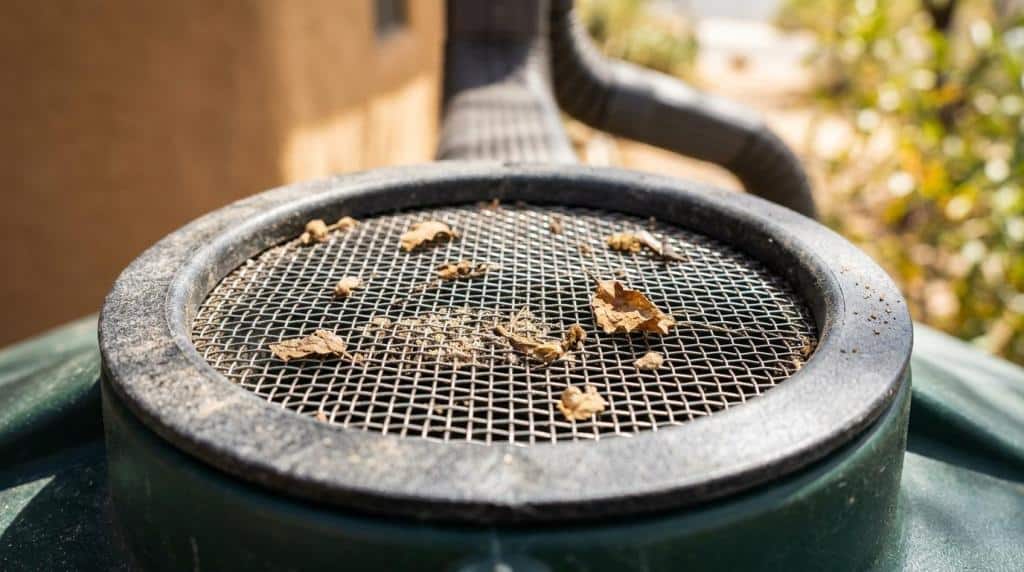
Cleaner water in means cleaner water out. As a general best practice, a well-built tank has a UV-stabilized body, screened inlets, sealed openings, and a planned overflow route.
A UV-stabilized body holds up to Tucson sun and limits light reaching the water. Screened inlets catch leaves and palo verde litter. Sealed lids keep out insects, animals, and blowing dust. Overflow planning sends excess water to a safe spot in the landscape instead of against the foundation.
Clean gutters before storm season pay off inside the tank. Pest and algae control is its own topic, and our guide to keeping mosquitoes and algae out of stored rainwater covers it step by step.
How much storage do your planned uses need?
The uses you have in mind decide how much storage makes sense. Garden irrigation systems commonly run 50 to 500 gallons, while whole-property residential systems commonly reach several thousand gallons, up to around 10,000, with larger tanks for commercial sites.
Matching storage to your plans is part of choosing safe uses for harvested rainwater, since a tank sized for a few beds cannot carry a whole yard of trees through the dry months. SARG installs three tank lines to cover that spread: above-ground plastic tanks, steel culvert cisterns, and commercial storage tanks. For owners not ready for a tank, underground drainage ties into the gutter system and moves water to a safe runoff area as a first step.
Tucson Water offers rainwater harvesting rebates, which can offset part of the cost of a qualifying system. Rebate amounts, eligibility, and program rules change over time, so confirm the current terms with Tucson Water before you buy.
Key Takeaways
- Deep, occasional soaks at a tree's drip line make the most of every stored gallon.
- For edible gardens, drip lines under mulch keep water off the parts you eat.
- A non-potable label on the tank spigot prevents mix-ups with guests and kids.
- Indoor rainwater plumbing must stay fully separate from drinking water lines.
- UV-stabilized tanks, screened inlets, sealed openings, and planned overflow protect water quality for every use.
- Tucson Water rebates can help with system cost, but confirm current terms first.
Other Rainwater Uses Tucson Homeowners Ask About
Can I use harvested rainwater in an evaporative cooler?
It is possible, but most swamp coolers are plumbed to the household water line, so running one on rainwater usually means a separate supply line and a small pump. Soft rainwater may reduce mineral buildup on the pads. Have a licensed plumber review any change first.
Is it okay to top off a swimming pool with stored rainwater?
Small top-offs are generally fine, since rain already falls into open pools. Tank water can carry sediment and organic matter that the pool filter and sanitizer then have to handle, so screen it on the way in and retest your pool chemistry afterward.
Can pets or backyard chickens drink harvested rainwater?
Fresh tap water is the safer choice for pet and poultry bowls. Stored roof runoff can carry droppings and roof residue. If you want to use tank water for animals, ask your veterinarian or the county extension office first.
Is harvested rainwater good for houseplants?
Yes, ornamental houseplants can be watered with harvested rainwater. Let it reach room temperature first, and skip it for indoor herbs or anything else you eat. Empty the saucers if pets tend to drink from them.
Does my roof material affect how I can use the water?
It can. Coatings, treated wood, and older roofing materials may shed residue into runoff, which matters more as a use moves closer to skin or food contact. Most common roof types work for watering ornamental plants, but have your installer look at the roof surface before you plan anything beyond the landscape.
Can I run a fountain or small pond on harvested rainwater?
Yes, decorative fountains and ponds are a good fit, since nobody drinks from them. Keep the water moving with a pump, clean the filter regularly, and plan for summer evaporation in Tucson so the pump never runs dry.
Should I use stored rainwater right after a monsoon storm or save it?
Use it steadily rather than holding it back. Drawing the tank down between storms frees space to catch the next monsoon rain instead of losing it to overflow. Once the storms end, ration what is left for the plants that need it most during the dry months.