ES
ES 
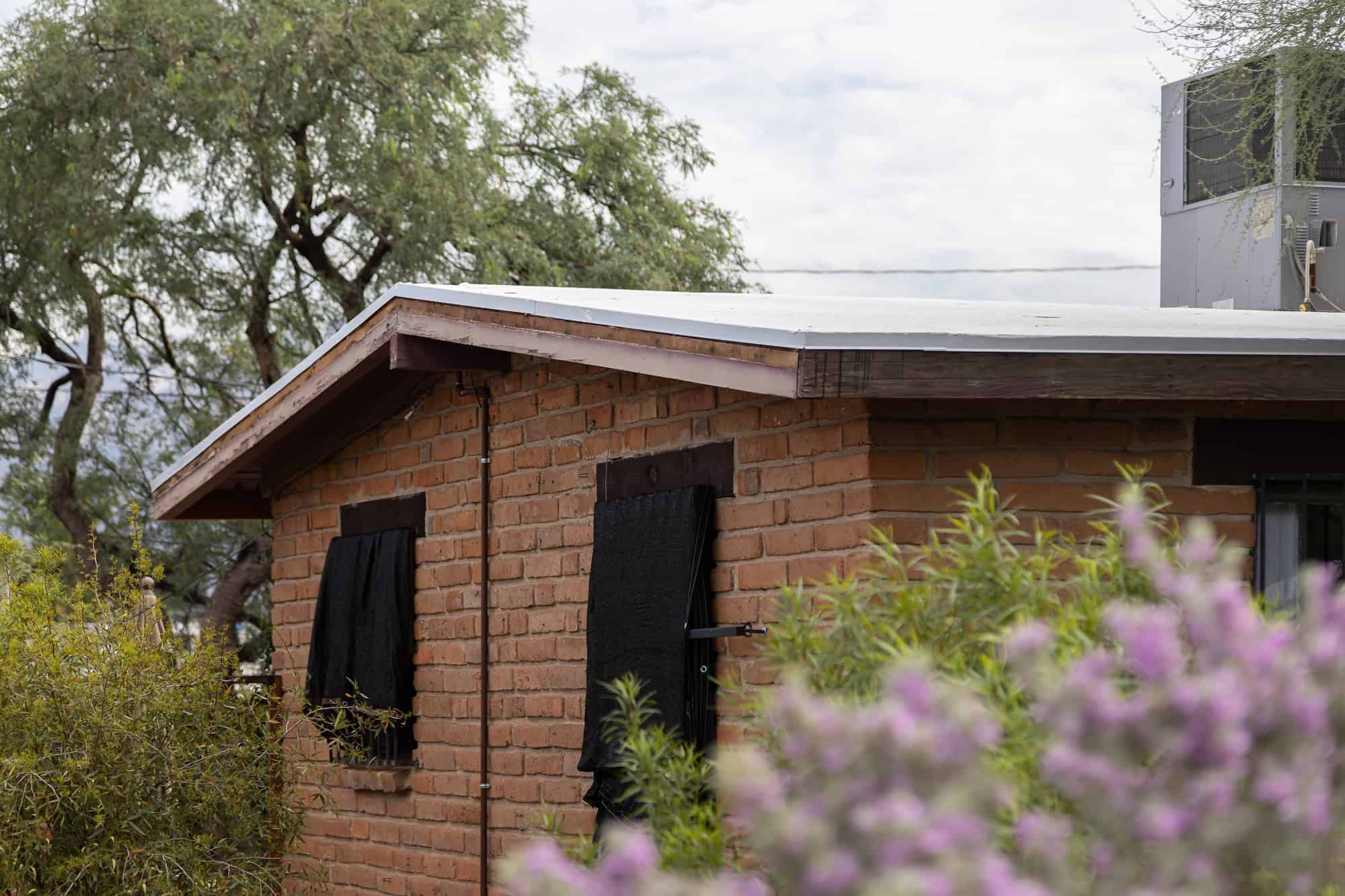
Sun damage to wood fascia is the most common reason Southern Arizona homeowners end up looking at their roofline and wondering when it started looking so tired. It rarely announces itself. The finish goes chalky, the color flattens, and one summer you notice the boards have gone from painted to weathered without any single event to blame.
Fascia sits in the worst possible position for this. It runs along the outermost edge of the building, fully exposed, with nothing shading it and nothing behind it to moderate the temperature. Understanding what the sun is actually doing to those boards makes it much easier to judge whether you are looking at a cosmetic issue or the start of a real problem. Our fascia wrap work exists largely because of what follows.
What Sun Damage to Wood Fascia Looks Like
It progresses in a recognizable order. First the finish loses its sheen and the color fades, often unevenly along the run. Then the film starts to crack and lift at the edges. Then the wood itself greys, splits along the grain, and develops the fine surface checking that tells you the board has been exposed rather than protected.
What makes it deceptive is that the early stages look like a paint problem. People assume they need a painter. By the time the wood is visibly greyed and checked, the surface underneath has degraded to the point where new paint will not bond well to it, which is why repaint jobs on old fascia often fail faster than the owner expects.
The Heat Load Those Boards Actually Take
The scale of it is easy to underestimate because we live with it. National Weather Service normals for Tucson, covering 1991 to 2020, put the average high at 101.2 degrees in June, 100.2 in July, and 98.6 in August. That is three consecutive months averaging at or near triple digits, against a December normal high of 65.5.
Those are air temperatures in the shade. A dark painted board in direct afternoon sun runs hotter than the air around it. You can check the full record on the National Weather Service Tucson normals page. The point is not the peak, it is the duration. Materials on the outside of a Tucson house spend a third of the year in conditions that would be an extreme event almost anywhere else.
Why the Sun Breaks Wood Down
Two things happen at once, and they compound. Ultraviolet radiation degrades the wood surface itself, breaking down the fibers in the top layer so it becomes weak and powdery. Separately, heat cycles the board through daily expansion and contraction, working at the paint film until it cracks and lifts.
Once the film is breached, the newly exposed wood degrades faster, which loosens more of the surrounding coating, which exposes more wood. That is why sun damage accelerates rather than progressing steadily, and why the gap between repaints tends to shorten over a board's life instead of holding constant. Each cycle starts from a worse surface than the one before.
Why Some Elevations Fail First
Damage is almost never even around a house. Orientation decides which boards go first, and the difference between the best and worst elevation on the same property is often years. Peeling or fading paint combined with east or west sun exposure is one of the standard signals that a wrap is worth pricing.
| Elevation | Typical exposure | What we usually find |
|---|---|---|
| West facing | Afternoon sun at a low angle, striking the fascia face directly during the hottest hours | Often the worst deterioration on the house |
| South facing | Long daily exposure across most of the year | Widespread fading and chalking along the run |
| East facing | Direct morning sun, hitting the face at a low angle in cooler air | Real deterioration, commonly lagging the west side |
| North facing | Least direct exposure of any elevation | Frequently still sound when other sides have failed |
The practical use of this is diagnostic. If you want to know how your fascia is really doing, do not judge from the elevation you see when you pull into the driveway. Look at the west side, then compare it against the north. That comparison tells you what the sun has been doing rather than what one viewpoint suggests.
Then the Monsoon Arrives
Sun creates the openings and monsoon rain exploits them. The cracks, lifted edges, and checked grain that months of heat produce are exactly the paths water needs, and the heaviest rain of the year arrives immediately after the hottest stretch.
That sequencing is why fascia fails here despite the dry climate. It is not slow constant damp the way it is in a wet region. It is a board that has been opened up by heat and ultraviolet exposure, then repeatedly wetted during a concentrated season. Sustained moisture in degraded wood is what turns a finish problem into a structural one, and at that point you are past wrapping and into repair. We cover that threshold in detail in fascia board repair before a wrap.
What Actually Stops It
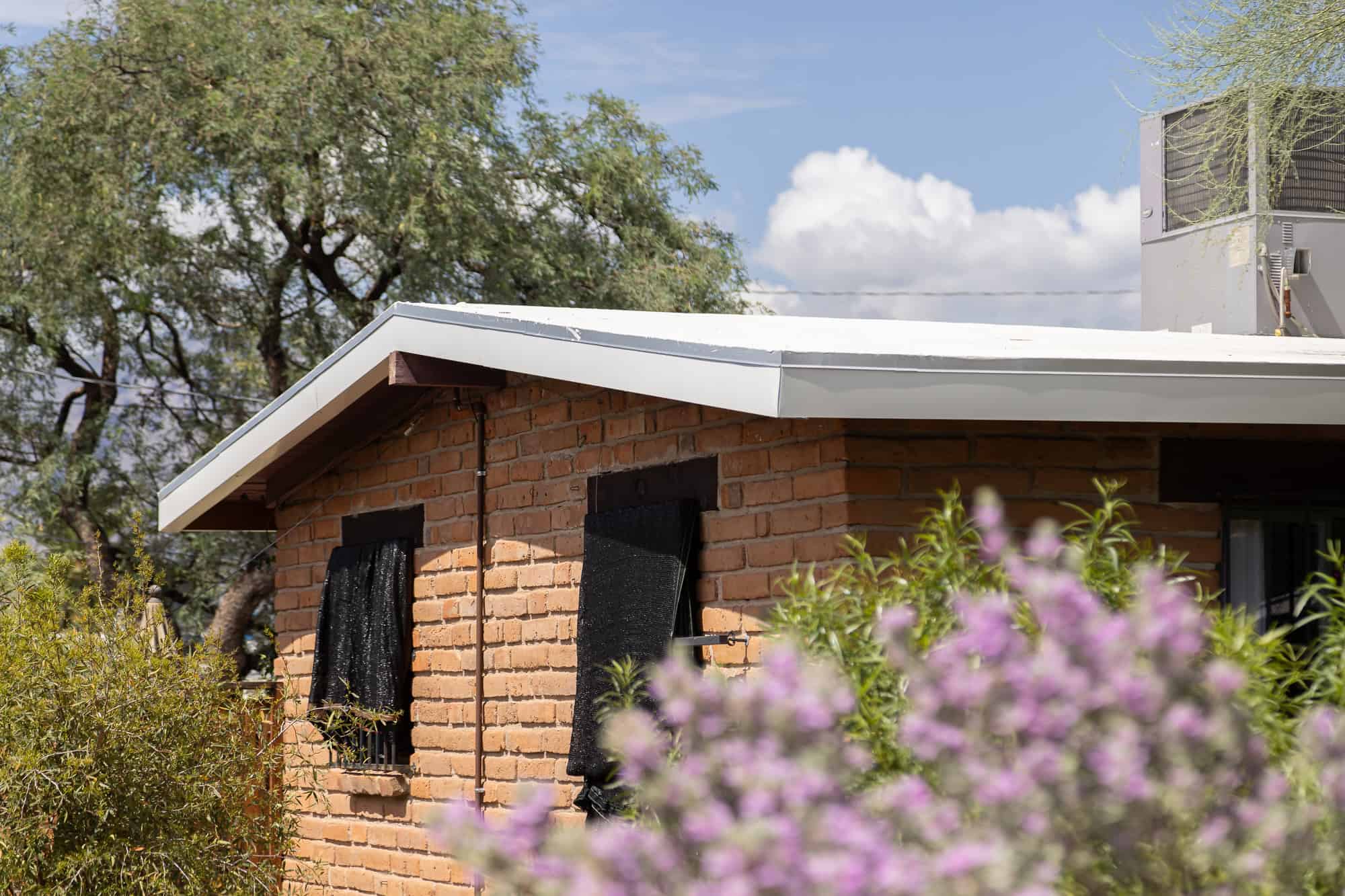
Covering the wood is the only approach that removes the cause rather than resetting the clock. A fascia wrap is a custom-fit aluminum covering installed over the existing wood, fitted in long overlapping sections tucked under the drip edge so water is sealed out.
The finish is chemically bonded to the aluminum rather than applied as a surface coat, and it carries a 50 to 100 year lifespan. It will not fade, rust, or peel, and it is paintable if you want a different color later. Since fading, cracking, and peeling are precisely the three failures the sun produces in a painted board, eliminating them is the entire point.
Aluminum handles the exposure that wood cannot. It does not have a lignin structure for ultraviolet light to break down, it does not swell and shrink with moisture, and it does not rust. The wood stays in place doing its structural job, including carrying the gutter line, while the aluminum takes the weather.
Is It Worth Doing Before It Gets Bad
Generally yes, and the reason is condition rather than appearance. Sound wood can be wrapped as it stands, so wrapping while boards are merely weathered keeps it to a single job. Waiting until sections have gone soft adds repair work before the aluminum can go on.
If you are weighing one more coat of paint against wrapping, that comparison has its own answer and we work through it in fascia wrap versus painting. Homeowners across Tucson, Oro Valley, Marana, Vail, Sahuarita, Green Valley, and Three Points reach this decision on roughly the same schedule, usually the second or third repaint. You can see how those projects turn out on our customer testimonials.
Key Takeaways
- Sun damage to wood fascia follows an order: loss of sheen, then fading, then cracking and lifting, then greyed and split wood.
- The early stages look like a paint problem, which is why the usual response is a repaint that then fails early.
- Tucson normal highs run at or near 100 degrees for three consecutive months, so the issue is duration of exposure rather than any single peak.
- Ultraviolet light degrades the wood surface while heat cycling works the paint film loose, and the two compound.
- Compare your west elevation against your north one. That contrast shows what the sun has actually done.
- Wrapping while boards are still sound keeps it to one job, because soft wood has to be repaired before aluminum goes on.
Sun Damage Questions from Tucson Homeowners
How can I tell if my fascia has sun damage or something else?
Sun damage follows a predictable sequence: dulling, then fading, then cracking and lifting of the finish, then greying and splitting of the wood along the grain. Moisture damage instead shows as dark staining, softness, or mold, and tends to be localized around one water path rather than spread along a whole sunlit run.
Which side of the house usually fails first?
Usually the west facing elevation, because it takes low angle sun during the hottest part of the day. South facing runs suffer long duration exposure, and east facing boards take direct morning sun. North facing fascia is often still sound when the other sides have deteriorated.
Why does repainting sun damaged fascia not last?
Because the wood surface itself has been degraded, not just the coating. Ultraviolet exposure weakens the top layer of the board, and paint applied over a degraded surface cannot bond as well as it would to sound wood. Each repaint therefore starts from a worse surface than the last.
Does an aluminum fascia wrap fade in the Arizona sun?
No. The finish is chemically bonded to the aluminum rather than applied as a separate surface coat, and it is rated not to fade, rust, or peel. Aluminum also has no lignin for ultraviolet light to break down, which is the mechanism that degrades exposed wood.
Should I wrap fascia before it looks bad?
It is usually the cheaper sequence. Sound wood can be wrapped as it stands, so acting while boards are only weathered keeps the project to a single job. Once sections have gone soft, repair has to happen before any aluminum is installed.
How hot does it actually get on a Tucson roofline?
National Weather Service normals for Tucson put average highs at 101.2 degrees in June, 100.2 in July, and 98.6 in August, measured as shade air temperature. A dark painted surface in direct sun runs hotter than the surrounding air, and that exposure continues for months at a time.
Can sun damage lead to gutter problems?
Yes, indirectly. The fascia carries the gutter line on most homes, so once sun and moisture have degraded the board, fasteners lose their grip. Sagging gutters or loose fasteners are often the first mechanical sign that the fascia behind them needs attention.