ES
ES 
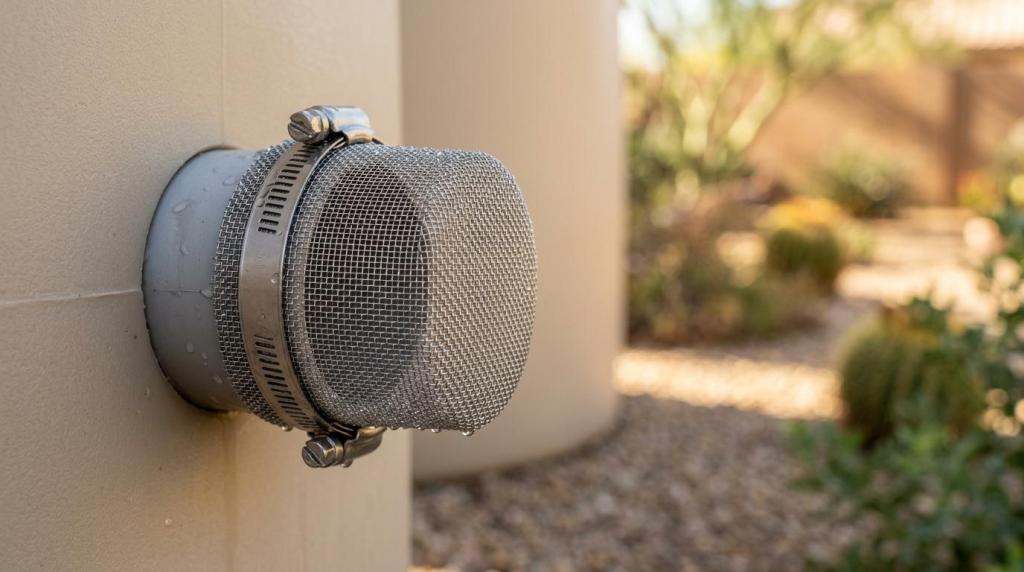
If you store rainwater in Southern Arizona, two problems show up fast when a system is not built right: mosquitoes and algae. Homeowners usually notice one of them first, but they often come from the same issue. The tank is letting in something it should not, either bugs, sunlight, or debris.
The good news is that this is usually a design and maintenance problem, not a mystery. A sealed, screened, light-blocking tank does most of the work. After that, regular checks during the hot season and monsoon season keep the system in good shape.
Why mosquitoes and algae show up in stored rainwater
Mosquitoes are simple. They need access to water and a place with little or no flow. The CDC recommends tightly covering water storage containers, including cisterns and rain barrels, so mosquitoes cannot get inside to lay eggs. If they can reach the water through an open lid, an unscreened vent, or an overflow pipe, they will use it.
Algae works a little differently. Algae needs light, moisture, and a place to grow. If sunlight gets through the tank wall or in through openings, green growth can start. Once that happens, it can coat the inside surfaces and start clogging parts of the system, including the outlet. That is one reason rain barrels and tanks need to be cleaned and maintained.
Here in Tucson, the climate makes both problems more likely if the setup is sloppy. Summer heat breaks down cheap plastics, dries out gaskets, and cooks lids until they warp. Then monsoon season arrives, and sudden roof runoff carries in dust, pollen, leaves, and whatever birds left behind. If the system is not sealed well, the tank turns into a warm holding pond.
The best rainwater tank design for mosquito and algae prevention
The best setup is not fancy. It is just well thought out. You want a tank or cistern that keeps out light, keeps out insects, and lets water move in and overflow without leaving open access points. That applies whether you are using a 200-gallon barrel, a larger above-ground plastic tank, or a steel culvert cistern.
A lot of homeowners think the tank itself is the whole system. It is not. The gutters, downspouts, screened inlet, overflow pipe, access hatch, and outlet all matter. One weak spot can undo the rest. A perfect tank with an unscreened overflow is still a mosquito tank.
In Southern Arizona, good installers usually build around a few basics: UV-protected tank materials, mosquito screens at all openings, and tight lids or hatches. Southern Arizona Rain Gutters notes that its tanks and cisterns are installed with mosquito screens at openings and overflow valves to help prevent infestation. That approach matches what works in the field. If insects cannot enter and sunlight cannot reach the water, you avoid most of the trouble before it starts.
| System part | What it should do | What happens if it fails |
|---|---|---|
| Lid or access hatch | Seal tightly and block light | Mosquito entry, debris entry, algae growth |
| Screened inlet | Filter leaves and keep bugs out as water enters | Organic buildup, insect access |
| Overflow pipe or valve | Release extra water without opening the tank to pests | Mosquito breeding at overflow point |
| Opaque or UV-protected tank wall | Keep sunlight out | Algae growth inside stored water |
| Outlet and valve | Drain cleanly without clogging | Poor flow, algae clogging the water outlet |
| Gutters and downspouts | Move roof water quickly into storage | Standing water in the collection path |
Rainwater tank openings that need screens and seals
If I am walking around a property with a homeowner, this is the first thing I point out. People tend to focus on the main lid and forget the smaller openings. Mosquitoes do not need much space, and algae does not care which opening let the light in.
The tank needs to be treated like a closed system. Every place water or air moves in or out should be screened, sealed, or both.
- Inlet opening: Use a screened inlet to filter debris and block insect entry where gutter water enters the tank.
- Overflow outlet: Add a mosquito-proof screen or protected overflow valve so the tank can breathe and drain without becoming an entry point.
- Access hatch: Use a tight lid with a gasket so it stays closed during wind and heat.
- Vent openings: Cover vents with fine screen that allows airflow but keeps mosquitoes out.
- Outlet assembly: Check around fittings for cracks or gaps where water leaks and insects gather.
This part matters even more on larger cisterns. Bigger storage gives you better water capture during monsoon storms, but it also means more places where fittings, ports, and seals have to be done right.
Maintenance steps for Tucson homeowners with rainwater storage
A good system still needs attention. Not constant attention, just regular attention. The CDC advises weekly action for smaller water-holding items around the home, including emptying, scrubbing, or covering them. For a rainwater storage system, that does not mean draining the tank every week. It means checking the whole setup so nothing around it is holding standing water and no part of the system has opened up.
Monsoon season is when little problems turn into big ones. Wind can blow screens loose. Roof grit can pack into strainers. Mesquite leaves and palo verde litter can clog gutters and send water where it should not go. Then water sits in elbows, disconnected extensions, or low spots near the tank pad.
A simple routine keeps most systems clean and usable:
- Inspect screens
- Clear gutter debris
- Check lids and hatches
- Look for standing water near the base
- Rinse out strainers
- Confirm overflow is draining away from the tank
- Make sure outlet valves still open freely
If a tank has visible green growth, slime, or a musty smell, it needs cleaning and inspection. Do not assume the water is fine because it looks clear. University guidance on rain barrels points out that contamination cannot be judged by sight or smell alone without testing. That matters if homeowners are tempted to use stored rainwater for anything beyond irrigation.
How sunlight and Tucson heat affect stored rainwater
Sun exposure is rough on every exterior component in Arizona. It fades finishes, weakens cheap screens, and shortens the life of rubber parts. On tanks, the biggest issue is that sunlight drives algae growth. If light gets through the tank wall or in through a lid gap, algae gets a foothold.
That is why opaque, UV-protected tanks are the safer choice here. A properly sealed cistern or tank that keeps out light often does not need chlorination just to avoid algae. Southern Arizona Rain Gutters makes that point with its systems, and in practice it holds up well. Dark, sealed storage stays cleaner than bright, translucent storage.
Heat also affects the collection side before water reaches the tank. Gutters expand and contract. Sealants age. Low-cost straps get brittle. Even on solid aluminum K-Style gutters, you want good support and correct slope so water does not linger in sections after a storm. Water that moves quickly is less likely to become a mosquito issue than water that sits in a sagging run or a disconnected downspout elbow.
Gutters and collection layout that help keep rainwater clean
Homeowners sometimes ask what gutter profile works best for harvesting. Around Tucson, K-Style gutters are common because they handle runoff well and match many home styles. The exact profile matters less than the layout, sizing, and workmanship. The goal is to get roof runoff into storage without giving debris and bugs extra places to settle.
That means properly sloped gutters, well-placed downspouts, and clean transitions into the tank inlet. If the fascia is in rough shape, fascia wrap can help protect the wood and give the gutter a better mounting surface. A sound mounting surface keeps the gutter line stable, which helps water flow where it should.
Roof runoff is not pure water, either. The EPA warns that water coming off a roof can pick up bacteria from birds and other animals, along with chemicals from roofing materials. That is one reason stored rainwater is usually best used for irrigation unless there is a separate treatment plan in place. For landscape watering, fruit trees, and native plants, a clean tank system makes excellent sense in our dry climate.
Quick fixes that do not solve the real problem
A lot of people look for additives when the better answer is to fix the hardware. If mosquitoes are getting into a tank, the first question is not what to pour into the water. The first question is where they are getting in.
Here are the most common misplaced fixes:
- Bleach as a first response: It may treat symptoms for a while, but it does not fix an open lid, a torn screen, or a bad overflow setup.
- Translucent decorative barrels: They may look nice at first, but light penetration encourages algae.
- Leaving the overflow open: Easy installation, bad long-term result.
- Ignoring nearby standing water: Mosquitoes may be breeding in plant saucers, blocked scuppers, or corrugated pipe beside the tank.
If the tank is sealed and screened correctly, you usually do not need to rely on chemical treatment just to keep algae and mosquitoes under control. Design comes first. Maintenance comes second. Additives are well down the list.
A simple monsoon inspection plan for rainwater tanks and cisterns
The easiest time to prevent problems is before the first big summer storm. Once the monsoon starts, issues stack up quickly because storms are intense and cleanup gets delayed.
A pre-season check can be done in one pass around the house:
- Check gutter runs for sagging, separation, and debris buildup.
- Inspect every tank opening, including the inlet, overflow, hatch, and vent screens.
- Make sure the tank is still sealed well and blocking light.
- Test the outlet valve so you know it is not partly clogged.
- Look around the tank pad and downspout area for places where water can pool.
- Confirm overflow water is routed away cleanly and does not create a muddy breeding spot.
If a homeowner follows that routine and keeps the system cleaned and maintained, stored rainwater can sit for many weeks without turning into a mosquito nursery or a green tank. That is the standard most people want: water ready for irrigation, a system that handles Tucson weather, and no surprise problems buzzing around the yard.
Common Questions About Rainwater Storage and Pests
Are mosquito dunks safe to use in a rainwater tank?
Mosquito dunks contain Bti, a naturally occurring bacterium that targets mosquito larvae and is generally considered safe for water used on plants. They do work, but treat them as a backup rather than a fix. If larvae are showing up, something is letting adult mosquitoes reach the water in the first place. Close that entry point, then use a dunk only as extra insurance during peak breeding weeks if you want it. Follow the product label for the right dose.
Do I need a first-flush diverter on my rainwater system?
A first-flush diverter routes the initial, dirtiest burst of roof runoff away from the tank before the cleaner water flows in. It is not required, but in a dusty climate it cuts down on the sediment, droppings, and pollen that feed algae and clog screens. On an irrigation-only system it is a worthwhile upgrade, and on any setup where you want cleaner stored water with less upkeep, it earns its place.
Will adding fish keep the tank free of mosquitoes?
Mosquito fish work in open ponds and stock tanks, not in a sealed harvesting cistern. A properly closed tank has no light and limited oxygen, which is no place for fish to survive. The better approach is to keep mosquitoes out entirely with screens and seals instead of introducing something to eat the larvae. Fish are a solution for a different kind of water feature.
Can a rainwater system attract pests other than mosquitoes?
It can, if it is left open or poorly sealed. Rodents and birds are drawn to accessible water during a dry Tucson summer, and they can foul the tank or chew on exposed fittings and pipe. The same sealing that blocks mosquitoes, meaning tight hatches and screened openings, also keeps larger pests out. Pooled water and food sources near the tank pad are usually what invite them over in the first place.
How often should I use the water so it does not go stale?
Water that moves stays fresher than water sitting untouched for months. If you draw from the tank regularly for irrigation through the warm season, you turn the supply over naturally and rarely run into stagnation. Problems tend to appear when a tank is filled and then ignored for a long stretch. If you know the water will sit, keep it fully sealed and dark, and give it a quick look before putting it back to use.