ES
ES 
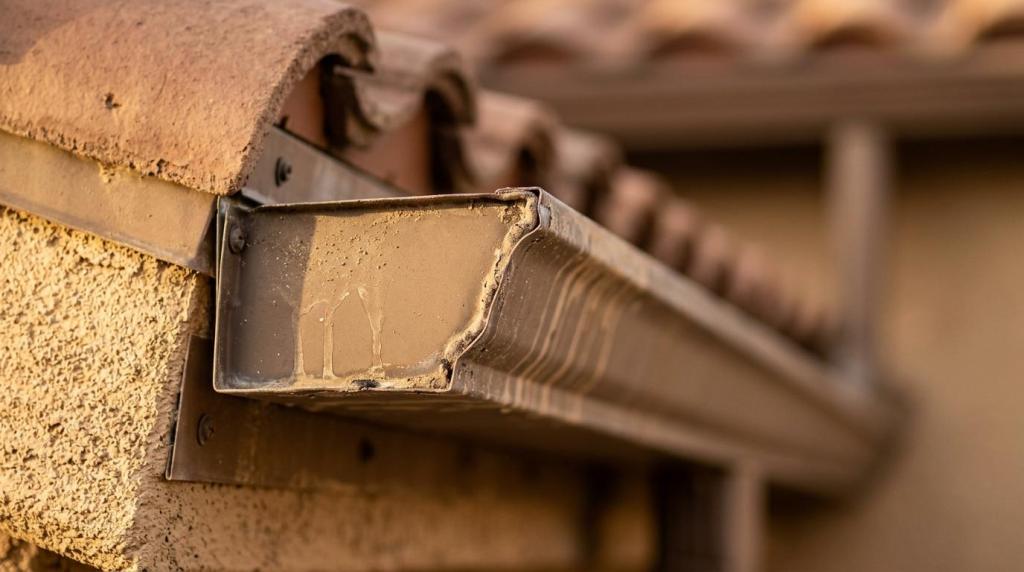
Fascia wrap colors are a long term decision, not a paint color you redo in a few seasons. A fascia wrap is a custom fit aluminum covering installed over your existing wood fascia, and the finish on that aluminum is chemically bonded, paintable, and built to hold up without fading, rusting, or peeling for 50 to 100 years. Whatever color goes up at the roof edge is the color the house wears for a very long time. That is why the question comes up on nearly every aluminum fascia wrap job we quote around Tucson.
The choice gets simple once you know what to look at. Fascia sits at the top edge of the wall with stucco below it and roof above it, so it reads as a line rather than a surface. Coordinate that line with what is already on the house and it settles into the architecture. Miss it and it is the first thing anyone notices from the driveway.
Why Fascia Wrap Colors Last Longer Than Paint Colors
A fascia wrap color lasts because it is a factory finish bonded to aluminum, not a coat of paint brushed onto wood in the field. That finish carries a 50 to 100 year rating and is made not to fade, rust, or peel. Painted wood at the roof edge does not behave that way in Southern Arizona.
So you are choosing a color on a different timeline than you are used to. Exterior paint gets revisited. A bonded aluminum finish usually does not. The safer approach is to tie the fascia color to the parts of the house that are not going to change, which normally means the roof tile, any stone or brick at the base, and the overall tone of the stucco, rather than a color that feels current this year.
The color also sits on a product doing a structural job. Panels are formed in long overlapping sections and tucked under the drip edge so water cannot get behind them, which our page on how a fascia wrap goes on covers in detail. Color is the visible layer of a repair that is really about keeping water off wood.
How Finish Grades Affect the Color You See Later
Not every factory finish on architectural aluminum is held to the same standard. The trade uses a good, better, best set of voluntary specifications, published as AAMA 2603, 2604, and 2605 by the Fenestration and Glazing Industry Alliance. The difference that matters to a homeowner is how much outdoor weathering the coating has to survive, color still intact, before it can carry that designation.
Published versions of those specifications set color retention testing at roughly one year of South Florida exposure for 2603, five years for 2604, and ten years for 2605. South Florida is used because it is the harshest natural weathering site in the country, not because it resembles Tucson. The ranking still tells you something useful. Ask which finish specification applies to the coil going on your house, whoever you hire. It is a fair question and a straight answer is easy to give.
Start With the Stucco, Not the Fascia
On most Tucson homes the stucco decides the fascia color, because the stucco is the largest color field on the building and everything else is read against it. Pick the fascia first and you end up working backward, trying to make a large surface agree with a narrow band.
Warm stucco tones, the tans, sands, and adobe colors common across the valley, sit comfortably with a fascia in a deeper version of the same family. Cooler grays want a fascia that is either close in tone or a clear step darker, because a warm fascia against cool stucco can look accidental. If the house has a body color and a separate trim color, the trim is usually the stronger cue, since it already appears around windows and the entry.
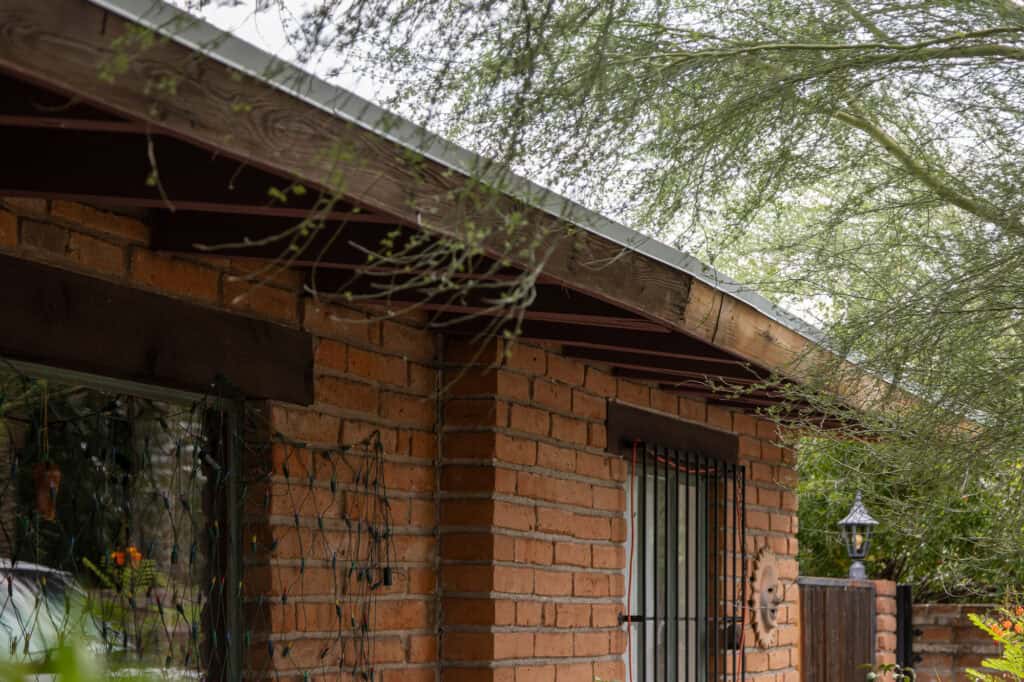
Finish and sheen belong in the same decision. A flatter finish absorbs light and keeps a color close to the sample, while a glossier one throws highlights and can look lighter along the top edge where the sun hits it. Options vary by supplier, so ask what is stocked before you settle on a color.
| Exterior element | Why it drives the fascia color | Common coordination approach |
|---|---|---|
| Stucco body color | Largest color field on the house, everything else is read against it | Stay in the same color family, usually a step deeper |
| Trim color | Already frames the windows and the entry | Repeat the trim tone at the roof edge for a quiet roofline |
| Roof tile or shingle | Sits directly above the fascia and is often multi toned | Pull a quieter tone out of the blend and match the undertone |
| Rain gutters | Hang on the fascia and read as one horizontal band | Match them unless you want a deliberate two tone edge |
| Soffit | Sits in shade and reads darker than the sample looks | Keep it the same tone or lighter, not darker |
| Stone or brick accents | Permanent and expensive to change | Treat as a fixed reference and coordinate to it |
Let the Roof Tile Set the Undertone
The roof is the second thing to check, because a tile roof carries several tones at once and the fascia sits directly beneath it. Hold a sample against the roof edge and you will see quickly whether the undertones agree. A fascia with a red undertone under a gray and charcoal tile roof looks off even when both colors are fine on their own.
Blended tile is common here, and it gives you options. Pull one of the quieter tones out of the blend rather than the loudest one and the roof edge looks intentional. If the roof is a single flat color, a fascia close to it makes the roofline read as one continuous element, while a lighter fascia draws a visible line between roof and wall. Neither is wrong. It depends on whether you want that line emphasized or quiet.
Should Fascia and Gutters Be the Same Color
Matching them is the most common approach, and for good reason. The gutter hangs on the fascia, so the two are physically stacked and read as one horizontal band from the street. Same color, one band. Different colors, two stripes.
There are homes where a split works. A darker fascia with a gutter matched to the stucco can help the gutter disappear on a long elevation. If you are weighing that, our guide to picking gutter colors for a Southwestern exterior walks through the families that hold up best on stucco homes. Just decide both in the same conversation. The mismatches we see almost always come from picking them months apart.
Downspouts are part of this too. They run down the wall rather than along the roof edge, so they are read against the stucco, not against the fascia. On a home with a deep accent fascia, a downspout in that same tone can draw a dark vertical line across a light wall.
Color Rules Vary by Community Around Tucson
If you live in a managed community, fascia wrap colors may not be entirely your call. Many neighborhoods in Oro Valley, Marana, Sahuarita, Green Valley, and Vail have architectural guidelines covering exterior colors, and some treat roof edge trim as part of the approved palette. Rules differ from one community to the next and get revised over time, so confirm yours before any material is ordered.
The document you want is usually the CC and Rs, or a separate architectural guideline packet from the HOA or the management company. Where color is regulated there is often an approved list, a submittal form, and a review window. None of that is hard, but it takes time, and it is far easier to handle before the order is placed. Do not assume the color the builder used is still approved either, since palettes get updated.
See It at the Roofline Before You Order
Fascia wrap colors look different outdoors than they do in your hand, so view any sample at the roof edge, from the distance you actually see your house. A chip held at eye level in the garage tells you almost nothing about how that color reads twenty feet up against sunlit stucco. Colors go lighter and flatter in full Tucson sun, and a tone that looked safe indoors can wash out completely.
Check it in the morning and again in the late afternoon, on more than one elevation. The same fascia looks different on a shaded north face than on a west wall at four in the afternoon. And if the house gets a new exterior color in fifteen years, the finish is paintable, so you are not locked in permanently. That is an option to keep in your pocket, not a plan.
Key Takeaways
- Fascia reads as a line, not a surface, so contrast shows up more there than it does on a wall.
- Tie the color to the permanent parts of the house, the roof tile and any stone or brick, rather than to a paint color that will be replaced.
- Matching the fascia and the gutter keeps the roof edge as one clean band, which suits most Tucson elevations.
- Ask which finish specification applies to the coil on your job, since the grades differ in how long they hold color under weathering.
- Confirm community color rules in writing before material is ordered, because the approval window is the part that delays jobs.
Fascia Color Questions from Tucson Homeowners
Does the fascia wrap color have to match the soffit?
No. The soffit and the fascia can be different colors, and many homes keep the soffit lighter because it sits in shade most of the day. Keeping both in the same tone is the simplest way to make the roof edge read as one band.
What color works on a house with two stucco tones?
Tie the fascia to the trim tone rather than the body tone. The trim already appears around the windows and the entry, so repeating it at the roof edge keeps the eye moving instead of stopping at the roofline.
Can a fascia wrap be color matched to an exact paint color?
Usually not exactly. Factory finish colors come from the range a supplier stocks, so the normal approach is to pick the closest available color. If an exact match matters, the paintable finish lets you handle it after installation.
Can a fascia wrap be painted a different color later?
Yes. The bonded finish is paintable, so a wrap installed in one color can be repainted when the rest of the exterior is repainted. Use a coating rated for exterior aluminum and follow the manufacturer preparation instructions.
Where do I find the approved exterior colors for my neighborhood?
Check your community documents, normally the CC and Rs or a separate architectural guideline packet from the HOA or management company. Requirements differ by community and get revised, so confirm current rules in writing.
Is white still a reasonable fascia color?
Yes. White is easy to coordinate and remains common on Southern Arizona rooflines. It does show dust and water streaking more plainly than mid tone colors, so weigh how visible your fascia is from the street.
Does the color choice change how the wrap is installed?
No. The color is a finish on the coil stock, so the panels are formed, lapped, and tucked under the drip edge the same way in any color. Availability can vary by supplier, so confirm stock before scheduling.