ES
ES 
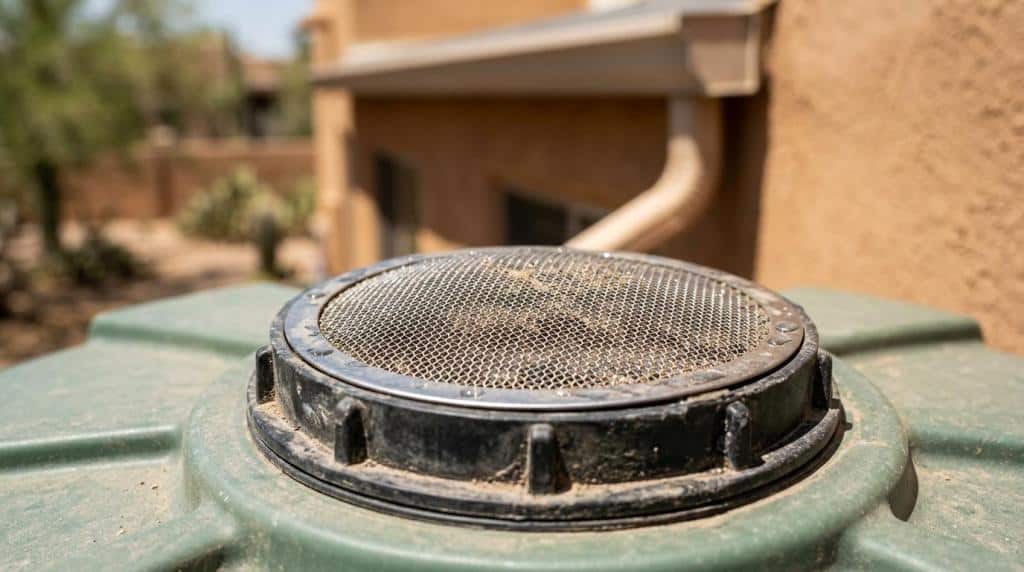
In Southern Arizona, putting in an above-ground water tank is not just a matter of dropping a tank in the yard and hooking up a downspout. If the location is off, the base is out of level, or the overflow is poorly planned, the whole system starts working against you.
A good setup has to fit Tucson conditions. That means hard sun, fast monsoon storms, wind, blowing dust, and a real interest in water conservation. It also means the tank needs to work with the house, the roof drainage, and the way you want to use the water, whether that is landscape irrigation, garden use, backup storage, or a larger rainwater harvesting system with cisterns.
What a proper water tank installation includes
A well-built system starts with the roof and ends at the outlet. The tank is only one piece of it. Gutter profiles, downspout placement, inlet screening, overflow routing, outlet height, pad construction, and access for cleaning all matter. On many Tucson homes, the right answer includes continuous aluminum gutters in a K-Style gutters profile, properly placed downspouts, and a screened tank inlet that can handle a sudden summer downpour.
The goal is simple: catch clean water, store it safely, and move it where you need it without damaging the house or yard.
Typical installation work often includes:
- Site layout
- Tank pad preparation
- Tank placement and leveling
- Inlet screening
- Overflow drainage
- Hose bib or pump connection
- Anchoring for wind
- Test fill and final check
Choosing the right tank location in Tucson
The best tank location is usually close to the downspouts that feed it and close to the area where the water will be used. Shorter pipe runs usually mean fewer fittings, fewer leak points, and less cost. If the tank can sit a little higher than the planting area, gravity can do some of the work for irrigation.
The ground needs to be flat, stable, and drained well. A full tank is heavy. Even a modest tank can weigh several thousand pounds once it is full, so it should not be placed where it can settle against a wall, lean toward a fence, or undermine a walkway. In Tucson, sandy soil, loose fill, and caliche all show up from one property to the next, so the pad has to match the soil conditions.
Sun exposure matters more here than in milder climates. Poly tanks are built for outdoor use, but they still last longer when they are not baking in all-day reflected heat off a block wall. If there is a choice, partial shade or a less exposed side yard can be a better location. The tank also needs enough clearance to inspect screens, valves, and fittings later.
Property lines, access gates, HOA rules, and local setbacks should be checked before the work starts.
Building a level tank pad that will not shift
Most tank problems that show up later start at the base. If the pad is uneven, the tank can twist, bulge, or put too much stress on one sidewall or fitting. That is true for smaller poly tanks and even more true for large steel cisterns.
For smaller systems, a compacted aggregate base may be enough if the soil is stable and the tank manufacturer allows it. For larger tanks, taller tanks, or sites with questionable soil, a reinforced concrete pad is usually the safer choice. The base should extend beyond the tank footprint and stay level across the full bottom.
During monsoon season, poor drainage around the pad can wash out edges and cause settling. That is why grading around the tank matters almost as much as the pad itself.
| Base option | Best use | Benefits | Watch for |
|---|---|---|---|
| Compacted aggregate base | Smaller poly tanks on stable soil | Good drainage, lower cost | Must be fully compacted and perfectly level |
| Reinforced concrete pad | Larger tanks, steel culvert cisterns, soft or mixed soil | Strong support, easier anchoring, stable footprint | Higher cost, needs proper drainage around slab |
| Engineered site prep with retaining work | Sloped yards or difficult access areas | Makes installation possible on challenging properties | Requires more planning and layout |
Connecting gutters and downspouts to the tank
A tank only collects what the roof drainage can deliver. That is why gutter sizing and placement matter. In Tucson, short, intense storms can dump a lot of water in a hurry, so undersized gutters or poorly placed downspouts can overflow long before the tank fills. On many homes, K-Style gutters are a good fit because they carry a lot of water and look right with most rooflines.
Sometimes the work also includes fascia wrap. If the wood behind the gutter line is weathered, wrapping the fascia before the new gutter goes on helps protect the edge of the roof and gives the fasteners a cleaner surface. That is especially useful on older homes that have taken years of sun damage.
A well-connected harvesting system should include a few basic parts that keep the water cleaner and the tank safer:
- Screened inlets: Help keep out leaves, roof grit, insects, and nesting debris.
- First-flush options: Send the dirtiest first runoff away from the tank after a long dry spell.
- Oversized downspouts when needed: Better flow during monsoon bursts.
- Overflow piping: Moves excess water away from the pad, foundation, and walkways.
- Sealed lids and screened openings: Cut down on algae growth and mosquitoes.
Comparing poly tanks and steel culvert cisterns
For most residential above-ground systems in Southern Arizona, the choice comes down to poly tanks or steel culvert cisterns. Both can work well when they are installed correctly.
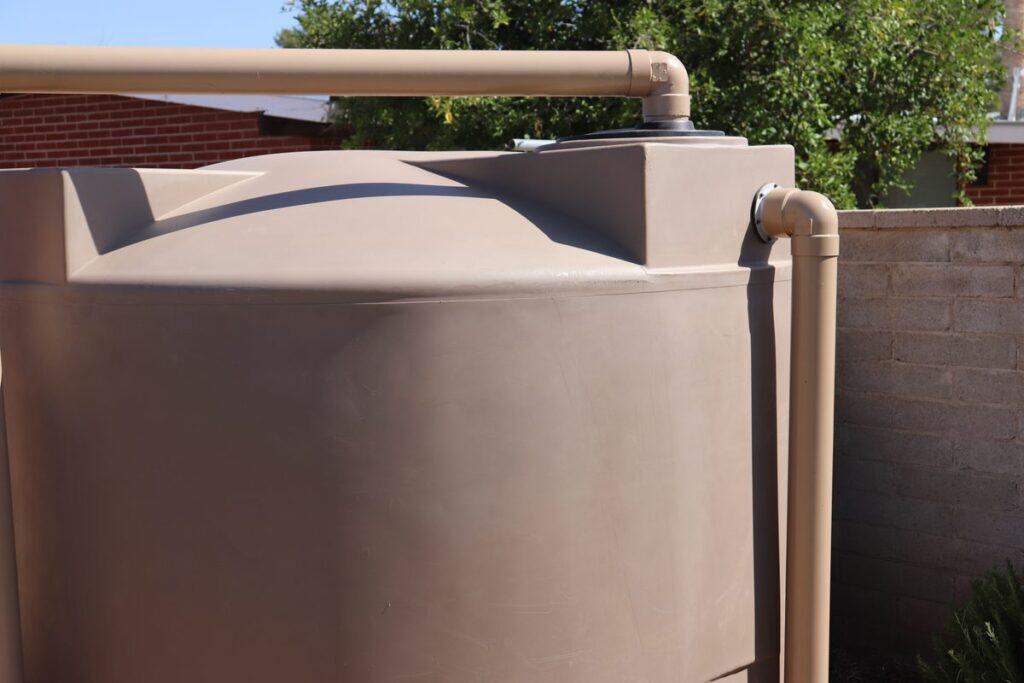
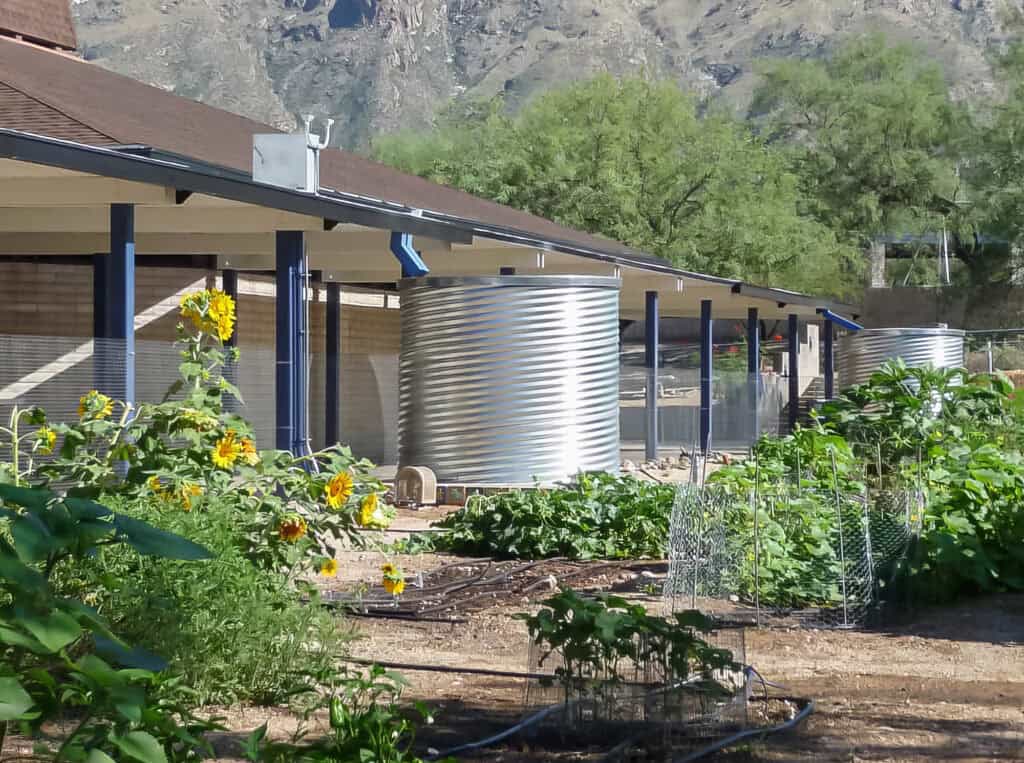
Poly tanks are a solid fit for many homes because they are cost-effective, available in useful sizes, and handle outdoor conditions well when they are UV-protected. They work especially well for moderate storage volumes and tighter side-yard installs. Steel culvert cisterns make sense when you want larger capacity, a different look, or a system that becomes a bigger part of the property plan.
| Tank type | Common fit | Main advantages | Main considerations |
|---|---|---|---|
| UV-protected poly tank | Small to mid-size residential systems | Lower cost, low maintenance, good for many yard layouts | Needs a very even base, benefits from reduced sun exposure |
| Steel culvert cistern | Larger residential or commercial storage | Large capacity, strong structure, distinctive appearance | Needs proper coating care, larger pad, more site planning |
Some properties do well with a single 200 to 800 gallon tank. Others make more sense with 1,500 gallons, 3,000 gallons, or a much larger cistern setup tied to several downspouts. The right size depends on roof area, budget, space, and how you plan to use the water.
When gravity feed works and when a pump makes more sense
If the tank outlet sits above the planting area, gravity feed can work for basic irrigation. If the yard is flat, the run is long, or you want stronger pressure at a hose bib, a pump is usually the better choice. That decision should be made before the outlet height and plumbing are finalized.
Protecting above-ground tanks from sun, wind, and debris
Desert weather is hard on outdoor equipment.
UV exposure can fade finishes, heat the water, and shorten the life of cheap materials. That is why opaque, UV-protected tanks and sealed lids matter. A screened overflow is just as important. Without it, mosquitoes, wasps, and debris find their way in fast. Dust is another local issue. Roofs stay dry for long stretches here, then the first monsoon rain washes all that fine dirt toward the tank.
Wind needs attention too. A tall empty or partly full tank can move more than people think, especially during monsoon outflow winds. Anchoring may include straps, hardware tied to the pad, or other support depending on tank size and exposure. Flexible plumbing connections also help because tanks and pipes expand and contract in the heat.
Water tank maintenance and safety checks
A good installation should be easy to maintain. If a tank is tucked into a corner with no room to inspect the screens or drain the bottom, service becomes harder than it needs to be. Access matters from day one.
Most homeowners do best with a simple maintenance routine a few times a year, plus a deeper cleaning when needed. If the water is being used for edible gardens, indoor backup, or any potable application, filtration and treatment need to be discussed separately.
A practical maintenance checklist looks like this:
- Check inlet and overflow screens
- Look for pad settling or cracks
- Test valves and hose connections
- Flush out sediment when the tank is low or empty
- Confirm overflow water is draining away from the house
- Inspect after monsoon storms: Look for shifted piping, clogged screens, and erosion around the base.
- Clean the tank on schedule: Remove sediment and rinse the interior before buildup gets heavy.
- Verify the lid seal: Keep light, insects, and debris out of the stored water.
Sizing an above-ground tank system for your property
Every rainwater harvesting setup is different from one house to the next. A small tank on one side yard may be enough to support fruit trees and patio plants. The right system is different from one house to the next. A small tank on one side yard may be enough to support fruit trees and patio plants. A larger setup may tie several roof sections together and feed a pump, drip irrigation, or multiple cisterns. The roof area, gutter layout, available pad space, and intended use all need to be looked at together.
Southern Arizona Rain Gutters installs above-ground tank systems with those details in mind, from gutter collection and fascia wrap work to screened tank inlets, overflow planning, and larger cistern layouts. If you want a system that fits Tucson weather and actually gets used, the planning stage is where the job is won or lost.
Questions Worth Asking Before You Install
Does Arizona require a permit to install an above-ground rainwater tank?
For most residential above-ground tanks, no building permit is required in Tucson or unincorporated Pima County, but it depends on the size of the tank, how the water will be used, and whether any plumbing connections are involved. Arizona has been one of the more rainwater-friendly states in the country, and state law explicitly allows residential collection for outdoor use. That said, if the system ties into indoor plumbing or involves significant grading work, additional review may apply. Checking with your local jurisdiction before work begins is always the right move.
Are there rebates or incentives available for rainwater harvesting in Tucson?
Yes. Tucson Water offers a rebate program for rainwater harvesting systems, including above-ground storage tanks. The rebate covers a portion of the installation cost and has historically applied to both the tank and qualifying system components. Income-qualified households may be eligible for a higher rebate amount. The program has specific requirements around how the water must be used, so it is worth confirming current terms directly with Tucson Water before the project starts.
How much rainwater can a typical Tucson home actually collect?
A rough rule of thumb is that one inch of rainfall across one square foot of roof area yields about 0.6 gallons of collectible water, accounting for typical losses. A modest 1,500 square foot roofprint during a single one-inch storm could generate close to 900 gallons. Tucson averages around 12 inches of rainfall per year, but most of that falls during the July through September monsoon window. That means collection opportunities are concentrated, which is exactly why having adequate tank capacity and properly sized gutters matters: you may get your biggest fills in just a handful of storms.
Will the stored water stay safe for garden use if the tank sits unused between monsoon storms?
For landscape irrigation, stored water generally holds up well when the tank is properly set up, meaning it is opaque, sealed, screened, and out of direct sun as much as possible. Algae growth and bacterial activity accelerate when light reaches the water or when the tank runs warm for extended periods. Between uses, keeping the tank as full as possible and maintaining intact screens and lid seals helps a lot. If the water will be used on edible plants and it has been sitting for weeks, a basic water test is a reasonable precaution. For any potable or near-potable use, filtration and treatment are separate conversations entirely.
Can an above-ground tank system be expanded later if I want more storage?
Yes, and it is worth thinking about that possibility before the first tank goes in. A system designed with a manifold connection point or a tee in the overflow line can accept additional tanks without reworking the whole setup. The pad location and the way the inlet and overflow are plumbed will either make future expansion straightforward or create extra work. If there is any chance you will want more capacity down the road, mentioning it upfront allows the installer to plan around it from the start.
How long does a professionally installed poly tank typically last in Southern Arizona conditions?
A quality UV-stabilized poly tank installed on a proper base, kept out of constant reflected heat, and maintained with regular screen checks and occasional interior flushes can realistically last 20 years or more. The weak points are usually not the tank wall itself but the fittings, inlet screens, and lid seals. Those components see the most wear and are also the easiest to replace on a schedule. Tanks that sit on an uneven base, bake against a south-facing block wall, or go years without any maintenance tend to show problems well before that.