ES
ES 
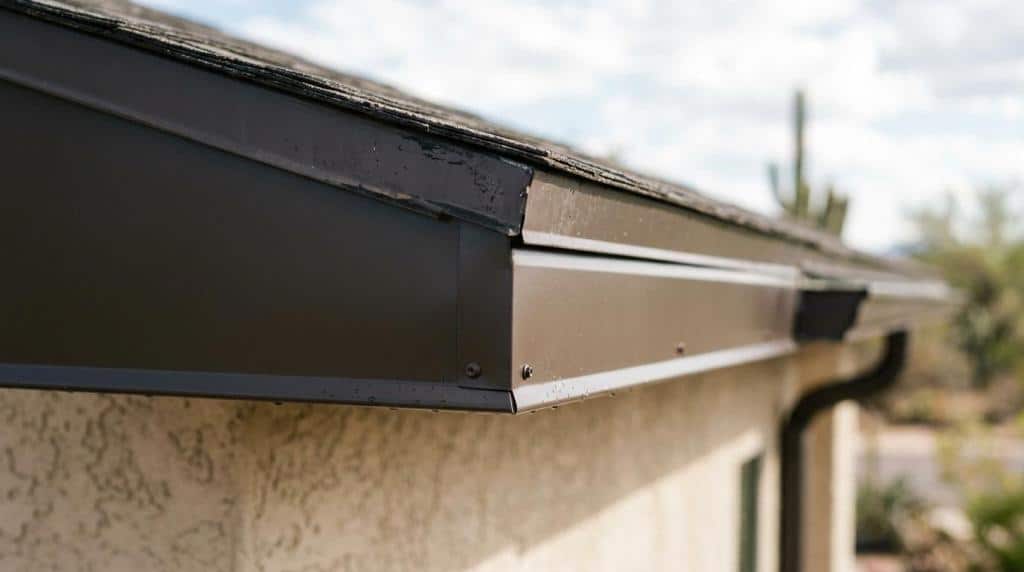
If your gutters are only as strong as the wood behind them, the fascia matters more than most homeowners realize. Along the roof edge, that board takes sun, wind, dust, and every hard monsoon downpour we get in Tucson. Once the paint fails or water starts getting behind the gutter line, the fascia can soften, split, and stop holding fasteners the way it should.
Wrapping that board with formed aluminum is a practical fix. It protects the wood, cuts down on repainting, and gives the roofline a clean finished look. On many homes in Southern Arizona, it also makes the gutter system work better, especially when the goal is to move stormwater cleanly away from the house or into a harvesting setup with barrels or cisterns.
Why fascia wrap matters on Tucson homes
The fascia is the trim board at the edge of the roof where gutters are mounted. When that board is exposed wood, it sits in a rough spot. It gets baked by UV, hit by windblown dust, and then soaked during summer storms. That cycle of extreme heat followed by sudden water is hard on paint and harder on wood.
A properly formed aluminum cover goes over the fascia and tucks under the drip edge so water sheds over the face of the wrap instead of soaking into the board. Done right, it helps stop rot, peeling paint, and the hidden moisture that can work its way behind gutters.
It also solves a cosmetic problem. A lot of rooflines look tired long before the roof itself is at the end of its life. Fascia wrap cleans that up without asking you to keep scraping, priming, and repainting every few years.
After inspecting homes across Tucson, Oro Valley, Marana, Vail, and Green Valley, the same problem areas show up again and again:
- peeling paint
- sun-checked wood
- gutter fasteners loosening
- water staining behind the gutter
- soft spots near corners and downspouts
How aluminum fascia wrapping is typically installed
Good fascia work starts with the wood underneath. If the board is sound, wrapping it makes sense. If sections are rotted, split, or no longer holding screws, those areas should be repaired first. Wrapping over bad wood only hides the problem for a while.
On most projects, the gutter is removed so the roof edge can be checked and measured accurately. The aluminum is then bent to fit the exact profile of the fascia. That matters because rooflines are rarely as uniform as they look from the ground. Corners, rake edges, and transitions around porches or window returns need custom bends, not guesswork.
The top of the wrap should slide under the drip edge, and the sections should overlap so water stays on the outside of the system. The lower edge is fastened in a low-profile way so the finished look stays clean. After that, the gutter can be reinstalled or replaced.
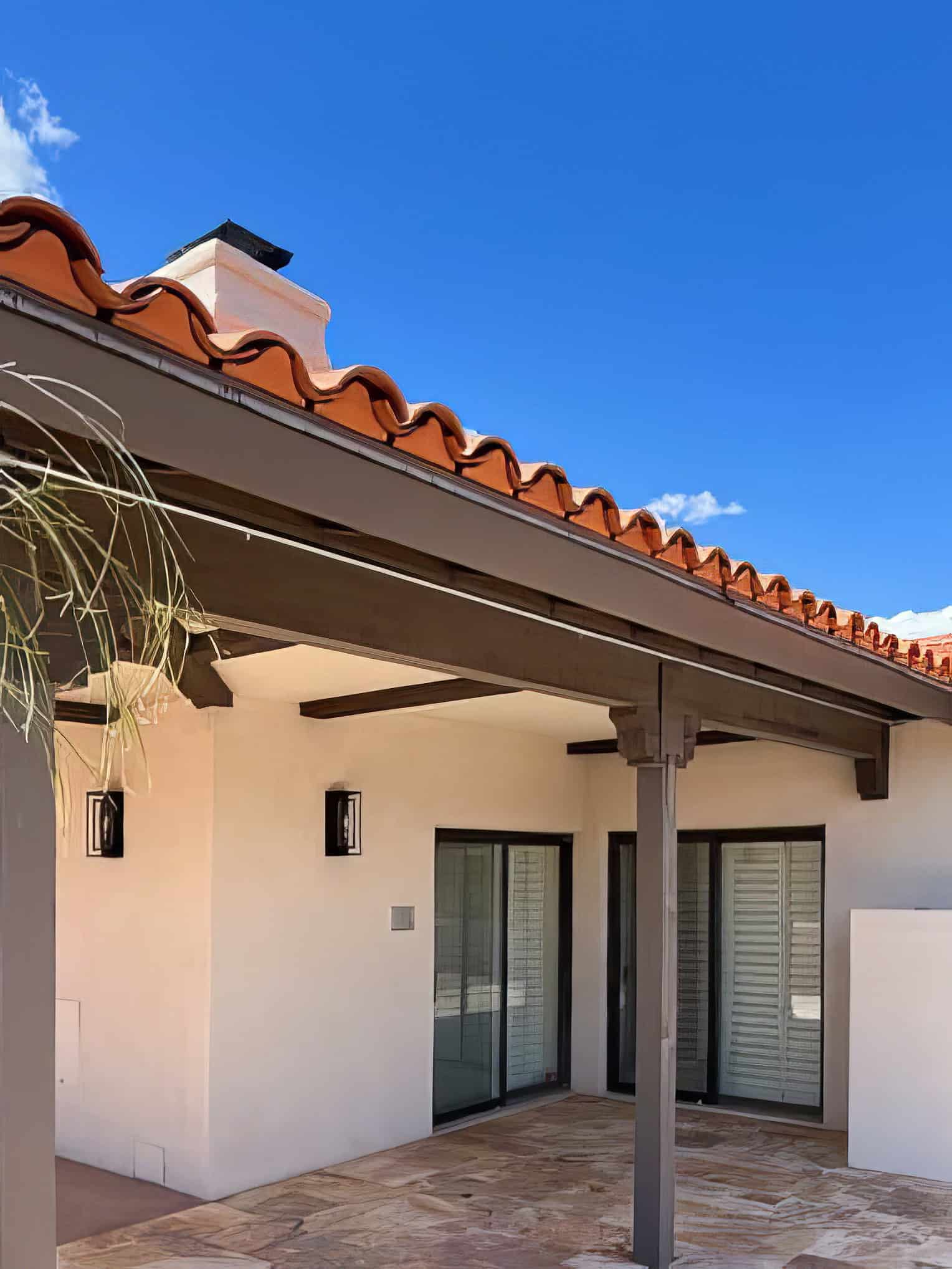
When fascia board repair comes before metal wrap
This is the step that saves trouble later. If a fascia board has been wet for years, the wood can lose its grip. That matters because gutter hangers are only as reliable as the material they are fastened into.
A solid repair plan usually includes the following:
- Inspection: check for rot, delamination, insect damage, and failed joints
- Replacement: swap out sections that are too soft or too far gone to support gutters
- Fitment: bend the new aluminum wrap to the actual roofline, not a stock guess
- Reattachment: mount the gutter back into sound framing through the finished fascia area
Why aluminum works better in the desert climate
In Southern Arizona, material choice matters. Vinyl and lower-grade trims may be fine in milder climates, but our sun is different. Long stretches of heat and UV exposure can make lighter materials brittle, faded, or warped over time.
Painted aluminum holds up well here because it resists rust, stands up to sun better, and gives a crisp finish that matches modern gutter systems. A factory-coated aluminum wrap also cuts down on maintenance. You are not out there with a ladder and brush trying to keep exposed fascia looking decent year after year.
Monsoon season is the other half of the equation. In Tucson, we can go weeks with no rain, then get a fast, heavy storm that tests every edge on the house at once. Fascia wrap helps because it directs water over the face of the trim instead of letting it sneak behind the gutter line.
That matters even more on homes set up for rainwater harvesting. If you are routing roof runoff into storage tanks or cisterns, you want water going where it is supposed to go. Lost water behind a gutter is wasted water, and in the desert, wasted water should get your attention.
For homeowners planning a rainwater harvesting setup, fascia condition is not a small detail. It affects how cleanly water enters downspouts and how reliably it gets to tanks or cisterns.
Bare fascia vs wrapped fascia at the roof edge
Here is the practical difference homeowners usually care about most:
| Roofline condition | Bare painted fascia | Aluminum-wrapped fascia |
|---|---|---|
| Sun exposure | Paint breaks down faster | Coated surface holds up better |
| Monsoon water | Can soak cracks and joints | Water sheds off the metal face |
| Gutter support | Fasteners loosen as wood ages | Better protection for the wood behind hangers |
| Maintenance | Scraping, caulking, repainting | Occasional cleaning only |
| Appearance | Shows peeling, swelling, stains | Clean, uniform finish |
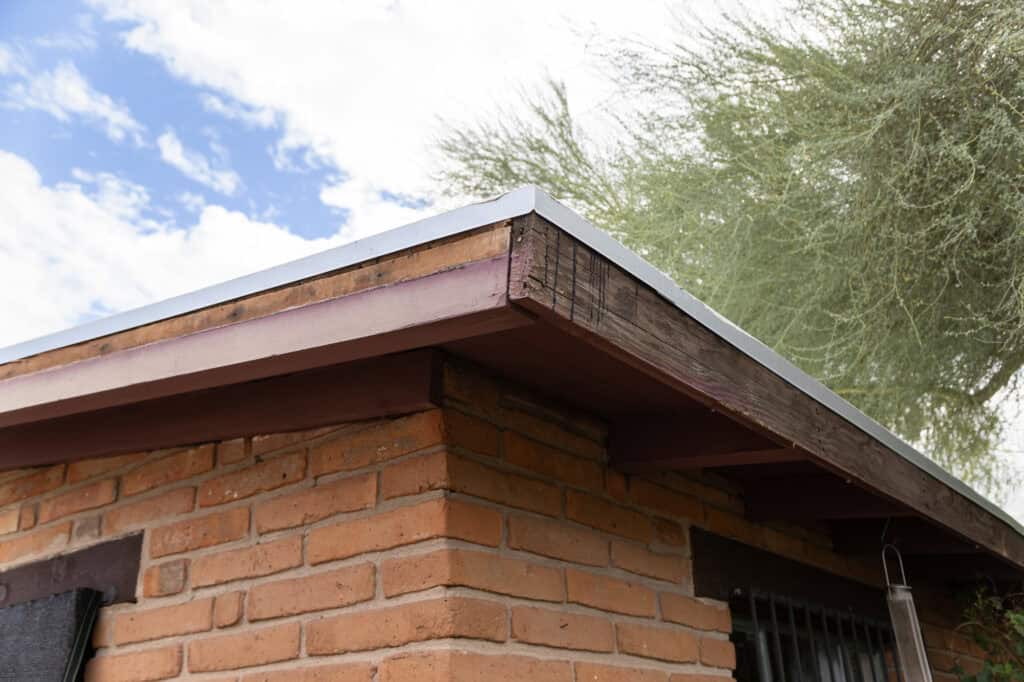
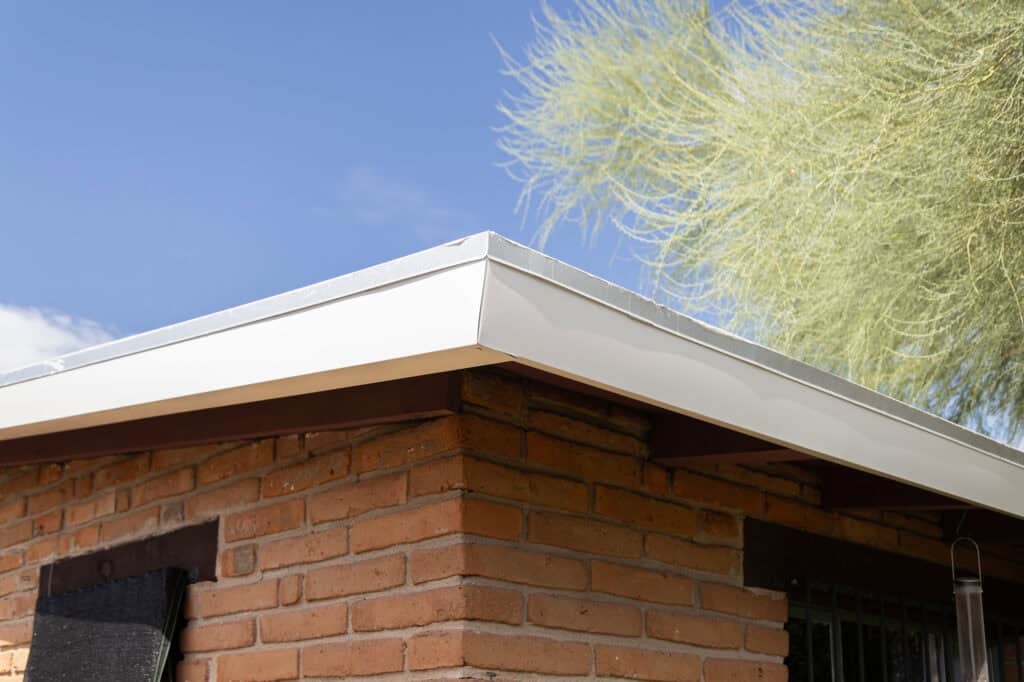
How fascia protection helps gutters last longer
Gutters do not fail only because the trough wears out. A lot of failures start at the mounting surface. If the fascia softens, hangers can pull, spikes loosen, and sections start to slope the wrong way. That leads to overflow, leaks at joints, and sagging runs.
This is especially important with larger K-Style profiles, which are common on Tucson homes because they handle roof runoff well and fit the architecture. A larger gutter can move a lot of water during a storm, but it also puts more demand on the fascia and fasteners holding it in place.
When the fascia is protected, the gutter system has a better base to work from. Water is directed where it belongs, the profile stays pitched correctly, and the roof edge is less likely to trap moisture behind the system.
On a working gutter system, that steadier base shows up in a few practical ways:
- Better drainage: less chance of water slipping behind the gutter
- Stronger attachment: gutter brackets hold better when the wood stays dry
- Cleaner water path: fewer wet, dirty areas around the roof edge before runoff enters the downspout
- Less maintenance: fewer repairs at the exact spots where water load is highest
Signs your home may be ready for fascia wrapping
A lot of fascia problems are easy to miss from the ground. The paint may look fine from the driveway, but the back edge behind the gutter can already be failing. If gutters are older or have been rehung a few times, it is worth checking the fascia before installing new sections.
Watch for a few common clues. Staining, bubbling paint, soft wood near corners, and gutter screws that seem to keep backing out are all warning signs. If you see sagging along a straight run, that may be a gutter issue, but it may also be the fascia telling you it has had enough.
These are usually the first things homeowners notice:
- gutters pulling away from the house
- paint that blisters near the roof edge
- dark streaks or moisture marks
- exposed wood at joints
- carpenter bee or insect activity
- trim that looks wavy instead of straight
Color matching, finish options, and roofline appearance
Function comes first, but appearance still matters. Fascia wrap is available in colors that can match or complement existing gutters, trim, roof accents, and even copper details on specialty homes. On many projects, the goal is simple: make the roof edge look clean and intentional, not patched together.
Because the wrap is custom bent, it can also be used around rake boards and other trim areas where exposed wood tends to age badly in the sun. That gives the whole roofline a more consistent look.
If you are already replacing gutters, adding new downspouts, or tying the roof drainage into a harvesting system, that is usually the right time to look at fascia as well.
Fascia Wrapping Questions Homeowners Ask
Can fascia wrapping be done without replacing the gutters at the same time?
In many cases, yes. If the existing gutters are in good shape and properly pitched, they can be removed, the fascia wrapped, and the same gutters reinstalled. That said, if the gutters are already aging or were installed into compromised wood, it often makes more sense to address both at once. Doing it in two separate trips costs more in the long run.
How long does aluminum fascia wrap typically last in a Southern Arizona climate?
Factory-coated aluminum fascia wrap is generally expected to last several decades when properly installed. The coating resists UV degradation better than painted wood, and aluminum does not rot or absorb moisture. In practice, the wrap tends to outlast the paint on surrounding trim by a significant margin, which is part of the reason homeowners in Tucson and surrounding areas favor it over alternatives.
Will fascia wrapping affect my home's ability to meet HOA guidelines on exterior appearance?
Most HOAs in Southern Arizona allow or have no objection to aluminum fascia wrapping because the finished result is cleaner and more uniform than painted wood that has been through several monsoon seasons. That said, some associations have specific requirements around color or finish. It is worth checking your CC&Rs before committing to a color, especially if your roof accents include copper or a distinctive trim palette.
Is this something a handy homeowner can do themselves, or does it need a contractor?
The material itself is not exotic, but the bending and fitting require a metal brake and some experience reading rooflines accurately. Corners, returns around porches, and transitions at rake boards rarely go as planned without the right tooling. A poor fit at the top edge, where the wrap should tuck under the drip edge, can actually make water intrusion worse rather than better. For most homeowners, this is one of those jobs where the cost of a professional installation is justified by the precision involved.
Does fascia wrapping help with carpenter bee or wood-boring insect damage?
Yes, indirectly. Carpenter bees and similar insects target exposed, unpainted, or weathered wood. Once the fascia is covered with formed aluminum, that surface is no longer accessible to them. It does not address any existing damage already inside the board, which is why inspection and repair come before wrapping, but it does eliminate the fascia as a future target for wood-boring activity.
Are there color or finish options beyond standard white?
Yes. Aluminum fascia wrap is available in a range of painted finishes, and most contractors can order or source colors to match common gutter profiles, trim paint, or roof accents. On homes with copper gutters or decorative copper details, a natural or dark bronze option can tie the roofline together rather than create a contrast. The goal is usually a consistent finished look, not a one-size-fits-all white wrap applied to every home regardless of its color scheme.