ES
ES 
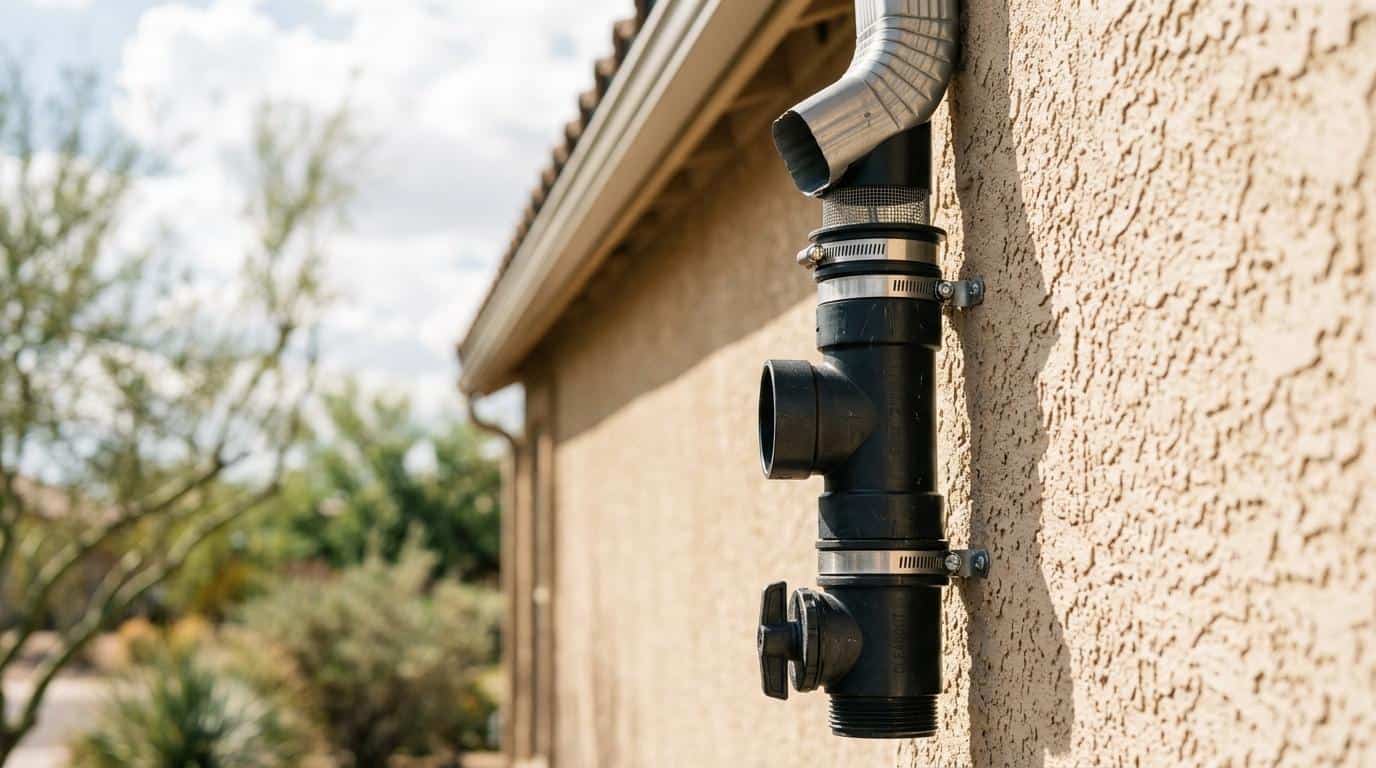
A well-designed rain gutter system should do more than hang off the roof edge and hope for the best. Around Tucson, it has to deal with hard sun, sudden monsoon downpours, roof runoff that can stain stucco, and the simple fact that water is too valuable to waste.
That is why gutter design matters. Southern Arizona Rain Gutters plans each system around the home itself, not around a one-size-fits-all layout. The roof shape, square footage, fascia condition, drainage path, and water harvesting goals all affect what should be installed and where.
Custom gutter design for Tucson homes
In Southern Arizona, a gutter system has two jobs. First, it needs to move water away from the house fast enough to protect foundations, walkways, patios, and landscaping. Second, it should fit the home visually, so it looks like part of the architecture instead of an afterthought.
A house in Oro Valley with long roof runs and stucco walls may need something very different from a flat-roof home in central Tucson or a larger property in Vail with room for cisterns. That is why custom gutter design starts with the roofline and the site conditions, then works outward from there.
When homeowners ask what makes a gutter system “custom,” the answer is pretty simple: size, profile, material, placement, and drainage strategy are all chosen for that specific property.
How custom gutter design is planned
The first step is measuring the roof area and looking at how water already behaves during a storm. Some homes have obvious trouble spots, like water dumping over entryways or washing out planting beds. Others have hidden issues, like fascia boards drying out from sun exposure or runoff hitting the same corner of the house over and over.
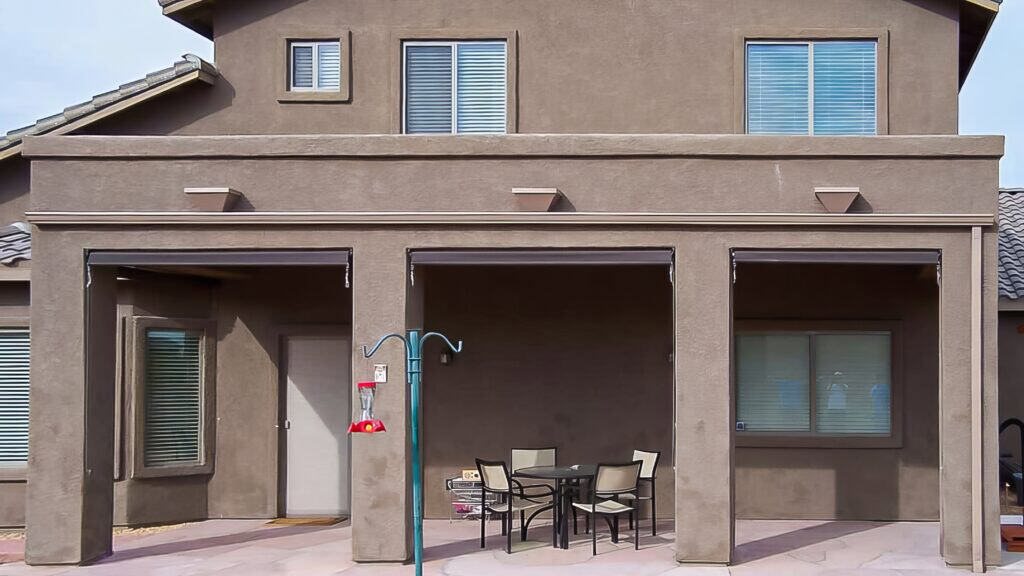
From there, the layout gets built around capacity and control. That includes the gutter profile, the slope of each run, the number of downspouts, and where those downspouts should discharge. On flat roofs, scupper boxes are often part of the plan so water can move cleanly from the roof edge into the drainage system.
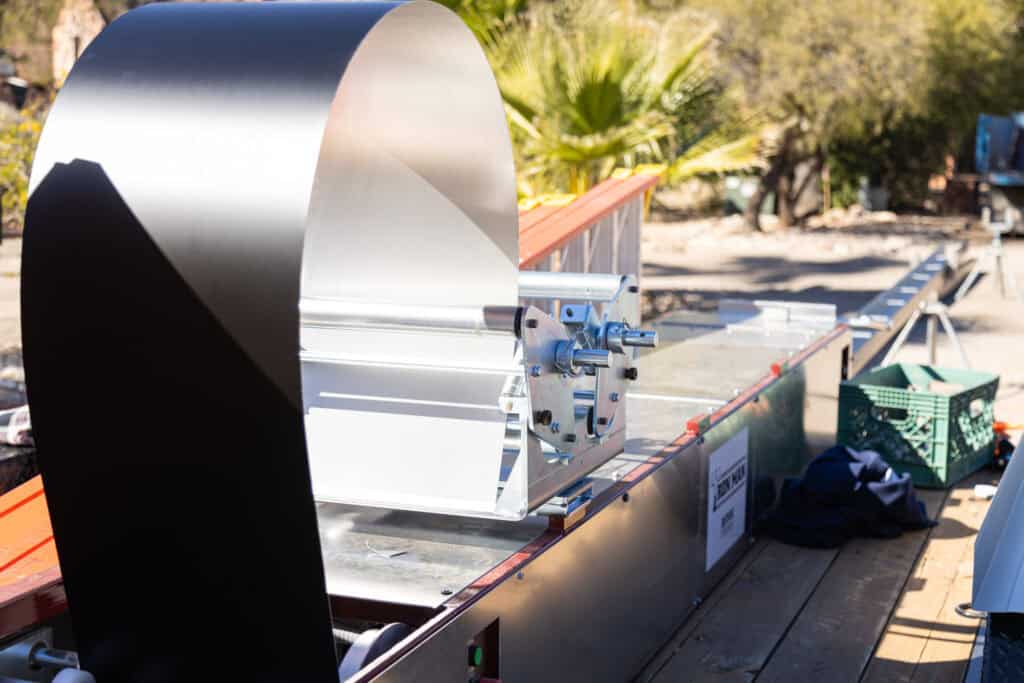
Seamless gutters are typically formed on-site in continuous lengths, which cuts down on joints and leak points. Proper support spacing matters too, especially during monsoon season when a long gutter run can hold a surprising amount of weight.
A solid design usually considers:
- Roof size and slope: how much water the system has to catch and move
- Drainage goal: direct runoff away from the foundation, into landscape areas, or into cisterns
- Roof style: pitched roofs, flat roofs, tile roofs, and parapet details all change the layout
- Entryways and patios
- Problem areas: stucco splashback, erosion, pooling water, and overshooting downspouts
Gutter profiles and materials for custom gutter systems
Most residential homes in Tucson do well with 5-inch or 6-inch K-Style gutters. They have good capacity, a clean appearance, and work with many home styles. For larger roof sections or commercial properties, 8-inch K-Style may be the better choice because it handles more water during heavy rains.
For homeowners who care as much about appearance as performance, there are other options. Half-round gutters have a classic look that works well on historic or custom homes. European Box gutters give a sharper, more modern line. Copper gutters bring a premium finish and develop a natural patina over time. Aluminum remains the most common choice because it holds up well in desert conditions and comes in many colors.
| Gutter Option | Best Fit | Main Benefit |
|---|---|---|
| 5" K-Style | Most homes | Good capacity and clean appearance |
| 6" K-Style | Larger residential roofs | More flow for monsoon runoff |
| 8" K-Style | Commercial or very large roofs | High-capacity drainage |
| 6" Half-Round | Classic and custom homes | Traditional profile with smooth flow |
| 6" European Box | Contemporary homes | Crisp modern look and strong performance |
| Copper | High-end architectural projects | Long life and distinctive patina |
Color also matters more than people think. A gutter system can be matched closely to fascia, trim, roof edge, or paint color so it blends in, or it can be chosen to stand out as a detail on the home.
Rainwater harvesting gutter design and cistern integration
A custom gutter plan can also be built around water harvesting from the start. That changes the design in a few important ways. Downspouts need to be placed where storage tanks or cisterns make sense. Overflow has to be planned so a full tank does not dump water back against the house. Screening and sealed openings matter too, especially in heat where algae growth and mosquitoes are concerns.
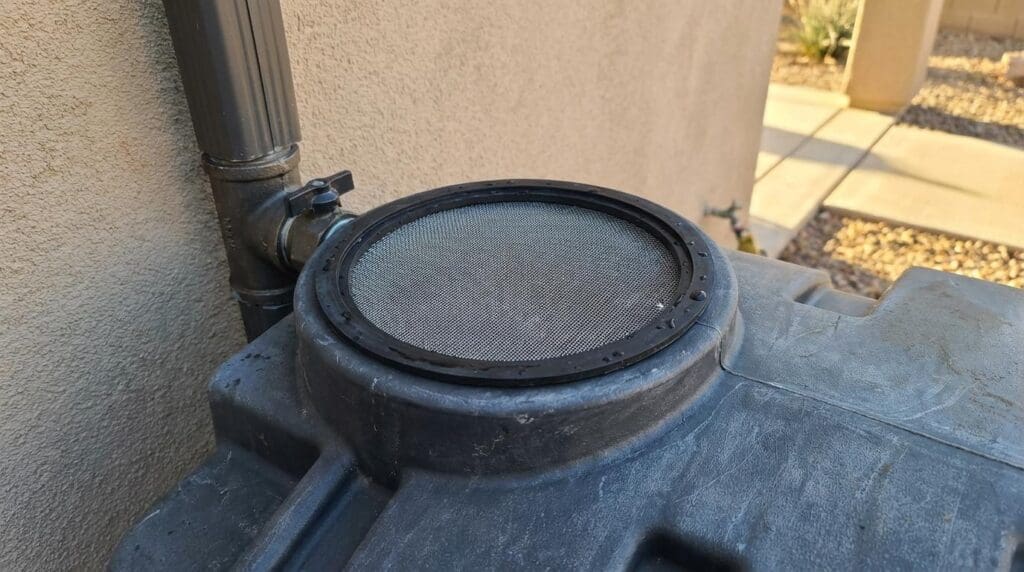
Southern Arizona Rain Gutters designs systems ranging from small collection setups to large storage layouts from 200 gallons to more than 10,000 gallons. Some homeowners want a simple tank for landscape watering. Others want a larger cistern system that supports irrigation, backup water storage, or a more serious conservation plan.
Pumps, filters, and underground drainage can be part of the design when needed. That is especially useful on larger lots where moving overflow away from the structure is just as important as collecting the first wave of rain.
Common harvesting layouts include:
- Small above-ground tanks
- Multi-downspout collection: several roof sections tied into one storage system
- Overflow planning: discharge lines or underground drains for heavy storm events
- Steel culvert cisterns
- Protected storage: UV-resistant tanks with screened openings to help keep water cleaner
Fascia wrap design for sun and moisture protection
In Tucson, gutters are only part of the roof edge story. Fascia boards take a beating from the sun, and once monsoon moisture gets into dried-out wood, damage moves fast.
That is why fascia wrap is often included in a custom design. Aluminum fascia wrap is bent to fit the home, color-matched to the trim, and installed to cover exposed wood. It helps protect fascia from UV damage, limits moisture penetration, and gives the roof edge a cleaner finished look.
This is especially useful on south- and west-facing sides of the house where the sun is hardest on exposed wood. When the fascia is protected first, the gutter system has a better base to attach to and usually lasts better as a result.
Why seamless gutter design matters in Southern Arizona
Every joint in a gutter run is a potential failure point. Sectional gutters are seamed together every few feet, and those seams are exactly where problems tend to start: they loosen under the weight of a hard monsoon downpour, collect debris, and eventually separate or corrode. Once a seam starts to leak, water runs down the fascia and stucco below it, leaving the streaks and staining most Tucson homeowners have seen on older homes.
Seamless gutters are formed on-site from a single continuous length of coil, so a full run has no joints except at the corners and downspout outlets. Fewer joints usually means fewer leaks, fewer drips down the stucco, and less maintenance over time. It also holds up better to the desert's temperature swings, where daily expansion and contraction slowly work sectional seams loose over the years.
For Southern Arizona specifically, that difference matters most during monsoon season, when a long gutter can be carrying a heavy, fast-moving load of water for short bursts. A seamless run handles that surge as one continuous channel instead of a chain of joints each hoping to hold.
What to expect during a gutter design visit
A good site visit should feel practical, not rushed. The roofline gets measured, drainage paths are checked, fascia condition is reviewed, and the homeowner’s priorities are discussed. Some people want the cleanest look possible. Some want to stop erosion near the foundation. Some want to harvest every drop they can during monsoon season.
After that, the design recommendation should be clear. You should know what profile is being suggested, why that size fits the roof, where the downspouts will go, whether fascia wrap is recommended, and how the water will leave the property or enter storage.
The process often includes:
- On-site measurements
- Profile selection: K-Style, half-round, European Box, or copper
- Color matching
- Drainage layout: downspouts, scuppers, splash control, and underground discharge if needed
- Harvesting options
- Project scope: full installation, fascia wrap, cistern tie-in, or DIY parts pickup
Some projects stay simple, and that is fine. Others turn into a full roof-edge and water management upgrade with gutters, fascia wrap, and rainwater storage working together. The right choice depends on the home, the budget, and what problems need to be solved now so they do not get more expensive later.
For homeowners in Tucson, Marana, Oro Valley, Sahuarita, Green Valley, Vail, Nogales, Rio Rico, Sonoita, and nearby areas, that custom approach usually makes the difference between a system that just hangs there and one that actually works when the summer storms hit.
Questions About Custom Gutter Design
How long does a custom gutter installation typically take once the design is finalized?
Most residential installations are completed in a single day. Larger projects that include fascia wrap, multiple downspout runs, or cistern tie-ins may run into a second day. Because seamless gutters are formed on-site, there is no waiting on prefabricated parts — the fabrication and installation happen during the same visit.
Do gutters in Tucson require any permits?
Standard gutter installation generally does not require a permit in most Tucson-area municipalities. However, if the project involves underground drainage, grading changes, or a larger rainwater harvesting cistern, some jurisdictions may have requirements. It is worth checking with your local city or county office if your project goes beyond the gutters themselves.
What happens if I skip gutters altogether on a desert home?
Without gutters, monsoon runoff falls directly off the roof edge and lands at the foundation line. Over time, that concentrated impact erodes soil, undercuts hardscape, and can work moisture into stucco at the base of the wall. Desert homes are not immune to foundation and drainage problems — the rain is infrequent but intense, which makes unmanaged runoff more damaging, not less.
Are gutter guards or leaf screens worth it in Southern Arizona?
In areas with heavy tree cover — particularly mesquite, palo verde, or pine in higher elevations — mesh screens can reduce how often gutters need to be cleaned. In more exposed desert settings with little overhead vegetation, screens matter less. The bigger concern in Tucson is debris washing in from the roof surface during monsoon storms, so fine mesh that keeps out granules and sediment tends to perform better than coarser options.
Can an existing gutter system be tied into a rainwater harvesting setup, or does it need to be redesigned from scratch?
Existing systems can sometimes be adapted, but it depends on where the downspouts currently discharge and whether the layout allows storage tanks to be positioned logically. If downspouts are located on sides of the house where tank placement is impractical, rerouting may be needed. A site visit is the most reliable way to assess what is workable versus what would require a more involved redesign.
How often should a custom gutter system be inspected after installation?
A quick inspection before monsoon season and again after it ends covers most situations. The main things to check are whether the slope is still correct (gutters can shift slightly over time), whether downspout outlets are clear, and whether any joints or end caps show signs of separation. Systems with rainwater harvesting components benefit from checking screens and overflow lines at the same time.