EN

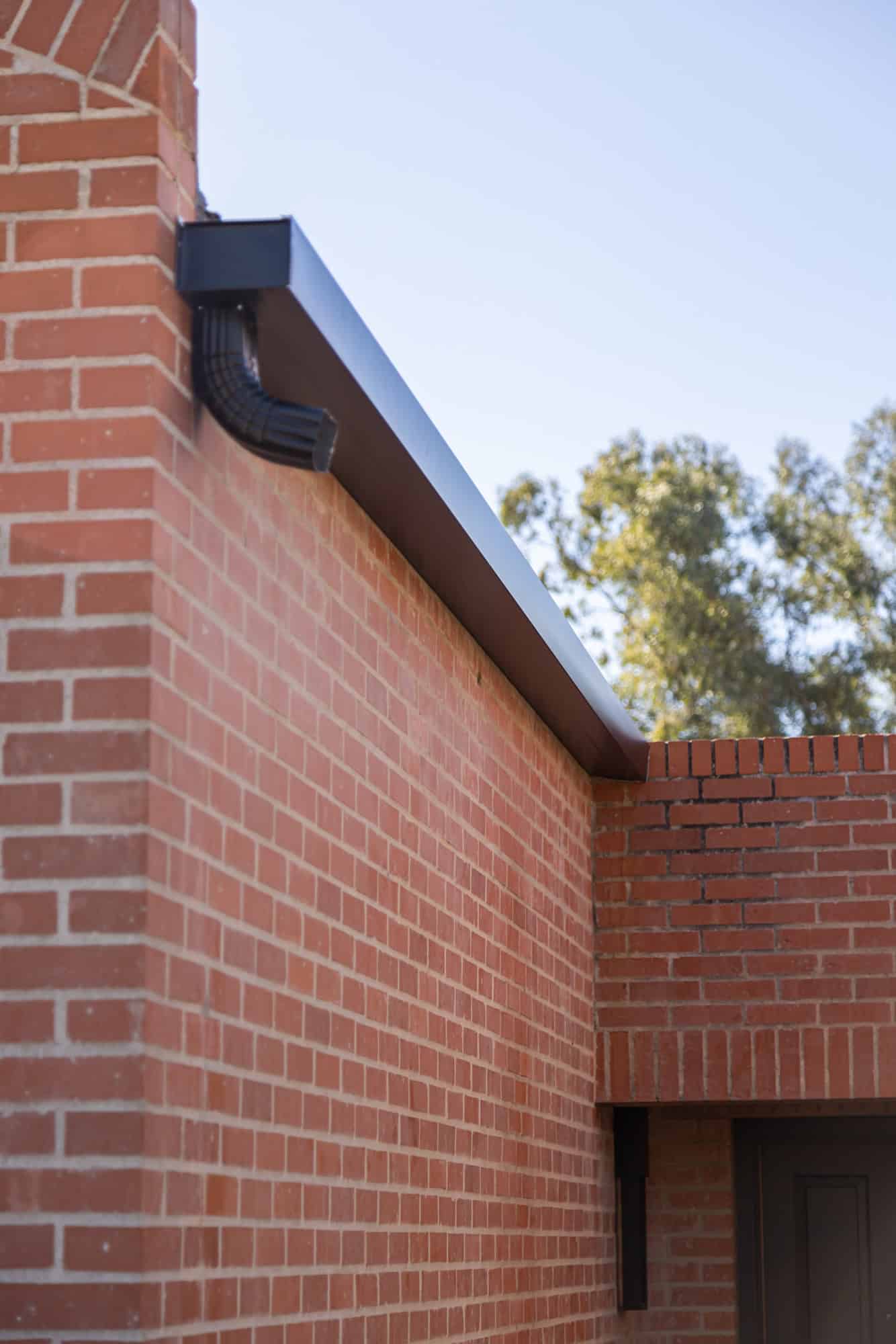
Leaking gutter seams are one of the most common problems on older sectional gutter systems, and they are easy to confuse with overflow. A rain gutter system on a Tucson home should carry roof water to a safe exit, and a leak is any spot where water escapes through the metal before it gets there. The simple rule: overflow goes over the gutter, a leak goes through it. If water is spilling across the front lip, our guide to why gutters overflow in Tucson covers those causes.
Here, gutters sit dry for most of the year while the sun bakes every joint. Then a monsoon cell fills the system in minutes, and a drip appears at the same corner after every storm, or a dark streak shows up on the stucco under one seam. This guide covers where gutters leak, why desert conditions wear joints out, how to find a leak yourself, and when a leaking system is telling you it is time for something new.
Is Your Gutter Leaking or Overflowing?
If water drips from underneath the gutter while the trough is not full, the gutter is leaking. If water sheets over the front edge during heavy rain, it is overflowing. The two have different causes, so know which one you have before deciding what to do.
| Pregunta | Overflow | Leak |
|---|---|---|
| Where does the water leave? | Over the front lip, or behind the gutter | Through a joint, corner, end cap, outlet or fastener hole |
| When does it show up? | Mostly in heavy rain | Any time water is in the gutter, even light rain |
| What does it look like? | A sheet or curtain of water | A steady drip from one spot |
| How do you confirm it? | Watch during a real storm | Run a hose test on a dry day |
Some homes have both. Treat them as separate findings and look at the leak first, since it is the one you can reproduce on demand.
Where Gutters Leak Most Often
Gutters leak most often where two pieces of metal meet or where the metal has been pierced: section seams, inside and outside corners, end caps, downspout outlets and fastener points. A long, unbroken stretch of gutter rarely leaks on its own.
| Leak location | What you typically see | Common cause | What it suggests about the system |
|---|---|---|---|
| Section seam | A drip from the same point mid-run, often with a stain below | Sealant between overlapping sections has dried out or pulled away | A sectional system whose joints are aging |
| Inside corner | Drips where two runs meet | The mitered joint opens as the corner flexes under load | A high-stress joint carrying heavy flow |
| Outside corner | Water on the wall or ground at the outer corner | A separated miter or failed sealant | Joint wear, often worse on sunny sides |
| End cap | A trickle at the very end of a run | The cap seal has shrunk or the cap has worked loose | Aging sealant where water tends to sit |
| Downspout outlet | Dripping around the top of the downspout | The seal between outlet and gutter bottom has failed | Water pooling at the outlet in storms |
| Fastener point | Small drips at regular spacing along a run | Screw or rivet holes that have loosened or lost their seal | Hardware that has shifted as the gutter moves |
Corners and outlets deserve the closest look. Water changes direction at a corner and slows at an outlet, so both spots stay wet longer than the rest of the gutter, and a joint that is wet longer has more chances to seep.
Fastener leaks are easy to miss because they look like scattered drips. Hanger screws and rivets pass through the metal, and when they loosen over the years, the hole around them can open just enough to weep.
Why Desert Heat and Sun Break Down Gutter Sealant
In Tucson, joint sealant fails mainly from heat, ultraviolet light and constant expansion and contraction. Over the years it hardens, shrinks and loses its grip on the metal, and a watertight joint starts to weep.
Metal gutters lengthen slightly as they heat up and shrink as they cool. A roof edge in full summer sun gets very hot, then cools after dark, so every joint is pulled and pushed through a full cycle day after day. Sealant has to stretch with that movement. Once it stiffens, it tears loose at the edges instead.
Ultraviolet light breaks down many sealants over time, which is why the trade generally calls for a UV-stable, flexible sealant rated for high heat at gutter joints. Even a well-chosen sealant ages, and joints on the sunniest sides of a home tend to go first. In short, sealant is a wear item, and a sectional system depends on dozens of sealed joints, each aging on its own schedule.
Why Monsoon Storms Find Every Weak Joint
Monsoon storms expose leaks because they fill the gutter quickly after months of dry weather. A joint that barely seeps in a light shower can drip steadily once the gutter runs full. Tucson monsoon storms can deliver intense rain in short bursts, and those bursts load every seam at the same moment.
Weight plays a part as well. During a storm a gutter can hold the weight of a full-grown person, so support matters. An under-supported run flexes at its joints as it fills, which works sealant loose. Hangers roughly every 24 inches is the accepted industry standard, and about 1/4 inch of fall per 10 feet is the standard slope that keeps water moving instead of sitting on a joint.
Outlet size affects how long the outlet joint stays submerged. The industry standard is 2x3 and 3x4 inch downspouts, with larger sizes for bigger roofs or intense rainfall. By nominal dimensions, a 3x4 opening has double the area of a 2x3.
Actual inside dimensions vary slightly by manufacturer, so treat these as nominal figures. A larger outlet gives water a faster way out, and less standing water means less time pressing on the outlet seal.
How to Find a Gutter Leak With a Hose Test
A hose test is the simplest way to find a gutter leak: run water into the gutter on a dry day and watch underneath for the first drip. Because it happens in clear weather, you can see exactly which joint is failing. Treat these steps as general information, and skip anything you cannot do safely.
- Pick a dry, calm day so any wet spot comes from the test, not the weather.
- Set the hose at the end of the run farthest from the downspout and let a gentle stream flow in.
- Have a helper on the ground watch the underside of every seam, corner, end cap and the outlet.
- Mark each drip with tape or a photo so you have a map of the problem joints.
- Finish by watching the downspout joints for water escaping before the exit.
Work only from a stable ladder on firm, level ground, keep a second person nearby, and leave second-story gutters to a professional. Then count what you found. One drip at a single end cap is a very different situation from drips at most of the seams on a run.
When Leaking Seams Mean It Is Time to Replace
Replacement starts to make sense when leaks show up at several joints, keep coming back after resealing, or arrive together with sagging, corrosion or damaged fascia. At that point the joints are a symptom of a system near the end of its useful life.
Leaks at many seams on one run mean the sealant across the system is aging together. Years of dripping onto the fascia can soften the wood that holds the hangers. And when each fix only moves the drip to the next joint, chasing leaks stops being a good use of time.
Southern Arizona Rain Gutters replaces gutter systems. We do not patch or reseal individual joints, so our role starts when a home is ready for a new system. What a replacement project involves is laid out in our guide to gutter replacement service in Tucson. A properly installed aluminum system can last 30+ years.
What a Seamless System Changes at the Joints
A seamless gutter removes the section seams along each run, because it is custom-formed on site in one continuous piece. It does not remove every joint. Corners, end caps and downspout outlets still exist, so how those pieces are built still matters.
A sectional run depends on sealant at every joint between sections. A seamless run of the same length has none of those mid-run seams, so there are far fewer places for sealant to age, and the joints that remain are easy to inspect. For how the gutter is formed from coil, see our post on instalación de canalones sin juntas. SARG forms gutters in aluminum and copper, in K-style (5, 6 and 8 inch), half-round and European box profiles.
Puntos clave
- Corners and downspout outlets stay wet longer than the rest of a run, so check them first.
- Drips at regular spacing along a run usually point to fastener holes rather than seams.
- Gutter sealant is a wear item, and joints on the sunniest sides of a home tend to fail first.
- An under-supported run flexes as it fills, which opens joints during storms.
- The number of leaking joints in a hose test is the clearest sign of whether a system is near the end of its life.