EN

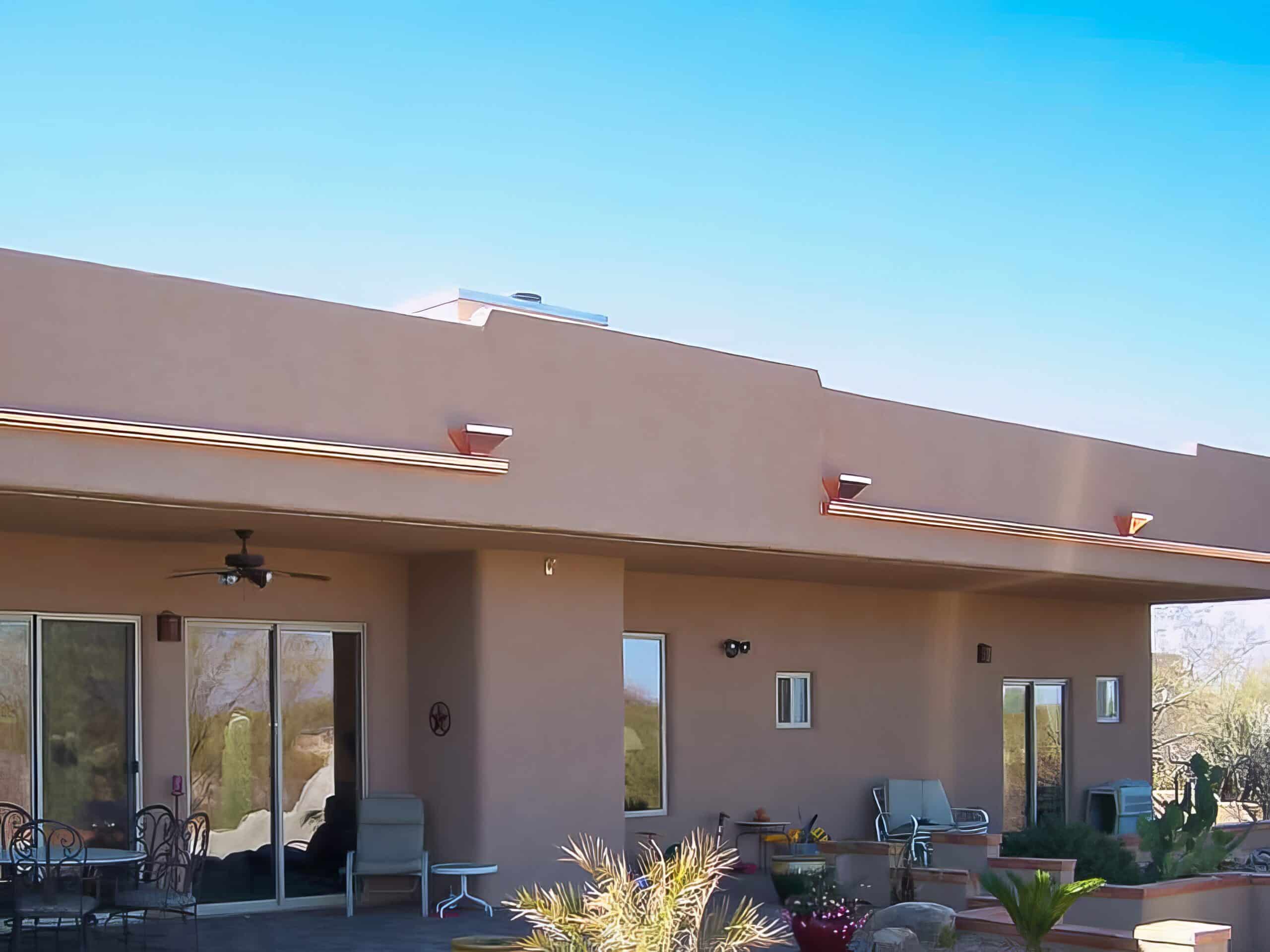
A leader box is a small, open-topped metal box that sits below a roof scupper and funnels the water into a downspout, and on Tucson homes it is the part that decides whether monsoon runoff leaves cleanly or runs down your wall. You may also hear it called a conductor head or a scupper box. Parapet and flat-roof homes across Southern Arizona drain through scuppers cut into the wall, and without something to catch that discharge the water simply falls, staining stucco and soaking the ground at the base of the house. This guide explains what the component does and how it fits into the rest of your rain gutter systems for Tucson homes.
The job sounds simple, and it is, but the details matter in a desert climate. A box that is too shallow for the scupper, too small for the storms, or left to fill with palo verde litter will overflow at exactly the wrong moment. Below we cover how the box works, the aluminum and copper options, matching it to your scupper and downspout, keeping it clear, and where the water should go once it leaves the bottom.
What Is a Leader Box and Why Tucson Homes Use Them
A leader box is the catch basin between a scupper and a downspout. The scupper is the opening that lets water out through a parapet wall or roof edge; the leader box hangs on the wall directly beneath it and collects that water in one controlled spot before handing it down the downspout. Many Tucson homes have flat or low-slope roofs with parapet walls, and those roofs cannot drain over their eaves the way a pitched roof does, so they rely on scuppers instead. Our overview of gutters and drainage for Tucson flat roofs covers how parapet roofs and canales handle water, so this post stays on the box itself.
The reason to add a box rather than let a scupper spill freely comes down to control. A bare scupper throws water out and lets it fall wherever gravity takes it, which in practice means down the stucco and onto the soil next to your foundation. A leader box captures that discharge, slows it, and sends it into a pipe you can aim. It also gives the system a visible, serviceable point: you can see when it is working and reach in when it needs cleaning.
What a Leader Box Does Below a Scupper
A leader box catches the water a scupper pushes out and redirects it straight down into a downspout instead of letting it sheet across the wall. That single change protects two things that are expensive to repair in Tucson: the stucco face of the house and the ground at the foundation. When water runs down a wall repeatedly it leaves mineral staining and works into any hairline cracks, and when it lands in a concentrated stream at the base of the house it erodes soil and can undermine the slab over time.
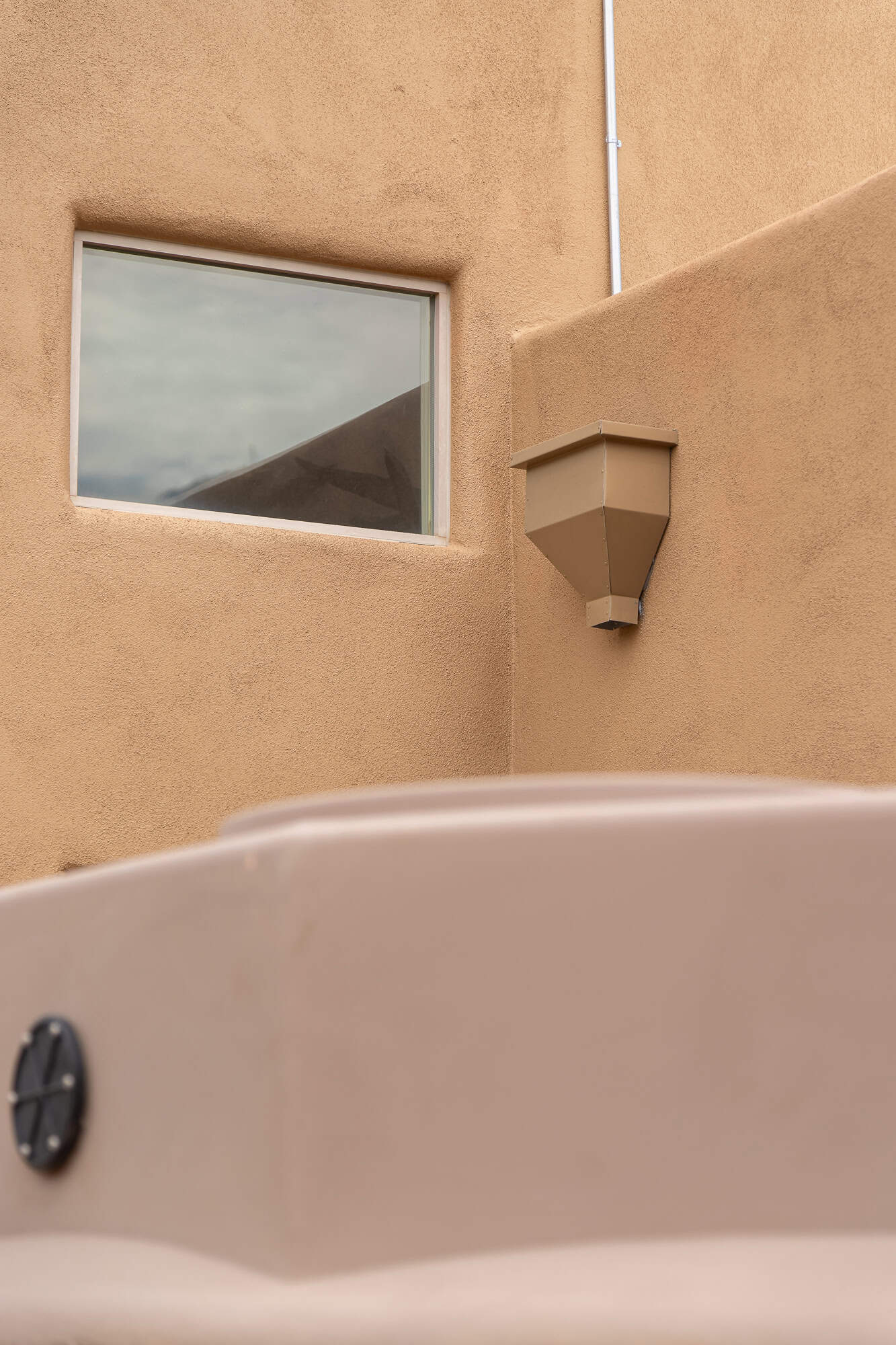
The box does this by giving the water a moment to collect and change direction. Water leaves the scupper moving outward, the box stops that outward throw, and the downspout takes it vertically down to where you want it. Because the top is open, the box also acts as a visual check. If you ever see it brimming during a storm, that is a sign the outlet or the downspout below it is restricted, and it is easier to notice in an open box than inside a sealed pipe.
Aluminum or Copper Leader Boxes
Leader boxes come in the same two metals we build gutters from: aluminum and copper. Aluminum is the practical workhorse. It handles Tucson sun and heat without rusting, takes a painted finish to match the house or the gutters, and pairs naturally with an aluminum gutter and downspout run. For most homeowners an aluminum box is the straightforward choice and blends into the roofline.
Copper is the upgrade when the box is meant to be seen. Copper develops a natural patina over the years, shifting from bright metal toward a deeper weathered tone, and a copper conductor head is a traditional architectural detail on Southwest and custom homes. It is often paired with copper scuppers and downspouts for a single, deliberate look. If you are weighing a copper system, our page on copper gutter and leader box installation walks through what copper involves. Both metals do the same functional job; the decision is about appearance, budget, and how much you want the drainage details to show.
Matching the Box to the Scupper and Downspout
A leader box has to be sized to both the scupper above it and the downspout below it, or it becomes the weak link in the chain. The opening of the box needs to sit under the scupper so it catches the full discharge without splashing past the sides, and the outlet at the bottom needs to feed a downspout that can carry the flow away. If any one of those three parts is undersized, water backs up at that point during a hard storm.
Downspouts set the pace for the whole assembly. As a general industry guide, 2x3 inch and 3x4 inch downspouts are the standard residential sizes, with larger profiles used for bigger roofs or areas of intense rainfall, and a typical downspout serves roughly 30 to 35 feet of gutter run. Tucson's rain arrives in short, heavy bursts rather than long soakers, so the sizing question here is less about total volume and more about peak intensity. The table below lays out how a leader box compares with the other ways a roof can shed water.
| Configuración | Where the water goes | Common issue | When it fits |
|---|---|---|---|
| Scupper alone | Falls straight off the wall to the ground below | Sheets down stucco and pools at the foundation | Rarely ideal on its own; a starting point before a box is added |
| Scupper with leader box and downspout | Collected in the box, carried down a downspout to a chosen spot | Box can clog with roof debris if left unchecked | Most parapet and flat-roof homes wanting controlled, aimed drainage |
| Canale | Projects water outward past the wall face | Can still stain the wall and drop water close to the foundation | Traditional Southwest look where a spout and splash are acceptable |
| Leader box feeding a rainwater tank | Down the downspout and into storage for later use | Needs screening and overflow planning to stay clean | Owners who want to capture roof runoff rather than send it to waste |
Why Scupper Boxes Face Short, Intense Bursts in Tucson
A scupper and leader box in Tucson are built for brief, violent downpours, not steady rain. Monsoon cells drop a lot of water in a few minutes, so the peak intensity a box must pass is far higher than the modest annual rainfall total suggests. That is why sizing for the worst five minutes of a storm, rather than for an average day, is the right way to think about these components. The chart below shows estimated 5-minute peak rainfall intensity near Tucson International Airport for storms of different rarity, drawn from NOAA Atlas 14 Volume 1 partial duration series point estimates. Treat them as estimates for the local area, not guarantees for your exact address.
Those numbers are inches per hour measured over a five-minute window, which is why they look large next to Tucson's low yearly rainfall. The takeaway for a leader box is simple: the system has to clear its peak flow fast, because the hardest part of a monsoon storm is over quickly and leaves no room for a box or downspout that drains slowly.
Keeping a Leader Box Clear of Debris
Because a leader box has an open top, it can collect roof debris, and in Tucson that means palo verde litter, dust, and wind-blown leaves settling in the bottom. A box that fills with debris loses capacity and can dam up at the outlet, so the water that should drop into the downspout spills over the front instead. Clearing it is quick: reach in, pull out the buildup, and confirm the outlet is open, ideally before the monsoon season and again partway through.
Keeping the box clear also protects everything downstream. Debris that washes out of a neglected box travels into the downspout and whatever the downspout feeds, whether that is an underground drain line or a storage tank. A minute of maintenance at the box saves a clog in a place that is much harder to reach. If your downspout feeds a tank, screening and sealed inlets are standard best practice to keep that stored water cleaner.
Where the Downspout Sends the Water
Once water leaves the bottom of the leader box, the downspout should carry it somewhere deliberate, not just to the base of the wall. The two useful destinations are drainage that moves water away from the house and a rainwater tank that stores it for later. Dropping it right at the foundation is the one outcome the whole assembly exists to prevent, so the downspout route is as important as the box itself. Our guide to prevenir la erosión de los cimientos mediante un drenaje adecuado explains how to carry runoff to a safe runoff area.
Routing to a tank turns that same runoff into a resource. A leader box can feed a downspout that drops into an above-ground tank or a cistern, which supports landscape irrigation, may qualify for a Tucson Water rebate, and makes use of a sustainable local resource instead of sending the water to waste. For homeowners not ready for a full tank, an underground drain that ties into the system and moves water to a safe discharge point is a sound middle step. Either way, the leader box is the clean handoff that makes the rest possible.
One code note worth a mention: roofs that do not drain over their edges rely on drains or scuppers, and the specific roof drainage requirements come from the edition of the residential building code your jurisdiction has adopted, so confirm the current rules with your local building department before planning a system. For background, the model residential code covers roof drainage in its roof assemblies chapter, though your local adoption is what governs.
Puntos clave
- A leader box, also called a conductor head or scupper box, sits below a scupper and feeds its water into a downspout.
- It stops runoff from sheeting down stucco and from pooling against the foundation, the two costly failure points on Tucson homes.
- Boxes come in aluminum for a practical painted finish or copper for a visible architectural detail that patinas over time.
- The box, scupper, and downspout must be sized together; 2x3 and 3x4 inch downspouts are the standard residential sizes.
- Its open top collects palo verde litter and dust, so clear it before and during monsoon season.
- The downspout should route to drainage away from the house or to a rainwater tank, never to the base of the wall.
Leader Box Questions from Tucson Homeowners
What is a leader box on a house?
A leader box is a small open-topped metal box that catches water from a roof scupper and directs it into a downspout. It is also called a conductor head or a scupper box, and it gives roof runoff one controlled point to leave the wall.
Do I need a leader box if my home has scuppers?
In most cases a leader box helps, because a bare scupper lets water fall down the wall and pool at the foundation. The box collects that discharge and sends it into a downspout you can aim toward drainage or a tank.
Should a leader box be aluminum or copper?
Both work, so the choice is mostly about appearance and budget. Aluminum is the practical painted option that resists Tucson sun and heat, while copper is a visible architectural detail that develops a natural patina over the years.
How do I size a leader box for my downspout?
Size the box to both the scupper above it and the downspout below it so none of the three is the weak point. As a general guide, 2x3 and 3x4 inch downspouts are standard residential sizes, with larger sizes for bigger roofs or intense rain.
How often should a leader box be cleaned in Tucson?
Clear it at least before monsoon season and again partway through, since the open top collects palo verde litter, dust, and leaves. A box full of debris loses capacity and can overflow at the front instead of draining.
Can a leader box feed a rainwater tank?
Yes, a leader box can send its downspout into an above-ground tank or a cistern for storage. Harvested roof water can support landscape irrigation and may qualify for a Tucson Water rebate, and screening the inlet helps keep it clean.
Are there code rules for roof scuppers and drainage?
Roof drainage rules come from the edition of the residential building code your jurisdiction has adopted, so they vary by location. Confirm the current requirements with your local building department before planning a scupper and leader box system.