ES

Old gutters rarely fail all at once. More often, they sag a little, drip at the corners, stain the stucco, and send roof runoff straight toward walkways, foundations, and planting beds. When that pattern starts repeating, replacement is often the wiser move.
For homes and commercial properties across Southern Arizona, a new gutter system should do more than look clean. It should be measured to the roof, pitched for reliable flow, and built to handle sharp summer downpours, long sun exposure, and the weight of water moving fast. Southern Arizona Rain Gutters replaces worn-out systems with custom-fabricated one-piece gutters in aluminum, steel, or copper, with optional fascia wraps, guards, downspout updates, and rainwater capture connections when the project calls for them.
When Repair Stops Making Sense
A repair can be the right call when the issue is small and isolated. A loose elbow, a short split, or a clogged outlet may not call for a full system replacement.
The picture changes when the gutter size is wrong for the roof, the old runs have too many leaking joints, or the metal has started to pull away from the fascia. In those cases, putting more money into patchwork work can delay the real fix without solving the drainage problem.
Common signs that point toward replacement include:
- Frequent leaks during storms
- Gutters separating from the fascia
- Rusted, cracked, or warped sections
- Overflow near entries and patios
- Water pooling near the foundation
- Repeated repairs that do not last
If fascia boards have also taken damage from moisture or sun, adding a protective wrap at the same time can make the whole roof edge cleaner, stronger, and easier to maintain.
Built for Southern Arizona Conditions
Rain may be infrequent here, but when it comes, it can come hard. A gutter system in Tucson and the surrounding area has to handle fast runoff without twisting, sagging, or dumping water where it should not go. That is why proper slope, strong support, and correct downspout placement matter just as much as the metal itself.
Projects are measured before fabrication so the gutter size and outlet locations match the roof area. Heavy-duty hangers are typically spaced about every two feet to support the load. On homes with flat or low-slope roof sections, custom boxes and scuppers can be used to move water neatly off the roofline and into downspouts or storage systems.
Material choice also affects appearance, lifespan, and budget. Here is a simple comparison:
| Material | Best Fit | Appearance | General Benefit |
|---|---|---|---|
| Aluminum | Most homes | Clean, color-matched finish options | Lightweight, rust-resistant, long service life |
| Steel | Larger runs, higher-demand areas | Strong, traditional look | Added strength for demanding drainage loads |
| Copper | Premium homes, architectural projects | Rich metal finish that develops patina | Very long life and standout curb appeal |
Profiles can be selected to suit both the roof and the style of the property. Options may include standard K-style gutters, half-round gutters, European-style box profiles, and larger-capacity commercial sizes.
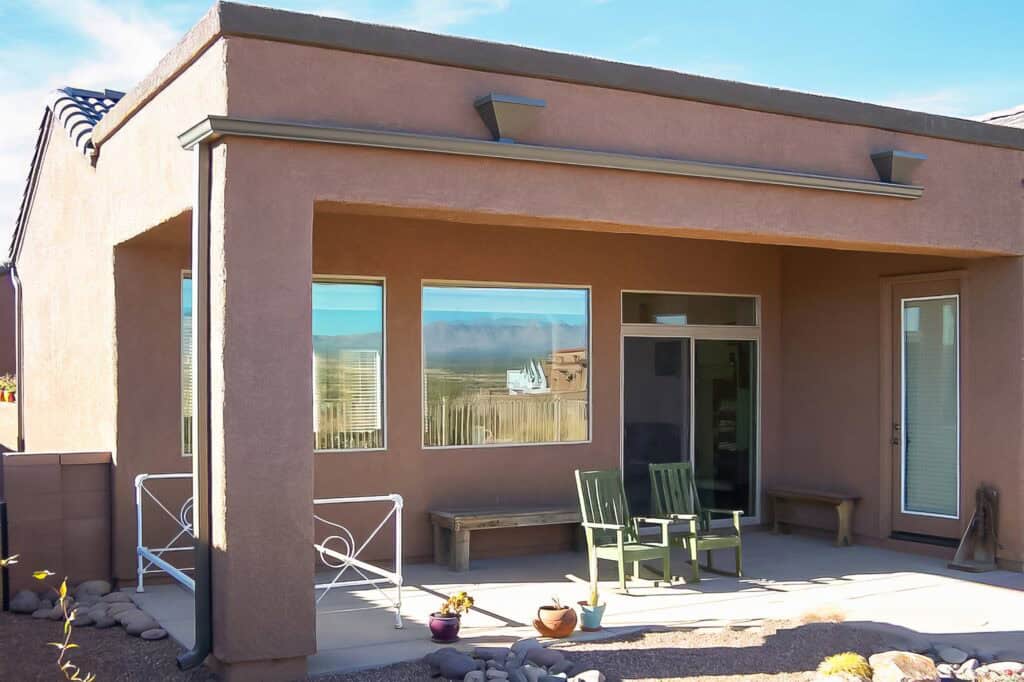
What a Full Replacement Usually Includes
A well-run replacement project is more than hanging new metal under the roof edge. It starts with taking apart the failing system safely, checking the fascia condition, and planning drainage so the new setup performs better than the old one ever did.
That is why a full-service approach matters. The goal is not just to swap parts, but to correct the weak points that caused the original problems.
A typical scope of work may include:
- Old system removal: Existing gutters and downspouts are taken down and hauled away for disposal or recycling.
- On-site fabrication: Long one-piece gutter runs are formed to fit each roof edge closely.
- Support installation: Heavy-duty hangers are set at regular intervals for strength and stability.
- Drainage planning: Pitch, outlet size, and downspout placement are matched to roof runoff.
- Water-tight detailing: Corners, caps, and outlets are sealed with durable, flexible sealant.
- Optional upgrades: Fascia wraps, gutter guards, cleaning, minor repairs, and rainwater harvesting tie-ins can be added.
Free estimates are available, which gives property owners a chance to compare materials, colors, profiles, and project scope before work begins. For larger jobs, flexible payment options may also be available.
How the Project Moves Forward
The replacement process should feel organized from the first visit to the final walkthrough. Clear planning keeps the job efficient and helps avoid surprises once installation starts.
A typical project follows these steps:
- Site visit and measurement of roof edges, drainage needs, and fascia condition
- Selection of material, profile, color, and any added features
- Scheduling, material preparation, and coordination for access around the property
- Removal of old gutters, installation of new runs, and connection of downspouts
- Cleanup, final check, and review of the finished system with the owner
Many residential replacements can be completed in a day or two once work begins, depending on home size, roof complexity, and whether add-ons are included. Larger homes, multi-story structures, and projects that include water storage can take longer.
Cleanup is part of the value. Old metal, fasteners, and cutoffs should leave with the crew, not stay behind in landscaping or on walkways. A final review also gives the property owner a chance to confirm outlet placement, water direction, and overall appearance before the project is signed off.
More Than Basic Drainage
Replacing gutters can also be the right time to think bigger about water use. Instead of directing every gallon away from the property, some homes and buildings can route roof runoff into a harvesting system for landscape irrigation and outdoor use.
Southern Arizona Rain Gutters offers custom rainwater harvesting systems ranging from smaller residential tanks to large-capacity storage setups. Depending on the design, gutters can feed above-ground plastic tanks or steel culvert cisterns. Screened openings and sealed, UV-protected tanks help limit algae growth and mosquito issues.
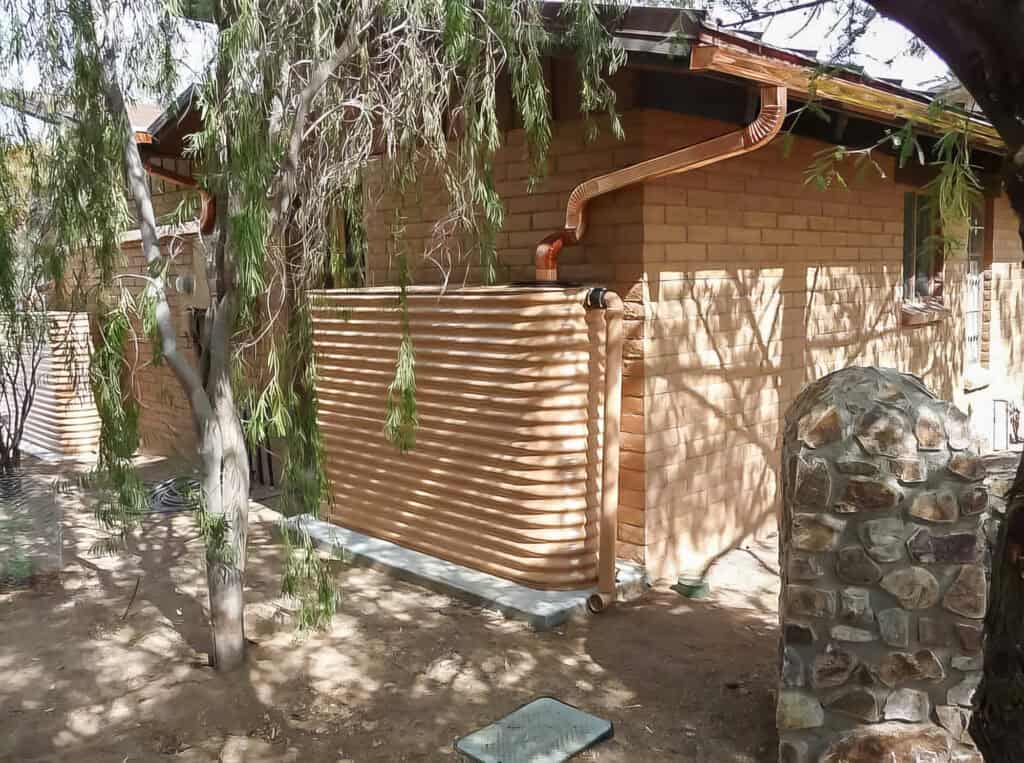
This is especially useful for owners who want their roof drainage system to do two jobs at once: protect the structure and save water.
Appearance Matters Too
Performance comes first, but looks still matter. New gutters can sharpen the roofline, clean up stained or patched edges, and tie in neatly with trim and exterior colors. For many properties, that visual upgrade is obvious from the street.
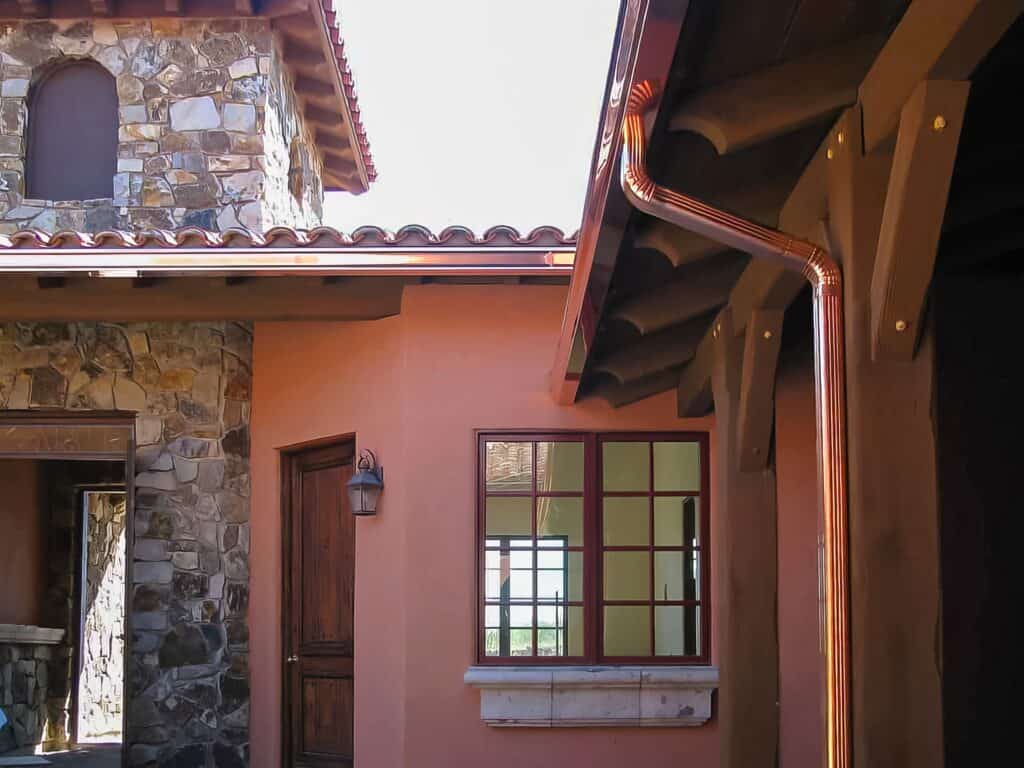
Color choices are available across a broad range of aluminum finishes, while copper offers a more architectural look that changes over time with patina. If the fascia has weathered or peeling paint, a color-matched wrap can give the entire edge of the roof a crisp, finished appearance while protecting the wood beneath.
That balance of function and appearance is one reason one-piece gutters remain a strong long-term investment. Fewer joints mean fewer common leak points, and custom fabrication gives the system a cleaner profile than many off-the-shelf sectional products.
Local Fit for Homes and Commercial Properties
Roof drainage in Southern Arizona is not one-size-fits-all. A tile-roof home in Oro Valley, a stucco house in Vail, and a commercial building in Tucson may all need very different layouts, capacities, and downspout strategies.
Local knowledge matters here. Roof pitch, fascia condition, courtyard layouts, scupper needs, and runoff patterns can vary widely from one property to the next. Service throughout the greater Tucson area, including Marana, Sahuarita, Green Valley, Nogales, Rio Rico, Sonoita, and Three Points, means projects can be planned with regional weather and building styles in mind.
If your current gutters leak, sag, overflow, or simply look worn out, a free quote is a practical first step. A properly fitted replacement turns short, intense storms into controlled drainage and gives the roof edge a cleaner, stronger finish at the same time.
Gutter Replacement Questions from Southern Arizona Homeowners
How do I know if my gutters need replacement or just cleaning?
A clogged gutter and a failing gutter can look similar from the ground — both overflow during rain. The simplest test is to clean the system thoroughly and then watch what happens during the next storm. If water still spills over the front edge, backs up at corners, or drips behind the gutter along the fascia, the problem is structural rather than debris-related. Sagging between hangers, visible rust holes, and separated seams are also signs that cleaning alone will not restore performance.
Will replacing my gutters damage my roof, fascia, or landscaping?
A professional crew takes precautions to avoid that. Old hangers and fasteners are removed carefully so the fascia is not splintered or cracked during takedown. If minor fascia damage is found underneath the old system, it can usually be repaired or wrapped as part of the project. Landscaping along the dripline is protected with drop cloths or temporary repositioning, and all old materials and debris should be cleared during cleanup. Most homeowners are surprised at how little disruption a well-run replacement actually creates.
Do new gutters come with a warranty?
Warranty terms depend on the installer and the materials used. For aluminum systems, manufacturer paint and material warranties often cover 20 years or more, while workmanship warranties from the installer typically range from one to five years. Copper carries an even longer expected lifespan and rarely needs a material warranty claim. The important thing is to ask for written warranty details before work begins — and confirm whether the warranty covers both materials and labor, since some only cover one.
Can I stay home during a gutter replacement?
Yes. All the work happens outside, so there is no need to vacate the house or clear interior rooms. The main things to prepare are keeping vehicles, patio furniture, and pets clear of the work zone along the roofline. There will be some noise from fabrication equipment and fastener installation, but most residential projects wrap up within a single day, so the disruption is short-lived.
Is it worth replacing gutters on a home I plan to sell?
Often yes, and it is one of the more cost-effective exterior improvements a seller can make. Stained stucco, sagging gutter lines, and visible water damage near the foundation are among the first things buyers and inspectors notice. New gutters with clean lines and matched color instantly improve curb appeal and remove a common inspection flag. In a market like Tucson where monsoon damage is well understood, buyers tend to view a new gutter system as a sign the home has been well maintained overall.
Should I replace my downspouts at the same time as my gutters?
In most cases, yes. Old downspouts may be undersized for a new gutter profile, corroded at the elbows, or routed to discharge points that no longer make sense for the property. Since the crew is already on site and the old system is coming down, replacing downspouts at the same time avoids a return trip and ensures the entire drainage path — from roof edge to discharge point — is matched and sealed as one system. Reusing old downspouts on a new gutter run often introduces the weakest link in an otherwise fresh installation.
Does homeowner's insurance cover gutter replacement?
It depends on the cause. If gutters were damaged by a specific covered event — a fallen tree limb, wind damage, or hail — many homeowner's policies will cover replacement minus the deductible. Normal wear, rust, age, and maintenance neglect are almost never covered. If you suspect storm damage contributed to your gutter failure, it is worth filing a claim or having an adjuster look before scheduling the work. Your installer can usually document the condition of the old system with photos to support the claim.
What happens to my old gutters after removal?
Aluminum and steel gutters are recyclable, and most professional crews haul the old material away as part of the job. Some installers take the scrap directly to a recycling facility rather than a landfill. Copper gutters have significant scrap value, so if you are replacing a copper system, it is worth confirming whether the removal price accounts for the salvage value of the old material or whether you want to keep it yourself.
When a storm drops a lot of water in a short time, your gutters have one job: catch it, move it, and get it away from the house before it spills over the edge. That sounds simple until a summer monsoon hits and a roof starts shedding water faster than the system can carry it. In places like Tucson, that is when gutter size stops being a cosmetic choice and becomes a performance decision.
The short answer is simple: if heavy rain is part of your climate, sizing up is usually the safer move.
The quick answer most property owners need
A standard 5-inch gutter works well on many homes, especially when roof sections are modest and rainfall rates are moderate. Once roof planes get larger, slopes get steeper, or storms come fast and hard, 6-inch gutters often become the better choice.
After looking at roof area, rainfall intensity, and roof shape, the usual starting point looks like this:
- 5-inch gutters for smaller, simpler residential rooflines
- 6-inch gutters: a stronger choice for large roof sections, steep roofs, and areas with intense downpours
- 8-inch systems: usually reserved for commercial buildings or very high-flow conditions
That extra inch matters more than many people expect. A 6-inch K-style gutter can hold about 67% more water per foot than a 5-inch gutter. In real storms, that added capacity can be the difference between controlled drainage and water pouring over the front lip near the foundation.
Why gutter size changes everything
A gutter is basically a channel with finite space. When runoff enters faster than that channel can carry it to the downspouts, the excess has nowhere to go but over the edge.
Heavy rain makes that problem show up quickly. Even homes in dry climates can face intense single-day storm events, and Southern Arizona is a prime example. The annual rainfall total may not look extreme on paper, yet monsoon storms often deliver water in short, concentrated bursts. Gutters have to be sized for that peak flow, not just the yearly average.
This is why a system that seems “fine most of the year” can still fail during the few storms that matter most.
What the numbers look like
Code-based sizing charts compare gutter size to roof area and rainfall rate. The figures below show approximate roof area that a single gutter can drain at a slight slope of 1/16 inch per foot.
| Gutter size | Roof area at 2 in/hr rain | Roof area at 4 in/hr rain | Roof area at 6 in/hr rain |
|---|---|---|---|
| 4-inch | 720 sq. ft. | 360 sq. ft. | 240 sq. ft. |
| 5-inch K-style | 1,250 sq. ft. | 625 sq. ft. | 416 sq. ft. |
| 6-inch K-style | 1,920 sq. ft. | 960 sq. ft. | 640 sq. ft. |
The pattern is clear. As rainfall intensity rises, the roof area a gutter can safely handle drops fast. That is why a 5-inch system may be perfectly acceptable on one house and completely undersized on the house next door.
If your home has large roof planes draining into one long run of gutter, or if local storms can push into the high-intensity range, a 6-inch system is often the smart investment.
Roof size is only part of the answer
Two homes with the same square footage may need different gutters.
Roof pitch changes runoff speed. A steep roof sends water downward with more force and less delay than a lower-pitch roof. Smooth roofing materials also move water quickly. Metal roofs are especially good at this, which is great for drainage but demanding on gutters. Tile roofs can also create concentrated flow, depending on the layout.
Then there is roof geometry. Valleys, long eave lines, and areas where multiple planes dump water into one section can overload a gutter even when the rest of the system looks generously sized. A valley feeding into a corner can create a surge that overwhelms a smaller gutter during a short storm.
Flat roofs need a different strategy. Water is often directed through scuppers rather than simply dropping off an eave. In that setup, the scupper box, gutter size, and downspout size all need to work as one system.
Downspouts can make or break the system
A large gutter paired with undersized downspouts is like a wide highway ending in a single narrow exit. Water collects, backs up, and rises until it spills.
That is why downspout sizing should always be part of the conversation. In heavy-rain applications, larger downspouts are often installed alongside larger gutters. A 3-by-4-inch downspout is common with 6-inch residential gutters, while large commercial systems may use 4-by-5-inch downspouts with 8-inch gutters.
Placement matters too. One downspout at the wrong end of a long run is not as effective as two downspouts located to shorten travel distance and reduce pooling.
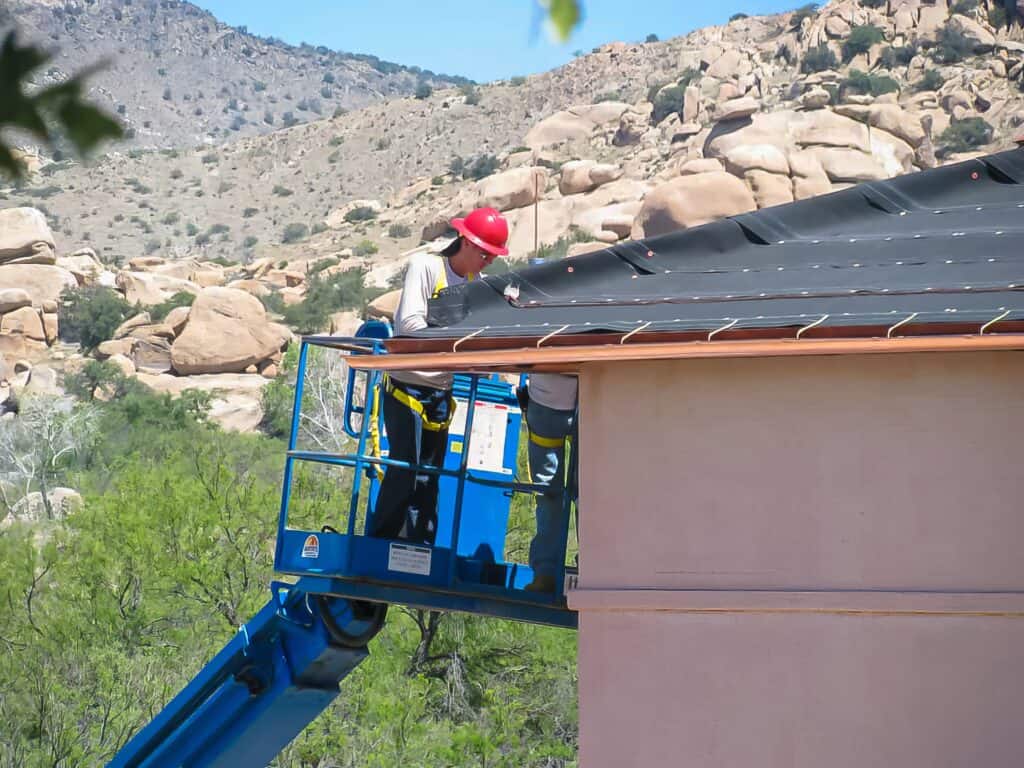
A well-sized gutter system is never just about the trough. It is the trough, the slope, the outlets, and the discharge path working together.
Which gutter shape handles heavy rain best?
Not all 6-inch gutters perform the same way.
K-style gutters are popular because they carry a lot of water relative to their profile and fit many architectural styles. For most homes, they are the practical choice when capacity matters. Box-style or deep-flow gutters can carry even more and are often used on commercial buildings or modern homes with high runoff demands.
Half-round gutters look beautiful, especially on historic or custom homes, but they generally carry less water than a K-style or deep-flow gutter of comparable width. That does not make them wrong. It just means they need to be selected with care when heavy rain is part of the picture.
If performance is the first priority, these are the profiles that usually rise to the top:
- K-style: strong capacity for residential homes
- Box or deep-flow: ideal where runoff volume is unusually high
- Half-round: better suited to architectural preference when drainage demand is moderate or the size is increased to compensate
Material matters in hot, stormy climates
A gutter that can hold the water still needs to survive heat, sun, wind, and debris.
In Southern Arizona, metal gutters are usually the strongest long-term fit. Aluminum is widely used because it resists rust, performs well in harsh sun, and comes in many finishes. Copper offers exceptional longevity and a distinct architectural look. Galvanized steel is strong, though long-term corrosion is still a consideration.
Vinyl is harder to recommend where extreme heat and intense storms meet. It is more vulnerable to warping, cracking, and joint issues, and it cannot provide the same kind of seamless performance as site-formed metal systems.
That is one reason many Tucson-area installations favor seamless aluminum or copper.
What usually works in Southern Arizona
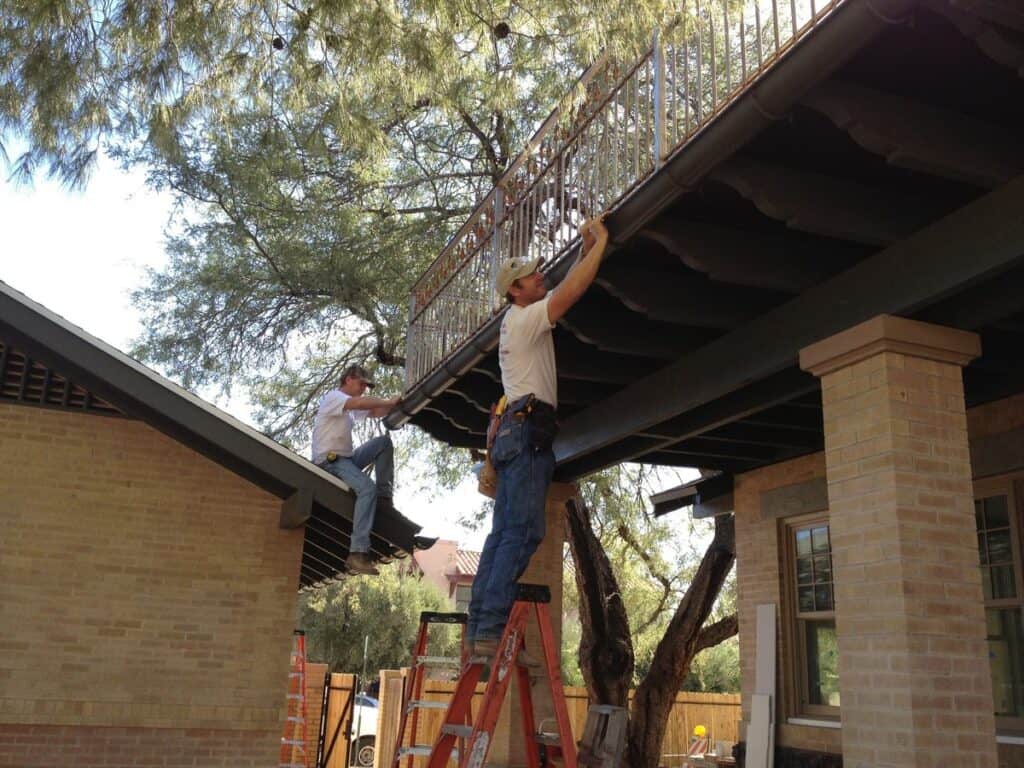
For homes across Tucson and nearby communities, 5-inch and 6-inch K-style gutters are the common residential choices. A local installer like Southern Arizona Rain Gutters often uses 6-inch systems when flow rates are higher or roof design calls for more capacity. On larger commercial projects, 8-inch seamless gutters with larger downspouts may be the right fit.
That local experience matters because Southern Arizona storms are unusual. Long dry periods can make it easy to overlook drainage needs, then a monsoon arrives and pushes an undersized system past its limit in minutes.
Homes with flat roofs often need scupper boxes to collect roof drainage and direct it into the gutter line. Sloped roofs need enough pitch in the gutter itself so water keeps moving toward the downspouts. A slight grade sounds minor, but it has a major effect on performance.
Support hardware matters as well. Gutters full of water get heavy fast. Strong hangers spaced every two feet help the system stay attached, straight, and properly pitched during peak loads.
Signs your current gutters are too small
Many owners do not think about sizing until they see failure during a storm.
If any of these show up, capacity may be part of the problem:
- Water pouring over the front edge in hard rain
- Splashing near the foundation
- Gutters that stay full and slow to drain
- Erosion below downspout areas
- Staining on fascia or siding
- Sagging sections after storms
Overflow is not always caused by size alone. Clogs, poor slope, too few downspouts, or loose hangers can produce similar symptoms. Still, when those issues are corrected and water still spills over during heavy rain, upsizing is often the right next step.
A practical way to choose the right size
The most reliable answer starts with measuring the roof area draining into each gutter run, then matching that load to local rainfall intensity. A good installer also looks at roof pitch, valleys, material, downspout placement, and any place where water concentrates.
That process usually leads to a clear recommendation:
- Standard 5-inch gutters: often enough for smaller roof sections with moderate flow
- 6-inch gutters: a strong choice for many homes in monsoon-prone areas
- Larger custom systems: best for commercial properties, flat roofs with scuppers, or very large drainage areas
If rainwater harvesting is part of the plan, sizing becomes even more important. A properly sized gutter system helps capture more runoff cleanly and direct it into screened, sealed storage rather than losing water to overflow. That matters for both property protection and water conservation.
Bigger is not always excessive
Some homeowners worry that 6-inch gutters will look oversized. In practice, many homes wear them well, especially when the color matches the trim and the profile is selected carefully. The visual difference is often smaller than expected, while the performance difference is substantial.
That is one of the better upgrades a property can make. A gutter system is not just trim attached to the roofline. It protects fascia, foundations, landscaping, walkways, and exterior walls. It can also support rainwater capture when designed with that purpose in mind.
If your property sees heavy rain, steep roof runoff, or large roof sections draining to one line, the safer answer is often to move up from 5 inches to 6 inches and make sure the downspouts keep pace. On many homes, that is the size that turns a vulnerable system into one that feels ready for the next hard storm.
Gutter Sizing Questions Tucson Homeowners Ask
Does upgrading from 5-inch to 6-inch gutters cost significantly more?
The material cost difference is usually modest — the jump from 5-inch to 6-inch aluminum is far less than most homeowners expect. Where cost can increase is if larger downspouts, wider fascia wraps, or additional outlet points are needed to support the bigger profile. For most residential projects in the Tucson area, the price gap is small enough that the added storm protection and longer trouble-free performance make the upgrade worthwhile rather than a stretch.
Can I mix gutter sizes on the same house?
Yes, and it is more common than people think. A home might use 6-inch gutters along the back where a large roof plane concentrates runoff into one run, and 5-inch along the front where shorter eave sections handle less water. Mixing sizes lets you put capacity where it is actually needed without over-building sections that do not face the same demand. The key is making sure downspout sizing matches each section independently.
How do I measure my roof area to figure out what size gutters I need?
You do not need to climb onto the roof. Measure the ground footprint of each section the gutter will serve — length times width — then adjust for pitch. A low-slope roof drains close to its footprint area, while a steep roof effectively drains a larger surface. For a rough estimate, multiply the footprint by 1.05 for a low pitch, 1.12 for a moderate pitch, or 1.3 for a steep pitch. That gives you the adjusted square footage to compare against sizing charts for your local rainfall intensity.
Do I need a permit to install or replace gutters in Tucson?
Standalone gutter installation on a residential property typically does not require a building permit in the City of Tucson or Pima County. However, if the project includes underground drainage lines tied into a public right-of-way, or if it is part of a larger remodel that triggers other permit requirements, it is worth confirming with the local building department before work begins. Commercial projects may have additional requirements depending on scope and site drainage plans.
Can undersized gutters cause damage even if they only overflow a few times a year?
Yes. Even a handful of overflow events per year can leave lasting damage. Repeated water spilling behind the gutter soaks fascia boards and can start rot that is invisible from the ground until it becomes serious. Overflow near the foundation causes soil erosion and can lead to moisture migration under slab edges. Stucco staining from splashback is also cumulative — each storm adds another layer that becomes harder to clean. The damage compounds even when the storms are infrequent.
Should I size my gutters differently if I plan to add rainwater harvesting later?
Yes, and planning ahead saves money. If there is any chance you will add collection tanks down the road, sizing up now avoids the cost of replacing gutters later. A 6-inch gutter captures more runoff per storm event, which directly increases the volume available for storage. Downspout placement should also be planned with future tank inlet locations in mind, so the harvesting hookup is straightforward rather than requiring rerouting or additional elbows and extensions.
Do gutter guards affect how I should size my gutters?
They can. Some guard and screen designs reduce the effective opening of the gutter, which means less water enters the trough per second — especially during the kind of fast, heavy downpours Tucson sees in monsoon season. If you plan to install gutter guards, it is worth factoring that flow reduction into the sizing decision. Going with a 6-inch gutter instead of a 5-inch gives the system more margin to compensate for any intake restriction the guard introduces.
How do I know if my downspouts are the bottleneck instead of my gutters?
If your gutters fill up and overflow near the downspout outlet rather than along the full run, the downspouts are likely undersized or too few. Another sign is water backing up at the top of the downspout during heavy rain while the far end of the gutter run stays relatively empty. Adding a second downspout to split the load, or upgrading to a larger downspout size, often solves the problem without replacing the gutters themselves.
When monsoon rain hits Tucson, water does not arrive gently. It can pour off a roof in minutes, cut channels through landscaping, stain stucco, and collect near a foundation before anyone has time to react. A properly designed gutter system changes that. It gives runoff a controlled path, protects the structure, and turns a hard burst of rain into something manageable.
Southern Arizona Rain Gutters provides custom gutter and rainwater collection solutions for homes, commercial properties, and managed buildings across the Tucson area. The focus is practical and design-minded at the same time: strong materials, clean installation, drainage that fits the site, and options that can move water away or store it for later use.
Built for Tucson weather
Desert conditions create a unique mix of stress on exterior systems. Long dry stretches leave dust and debris on the roof. Then summer storms can send a large volume of water into a short section of gutter all at once. That is why sizing, slope, downspout placement, and support spacing matter so much in Southern Arizona.
A good system does more than catch water at the roof edge. It helps protect fascia boards, reduces splashback against walls, limits soil erosion, and keeps runoff from pooling near entries, patios, and slab foundations. On flat or low-slope rooflines, header boxes and scuppers can be part of the answer. On pitched roofs, the profile and outlet size need to match the roof area and expected flow.
Custom-formed gutters with long continuous runs are especially useful in this climate because fewer joints mean fewer places for leaks to develop over time.
Gutter styles and system options
Not every property in Tucson needs the same profile. Some homes look best with traditional K-style gutters, while others benefit from the softer shape of half-round gutters or the clean lines of European box profiles. Material matters too. Aluminum is a strong all-around choice for many properties, copper offers a premium architectural look with a natural patina, and steel can be a fit where extra strength is needed.
Southern Arizona Rain Gutters offers multiple profiles and sizes to match both appearance and water volume. Systems are formed for the building rather than pulled from a shelf in fixed lengths, which supports a cleaner finish and more reliable performance.
| Option | Common Use | Notes |
|---|---|---|
| 5" K-style | Many homes | Popular balance of capacity, value, and curb appeal |
| 6" K-style | Larger homes and higher-flow roof sections | Extra capacity for stronger runoff |
| 8" K-style | Commercial and large roof areas | Built for demanding water volume |
| 6" Half-round | Classic and decorative architecture | Smooth curved profile, often chosen in copper |
| 6" European box | Contemporary homes and select commercial sites | Sharp, modern lines |
For most Tucson homes, 5-inch seamless aluminum K-style gutters are the best all-around choice, giving the right balance of capacity, cost, and curb appeal for a typical residential roofline. Larger homes and roof sections that funnel heavy runoff are better served by 6-inch gutters, commercial and large-roof properties often need 8-inch, and owners after a specific architectural look may prefer copper or half-round profiles. The right pick ultimately depends on roof area, pitch, and how much water reaches each section during a monsoon downpour, which is what a site review determines.
Color selection also matters more than many owners expect.
Services that go beyond the roof edge
A strong gutter system is only part of the full drainage picture. Downspouts, elbows, outlets, splash control, underground drain lines, and fascia protection all work together. If one part is undersized or poorly placed, the whole system can struggle during a heavy storm.
Southern Arizona Rain Gutters handles new installation, repairs, replacements, and water redirection for both residential and commercial properties. That includes work on drainage paths below the gutter line, where water often creates the most visible damage.
After a careful site review, projects may include:
- Custom-formed gutter installation
- Downspouts and leader boxes
- Fascia wraps
- Underground drainage lines
- Gutter cleaning and repairs
- Residential and commercial service
This broader approach is valuable in Tucson because runoff problems rarely stop at the eave. Water can cross walkways, undermine gravel beds, flood planting areas, or settle against walls if it is not guided to the right discharge point.
Why installation quality matters
Material selection gets a lot of attention, yet installation details are what determine how a system performs season after season. Long runs need solid support. Outlet points need secure sealing. Gutters need the right pitch to move water without looking uneven from the street.
Southern Arizona Rain Gutters uses support hangers spaced at regular intervals, including every two feet where needed for strength, and uses UV-resistant polyurethane sealant at joints and accessory connections. Those details matter in a place where intense sunlight breaks down low-grade materials quickly and storm runoff adds sudden weight to the system.
Professional fabrication on site also helps reduce common weak points. A gutter with fewer field joints is less likely to drip, separate, or collect debris at connection points. That means a cleaner look during dry months and more confidence when the summer rain returns.

Rainwater collection that fits Southern Arizona
In Tucson, runoff can be directed away from the property, but it can also be stored and reused. That is where rainwater harvesting becomes more than a nice idea. It becomes a smart property upgrade. Roof runoff can feed tanks or cisterns for landscape watering, site use, and selected filtered applications.
Southern Arizona Rain Gutters designs and installs harvesting systems in a wide range of sizes, from smaller residential setups to large-capacity storage for homes, ranch properties, and commercial sites. Available options include above-ground plastic tanks and corrugated steel cisterns. Systems can be configured with overflow lines, clean-out valves, hose bibs, and pump options based on how the water will be used.
Tanks are available with UV protection, screened openings, and sealed components that help limit algae growth and mosquito activity. That is especially important in warm weather and for properties that want dependable storage over time.
Rainwater systems may be planned around several goals:
- Tank sizing: storage options can range from 200 gallons to 10,000+ gallons, based on roof area and water goals
- Tank protection: UV-resistant bodies, screened inlets, sealed openings, and overflow planning support cleaner stored water
- Water use: irrigation, landscape support, and selected filtered backup water applications
- Project flexibility: full installation service or parts pickup for owners taking on a DIY project
For many property owners, this adds a second layer of value to a gutter project. The same system that protects the building can also help offset outdoor water use.
Repairs, drainage correction, and maintenance
Not every property needs a full replacement. Sometimes the right move is targeted repair. A leaking corner, a sagging run, a clogged downspout, or a poorly placed discharge point can often be corrected before the issue spreads to stucco, fascia, or soil around the home.
Cleaning and maintenance are also part of keeping a system ready for storm season. Even in a dry climate, roofs collect leaves, dust, grit, seed pods, and roofing debris. Those materials settle in troughs and outlets, slowing water flow at the exact moment the system needs maximum capacity. Periodic service helps keep drainage moving and gives owners a chance to spot wear early.
Underground drainage can also make a major difference. When downspouts send water into buried lines, runoff can be carried toward a safer discharge area instead of dropping right beside the foundation.
Material choices with long-term value
Aluminum remains a popular choice because it is lightweight, rust-resistant, and available in many colors. It works well on a wide range of homes and commercial buildings. Copper appeals to owners who want a more architectural finish and exceptional lifespan. Galvanized steel can be a practical choice on select projects where strength is the top concern.
The right material is not just about budget. It is about roof size, local exposure, maintenance expectations, and the visual character of the building. A custom system should look intentional from the curb and perform confidently during the toughest weather of the year.
What the process can look like
A productive estimate starts with the building itself: roof type, square footage, pitch, fascia condition, drainage paths, and whether the goal is simple runoff control or full water capture. From there, the system can be sized and shaped to fit the structure rather than forced into a generic layout.
That gives Tucson property owners room to choose what matters most, whether that is a durable aluminum gutter system, decorative copper, fascia wraps, a large cistern, flexible payment options, or even parts pickup for a hands-on project. The result is a cleaner exterior, stronger water control, and a property that is better prepared for the next storm.
Rain Gutter Questions from Tucson Property Owners
Do all sides of a Tucson home need gutters?
Not always. Many homes only need gutters on the sides where roof runoff creates a real problem — above entryways, walkways, patios, planting beds, or areas close to the foundation. A site review can identify which sections of the roofline actually produce concentrated runoff and which ones discharge harmlessly onto open ground. Installing only where gutters are needed keeps the project cost-effective without leaving vulnerable areas unprotected.
Can gutters be installed on a tile roof?
Yes, though the approach is different than with shingle or flat roofs. Tile roofs channel water in irregular patterns, and the raised profile of the tile means the gutter needs to be positioned to catch runoff that may overshoot a standard mount point. Bracket style, standoff distance, and flashing details all need to account for the tile layout. This is common work in Tucson, where concrete and clay tile roofs are widespread across older and newer neighborhoods.
When is the best time of year to install gutters in Tucson?
Any time outside of active monsoon storms is workable, but fall through spring is ideal. Sealants cure best when temperatures are warm but not extreme, and scheduling is typically more flexible outside the peak summer storm window. Getting a system in place before monsoon season means the property is protected when the heaviest runoff arrives rather than waiting through another round of storms.
Do gutters help prevent foundation problems in Southern Arizona?
Yes. Even on homes with slab foundations, concentrated roof runoff landing at the base of the building can cause soil erosion, moisture migration under the slab, and cracking in exterior stem walls over time. Gutters collect that water at the roofline and route it to a controlled discharge point — either away from the structure through downspouts and underground lines, or into a storage tank. That separation between runoff and foundation is one of the most practical reasons to install gutters in the Tucson area.
Are gutter guards or leaf screens worth adding in the desert?
They can be, depending on the property. Homes near mesquite, palo verde, or other desert trees that drop fine seeds, pods, and small leaves benefit from screens that keep debris out of the trough. However, not all guard styles work well in this climate — some trap dust and fine grit on top of the screen, which can slow water entry during a fast monsoon pour. A mesh-style screen with adequate opening size tends to perform better than solid-cover designs in dry, dusty conditions.
Will new gutters change the look of my home?
They should improve it, not distract from it. When the profile, color, and mounting line are chosen to match the architecture, gutters create a cleaner roofline and a more finished exterior. A mismatched color or oversized profile on a small home can look heavy, while undersized gutters on a large roofline can look flimsy and fail during storms. The visual fit matters as much as the functional sizing, which is why color matching and profile selection are part of a proper estimate.
Do I need to be home during the gutter installation?
Not for the full project. Most crews only need access to the exterior and a clear work path along the roofline. It helps to be available at the start so the installer can confirm placement, color, and downspout locations, and again at the end for a walkthrough and water test. Beyond that, the work happens outside and does not require interior access unless an indoor downspout route or attic-mounted component is part of the plan.
Can I finance a gutter or rainwater harvesting project?
Many homeowners prefer to spread the cost of larger projects, especially when the scope includes harvesting tanks, underground drainage, or fascia wraps in addition to gutters. Financing availability and terms vary by project size and provider, so it is worth asking during the estimate process. Some water harvesting installations may also qualify for local rebates or incentive programs, which can offset part of the upfront cost.
Aluminum gutter installation is the process of fabricating and mounting rust-resistant aluminum channels along a roofline to collect rainwater and route it away from the foundation through downspouts. In the Tucson area, it is a core defense against monsoon runoff, stucco staining, and foundation erosion.
A well-installed aluminum gutter system does more than catch rain. It protects stucco, fascia, foundations, walkways, and landscaping from the sudden runoff that arrives with Southern Arizona storms.
In Tucson and the surrounding region, aluminum gutter installation has to account for intense sun, long dry periods, blowing dust, and short bursts of heavy monsoon rain. That mix is exactly why aluminum remains a strong choice for residential and commercial properties: it resists rust, handles heat well, and offers a clean finished look that fits both traditional and modern architecture.
Why aluminum is a smart fit for Southern Arizona
Aluminum gutters offer a practical balance of durability, appearance, and value. They are light enough to reduce strain on the roof edge, yet strong enough to move a large volume of water when the system is sized correctly. Unlike steel, aluminum does not rust. Unlike vinyl, it is far less likely to soften, crack, or distort under prolonged desert heat.
That matters here. A gutter system may sit dry for weeks, then suddenly need to carry a major roof runoff event. If the material, hangers, slope, and seal points are not right, water can spill behind the gutter, stain exterior walls, or pool near the base of the building.
After the roofline is measured and the runoff demand is reviewed, aluminum also gives homeowners plenty of design freedom. It is available in a wide range of colors and finishes, so the gutters can blend into trim, fascia, or stucco rather than look like an afterthought.
After a paragraph like that, the main benefits are easy to see:
- Rust resistance
- Strong heat performance
- Light structural load
- Clean architectural lines
- Long service life
- Broad color selection
What proper installation actually includes
Good installation starts before any metal is cut. The roof edge and fascia should be checked for rot, movement, or old fastener damage, and weathered boards may need aluminum fascia wrap installation before new gutters go up. If the substrate is weak, even a premium gutter will struggle over time. Layout comes next: roof dimensions, downspout locations, drainage paths, and the direction of pitch all need to be mapped carefully.
For many homes, the gutter is sloped about 1/4 inch per 10 feet toward the downspout. That slight angle is enough to keep water moving without making the line look uneven from the ground. Downspouts are placed where runoff can leave the building efficiently and discharge well away from the foundation.
Small errors in pitch can create big drainage problems.
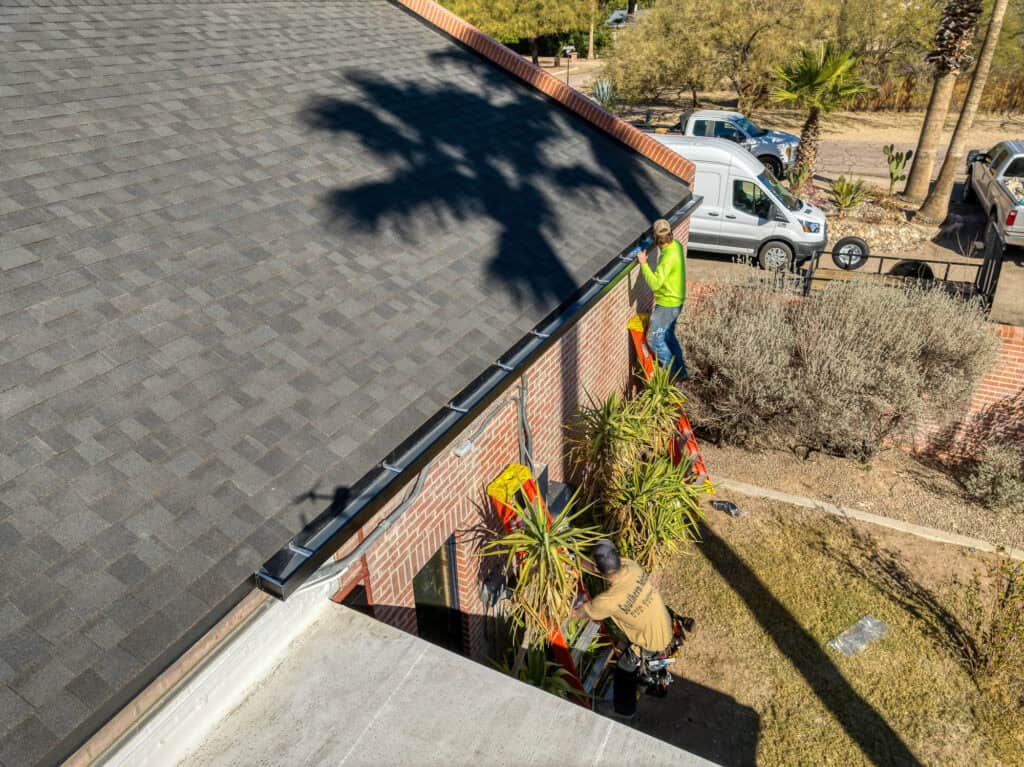
Once layout is finalized, the gutter sections are formed or cut to fit the structure, corners are fitted, outlets are placed, and supports are secured along the fascia. Southern Arizona Rain Gutters installs supports every two feet, which helps the system stay stable when a long run fills with water. Joints, end caps, and outlets are then sealed with a flexible sealant chosen for high-heat conditions.
Sizing options for different properties
Not every building needs the same gutter profile. Roof area, roof pitch, valley concentration, and desired water collection all influence sizing. A compact single-story home may perform well with a 5-inch system, while a larger residence or a commercial roofline may benefit from 6-inch gutters and larger downspouts.
| Gutter Size | Common Use | Downspout Pairing | Best Fit |
|---|---|---|---|
| 5-inch aluminum | Standard residential roofs | 2x3 or 3x4 downspouts | Most homes with moderate roof area |
| 6-inch aluminum | Large roofs or heavy runoff zones | 3x4 or 4x5 downspouts | Larger homes, valley-heavy roofs, some commercial buildings |
A site review helps determine whether standard sizing will perform well or whether a larger profile makes sense. That is especially useful for homes with tile roofs, long eave runs, or concentrated drainage points.
Materials, fasteners, and sealants matter
Appearance is only part of the story. The strength of an aluminum gutter system comes from the material thickness, the hanger spacing, the fastener quality, and the sealant used at every joint. A properly built system should stay attached, keep its line, and remain watertight through heat cycles and summer storms.
For many projects, heavy aluminum in the .027-inch range offers an excellent balance of value and durability. Heavier material may be chosen where roof runoff is more demanding. Corrosion-resistant screws and rivets help prevent premature failure, and a polyurethane-based sealant is a strong fit in hot climates because it stays flexible longer than many standard caulks.
A reliable installation usually includes these details:
- Material thickness: commonly .027-inch aluminum, with heavier options available for demanding rooflines
- Support spacing: hangers set every two feet for added strength
- Joint sealing: polyurethane sealant that remains flexible in desert heat
- Fastener choice: corrosion-resistant screws and rivets matched to the system materials
Those details may seem small during installation, yet they often decide how the gutter performs five, ten, or fifteen years later.
More than simple drainage
For many property owners, gutters are also the starting point for rainwater capture. Aluminum systems can be installed to feed collection tanks, landscape basins, or larger storage setups. That is a strong fit for Southern Arizona, where every storm can become a water resource instead of runoff.
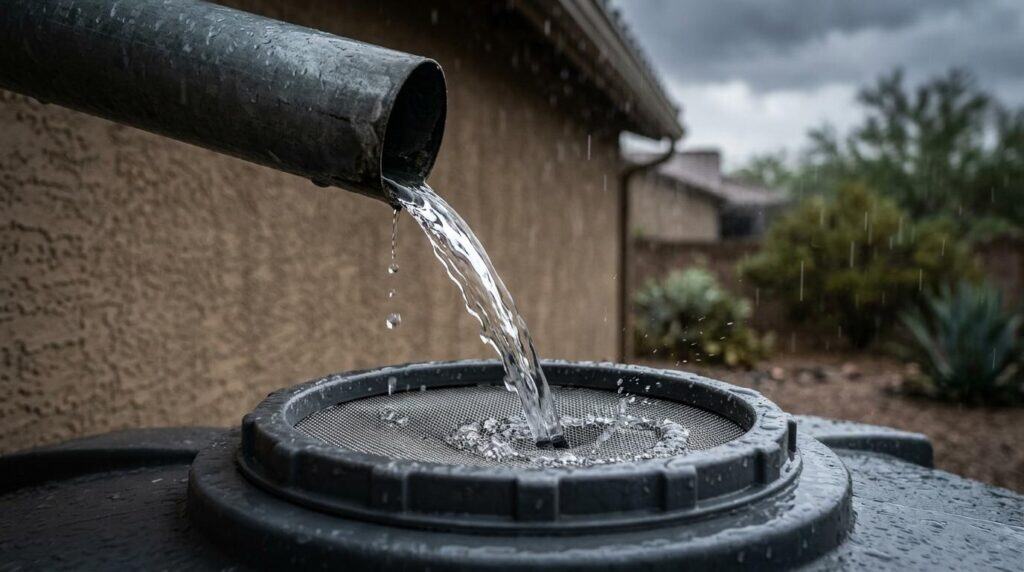
Southern Arizona Rain Gutters designs and installs rainwater harvesting systems ranging from 200 gallons to more than 10,000 gallons. Tanks can be sealed and UV-protected, with screened openings that help limit algae growth and mosquito intrusion. For homeowners interested in water reuse, gutter layout and downspout planning should be done with the storage system in mind from the start.
Residential and commercial installation
Homes, rental properties, and commercial buildings all benefit from well-planned rain gutter installation, though the design priorities can differ. A homeowner may focus on protecting stucco and improving curb appeal. A property manager may be more focused on drainage reliability, maintenance access, and long-term repair cost. Commercial sites often need wider profiles, more downspout capacity, and careful routing around entries, sidewalks, and equipment.
Service across the greater Tucson area often includes Tucson, Oro Valley, Marana, Vail, Sahuarita, Green Valley, Nogales, Rio Rico, Sonoita, and 3 Points.
What the installation process looks like
Most projects follow a clear sequence. That helps keep the work organized and gives the property owner a better idea of what to expect on installation day.
- Site review and measurement
- Drainage planning and downspout placement
- Material selection and color matching
- Fabrication, fitting, and mounting
- Sealing, testing, and cleanup
After installation, water testing is a valuable step. Running water through the system can reveal slow spots, missed seal points, or discharge issues before the next storm arrives.
Maintenance after installation
Aluminum gutters are low-maintenance, not no-maintenance. In Southern Arizona, dust, seed pods, leaves, and fine debris can collect in the trough and harden into mud after rainfall. A yearly cleaning is wise for many homes, and a second inspection after monsoon season is often a good idea.
A yearly cleaning is wise for many homes, and a second inspection after monsoon season is often a good idea. You can follow our free seasonal gutter maintenance checklist for Tucson to stay on schedule through the monsoon cycle.
Watch for a few signs that service may be needed: water spilling over the front edge, brown streaking on stucco, visible sagging between hangers, or downspouts that drain too close to the foundation. Cleaning, minor resealing, and occasional adjustment can help preserve the system and prevent larger repairs.
For properties that also use rainwater harvesting, routine upkeep becomes even more important. Screens, first-flush components, outlets, and storage inlets should stay clear so the full system continues to work as intended.
A cleaner roofline, stronger drainage, and a better plan for rain
Aluminum gutter installation is one of those upgrades that improves both protection and appearance when it is done correctly. With proper sizing, secure support, heat-ready sealants, and drainage planning that fits the building, the system can perform for years while looking right at home on the property.
Southern Arizona Rain Gutters provides custom aluminum gutter installation for homes and businesses throughout the region, with options for continuous gutter runs, fascia wraps, coordinated finishes, rainwater harvesting integration, and even parts pickup for DIY-minded customers who want the right materials from the start.
Common Questions About Aluminum Gutter Installation
Are aluminum gutters a good choice for Tucson's climate?
Yes. Aluminum handles intense sun and high heat without rusting, softening, or cracking the way steel or vinyl can. It stays stable through long dry periods and performs well during sudden monsoon runoff, which makes it one of the most reliable gutter materials for homes and businesses across Southern Arizona.
How much does aluminum gutter installation cost in the Tucson area?
Pricing depends on the total length of gutter, whether the home needs 5-inch or 6-inch profiles, the number of downspouts, roof height and complexity, and any rainwater harvesting tie-ins. A long single-story run costs far less than a two-story home with multiple valleys. Because these factors vary by property, a free on-site measurement gives a far more accurate figure than a phone estimate.
Should I choose aluminum or copper gutters for my home?
For most Southern Arizona homes, aluminum offers the best balance of cost, rust resistance, and color choice. Copper lasts longer and develops a distinctive patina over time, but it carries a significantly higher price and is usually reserved for architectural or high-end projects. If you are weighing the two, our guide on copper vs aluminum gutterscompares cost, lifespan, and appearance in detail.
How often should aluminum gutters be cleaned in Southern Arizona?
Once a year is a reasonable baseline for most Tucson homes, with an extra inspection after monsoon season. Dust, seed pods, palo verde debris, and fine sediment can harden into mud inside the trough and block flow. Properties near heavy vegetation or with rainwater harvesting systems often benefit from more frequent checks. For an easy way to stay on track, download our free seasonal maintenance checklist built for the Tucson monsoon cycle.
Can aluminum gutters be color-matched to my home or HOA requirements?
Yes. Aluminum gutters come in a wide range of factory finishes, so they can be matched to your fascia, trim, or stucco rather than standing out. This also makes it easier to meet the HOA color requirements common in communities around Oro Valley, Marana, and Sahuarita. Color is reviewed during the site visit so the finished gutters complement the home.
How long does aluminum gutter installation take?
Most residential aluminum gutter installations are completed in a single day. Larger homes, two-story rooflines, commercial buildings, or projects that include fascia work or rainwater harvesting integration can take longer. Because seamless gutters are fabricated on site to fit each run, the work moves efficiently once measurement, drainage planning, and color selection are finalized.
How long do aluminum gutters last in Tucson?
With proper installation, correct hanger spacing, and heat-ready sealants, aluminum gutters commonly last 20 years or more in the Tucson climate. Service life depends heavily on material thickness, fastener quality, and whether annual cleaning and post-monsoon inspections are kept up.
What's included in a professional aluminum gutter installation?
A proper installation includes a fascia and roof edge review, drainage and downspout planning, custom fabrication of seamless runs, hangers set every two feet, polyurethane sealant at joints and outlets, and a final water test. Southern Arizona Rain Gutters follows this sequence on residential and commercial projects throughout Tucson, Oro Valley, Marana, Vail, Sahuarita, Green Valley, and surrounding communities.