ES

Shed roof rainwater harvesting lets you turn a small outbuilding into a working water source for the garden right beside it. On larger Tucson lots, and in places like Vail, Sonoita, Three Points, and Marana, the main house often sits in the wrong spot for a tank, while a shed, detached garage, or carport stands a few steps from the beds that actually need water. A small roof still catches a surprising amount during a monsoon downpour. If you are weighing full rainwater harvesting systems in Tucson against a simpler starting point, an outbuilding feeding one garden tank is one of the easiest ways to begin.
This guide covers which outbuildings are worth collecting from, the gutters that fit a small structure, how to match a shed roof to a garden-size tank, and the setup details that keep stored water clean. Everything here is for Southern Arizona conditions, where sun, dust, and short intense storms shape what works.
Why a Small Roof Still Fills a Garden Tank
A small roof fills a garden tank because even a modest footprint captures real volume in a single storm. A rule of thumb from a standard volume conversion is that one inch of rain on one square foot of roof yields about 0.623 gallons before any losses. That means a 200 square foot shed roof can theoretically shed well over a hundred gallons from a single inch of rain. Real capture is always lower once you count first-flush diversion, splashing, overflow, and what the gutter misses, so treat the figures below as theoretical maximums rather than a guaranteed yield.
The chart shows the theoretical ceiling for four common small-roof sizes. The practical lesson is simple: you do not need a big roof to keep a garden tank useful between storms.
For the yield math on a full house roof, our guide on how much rainwater you can collect from your roof runs those larger numbers. This post stays focused on the small structures that often get overlooked.
Which Outbuilding Roofs Are Worth Collecting From
Almost any outbuilding with a solid, sloped roof is worth collecting from if it sits near where you want the water. The best candidates shed water to one or two clear edges where a gutter and downspout can direct flow into a tank without a long, awkward run. A structure right beside the planting beds beats a larger one across the yard, because every foot of pipe adds cost and a place for water to stall.
Before you commit, look at the roof pitch, the material, the condition of the fascia, and how close a tank can sit. The table sorts the common outbuilding types by what to check first and where each tends to fit best.
| Structure | What to check first | Good fit for |
|---|---|---|
| Garden shed | Roof pitch and whether a short downspout reaches the beds | Smallest garden tanks and single drip zones |
| Detached garage | Fascia condition and how far the tank must sit from the roof edge | Mid-range garden storage for a larger planted area |
| Barn | Roof size and the longest clear gutter run to one outlet | The top of the garden range or a second tank |
| Ramada or patio cover | Whether the cover has a solid roof that actually sheds water | A small accent tank for nearby pots and raised beds |
| Carport | Slope direction and whether the open sides leave room for a tank | A compact tank feeding a close, defined bed |
Barns and large detached garages can move toward the bigger end of garden storage or beyond, while a garden shed usually pairs with the smallest tanks. The point is to match the roof you have to a tank you will actually use.
Gutters for Small Structures
Gutters for small structures use the same profiles and materials as a house, sized to the roof. We form seamless gutters on site in one continuous piece, which matters even on a shed because fewer seams means fewer places to leak over the years. K-style is the common choice and comes in 5 inch, 6 inch, and 8 inch widths, with half-round and European box available when the look calls for it.
Materials are aluminum or copper. Aluminum is the practical pick for most outbuildings: it handles Tucson sun and heat without rusting, and a well-installed aluminum system commonly lasts 30 years or more. Copper costs more and develops a natural patina over time, and it can last far longer than a standard system, so some owners choose it where the shed is part of a visible, designed yard. We do not install steel gutters.
A few install details carry over from larger jobs as general trade practice. The industry standard is to set hangers roughly every 24 inches for solid support, and to pitch the run about a quarter inch of fall per 10 feet so water moves to the outlet. Downspouts in the 2 by 3 inch and 3 by 4 inch range are standard, with one downspout serving roughly 30 to 35 feet of gutter, which is usually more than a single shed edge needs. On a storm-heavy roof a slightly steeper pitch can help.
Matching a Shed Roof to a Garden Tank
Match a shed roof to a garden tank by starting from the garden range, not the roof. Garden irrigation systems commonly run in the 50 to 500 gallon range, and a single outbuilding roof pairs naturally with a tank somewhere in that band. A small garden shed often suits the lower end, while a detached garage or barn can justify the top of the range or a second tank.
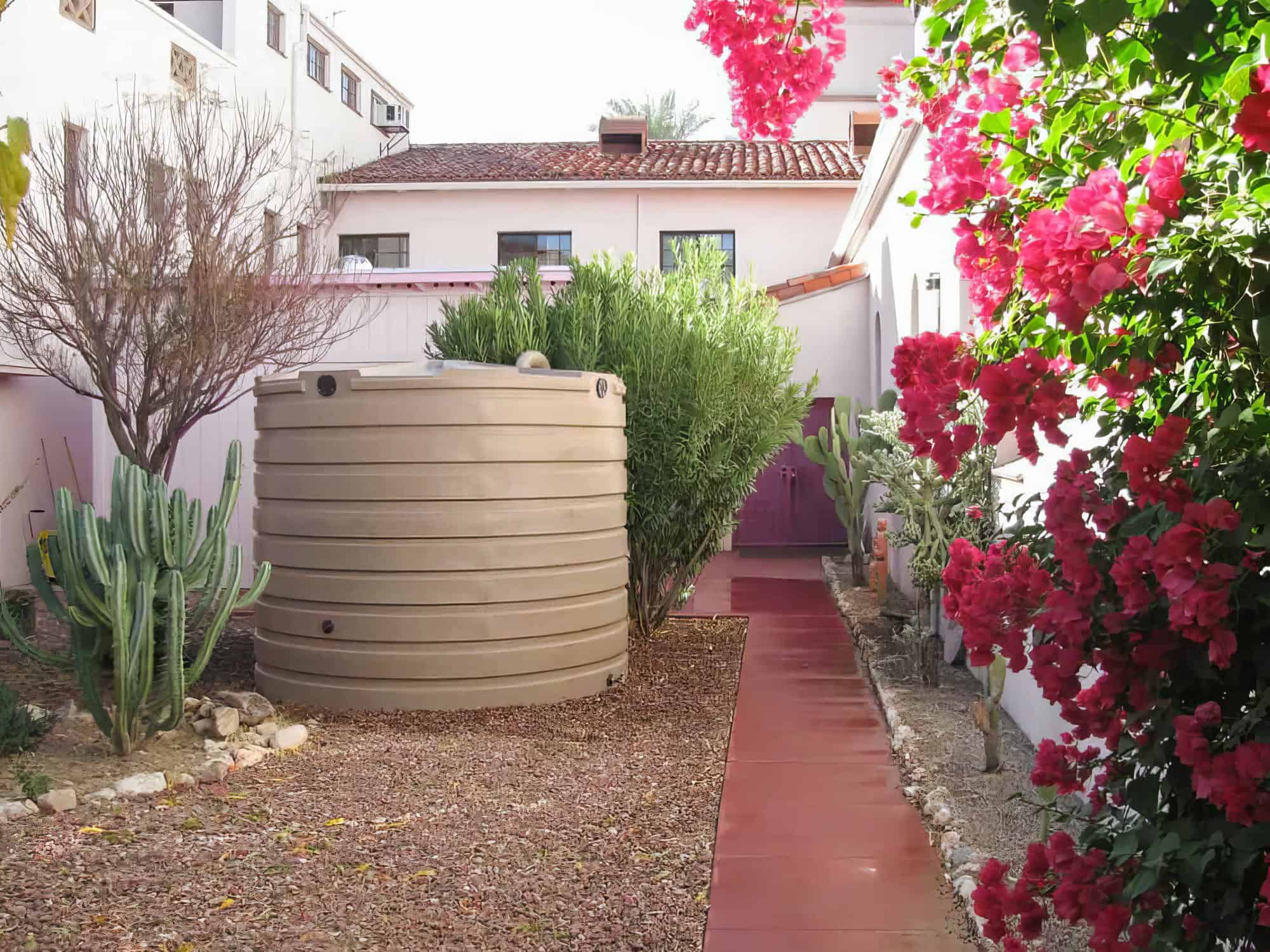
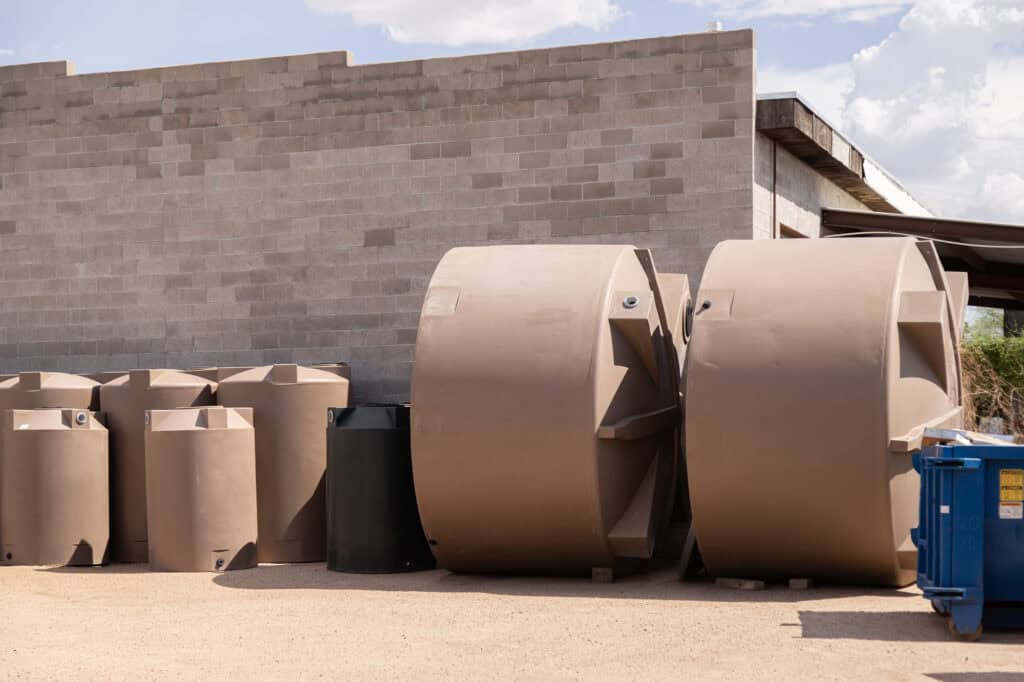
Above-ground plastic tanks are the usual fit here. They are straightforward to place, easy to connect to a short downspout run, and simple to tap for a hose or drip line. You can see small tank options and sizes on our plastic water tanks page. If you are not ready for a tank at all, underground drainage that ties into the gutter system can move roof water to a safe runoff area or a planted basin instead, which is a reasonable first step.
Place the tank as close to the planting as the structure allows. A short, direct path from downspout to tank keeps the system simple, reduces the chance of standing water in a long pipe, and makes the stored water easy to use where you need it.
Keeping Outbuilding Water Clean and Controlled
Keeping outbuilding water clean starts with screening what goes in and sealing what sits in the tank. Best practice across the trade is a screened inlet to keep out leaves, palo verde litter, and insects, a sealed opening so light and pests stay out, and a planned overflow route so a full tank during a heavy storm sends excess somewhere safe rather than against a wall or foundation. These are standard steps for cleaner stored water, not SARG-specific specifications.
Overflow planning matters more on a small system than people expect, because a garden tank fills fast. Decide in advance where the excess goes, whether that is a second tank, a drainage line, or a mulched basin that soaks the overflow into the ground near the plants.
For hands-on owners, we also offer DIY gutter parts pickup, so you can buy the gutter, downspout, and fittings for a shed project and do the install yourself. If the roof is awkward, the fascia needs attention, or you would rather have the gutter formed and hung for you, that is where a professional install earns its place.
Rebates and a Note on Eligibility
A rebate may be available through the Tucson Water rainwater harvesting program, but you should confirm eligibility before you buy. The program page asks for the roof area that will feed the system and does not directly address detached structures, so it is not clear from the public information whether an outbuilding-fed setup qualifies on its own. Program rules, eligibility, any required workshop, and the amounts can change, so confirm the current terms and whether a shed-fed or garage-fed system counts with Tucson Water through the Tucson Water rainwater harvesting rebate program before installing. We are happy to help you plan a system that fits whatever the program currently allows.
Key Takeaways
- A small outbuilding roof can fill a garden tank, so a shed or garage near the beds is often a better collection point than a poorly placed house roof.
- One inch of rain on one square foot of roof yields about 0.623 gallons before losses, so a 200 square foot shed still catches real volume in a storm.
- Small structures use the same seamless aluminum or copper gutters as a house, in K-style 5, 6, or 8 inch, with no steel gutters offered.
- Match the roof to the hedged 50 to 500 gallon garden range and place an above-ground plastic tank close to the planting.
- Screened inlets, sealed openings, and a planned overflow are standard best practice for cleaner stored water.
- Confirm rebate eligibility for a detached-structure system with Tucson Water before buying.
Outbuilding Rainwater Questions from Tucson Property Owners
Is a shed roof big enough to bother collecting rainwater?
Yes, a shed roof is usually big enough to fill a garden tank because even a small footprint captures real volume in a Tucson storm. One inch of rain on one square foot yields about 0.623 gallons before losses, so a modest roof keeps a 50 to 500 gallon garden tank useful between rains.
What size tank should I use for a detached garage or shed?
Start from the garden range rather than the roof, since garden irrigation systems commonly run from about 50 to 500 gallons. A small shed often suits the lower end and a detached garage or barn can justify the top of that range or a second tank.
Can you put gutters on a barn, carport, or ramada?
Yes, we can gutter most outbuildings that have a solid sloped roof, including barns, carports, and ramadas with a real roof surface. We form seamless gutters on site in K-style 5, 6, or 8 inch widths in aluminum or copper, sized to the structure.
What gutter material is best for an outbuilding in Tucson?
Aluminum is the practical choice for most outbuildings because it handles local sun and heat without rusting and commonly lasts 30 years or more. Copper costs more, develops a natural patina, and can last far longer, so it suits sheds in a visible, designed yard.
Where should the tank sit relative to the shed?
Place the tank as close to the planting as the structure allows, with a short direct path from the downspout. A short run keeps the system simple, reduces standing water in long pipes, and makes the stored water easy to use right where the garden needs it.
How do I keep water from a small roof clean?
Screen the inlet, seal the tank opening, and plan where overflow goes before the first big storm. A screened inlet keeps out leaves and insects, a sealed opening blocks light and pests, and a planned overflow route sends excess somewhere safe instead of against a wall.
Can I install a shed gutter and tank setup myself?
Yes, hands-on owners can buy gutter, downspout, and fittings through our DIY gutter parts pickup and do a simple shed install themselves. If the roof is awkward or the fascia needs work, a professional seamless install is the more reliable route.