ES

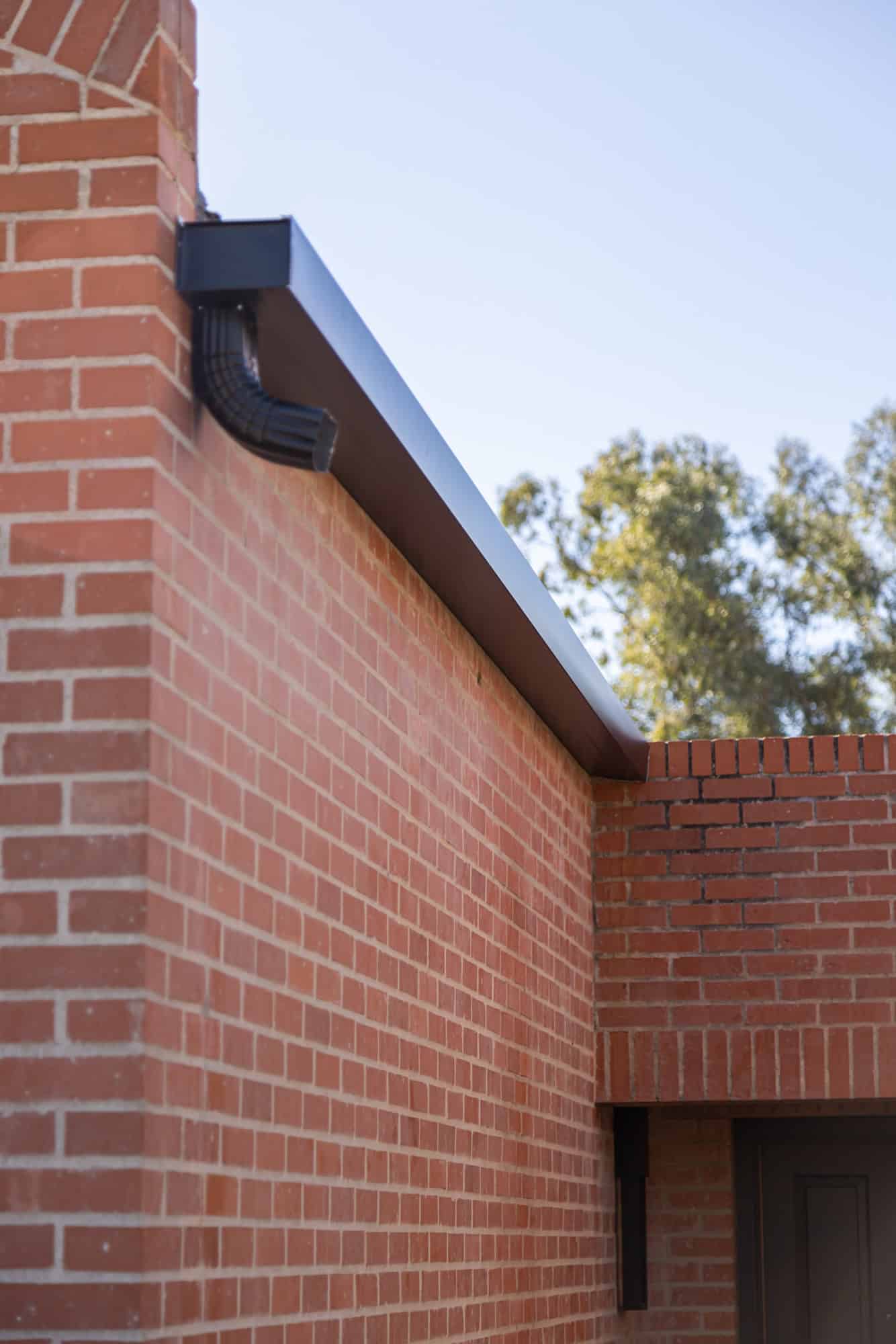
Knowing why gutters overflow starts with one observation: where the water actually goes over the edge. A spill at a corner has a different cause than a spill in the middle of a long run, and both differ from water sneaking down behind the gutter. A well-planned seamless rain gutter installation in Tucson is built to avoid all of them, but even a good system can drift out of adjustment over the years.
In Tucson the problem shows up fast. Gutters sit dry most of the year collecting dust and palo verde litter, then a monsoon cell drops a burst of rain in minutes, and every weak spot announces itself at once. This guide sorts overflow by location so you can tell a quick cleanup from a job that needs an installer.
Why Gutters Overflow in the First Place
Gutters overflow when water arrives faster than the system can carry it away. That happens because something blocks the flow, the gutter is not sloped toward an outlet, or the gutters and downspouts are too small or too few for the roof feeding them.
Every gutter is a channel with a fixed capacity, and the spill location tells you which link failed. That is why guessing rarely works: cleaning a gutter pitched the wrong way will not stop it spilling, and adding a downspout will not help a section sagging between hangers. Diagnose first, then fix.
Where the Water Spills Tells You the Cause
The spill location is the most reliable clue you have. Watch the gutters during the next real storm, or look afterward for streaks on the stucco, splash marks in the gravel, or erosion under the eave, then match what you see to the table below.

| Where it overflows | Most likely cause | Typical fix |
|---|---|---|
| At an inside corner | Debris where the water turns, or valley runoff outrunning the corner | Clear the corner; many installers add a splash guard where a valley empties in |
| At or right beside the downspout | Clogged outlet, packed elbow, or a backed-up drain line | Clear the outlet and both elbows, then flush the downspout |
| Mid-run, in one spot | A sag from loose or widely spaced hangers | Rehang the section; hangers roughly every 24 inches is the common standard |
| At the far end from the downspout | Pitch set flat or tilted the wrong way | Reset the slope; about 1/4 inch of fall per 10 feet is the industry standard |
| Behind the gutter, down the wall | Missing gutter apron or drip edge, or a gutter set too low | Add an apron or drip edge and reset the gutter under the roof edge |
| Along the whole length, only in hard downpours | Too few downspouts, or an undersized downspout or gutter | Add an outlet, move from 2x3 to 3x4 inch downspouts, or step up a K-style size |
Overflow at an Inside Corner or Over the Outlet
Overflow at an inside corner or right over an outlet is almost always a blockage. Debris piles up wherever water changes direction or slows down, and corners and outlets are exactly those places.
In Southern Arizona the usual culprits are palo verde and mesquite leaves, seed pods, and blown dust that turns to paste when wet. A small pile at the outlet acts like a dam, and water rises behind it until it sheets over the front lip. Check the elbow below the outlet too, because a gutter can look clear from above while the first bend of the downspout is packed solid.
Inside corners have a second issue. A roof valley gathers rain from two slopes and dumps it into the corner as one concentrated stream, which can jump past even a clean corner in a hard storm. A splash guard turns that rush back into the gutter. For debris, the fix is a cleanout and a flush of the outlet and elbows, and our guide on how often to clean gutters in Arizona covers the timing.
Water Spilling Mid-Run Usually Means a Sag or Bad Pitch
A spill in the middle of a run, away from corners and outlets, usually means the gutter has a low spot. Either a section has sagged between hangers or the run was set without enough fall toward the downspout.
The industry standard is about 1/4 inch of fall for every 10 feet of gutter, up to 1/2 inch in heavy-rain areas. That slope is too subtle to see from the ground, so a run that has settled flat can go unnoticed until it spills.
Sags come down to support. Most installers set hangers roughly every 24 inches, and gutters tend to drop where hangers have loosened, pulled out of soft fascia, or were spaced too far apart. During a storm a full gutter can hold the weight of a full-grown person, so a run that looks straight when dry can drop once it fills.
If you see standing water a day after rain or a visible belly, rehang the section and reset the pitch. Rotted fascia has to be repaired first, or new hangers will pull loose again.
Overflow Near the Downspout Points to the Drain Side
When water spills at or right next to the downspout, the gutter is usually fine and the drain is the bottleneck. Either the downspout is clogged, or one downspout is draining more gutter than it can handle.
Clogs in the outlet or either elbow are common. If water pours freely out the bottom while the gutter still spills, the downspout is clear and the problem is capacity.
Downspouts in 2x3 and 3x4 inch sizes are standard, with larger sizes for bigger roofs or intense rainfall, and one downspout typically serves roughly 30 to 35 feet of gutter. Adding a downspout partway along the run, or moving up a size, often solves it. Our post on downspout installation in Tucson covers placement and discharge in more depth.
Water Running Behind the Gutter Is a Different Problem
If water runs down the wall behind the gutter instead of over the front, the gutter is not really overflowing. Water is slipping through a gap between the roof edge and the back of the gutter, usually because there is no apron or drip edge to bridge it.
Signs include staining on the fascia, peeling paint under the roofline, and drips falling between the gutter and the house. Over time this water softens the fascia that holds the hangers, so today's leak can become next season's sag.
The fix is to close the gap with an apron or drip edge tucked under the roofing and over the back of the gutter, sometimes with the gutter reset higher. Damaged fascia should be repaired first, and many owners cover the repaired boards with an aluminum fascia wrap at the same time. For how aprons work and when a home needs one, see our guide to gutter aprons for Tucson homes.
Why Gutters Overflow Only in a Hard Monsoon Downpour
If your gutters handle ordinary rain but spill along the whole length in a hard downpour, the system is probably too small for the peak rate of rain, not clogged or crooked. Tucson storms deliver much of their water in short bursts, and gutters are tested by those few minutes, not by the storm total.
Estimates from NOAA Atlas 14 (Volume 1, partial duration series, 2-year average recurrence interval, point estimate near Tucson International Airport) show short monsoon bursts falling far faster than the hourly average rate, which is why a system that copes most of the time can still overflow for a few minutes.
The peak 5 minutes is estimated at 3.86 inches per hour, almost four times the 1.01 inches per hour estimated across a full 60 minutes.
Gutters that spill only at these peaks need more capacity. K-style gutters come in 5, 6, and 8 inch sizes, and stepping up a size or adding outlets often does more than any amount of cleaning. Sizing depends on roof area, pitch, and rainfall, and our guide on what size gutters you need for heavy rain walks through that choice.
When to Fix It Yourself and When to Call an Installer
Clearing debris from a single-story gutter is a reasonable job to handle yourself, while re-pitching runs, adding downspouts, installing aprons, and upsizing a system are installer work.
Hands-on owners can use SARG's DIY parts pickup for components. For second-story work, damaged fascia, or a system that overflows in several places at once, a professional assessment is faster. SARG installs aluminum and copper gutters custom-formed on site in one continuous piece, which removes the mid-run seams where leaks often start, and aluminum systems can last 30+ years when hung and pitched correctly.
Key Takeaways
- A packed downspout elbow can cause overflow even when the trough looks clean from above.
- The standard pitch is only about 1/4 inch per 10 feet, so slight settling can stop a run from draining.
- Hangers pulling out of soft fascia are a frequent cause of mid-run sags.
- One downspout typically serves about 30 to 35 feet of gutter, so long single-outlet runs are prone to spilling.
- NOAA Atlas 14 estimates a 2-year peak 5 minute rate near Tucson of 3.86 inches per hour.
- Water down the wall behind a gutter is a roof edge gap, not true overflow.
Overflowing Gutter Questions from Tucson Homeowners
Is it normal for gutters to overflow a little during a monsoon storm?
A brief spill in a rare, extreme cloudburst can be normal, even on a well-built system. Regular overflow in ordinary summer storms is not normal and means something needs attention.
Can an overflowing gutter damage my foundation?
Yes, repeated overflow can harm the soil and concrete next to your house. Spilled water lands at the base of the wall, where it can erode soil and soak the ground along the foundation.
How can I test my gutters for overflow without waiting for rain?
Run a garden hose into the high end of each gutter run and watch where the water goes. It should flow steadily to the downspout and exit freely. Pooling or water escaping marks the problem spot. Work only from a stable ladder.
Should I repair or replace a gutter that keeps overflowing?
Most overflow problems can be repaired without replacing the whole system. Replacement makes sense when the gutter is badly bent, too small for the roof, or near the end of its life.
Does overflow mean my gutters were installed wrong?
Not necessarily. Gutters that worked for years can start to overflow as hangers loosen or trees grow over the roof. Overflow from the first storm after installation is worth having the installer check.
What should I do right after I notice my gutters overflowing?
Note exactly where the water went over and take a photo or short video if you can do it safely. Record whether it happened in light rain or only in a heavy burst.
Does SARG fix overflowing gutters outside of Tucson?
Yes, within its service area. Southern Arizona Rain Gutters serves Tucson, Oro Valley, Marana, Vail, Sahuarita, Green Valley, Nogales, Rio Rico, Sonoita, and Three Points. For other locations, contact the company to ask whether it can help.