ES
ES 
Copper gutters bring together performance and presence in a way few exterior upgrades can. They manage runoff during hard summer storms, protect foundations and walkways, and add a rich architectural finish that only gets more distinctive with time.
In Southern Arizona, that combination matters. Homes and commercial buildings face intense sun, sudden downpours, and long dry stretches that can be hard on ordinary materials. Copper stands apart because it resists rust, holds its shape well, and develops a natural patina that gives the building more character year after year.
Why Copper Makes Sense for Southern Arizona
Copper is often chosen by property owners who want a long-term answer, not a short-term patch. It is known for durability, low upkeep, and a classic appearance that works well on custom homes, historic styles, upscale remodels, and distinctive commercial properties.
It also performs well in a climate like Tucson’s. Dry heat, UV exposure, and seasonal monsoon runoff can push lesser materials toward fading, cracking, or wear. Copper responds differently. Rather than rusting, it oxidizes and forms a protective surface that helps it age gracefully.
After looking at cost, lifespan, and visual impact together, many owners choose copper for a few clear reasons:
- Long service life
- Rust resistance: copper does not rot or rust like some other gutter materials
- Low upkeep: once installed correctly, it typically needs very little ongoing attention
- Architectural character
- Natural patina: the finish shifts over time from bright penny tones to deeper browns and blue-green hues
- Strong resale appeal
Built Around the Roof, Not Just the Metal
A good copper gutter system starts with the roof plan. The size of the roof, the pitch, the runoff volume, and the placement of downspouts all affect how well the system performs in a heavy rain. A visually striking gutter that is undersized or poorly sloped will not protect the building the way it should.
That is why a custom layout matters. Southern Arizona Rain Gutters starts with on-site measurements and roof area calculations, then plans the slope and outlet locations so water moves away from the structure effectively. This approach is especially important for large roof planes, courtyards, entries, and rooflines with multiple valleys.
Different buildings also call for different profiles. Some properties look best with a 5-inch or 6-inch K-style gutter. Others are a better fit for half-round gutters or European box profiles that create a more refined edge. Flat-roof structures may need custom scupper boxes to collect water and direct it into downspouts cleanly.
What the Installation Process Looks Like
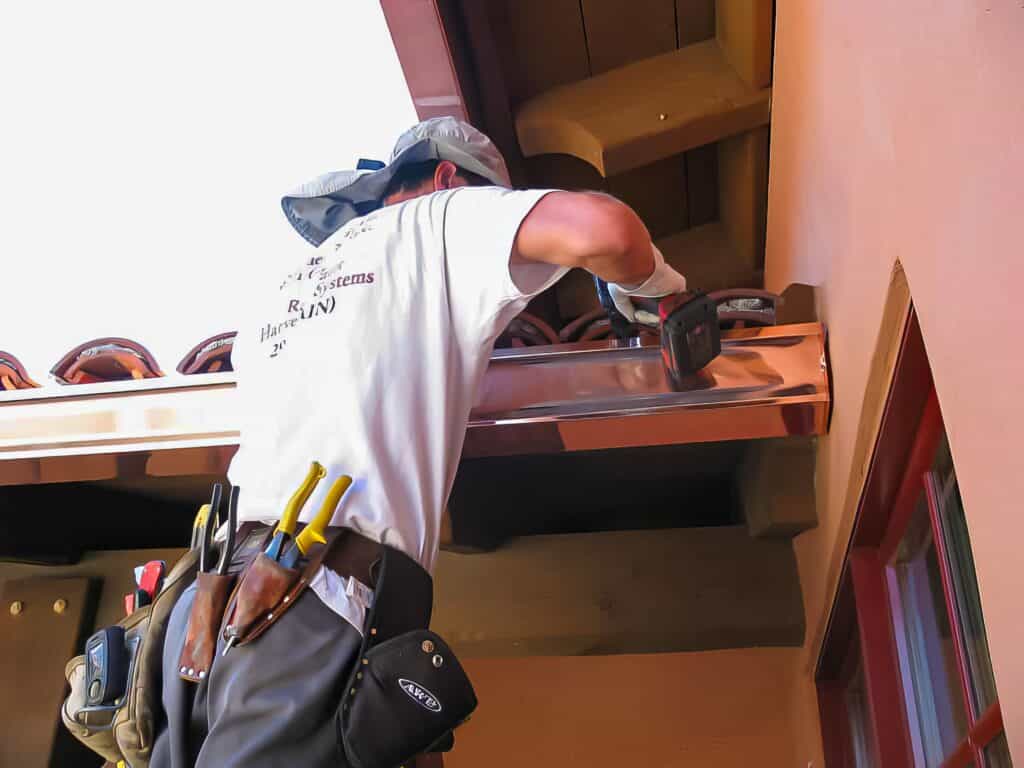
Copper installation is more than attaching metal along the fascia. It is a precision job that depends on accurate layout, clean forming, solid support, and compatible accessories that will not create corrosion problems over time.
For many projects, gutter sections are formed on site in long continuous runs. That reduces joints, which helps cut down on future leak points. The system is then mounted with hanger supports placed at close intervals, commonly every two feet, to help prevent sagging and keep the line crisp.
Once the main sections are in place, downspouts, outlets, miters, and end caps are fitted and sealed. Southern Arizona Rain Gutters uses a high-grade construction polyurethane sealant designed to stay flexible and hold up well in Arizona heat. That matters because the desert sun can be unforgiving on lesser sealants.
A typical installation includes a few essential stages:
- Measure and size: roof square footage, water volume, slope, and downspout placement
- Form and mount: copper gutters produced in long sections and secured with frequent hanger supports
- Seal and finish: joints, end caps, and outlets sealed and checked for proper flow
- Final inspection
The Look Changes Over Time, and That Is Part of the Appeal
Fresh copper has warmth and brightness that immediately stands out against stucco, stone, brick, tile, and wood accents.
Over time, that finish deepens and softens into a patina that many property owners specifically want.
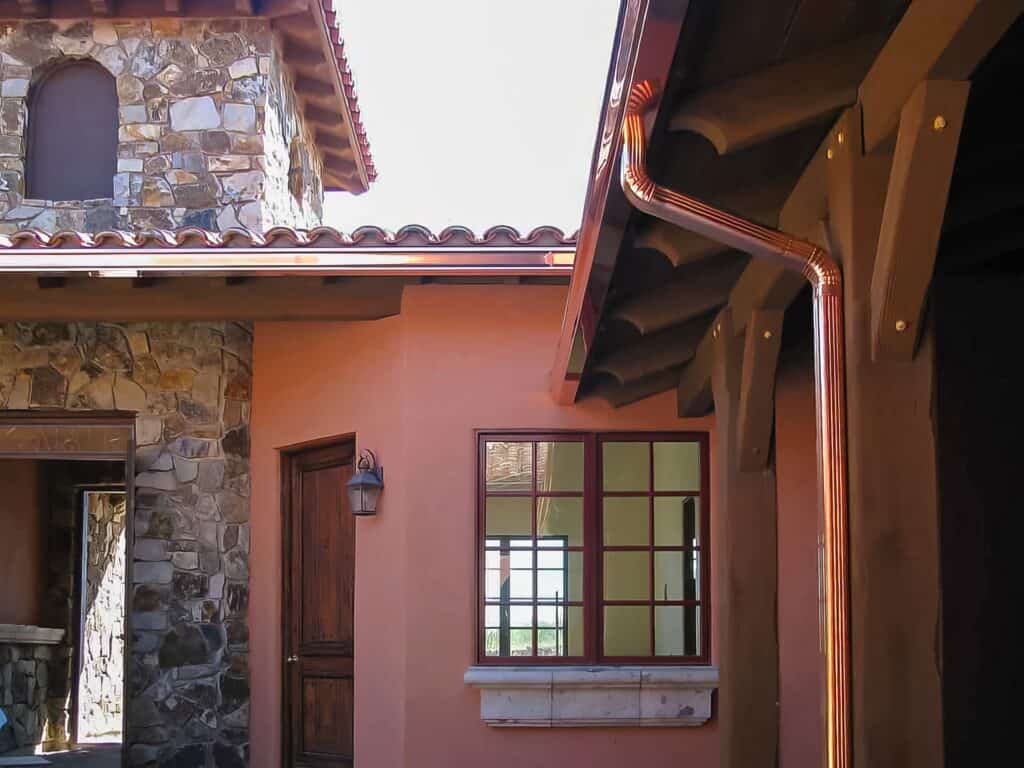
This aging process is one of copper’s most attractive qualities. Instead of looking worn, it tends to look established. On Southwestern architecture, Spanish-inspired homes, territorial styles, and custom desert properties, copper often feels like it belongs from the start and looks even better a few years later.
That visual flexibility also extends to the details. Downspouts, leader boxes, decorative collector heads, and scuppers can be coordinated so the whole drainage system feels intentional rather than purely functional.
Copper Compared With Other Gutter Materials
Copper is not the only option, and it is not always the right fit for every budget. Still, when durability and appearance are top priorities, it is hard to match. A side-by-side comparison makes the differences easier to see.
| Feature | Copper | Aluminum | Galvanized Steel | Vinyl |
|---|---|---|---|---|
| Lifespan | Very long, often far longer than common alternatives | Good, but generally shorter than copper | Strong, though coating damage can lead to corrosion | Shorter life in harsh conditions |
| Maintenance | Low, with a protective patina over time | Low to moderate | Moderate, especially if rust appears | Low until cracking or warping occurs |
| Appearance | Premium look that ages naturally | Clean and practical | More utilitarian unless painted | Basic appearance |
| Weather response | Excellent in sun and storm cycles | Can dent and may fade over time | Strong but vulnerable to corrosion if finish is compromised | Heat can warp, cold can crack |
| Upfront cost | Highest initial investment | Moderate | Moderate to high | Lowest |
For property owners planning to stay in their building for many years, the higher starting cost of copper can make financial sense. Replacement cycles tend to be longer, repairs are less frequent when the system is installed properly, and the visual value remains strong.
A Smart Choice for Rainwater Harvesting
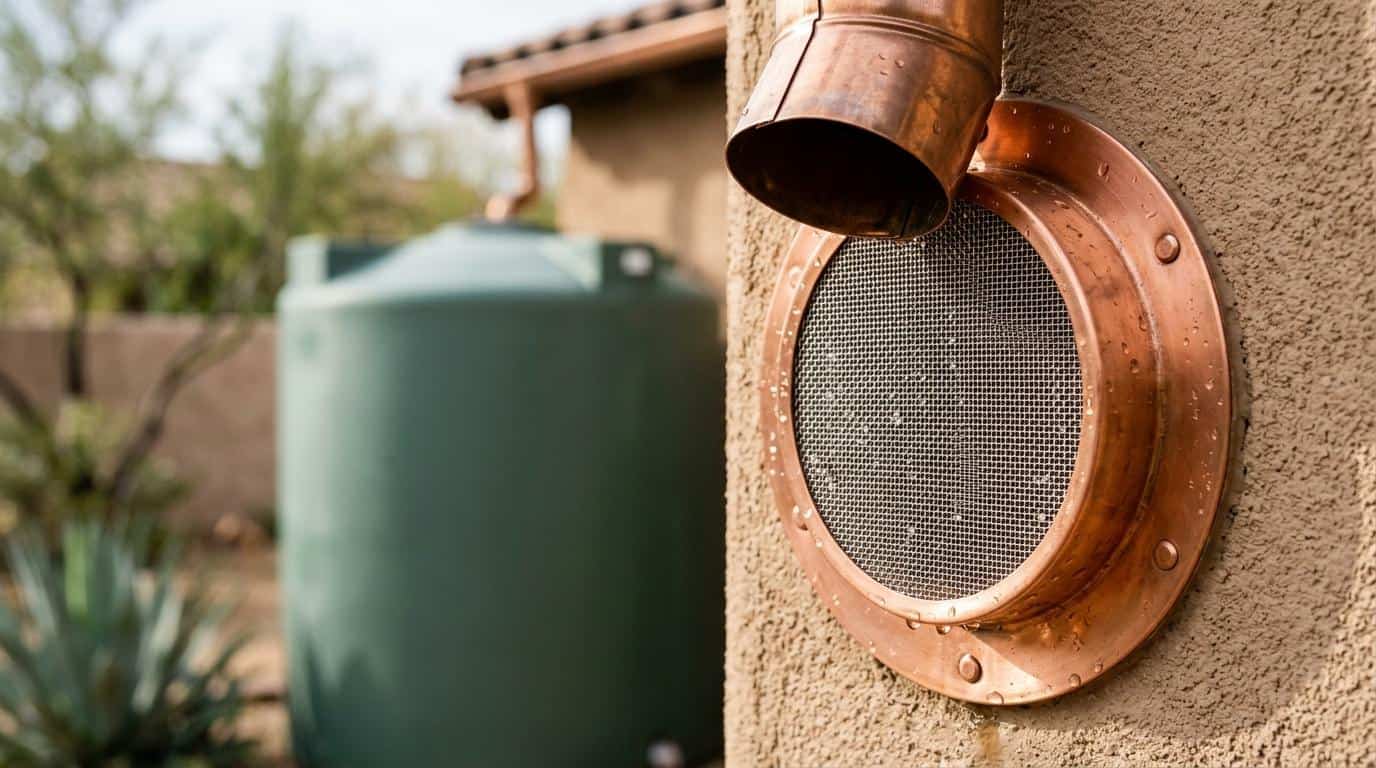
Copper gutters are also a strong match for rainwater collection systems. When a project includes harvesting, gutter sizing and downspout placement become even more important because the goal is not only to move water away from the building, but also to direct it where it can be stored and used.
Southern Arizona Rain Gutters designs and installs harvesting systems from 200 gallons to more than 10,000 gallons. That can include above-ground tanks or steel culvert cisterns, depending on the property and storage goals. For owners who want a coordinated exterior plan, copper gutters can be tied into a collection layout that looks polished and works efficiently.
The details matter here:
- Screened openings: help reduce debris, mosquitoes, and algae issues
- UV-protected tanks
- Custom routing: directs roof runoff to storage while still protecting the structure during overflow conditions
- Options for homes and commercial sites
Where Craftsmanship Matters Most
Copper is a premium material, so installation quality has to match it. Clean lines, secure attachment, correct pitch, and careful sealing all affect how the system will look and perform years from now. Poor installation can undercut the value of even the best material.
That is why local experience matters in Southern Arizona. Roof forms, monsoon patterns, fascia conditions, and site drainage vary from one neighborhood to the next. A crew that works regularly in Tucson, Oro Valley, Vail, Marana, Green Valley, Sahuarita, Nogales, Rio Rico, Sonoita, and nearby areas brings practical knowledge to the design and installation process.
Southern Arizona Rain Gutters offers copper along with aluminum and galvanized steel, but copper remains a standout option for owners who want a lasting architectural finish with very little day-to-day upkeep. Professional installation is available, and parts are also available for pickup for those handling portions of a project themselves.
Planning the Right System for Your Property
Every roofline asks for its own solution. A single-story ranch home, a custom residence with varied elevations, a flat-roof commercial building, and a property with rainwater storage goals all need different gutter layouts.
A site visit can help answer the key questions quickly: which profile fits the architecture, what size will handle runoff well, where downspouts should go, and whether the gutter system should connect to a harvesting setup. With the right plan, copper gutters do more than manage water. They become a lasting part of the building’s design.
Copper Gutter Questions from Arizona Homeowners
How long does it take for copper gutters to develop a full patina in Tucson?
The timeline varies depending on sun exposure, moisture contact, and orientation. In Southern Arizona's dry climate, the initial darkening from bright copper to a warm brown usually happens within the first year. The progression toward the familiar blue-green verdigris takes considerably longer — often five to fifteen years — and may develop unevenly depending on which sections of the gutter receive direct rain versus staying dry most of the year. South- and west-facing runs exposed to more UV and occasional moisture tend to patina faster than sheltered north-facing sections.
Can I speed up or control the patina on my copper gutters?
Yes. Chemical patina solutions can be applied to achieve the aged look much sooner than natural weathering allows. These treatments use mild acid or salt-based compounds to accelerate oxidation and are available in different formulations to produce brown, dark bronze, or green tones. The results can look natural when applied evenly, though the finish will continue evolving after treatment. On the other hand, if you want to preserve the bright copper appearance, a marine-grade clear sealant can slow oxidation significantly — though it requires reapplication every few years in the Tucson sun.
Do copper gutters attract theft?
It is a concern worth acknowledging. Copper has significant scrap value, and exposed copper on a building can attract attention in some areas. Ground-level runs are more vulnerable than second-story installations. Practical deterrents include security cameras, motion-activated lighting near the roofline, and tamper-resistant fasteners that require specialized tools to remove. In most established Tucson neighborhoods, theft risk is low, but it is a fair question to raise with your installer if your property sits on a less-trafficked lot or has long ground-accessible copper runs.
Are copper gutters safe for vegetable garden irrigation if I'm harvesting rainwater?
Copper does release trace amounts of copper ions into water, which is why this question comes up with harvesting systems. At the concentrations typical of roof runoff passing through copper gutters, the levels are generally well below any concern for landscape irrigation, flower beds, and most established garden plants. However, some gardeners growing sensitive seedlings or copper-intolerant crops prefer to run a first-flush diverter to discard the initial roof wash before collecting. If potable use is ever a goal, a full filtration and treatment system would be needed regardless of gutter material.
Will hail damage copper gutters the way it damages aluminum?
Copper is significantly harder and more dent-resistant than aluminum, so it holds up much better during hail events. Light to moderate hail that would dimple an aluminum gutter typically leaves a copper system undamaged. Severe hail can still cause surface marking, but the structural integrity of copper is rarely compromised. This is one of the practical durability advantages that does not show up in a cost-per-foot comparison but matters over a decades-long ownership period in a region where summer storms occasionally bring hail.
Can copper gutters be installed over existing fascia wrap, or does the wrap need to come off?
Copper can be mounted over an existing aluminum fascia wrap as long as the wrap is secure, flat, and in good condition. However, direct metal-to-metal contact between copper and aluminum creates a galvanic corrosion risk when moisture is present. A qualified installer will place a dielectric barrier — typically a rubber or plastic separation strip — between the copper hanger and the aluminum wrap surface. If the existing wrap is damaged, loose, or deteriorating, it is better to remove it and either install a new copper-compatible wrap or mount directly to sound fascia board.
How do I clean copper gutters without damaging the patina?
For routine debris removal, a simple scoop-and-flush with a garden hose is all that is needed — the same as any other gutter material. The important thing is to avoid abrasive scrubbing, wire brushes, or acidic cleaners on the exterior surface, as these will strip the patina unevenly and leave visible marks that take months to blend back in. If you want to remove a specific stain or deposit without disturbing the surrounding patina, a soft cloth with a mild soap solution works well. Most copper gutter owners find that the less they do to the exterior finish, the better it looks over time.
Is copper a good choice for a flat-roof home that uses scupper boxes?
It can be an excellent fit. Scupper boxes on flat-roof homes are highly visible design elements — often mounted at eye level on parapet walls — so the material choice has real architectural impact. Copper scupper boxes, leader heads, and downspouts create a cohesive, high-end look that works particularly well on Southwestern, territorial, and contemporary flat-roof designs common across Tucson. The added strength of copper is also a practical benefit here, since scupper boxes handle concentrated water flow and need to maintain their shape under heavier loads than a standard eave gutter.