EN
EN 
Si estás pesando un trabajo de canalones de bricolaje más que el precio. Se trata de si el sistema seguirá funcionando después de unos veranos en Tucson, un par de temporadas de monzones y años de sol intenso sobre el metal, el sellador y los sujetadores.
Por aquí, las canaletas no son adornos decorativos. Protegen el estuco, las molduras, los cimientos, las pasarelas, el paisajismo y, en muchos casos, alimentan sistemas de recolección de agua en los que los propietarios confían para árboles y riego. Una canaleta que se ve bien el día de la instalación pero gotea en cada unión dos veranos después, nunca fue una ganga.
Instalación de canalones DIY vs. profesional: costos y herramientas
Lo primero que la mayoría de los propietarios compara es el costo, y eso es justo. En teoría, el bricolaje suele parecer mucho más barato. Compras las piezas, haces el trabajo tú mismo y te saltas el cargo de instalación.
Pero las matemáticas en papel dejan mucho fuera.
La mayoría de los trabajos de canaletas "hágalo usted mismo" se construyen con piezas seccionales compradas en la tienda. Esas secciones tienen juntas, y cada junta es un futuro punto de fuga si los cortes, la pendiente y el sellador no son correctos. Los equipos profesionales suelen instalar canaletas sin juntas fabricadas en el sitio a la longitud exacta de cada tramo. Eso cambia todo el sistema, tanto en apariencia como en rendimiento a largo plazo.
Aquí está la versión sencilla:
| Factor | Instalación DIY | Instalación profesional |
|---|---|---|
| Tipo de canaleta | Generalmente seccional | Generalmente sin problemas |
| Herramientas necesarias | Escaleras, taladro, tijeras, sierra, remachadora, pistola de sellador, nivel | La tripulación trae todas las herramientas y equipos de encofrado |
| Calidad del material | A menudo, material de menor calibre de tiendas minoristas | Opciones de aluminio, acero o cobre de calibre más grueso |
| Tiempo requerido | A menudo un fin de semana completo o más | Normalmente un día para muchos hogares |
| Garantía | Ninguno en el trabajo | Cobertura de mano de obra habitual |
| Riesgo de fuga a largo plazo | Más alto debido a más costuras | Más bajo debido a menos uniones |
Esa brecha importa mucho más en julio que en enero.
Un propietario puede ahorrar dinero haciendo un trabajo básico de una sola planta. Eso es cierto. Lo que se pasa por alto es el costo de las herramientas, el tiempo, los errores, la limpieza y la posibilidad de que parte del trabajo tenga que rehacerse. Si necesita escaleras altas, estabilizadores, manos adicionales o piezas de repuesto después de un error de medición, los ahorros disminuyen rápidamente.
Canalones seccionales vs canalones sin juntas
Aquí es donde deberían comenzar muchas conversaciones de bricolaje.
Las canaletas seccionales pueden funcionar, pero dependen de juntas, conectores y sellador. En Tucson, el sellador sufre mucho. La exposición a los rayos UV, el calor y los rápidos cambios de temperatura resecan las cosas más rápido de lo que la gente espera. Una junta que aguanta una temporada templada puede no aguantar después de un largo verano en una pared orientada al oeste.
Las canaletas sin juntas reducen esos puntos débiles. Todavía tienes áreas selladas en las esquinas, salidas y tapas finales, pero eliminas muchos puntos de falla en las carreras rectas. Esa es una de las razones principales por las que la instalación profesional tiende a durar más.
Instalación segura de canalones en viviendas de Tucson
Lo diré de la misma manera que lo diría parado en tu entrada: la escalera suele ser el mayor problema, no el canalón.
Muchos propietarios se sienten cómodos usando herramientas. Menos se sienten cómodos pasando horas moviendo escaleras, levantando piezas largas de metal, extendiéndose más allá de los bordes del techo e intentando mantener todo nivelado mientras trabajan por encima de sus cabezas. En una casa de dos pisos, eso se vuelve serio rápidamente. En los tejados de tejas, se vuelve aún más complicado porque un paso en falso puede agrietar una teja o ponerte en una mala situación.
Las tripulaciones profesionales hacen esto todos los días. Trabajan en equipo, lo que significa que una persona no intenta sostener una sección de 6 metros, mantener la inclinación correcta y gestionar la colocación de la escalera al mismo tiempo.
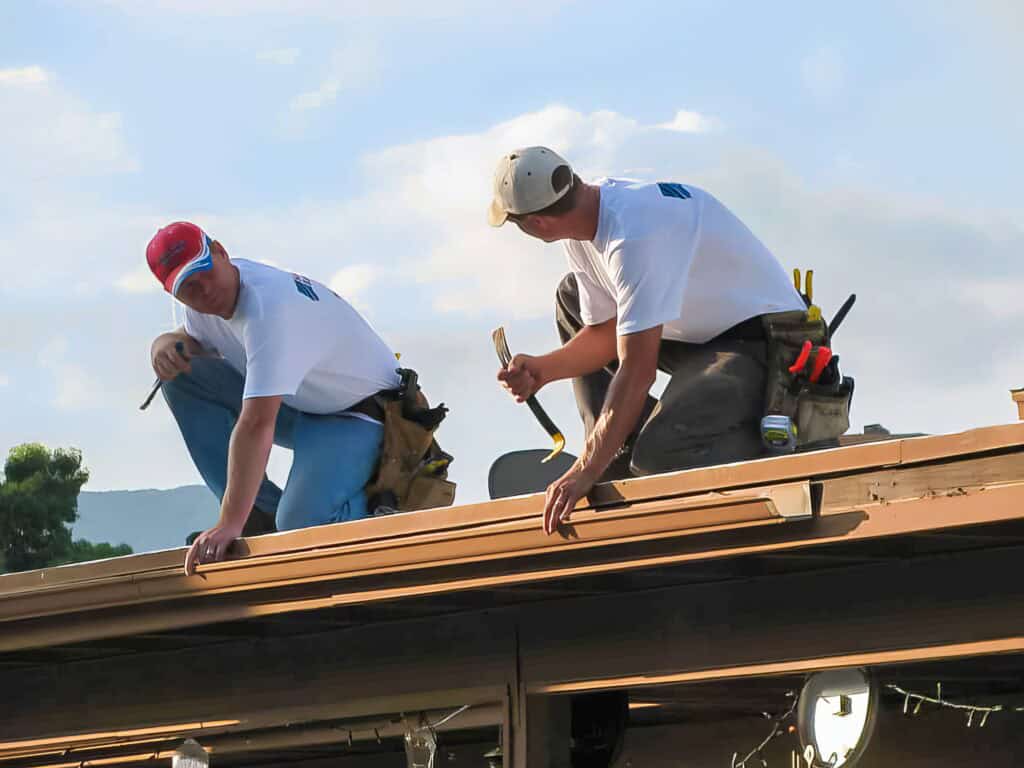
Eso por sí solo es razón suficiente para que muchas personas decidan no hacerlo por sí mismas.
Hay algunas situaciones donde el riesgo aumenta rápidamente:
- Tejados de dos plantas
- Techos de pendiente pronunciada
- Tejas de barro
- Canalones largos
- Materiales pesados o voluminosos
- Casas con pendiente irregular alrededor del perímetro
Incluso en una casa de un solo piso, el trabajo es más agotador de lo que parece. Las canaletas son ligeras en comparación con otros materiales de construcción, pero son largas, flexibles y difíciles de manejar. Agregue calor y brillo, y el buen juicio comienza a flaquear.
Rendimiento y dimensionamiento adecuado de canaletas de monzón en el sur de Arizona
A sistema de canalones en el sur de Arizona tiene que desempeñar dos funciones muy diferentes. Tiene que soportar el calor seco durante meses sin desmoronarse y, luego, tiene que mover mucha agua en ráfagas cortas cuando llega el monzón.
Por eso el tamaño, el paso y la fijación son tan importantes.
Un error común en el bricolaje es pensar que cualquier canalón es mejor que ninguno. No siempre. Si el perfil es demasiado pequeño, la pendiente no es la adecuada o los bajantes están colocados en los lugares incorrectos, el agua saldrá disparada por el borde frontal o se acumulará en las esquinas. Entonces aparecen manchas en el estuco, pudrición en la fascia, salpicaduras en puertas y ventanas, o agua estancada donde no la quieres.
En muchas casas de Tucson, el estilo K de 5 pulgadas es suficiente. En áreas de tejado más grandes, carreras largas o puntos de recogida pesados, Estilo K de 6 pulgadas puede ser la decisión más inteligente. Las casas con techo plano también pueden requerir detalles diferentes, como canaletas y una ubicación que funcione con la forma en que el techo drena el agua. No puedes adivinar cómo hacer eso.
Errores comunes en la instalación de canalones caseros
Los problemas que reparamos con más frecuencia suelen ser siempre los mismos.
- Tono incorrecto
- Pocas bajantes
- Perchas demasiado separadas
- Sellador débil en ingletes y tapones de extremo
- Fijación deficiente a la fascia deteriorada
- Bajantes vertiendo agua justo al lado de los cimientos
La pendiente es un factor importante. Si es demasiado plana, las canaletas acumularán agua. Si es demasiado empinada, puede verse torcida y aun así no drenar bien. Quieres una caída constante, no desniveles o subidas aleatorias.
La fijación también importa. El viento monzónico pondrá a prueba cada soporte y tornillo. Un canalón que sobrevive a una prueba de manguera en calma no está necesariamente preparado para una fuerte tormenta de verano con el viento empujando láminas de agua por el tejado.
El sol del desierto cambia la conversación de los materiales
En climas más fríos, la gente habla más de la carga de nieve. Aquí, los daños del sol son el problema diario.
Selladores más baratos, acabados delgados y componentes de menor calidad se degradan más rápido bajo la exposición al desierto. Eso no significa que todo producto de bricolaje sea malo. Significa que debes ser honesto sobre lo que estás comprando y cuánto tiempo esperas que dure.
Si tu objetivo es una solución rápida antes de vender, eso es una cosa. Si tu objetivo son más de veinte años de servicio, la elección del material debe ser coherente con eso.
Atractivo exterior, protección de aleros y opciones de recolección de agua de lluvia
Una instalación profesional no solo se trata de evitar fugas. También abre mejores opciones de diseño.
La mayoría de las instalaciones caseras de bricolaje se limitan a canalones modulares estándar en colores básicos. El trabajo profesional te da más flexibilidad con los perfiles, la combinación de colores, la ubicación del bajante y los detalles de los remates. Si la casa tiene un cierto estilo, el sistema de canalones puede complementarlo en lugar de parecer una ocurrencia tardía.
El K-Style es el perfil más común porque funciona bien y se ve limpio en muchas casas. El medio círculo tiene un aspecto más suave y tradicional. Los perfiles de caja se adaptan mejor a algunos diseños modernos y de techos planos. Envoltura de fascia también puede limpiar la madera expuesta y ayudar a proteger esos bordes de la intemperie.
Y si te importa conservación del agua, la instalación de canalones se convierte en parte de un plan más amplio.
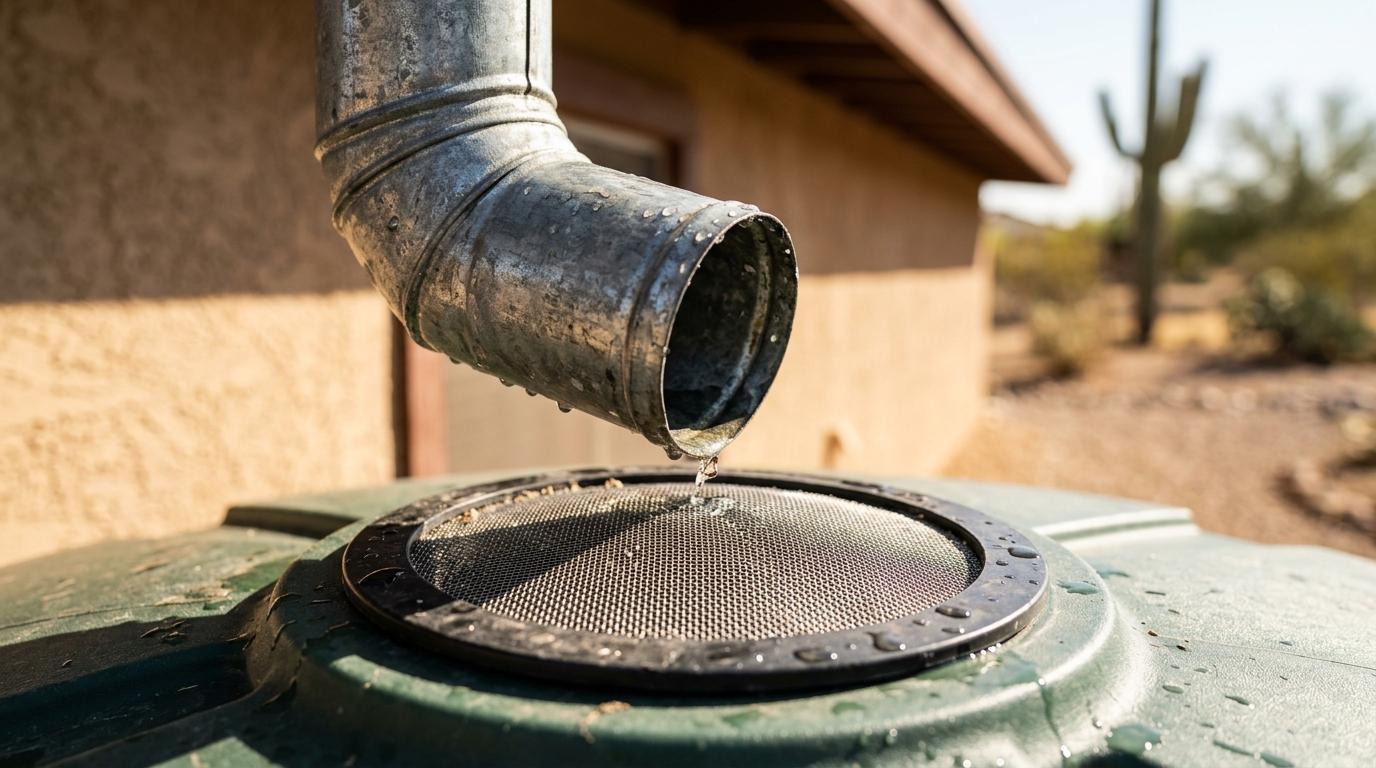
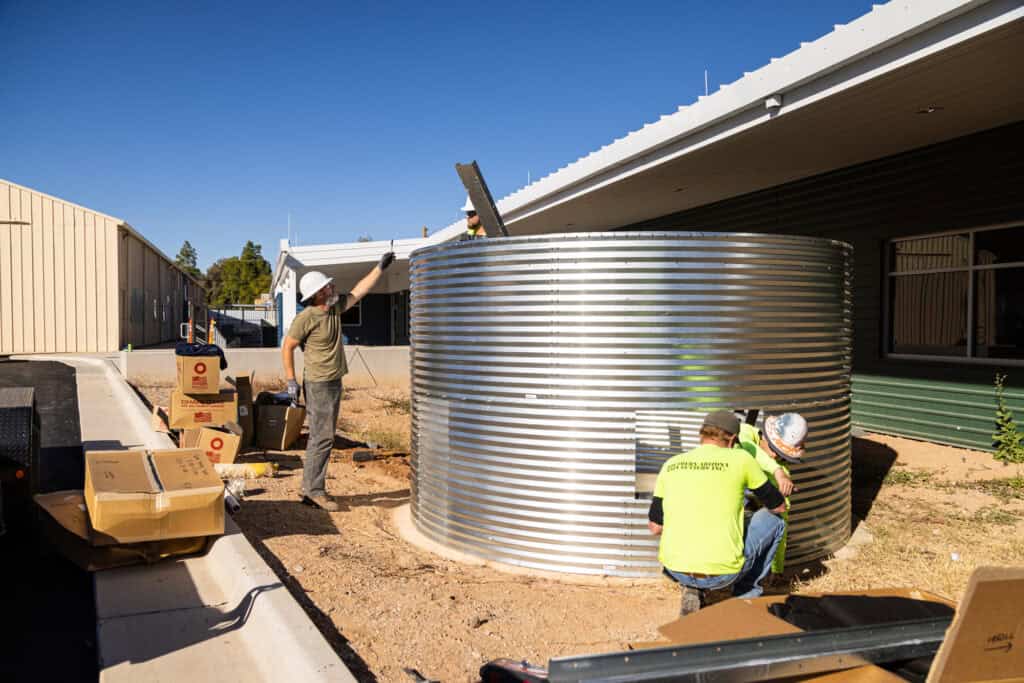
Aquí en Tucson, un sistema de canalones adecuadamente diseñado puede alimentar cisternas, tanques de acero, o sistemas de recolección sobre el suelo para uso paisajístico. Eso requiere más planificación que un sistema básico de escorrentía. Necesitas entradas con rejilla, salidas sólidas, planificación de desbordamientos y materiales resistentes al sol.
Cuando un propietario quiere tanto control de drenaje como recogida de agua, aquí es donde suele merecer la pena un diseño profesional.
La recolección de agua de lluvia añade una capa de diseño
Un trabajo de canalón estándar aleja el agua de la casa. Un sistema de recolección envía el agua a algún lugar útil.
Eso significa que la disposición de la canaleta debe funcionar con la ubicación del tanque, las opciones de prelavado o filtración, las rutas de desbordamiento y cómo planeas usarla en realidad. agua almacenada. Si una cisterna forma parte del plan, el sistema de canalones debe diseñarse alrededor de ella desde el principio, no integrarse más tarde.
Cuándo la instalación de canalones hazlo tú mismo puede tener sentido
El bricolaje no es siempre una mala idea. Algunos propietarios son habilidosos, cuidadosos y realistas sobre el trabajo. En la casa adecuada, puede ser un proyecto razonable.
La clave es adaptar el proyecto a tu nivel de experiencia.
- Mejor ajuste: Casa de una sola planta con tramos cortos y rectos
- Buena configuración: Ya posees escaleras adecuadas y herramientas básicas de metalurgia
- Expectativa correcta ¿Está de acuerdo con los canalones seccionales en lugar de los sin costuras?
- Objetivo de bajo riesgo: Mejora del drenaje, no un acabado arquitectónico de lujo
- Ayuda adicional: Tienes otro adulto disponible para levantar y colocar.
Si esa descripción se ajusta a tu situación, considera la opción de hacerlo tú mismo (DIY). Un garaje, una cubierta para patio, un taller o una pequeña ampliación suele ser un mejor proyecto inicial que la casa principal completa.
Simplemente no trates tu casa como una prueba si la línea del techo es complicada.
Cuándo la instalación profesional de canalones vale la pena
Para muchas casas, contratar a un profesional es simplemente la elección más inteligente. No porque los propietarios no puedan aprender, sino porque el margen de error se reduce una vez que la casa se eleva, los recorridos se alargan o el sistema necesita hacer más que drenaje básico.
Si alguno de los elementos que aparecen a continuación le resulta familiar, le recomiendo que obtenga un presupuesto profesional antes de comprar las piezas.
- Casa de dos pisos El riesgo de seguridad aumenta rápido
- Diseño de techo complejo Valles, múltiples niveles o puntos complicados de concentración de agua
- Drenaje de techo plano: Boceles, salidas personalizadas o detalles tipo caja
- Planes de recolección de agua: Cisternas, rebosaderos de depósitos, entradas tamizadas, opciones de filtración
- Los finales importan Quieres líneas limpias, colores personalizados, cobre, o un perfil que se adapte a la casa
- Problemas de fascia: Daños en la madera, extremos expuestos de las vigas o necesidad de revestimiento de aleros
También está el tema de la garantía. Si un canalón instalado profesionalmente gotea, se desprende o tiene un problema de mano de obra, generalmente no empiezas desde cero. Con el bricolaje, cada reclamación es tu propio sábado.
Eso importa más a medida que la casa envejece.
Las casas antiguas a menudo tienen problemas en la fascia ocultos detrás de la pintura. Una vez que comience a quitar los canalones viejos, puede encontrar madera blanda, masilla vieja o agujeros de fijación que no sujetarán bien el nuevo hardware. Un equipo que se ocupa de esto a menudo puede detectarlo temprano y arreglar el problema correcto en lugar de simplemente colocar metal nuevo sobre un soporte débil.
Una forma práctica de decidir entre hacer el trabajo de canalones tú mismo o contratar a un profesional
Si estás indeciso, revisa la casa y responde algunas preguntas honestas. ¿A qué altura están los aleros? ¿Cuántas esquinas y bajantes se necesitan? ¿La fascia está sólida? ¿Estás tratando de alejar el agua solo de la casa o también hacia cisternas? ¿Y estás de acuerdo con canalones seccionados o realmente quieres que sean de una sola pieza?
Esa revisión rápida suele indicarte la dirección correcta.
Para un proyecto pequeño y sencillo, hacerlo tú mismo puede estar bien. Para una residencia principal en el sur de Arizona, donde el sol, la lluvia monzónica y la conservación del agua son importantes, la instalación profesional generalmente te brinda un sistema más resistente, una apariencia más limpia y menos reparaciones posteriores. Y si los canalones van a alimentar el paisajismo o un Captación de agua de lluvia La configuración, obtener la distribución correcta desde el primer día, vale dinero real con el tiempo.
Preguntas que vale la pena hacer antes de empezar
¿Con qué frecuencia necesitan limpiarse los canalones en el área de Tucson?
Dos veces al año es un punto de partida razonable para la mayoría de los hogares: una vez antes de la temporada de monzones y otra después. Los paisajes desérticos tienden a dejar menos escombros que los árboles de hoja caduca, pero el polvo, la arenilla del tejado y la acumulación orgánica aún se acumulan con el tiempo. Las casas cercanas a árboles mezquite, palo verde o pino pueden necesitar limpiezas más frecuentes, especialmente durante las temporadas de semillas y vainas. Las canaletas obstruidas durante una tormenta causan problemas rápidamente.
¿Cuáles son las señales de que las canaletas necesitan un reemplazo completo en lugar de una reparación?
El óxido persistente, el fallo generalizado de las uniones, las secciones que se separan del alero en varios puntos o los canalones que retienen agua estancada de forma constante a pesar de la limpieza y la corrección de la pendiente suelen indicar la necesidad de reemplazo en lugar de reparación. Un canalón que ha sido reparado repetidamente en los mismos lugares le está diciendo algo. El desvanecimiento cosmético por sí solo no es razón suficiente para reemplazar un sistema estructuralmente sólido.
¿Necesito un permiso para instalar canalones en mi casa?
En la mayoría de los casos, la instalación de canalones residenciales no requiere un permiso. Dicho esto, los requisitos varían según la jurisdicción y ciertas situaciones —como cambios estructurales en la fascia, trabajos en propiedades históricas o sistemas conectados a una configuración de aguas grises o de recolección— pueden requerir una revisión adicional. Si se encuentra en la ciudad de Tucson o en el condado no incorporado de Pima, una llamada rápida al departamento de construcción antes de comenzar vale la pena en unos minutos.
¿Qué preguntas debo hacerle a un contratista de canaletas antes de contratarlo?
Pregunta si instalan canalones sin juntas en el sitio, qué calibre de aluminio utilizan, cómo manejan las reparaciones de fascia si es necesario y qué cubre realmente su garantía de mano de obra. Pide ver ejemplos de la ubicación de los bajantes en casas similares a la tuya. Si la recolección de agua es parte del plan, pregunta si tienen experiencia en el diseño de sistemas que alimenten cisternas o tanques, no solo en dirigir la escorrentía lejos de la casa.
¿Hay un mejor momento del año para programar la instalación de canalones en el sur de Arizona?
La primavera y principios del verano suelen funcionar bien: la temporada de monzones aún no ha comenzado, los contratistas aún no están en su punto máximo de demanda y las condiciones secas propician días de instalación limpios y estables. El otoño también es una ventana razonable. Las instalaciones a mediados de invierno son generalmente buenas desde el punto de vista meteorológico, aunque la programación puede ser más ajustada dependiendo de la disponibilidad de los contratistas. Evita comprometerte a una instalación justo antes de que comience la temporada de monzones si aún no has confirmado tu reserva.
¿Cuánto duran las canaletas típicamente en un clima desértico?
Canaletas de aluminio de calidad sin juntas, instaladas profesionalmente, pueden durar de veinte a treinta años con un mantenimiento razonable. Las canaletas seccionales con juntas selladas tienden a tener una vida útil más corta en condiciones desérticas, a menudo en el rango de diez a quince años, dependiendo de la exposición al sol y de cuán bien se mantenga el sellador en las orientaciones de pared de alta temperatura. El cobre dura más, pero tiene un costo de material significativamente mayor. El principal factor que acorta la vida útil suele ser el mantenimiento diferido: escombros que retienen la humedad contra el metal, o daños menores que no se abordan.
¿Merece la pena instalar protectores de canalones en Tucson?
Depende de lo que caiga en tu techo. Para las casas rodeadas de árboles que sueltan vainas, semillas u hojas pequeñas, una protección de micromalla de calidad puede reducir significativamente la frecuencia de limpieza. Para las casas con mínima cobertura de árboles, las protecciones a menudo añaden costo sin el beneficio suficiente para justificarlas. Los insertos baratos de espuma o cepillo tienden a atrapar los escombros en lugar de repelerlos y pueden crear nuevos problemas. Si estás considerando protecciones, pregunta a tu instalador sobre productos específicos diseñados para condiciones desérticas en lugar de sistemas comercializados para climas más húmedos y con más hojas.