ES

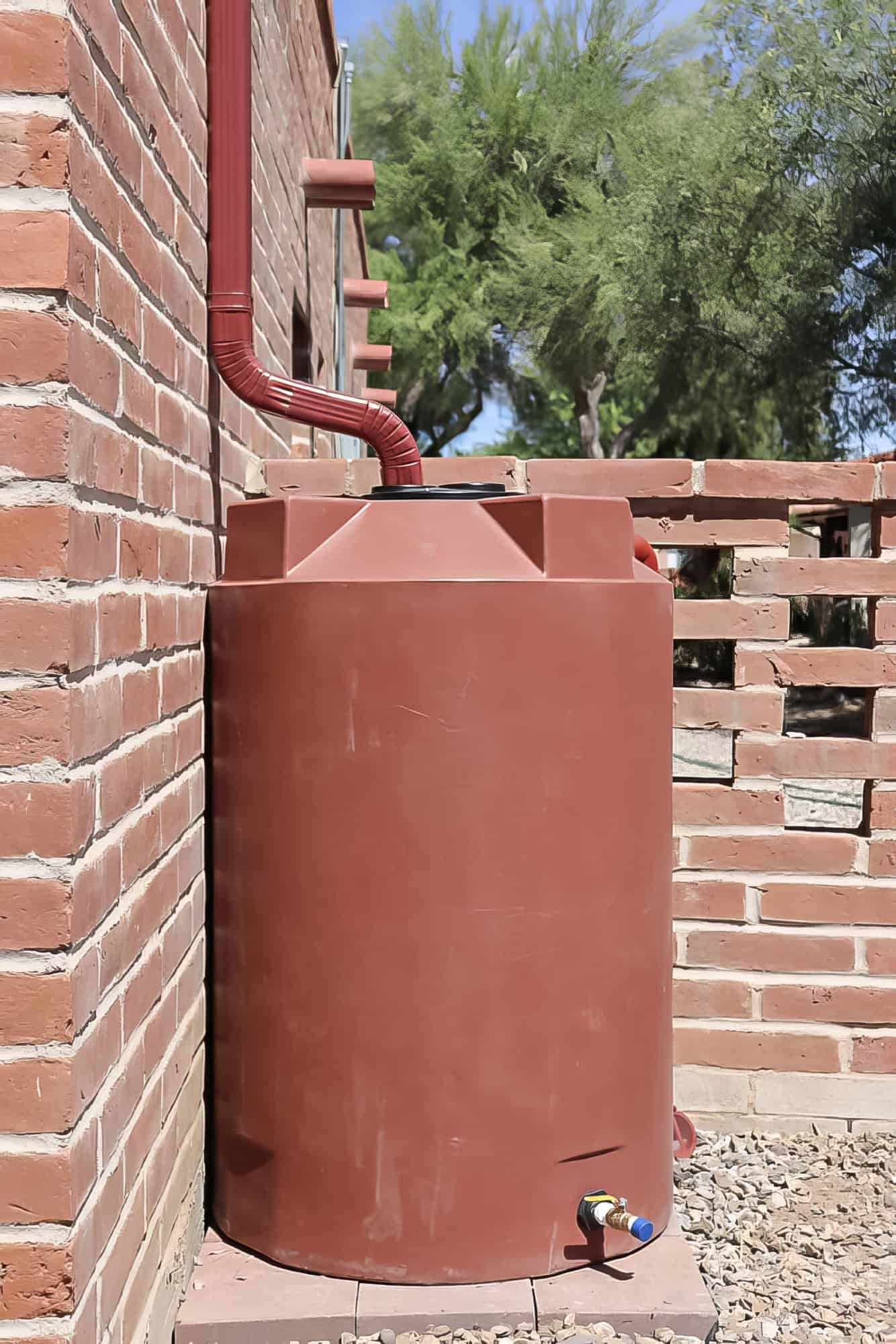
A wet vs dry rainwater harvesting system comparison comes down to one question: how does water get from your gutters into the tank? In a dry system, also called a top feed, a downspout drops straight into the tank inlet and the pipe empties after every storm. In a wet system, also called a wet feed, pipes from several downspouts run underground and rise back up into the tank, so water stays in those pipes between storms.
For Tucson homeowners planning a rainwater harvesting system for a home or business, this choice shapes where the tank can sit, how much roof you can collect from, and what upkeep looks like after monsoon season. One note first: wet vs dry is not the same as passive vs active harvesting. Passive harvesting uses earthworks to slow and sink water into the soil, while wet and dry systems are both ways of filling a storage tank.
What Is a Wet vs Dry Rainwater Harvesting System?
The difference is the path water takes into the tank. A dry system feeds the tank from above with a downspout that drains completely after rain. A wet system feeds the tank through a buried pipe network that stays partly full of water between storms.
Dry systems are simple and visible. Wet systems are hidden and flexible, but they depend on careful planning of heights, slopes and clean-outs.
| Feature | Dry (top feed) | Wet (wet feed) |
|---|---|---|
| How water enters | Downspout drops into the top inlet of the tank | Buried pipes rise into the tank inlet from below the gutter line |
| Best fit | A tank set right beside one downspout | One tank collecting from several sides of the roof |
| Downspouts collected | Typically one, sometimes two close together | Several downspouts tied into one line |
| Standing water | Pipes drain dry after each storm | Water sits in the buried pipes between storms |
| Clean-out needs | Inlet screen and gutters kept clear | A drain or clean-out at the low point, plus screens |
| Visual impact | Downspout and tank sit together against the wall | Pipes run underground, so the tank can sit away from the house |
How Does a Dry Top Feed System Work?
A dry system works by gravity in the simplest possible way. Rain runs off the roof into the gutter, down the downspout and straight into an opening on top of the tank. Once the storm ends, the downspout empties. Because the downspout has to reach the tank inlet, the tank usually sits directly beside or under the downspout it serves.
Dry systems are generally the easier of the two to install and maintain, with no trenching and a fully visible path. The trade-off is reach. A dry tank typically collects only from the roof section that drains into its downspout, so on a large home it may capture just part of the rain the roof could provide.
How a Wet System Moves Water Underground
A wet system moves water by letting it find its own level. Downspouts from different sides of the roof connect to sealed pipes that run below ground to the tank, then rise vertically into an inlet near the top. During a storm the pipes fill, and water pushes up the riser and into the tank because the water entering at the gutters sits higher than the inlet.
When the rain stops, the riser and the low points of the line stay full. Extension guidance from the University of Arizona draws the same line: dry conveyance holds no water until it rains, while a wet system keeps water in its low sections until fresh rain pushes it through. That same University of Arizona guide to the basic components of a rainwater storage system generally breaks a system into collection, conveyance, storage, filtration, overflow and distribution, which is a useful way to see that wet and dry only change the conveyance step.
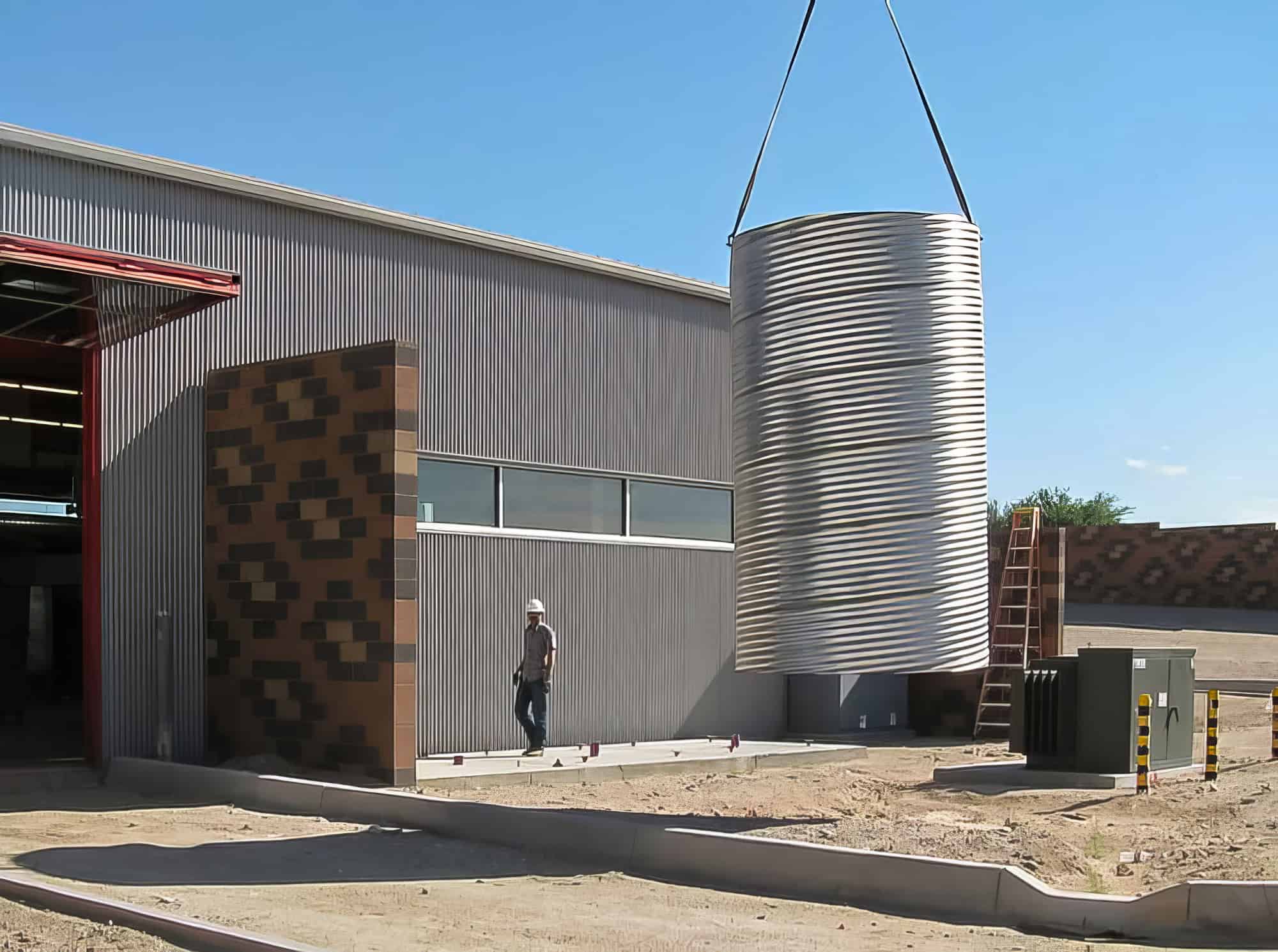
SARG's corrugated steel culvert cisterns are set up for either approach. Water enters through a top or wet feed system and fills the tank until it reaches the overflow pipe, and excess water is redirected safely away. Our guide to cistern installation for rainwater collection touches on both feed styles; this post goes deeper on the wet option.
Why Does the Tank Inlet Have to Sit Below the Gutters in a Wet System?
In a wet system, the tank inlet generally has to sit below the lowest gutter outlet that feeds it, because water in a connected pipe cannot rise higher than its source. If the inlet sits above that lowest gutter, that downspout tends to back up instead of filling the tank.
This is the most important design check for a wet system. The highest point the water can reach is set by the lowest gutter tied into the line, not the tallest one. Designers typically leave some extra room below that point as well, since friction in a long pipe run and the push needed to lift water up the riser both use up a little height. That margin is worked out site by site.
Height also shapes the tank choice. On a single-story Tucson home with low eaves, the usable height for a wet-fed tank can be limited, which may push the design toward a shorter, wider tank or toward setting the tank on lower ground. Dry systems sidestep this issue entirely.
What Upkeep Does Standing Water in a Wet System Need?
Standing water in a wet system needs three things: a way to drain it, a way to keep debris out, and sealed openings so insects cannot reach it.
Many wet systems include a drain or clean-out valve at the lowest point of the buried pipe. Opening it empties the line and flushes out sediment, which matters in Tucson, where long dry stretches can leave water in the pipes for weeks.
Debris screening matters more on a wet system. In a dry system, leaves and grit that get past the gutter land on the tank inlet screen, where you can see and clear them. In a wet system, anything that slips past the gutter can settle inside buried pipe you cannot see. Screens at the gutter outlets or downspouts, plus a screened tank inlet, are the usual defense.
Water standing in pipes also raises the mosquito question. A well-built wet line is sealed from end to end, so the water inside is generally not open to egg-laying insects. The weak points tend to be an unscreened downspout connection, a loose clean-out cap or an open riser, and checking those spots after monsoon season is a simple habit. For tank-wide prevention, including lids, screens and algae, see our guide on keeping mosquitoes and algae out of stored rainwater.
Which System Fits a Tucson Property Best?
A dry system usually fits when one downspout sits right where you want the tank. A wet system usually fits when you want one tank fed from several roof sides, or a tank away from the house.
Choosing a wet vs dry rainwater harvesting system usually follows the yard. A home with a side yard garden and one downspout draining toward it is a classic dry candidate, with a short path and easy upkeep. A ranch-style home where rain drains to four corners, but the only good tank spot is in the back yard, often points toward a wet system, since buried lines can bring several downspouts to that one location. Homes in communities such as Oro Valley, Marana or Vail with HOA design rules may also lean wet, because the pipes stay out of sight. Check your HOA guidelines either way, since rules vary by community. Trenching for a wet line can run into caliche or rocky ground in parts of Southern Arizona, which may affect the pipe route.
Whichever style fits, your system may also be eligible for a Tucson Water rebate. Program details and eligibility change over time, so confirm current terms with Tucson Water before you buy.
Which SARG Tanks Work With Wet and Dry Feeds?
SARG offers three tank lines: above-ground plastic tanks, steel culvert cisterns and commercial storage tanks. Steel culvert cisterns are listed for either a top or wet feed, while plastic tanks fill through a screened inlet fed from the gutters, which generally matches a dry setup.
Plastic tanks run from 100 to 5,000 gallons. They are UV-stabilized, lightweight, install on level ground and come in multiple colors, with an overflow pipe for excess water and a hose connection for using what you store. Steel culvert cisterns run from 800 to more than 20,000 gallons in corrugated steel, serve both residential and commercial properties, and can be drained and cleaned through a built-in valve system. Whether a specific tank should be wet fed on your property depends on its height and inlet position, so confirm that on site. The chart below compares the top of each listed range.
Key Takeaways
- The lowest gutter tied into a wet line sets the highest point the tank inlet can reach, not the tallest gutter.
- A dry tank collects only from the roof area draining into its own downspout, so a large roof may need more than one dry tank.
- A low-point drain or clean-out lets you empty and flush a wet line between storms.
- Sealed pipes and capped clean-outs keep water standing in a wet line away from mosquitoes.
- Wet vs dry describes how a tank is filled, while passive vs active describes whether water is stored in a tank at all.