ES
ES 
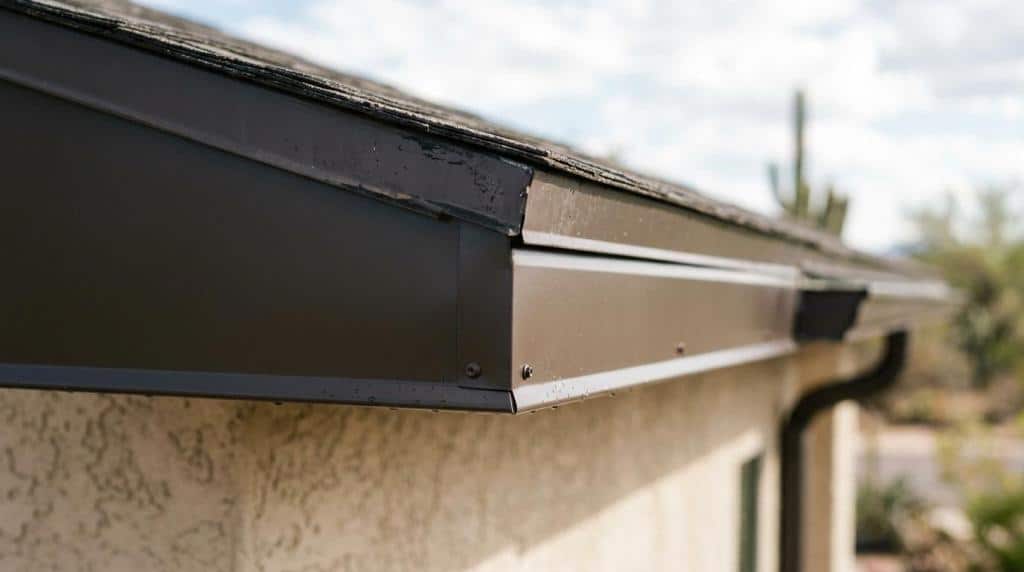
Fascia and soffit are the two pieces that finish the edge of your roof, and most homeowners only learn the difference between them when one starts to fail. The fascia is the vertical board that runs along the roof edge. The soffit is the panel tucked underneath the overhang. Together they close off the roof structure, guide water away from the house, and keep the space above your ceiling protected. If you have started looking into a fascia wrap for your Tucson home, it helps to understand these two parts first.
This guide keeps it plain. We will define fascia and soffit, show how they fit together at the roofline, and explain why the fascia is the part your gutters lean on the hardest. Because Tucson runs on strong sun and heavy monsoon rain, the wood version of these parts tends to wear here faster than it would in a milder climate. Knowing what each part does makes it much easier to spot a problem early and to understand any quote you get for fixing it.
What fascia and soffit actually are
Fascia is the board that caps the ends of your roof rafters along the edge of the roof. Soffit is the finished underside of the eave, the section of roof that hangs out past your exterior wall. One faces outward and you see it from the street, the other faces down and you see it only when you stand under the overhang and look up.
The fascia does the visible structural work at the edge. It ties the rafter tails together in one straight line, gives the roof a clean finished border, and, most important for a gutter company, it is the surface your gutters bolt onto. On many older Tucson homes the fascia is painted wood, which is exactly the material that struggles most in this climate.
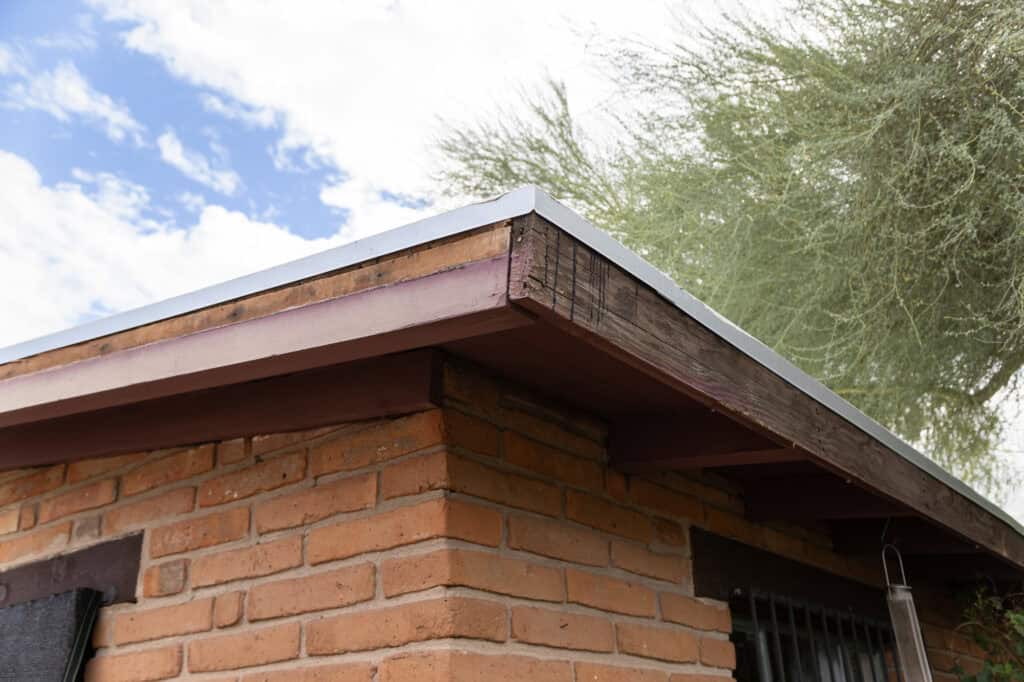
The soffit sits behind and below the fascia, bridging the gap from the fascia back to the wall. It hides the underside of the rafters and, on a lot of homes, it carries vents that let air move into the attic. Soffit materials vary widely from home to home, so it is worth looking at your own before assuming what it is made of.
How to tell fascia and soffit apart on your own home
To tell them apart, stand back from the house and look at the roof edge. The flat vertical band running along the edge is the fascia. Then step closer and look straight up under the overhang, and the panel over your head is the soffit. That is the whole difference in one look.
A simple memory aid is that fascia faces the street while soffit faces the ground. The gutter is the giveaway, since it always hangs on the fascia and never on the soffit. Once you can point to each part by name, it becomes far easier to describe an issue to a contractor and to read any estimate you receive without guessing.
How fascia and soffit work together at the roof edge
Fascia and soffit form an L shape at the edge of the roof, with the fascia standing vertical and the soffit lying flat underneath it. That corner is where the roof meets open air, so both parts share the job of sealing the structure while still letting the roof breathe. Neither one works well for long if the other is failing.
The fascia takes the weather head on. Rain runs off the roof, meets the drip edge, and drops into the gutter that hangs on the fascia. The soffit stays more sheltered but does quieter work, closing the underside so pests and windblown debris stay out while air still moves through any vents it holds. Here is how the two compare side by side.
| Feature | Fascia | Soffit |
|---|---|---|
| Location | Vertical board along the roof edge | Horizontal underside of the eave |
| Main job | Caps the rafter ends and gives gutters a solid surface to mount to | Closes the underside of the overhang and often allows attic airflow |
| Typical material | Often painted wood on older Tucson homes, and the surface SARG wraps in aluminum | Wood, plywood, or vented panels, varies by home |
| Gutter connection | Gutters and the drip edge fasten directly to it | Sits behind the gutter line and is not a mounting point |
Why the fascia is the part your gutters depend on
Your gutters depend on the fascia because that board is what they physically hang from. Gutter hangers and the drip edge fasten straight into the fascia, so a soft or rotted board simply cannot hold a gutter safely. The soffit plays no part in carrying that weight.
This matters more than most people expect. During a hard monsoon cell, a full run of gutter loaded with water can hold the weight of a grown adult, and all of that load pulls on the fascia behind it. If the wood is sound, it holds. If sun and moisture have softened it, the fasteners loosen and the gutter begins to sag or pull away from the house. Installers generally set gutter hangers into the fascia every couple of feet as a standard, which spreads the load along the board, but that only works when the board itself is solid. You can read more about how monsoon storms stress a home without solid drainage and why the roof edge takes so much of that pressure.
What Tucson sun and monsoon moisture do to wood fascia
In Tucson, wood fascia usually fails from two directions at once. The sun bakes and fades the finish, and monsoon moisture works its way into any crack that opens up. West and east facing runs take the worst of the direct sun and tend to show wear first, since they catch hours of low, intense light.
Signs to watch for are peeling or fading paint, cracking or warping in the board, and any soft spots or mold that show up after a wet summer. None of that means your roof is failing, but it does mean the board that holds your gutters is losing its protective surface. Staying ahead of it comes down to the finish, because a sealed, intact surface is what keeps water out of the wood in the first place.
The soffit plays a supporting role here too. Because the soffit is usually where intake air enters the attic, it is part of how the roof sheds heat and moisture through the seasons. Building science groups such as Penn State's Housing Research Center describe soffit vents as the intake side of attic ventilation, though the right setup varies from home to home, so confirm your own arrangement with a qualified contractor rather than assuming.
What happens when fascia or soffit goes unaddressed
When fascia or soffit is left to deteriorate, the damage rarely stays put. A failing fascia lets water reach the rafter ends and lets the gutters work loose, while a damaged soffit can open the attic to pests and weather. Small surface problems at the roof edge have a way of growing into structural ones.
That is the practical reason to treat the roof edge as one system rather than two unrelated boards. Water that slips past a cracked fascia can travel back into the framing, and once the gutters lose their anchor they stop moving runoff where it belongs. Catching a fading or splitting board while it is still only a surface issue is far cheaper and simpler than repairing rot after several monsoon seasons have worked into the wood.
What an aluminum fascia wrap is and how it protects the board
An aluminum fascia wrap is a custom-fit aluminum cover installed over your existing wood fascia. It goes on in long overlapping sections that tuck under the drip edge, so water is sealed out at the top and the wood underneath stays dry. The wrap follows the shape of the board rather than sitting on it loosely, which is why it is cut and fitted on the job.
The finish is chemically bonded to the metal instead of brushed on as a surface coat, and that is why it holds up so well. It will not fade, rust, or peel the way exterior paint does, and it stays paintable later if you ever want a different color. It also takes the yearly maintenance of a wood edge off your list. Measured against a paint cycle you would otherwise repeat every few years, the aluminum is built to outlast it by a wide margin, as the figures below show. SARG installs the wrap over sound fascia, and our fascia wrap installation process is where the details of fit and sealing get handled.
The point is straightforward. The aluminum at the roof edge is meant to last for decades, not for the few years a coat of exterior paint holds in the Tucson sun.
Does a fascia wrap cover the soffit as well?
A fascia wrap covers the fascia board only, not the soffit. The two parts are separate, and wrapping the fascia does not replace or change the soffit underneath it. It is a common question, so it is worth stating plainly.
That distinction matters when you plan a project. SARG's product is the aluminum fascia wrap, which protects the exact board your gutters mount to. The soffit is its own part of the eave, built and finished its own way from one home to the next. If your main concern is a weathered board along the roof edge and the gutters hanging off it, the fascia is the part a wrap is made to address.
Key Takeaways
- Fascia is the vertical board at the roof edge, and soffit is the horizontal underside of the eave.
- Gutters, hangers, and the drip edge all fasten to the fascia, never to the soffit.
- A loaded gutter in a storm can pull the weight of an adult on the fascia, so the board has to stay sound.
- The soffit is commonly where intake air enters the attic, and its material varies from home to home.
- A fascia wrap is a custom-fit aluminum cover over the wood fascia, with a bonded finish rated for 50 to 100 years.
- A fascia wrap protects the fascia only and does not include the soffit.
Fascia and Soffit Questions from Tucson Homeowners
Which part of my roof do gutters attach to?
Gutters attach to the fascia, not the soffit. Hangers and the roof drip edge anchor into that edge board, so it has to be strong enough to hold a full gutter. The soffit below plays no part in supporting it.
What is the underside of my roof overhang called?
That underside is the soffit. It closes the gap beneath the eave, which is the part of the roof that hangs past the exterior wall, and it often carries vents for attic airflow.
Can a home have fascia without a soffit?
Yes. Some homes leave the rafter tails exposed and have no finished soffit, yet still have a fascia board at the roof edge. Whether a soffit is present depends on how the home was built.
Does a fascia wrap cover the soffit too?
No. A fascia wrap is aluminum fitted over the wood fascia only. The soffit is a separate part of the eave, so it is not included when the fascia is wrapped.
What is a fascia wrap made from?
Aluminum. It is a custom-fit aluminum covering set over the existing wood fascia, then finished so the surface will not rust or peel in the Tucson climate.
How long does an aluminum fascia wrap finish last?
The bonded finish is rated for roughly 50 to 100 years. It is also paintable, so the color can be changed later without stripping the metal.
Does the fascia really carry the weight of a full gutter?
In a storm a water-filled gutter can weigh as much as a grown adult, and all of that weight rests on the fascia. A rotted board cannot take that load, which is why the fascia has to stay solid.