ES
ES 
When monsoon rain hits Tucson, water does not arrive gently. It can pour off a roof in minutes, cut channels through landscaping, stain stucco, and collect near a foundation before anyone has time to react. A properly designed gutter system changes that. It gives runoff a controlled path, protects the structure, and turns a hard burst of rain into something manageable.
Southern Arizona Rain Gutters provides custom gutter and rainwater collection solutions for homes, commercial properties, and managed buildings across the Tucson area. The focus is practical and design-minded at the same time: strong materials, clean installation, drainage that fits the site, and options that can move water away or store it for later use.
Built for Tucson weather
Desert conditions create a unique mix of stress on exterior systems. Long dry stretches leave dust and debris on the roof. Then summer storms can send a large volume of water into a short section of gutter all at once. That is why sizing, slope, downspout placement, and support spacing matter so much in Southern Arizona.
A good system does more than catch water at the roof edge. It helps protect fascia boards, reduces splashback against walls, limits soil erosion, and keeps runoff from pooling near entries, patios, and slab foundations. On flat or low-slope rooflines, header boxes and scuppers can be part of the answer. On pitched roofs, the profile and outlet size need to match the roof area and expected flow.
Custom-formed gutters with long continuous runs are especially useful in this climate because fewer joints mean fewer places for leaks to develop over time.
Gutter styles and system options
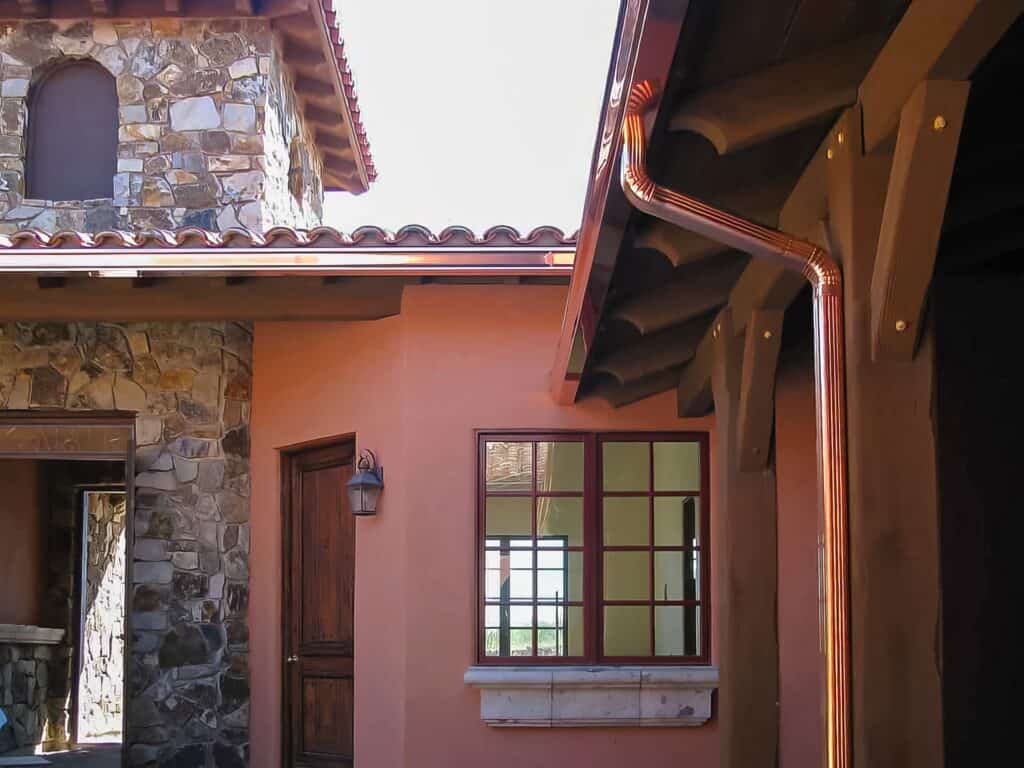
Not every property in Tucson needs the same profile. Some homes look best with traditional K-style gutters, while others benefit from the softer shape of half-round gutters or the clean lines of European box profiles. Material matters too. Aluminum is a strong all-around choice for many properties, copper offers a premium architectural look with a natural patina, and steel can be a fit where extra strength is needed.
Southern Arizona Rain Gutters offers multiple profiles and sizes to match both appearance and water volume. Systems are formed for the building rather than pulled from a shelf in fixed lengths, which supports a cleaner finish and more reliable performance.
| Option | Common Use | Notes |
|---|---|---|
| 5" K-style | Many homes | Popular balance of capacity, value, and curb appeal |
| 6" K-style | Larger homes and higher-flow roof sections | Extra capacity for stronger runoff |
| 8" K-style | Commercial and large roof areas | Built for demanding water volume |
| 6" Half-round | Classic and decorative architecture | Smooth curved profile, often chosen in copper |
| 6" European box | Contemporary homes and select commercial sites | Sharp, modern lines |
For most Tucson homes, 5-inch seamless aluminum K-style gutters are the best all-around choice, giving the right balance of capacity, cost, and curb appeal for a typical residential roofline. Larger homes and roof sections that funnel heavy runoff are better served by 6-inch gutters, commercial and large-roof properties often need 8-inch, and owners after a specific architectural look may prefer copper or half-round profiles. The right pick ultimately depends on roof area, pitch, and how much water reaches each section during a monsoon downpour, which is what a site review determines.
Color selection also matters more than many owners expect.
Services that go beyond the roof edge
A strong gutter system is only part of the full drainage picture. Downspouts, elbows, outlets, splash control, underground drain lines, and fascia protection all work together. If one part is undersized or poorly placed, the whole system can struggle during a heavy storm.
Southern Arizona Rain Gutters handles new installation, repairs, replacements, and water redirection for both residential and commercial properties. That includes work on drainage paths below the gutter line, where water often creates the most visible damage.
After a careful site review, projects may include:
- Custom-formed gutter installation
- Downspouts and leader boxes
- Fascia wraps
- Underground drainage lines
- Gutter cleaning and repairs
- Residential and commercial service
This broader approach is valuable in Tucson because runoff problems rarely stop at the eave. Water can cross walkways, undermine gravel beds, flood planting areas, or settle against walls if it is not guided to the right discharge point.
Why installation quality matters
Material selection gets a lot of attention, yet installation details are what determine how a system performs season after season. Long runs need solid support. Outlet points need secure sealing. Gutters need the right pitch to move water without looking uneven from the street.
Southern Arizona Rain Gutters uses support hangers spaced at regular intervals, including every two feet where needed for strength, and uses UV-resistant polyurethane sealant at joints and accessory connections. Those details matter in a place where intense sunlight breaks down low-grade materials quickly and storm runoff adds sudden weight to the system.
Professional fabrication on site also helps reduce common weak points. A gutter with fewer field joints is less likely to drip, separate, or collect debris at connection points. That means a cleaner look during dry months and more confidence when the summer rain returns.

Rainwater collection that fits Southern Arizona
In Tucson, runoff can be directed away from the property, but it can also be stored and reused. That is where rainwater harvesting becomes more than a nice idea. It becomes a smart property upgrade. Roof runoff can feed tanks or cisterns for landscape watering, site use, and selected filtered applications.
Southern Arizona Rain Gutters designs and installs harvesting systems in a wide range of sizes, from smaller residential setups to large-capacity storage for homes, ranch properties, and commercial sites. Available options include above-ground plastic tanks and corrugated steel cisterns. Systems can be configured with overflow lines, clean-out valves, hose bibs, and pump options based on how the water will be used.
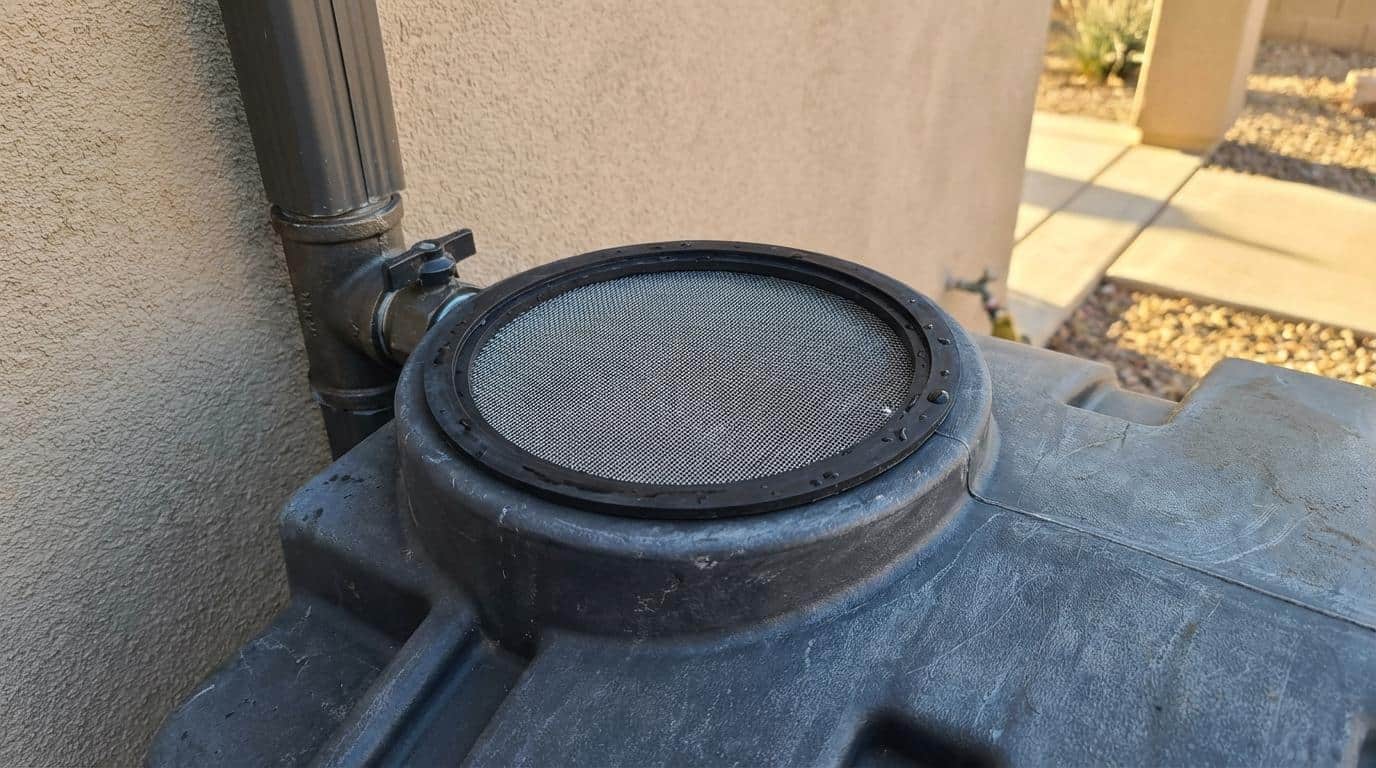
Tanks are available with UV protection, screened openings, and sealed components that help limit algae growth and mosquito activity. That is especially important in warm weather and for properties that want dependable storage over time.
Rainwater systems may be planned around several goals:
- Tank sizing: storage options can range from 200 gallons to 10,000+ gallons, based on roof area and water goals
- Tank protection: UV-resistant bodies, screened inlets, sealed openings, and overflow planning support cleaner stored water
- Water use: irrigation, landscape support, and selected filtered backup water applications
- Project flexibility: full installation service or parts pickup for owners taking on a DIY project
For many property owners, this adds a second layer of value to a gutter project. The same system that protects the building can also help offset outdoor water use.
Repairs, drainage correction, and maintenance
Not every property needs a full replacement. Sometimes the right move is targeted repair. A leaking corner, a sagging run, a clogged downspout, or a poorly placed discharge point can often be corrected before the issue spreads to stucco, fascia, or soil around the home.
Cleaning and maintenance are also part of keeping a system ready for storm season. Even in a dry climate, roofs collect leaves, dust, grit, seed pods, and roofing debris. Those materials settle in troughs and outlets, slowing water flow at the exact moment the system needs maximum capacity. Periodic service helps keep drainage moving and gives owners a chance to spot wear early.
Underground drainage can also make a major difference. When downspouts send water into buried lines, runoff can be carried toward a safer discharge area instead of dropping right beside the foundation.
Material choices with long-term value
Aluminum remains a popular choice because it is lightweight, rust-resistant, and available in many colors. It works well on a wide range of homes and commercial buildings. Copper appeals to owners who want a more architectural finish and exceptional lifespan. Galvanized steel can be a practical choice on select projects where strength is the top concern.
The right material is not just about budget. It is about roof size, local exposure, maintenance expectations, and the visual character of the building. A custom system should look intentional from the curb and perform confidently during the toughest weather of the year.
What the process can look like
A productive estimate starts with the building itself: roof type, square footage, pitch, fascia condition, drainage paths, and whether the goal is simple runoff control or full water capture. From there, the system can be sized and shaped to fit the structure rather than forced into a generic layout.
That gives Tucson property owners room to choose what matters most, whether that is a durable aluminum gutter system, decorative copper, fascia wraps, a large cistern, flexible payment options, or even parts pickup for a hands-on project. The result is a cleaner exterior, stronger water control, and a property that is better prepared for the next storm.
Rain Gutter Questions from Tucson Property Owners
Do all sides of a Tucson home need gutters?
Not always. Many homes only need gutters on the sides where roof runoff creates a real problem — above entryways, walkways, patios, planting beds, or areas close to the foundation. A site review can identify which sections of the roofline actually produce concentrated runoff and which ones discharge harmlessly onto open ground. Installing only where gutters are needed keeps the project cost-effective without leaving vulnerable areas unprotected.
Can gutters be installed on a tile roof?
Yes, though the approach is different than with shingle or flat roofs. Tile roofs channel water in irregular patterns, and the raised profile of the tile means the gutter needs to be positioned to catch runoff that may overshoot a standard mount point. Bracket style, standoff distance, and flashing details all need to account for the tile layout. This is common work in Tucson, where concrete and clay tile roofs are widespread across older and newer neighborhoods.
When is the best time of year to install gutters in Tucson?
Any time outside of active monsoon storms is workable, but fall through spring is ideal. Sealants cure best when temperatures are warm but not extreme, and scheduling is typically more flexible outside the peak summer storm window. Getting a system in place before monsoon season means the property is protected when the heaviest runoff arrives rather than waiting through another round of storms.
Do gutters help prevent foundation problems in Southern Arizona?
Yes. Even on homes with slab foundations, concentrated roof runoff landing at the base of the building can cause soil erosion, moisture migration under the slab, and cracking in exterior stem walls over time. Gutters collect that water at the roofline and route it to a controlled discharge point — either away from the structure through downspouts and underground lines, or into a storage tank. That separation between runoff and foundation is one of the most practical reasons to install gutters in the Tucson area.
Are gutter guards or leaf screens worth adding in the desert?
They can be, depending on the property. Homes near mesquite, palo verde, or other desert trees that drop fine seeds, pods, and small leaves benefit from screens that keep debris out of the trough. However, not all guard styles work well in this climate — some trap dust and fine grit on top of the screen, which can slow water entry during a fast monsoon pour. A mesh-style screen with adequate opening size tends to perform better than solid-cover designs in dry, dusty conditions.
Will new gutters change the look of my home?
They should improve it, not distract from it. When the profile, color, and mounting line are chosen to match the architecture, gutters create a cleaner roofline and a more finished exterior. A mismatched color or oversized profile on a small home can look heavy, while undersized gutters on a large roofline can look flimsy and fail during storms. The visual fit matters as much as the functional sizing, which is why color matching and profile selection are part of a proper estimate.
Do I need to be home during the gutter installation?
Not for the full project. Most crews only need access to the exterior and a clear work path along the roofline. It helps to be available at the start so the installer can confirm placement, color, and downspout locations, and again at the end for a walkthrough and water test. Beyond that, the work happens outside and does not require interior access unless an indoor downspout route or attic-mounted component is part of the plan.
Can I finance a gutter or rainwater harvesting project?
Many homeowners prefer to spread the cost of larger projects, especially when the scope includes harvesting tanks, underground drainage, or fascia wraps in addition to gutters. Financing availability and terms vary by project size and provider, so it is worth asking during the estimate process. Some water harvesting installations may also qualify for local rebates or incentive programs, which can offset part of the upfront cost.